Industrial Farmhouse Bedroom Ideas That Feel Cozy

By Julio Arco
Architect and online interior designer
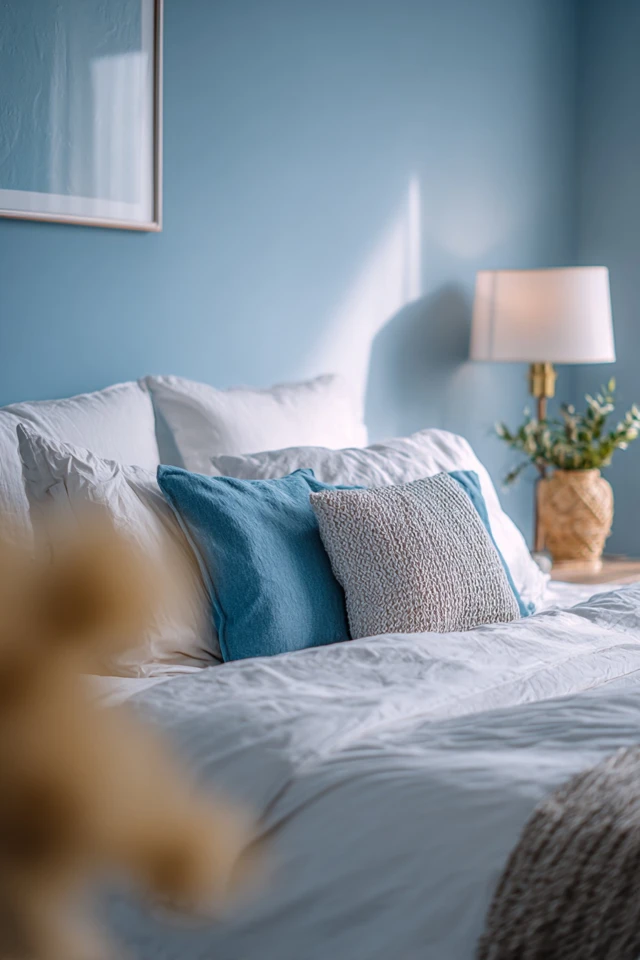
In this post
An industrial farmhouse bedroom pairs hard, honest materials (black metal, exposed wood, plain walls) with soft layers like linen, wool and a good rug. The trick is balance: let the metal give the room its outline and let the textiles make it comfortable enough to sleep in.
If your bedroom feels a bit cold or a bit cluttered, that's common with this style, and it's easy to fix. Below you'll find layout dimensions, a color approach, material pairings and styling moves you can use in a small room or a large one.
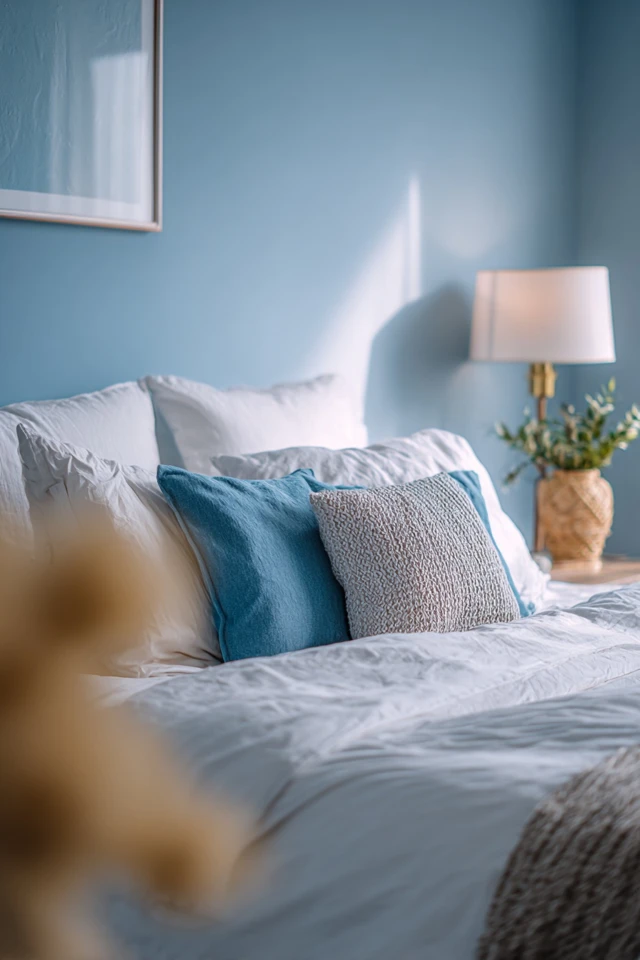
What defines an industrial farmhouse bedroom?
Industrial brings dark metal, raw finishes and a slightly rough edge. Farmhouse brings warm wood, simple shapes and soft fabrics. Put them together and you get contrast: black iron against white shiplap, matte fixtures next to washed oak.
Contrast only works when something repeats. Pick a short list of materials, say wood, steel and linen, and use each of them more than once in the room. A black bed frame, black lamp bases and black curtain rods read as a plan. Five unrelated black objects read as a coincidence.
For more on the style across the whole house, see these industrial farmhouse decor design tips.
How should you lay out the room?
Start with the bed, because everything else orbits it. Put it on the longest solid wall with the headboard centered, so it's the first thing you see from the door.
- Let a rug extend about 18-24 inches beyond each side of the bed.
- Keep about 24-36 inches of clear walkway around the bed and between furniture.
- Use a bench or a reclaimed-wood console at the foot of the bed to mark the sleeping zone from a dressing or reading corner.
Small rooms
Wall-mounted lamps free up nightstand space. A low-profile bed and a couple of floating shelves keep the eye moving up instead of getting stuck on bulky furniture. A mirror placed to catch window light adds depth.
Large rooms
Big rooms can feel like a warehouse, which is on theme but not restful. Use a rug and furniture grouping to define the sleep area, and consider a beam, a paneled headboard wall or a partition to bring the scale down.
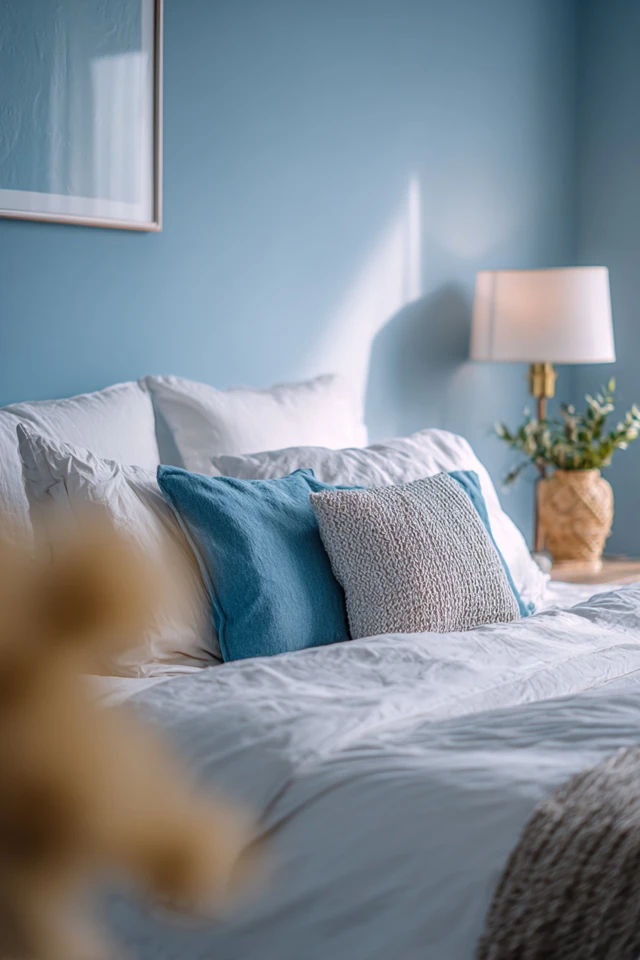
Which colors work best?
Stay with desaturated tones: warm gray, taupe, chalky white and muted green. Then add one deep accent such as charcoal, rust or oxidized teal. Quiet backgrounds let the black metal and wood grain do the talking, and they're easier to live with at 11 p.m.
Warm accents like terracotta or beige in pillows and throws add coziness. Cooler tones such as sage or slate blue suit larger surfaces like walls. If your floors or furniture lean brown, these colors that go with brown are a handy reference.
Finish matters as much as color. Matte and satin paint absorb light and soften shadows, while gloss bounces it around and can feel harsh in a bedroom. Limewash or textured plaster gives a plain wall depth without adding pattern.
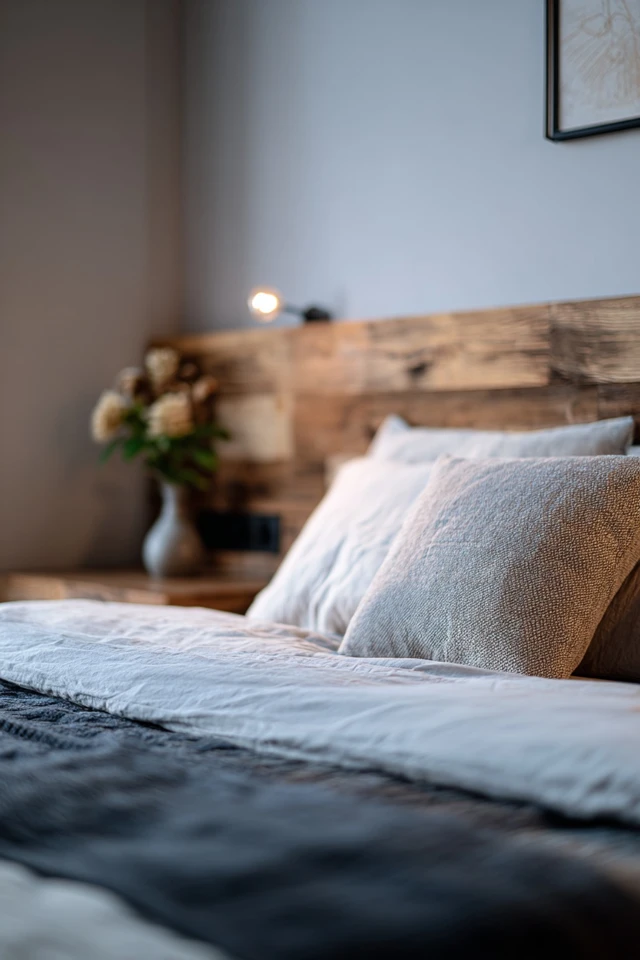
What materials and textures should you layer?
Reclaimed or oiled wood brings warmth and visible age. Matte black or brushed steel gives definition. Linen, wool and leather add different kinds of softness, which is what stops a metal-heavy room from feeling like a showroom.
Build the bed in layers: a cotton sheet set, a linen or percale layer, a wool or cotton coverlet, and three to five pillows in mixed sizes and textures. A knit throw at the foot finishes it. If a dog or cat shares your bed, choose covers and throws you can machine wash, and keep a dedicated blanket for them so the good coverlet stays out of the rotation.
Pick finishes that age well: oiled wood, patinated metal, natural fibers. Scratches on them look like character, which suits this style.
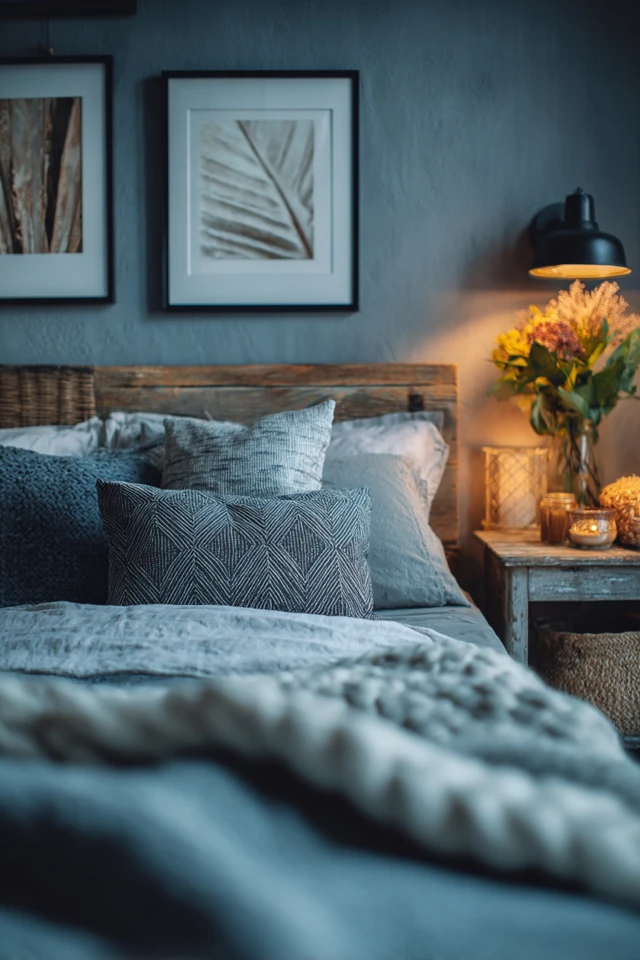
How do you light an industrial farmhouse bedroom?
Use three layers: an overhead pendant or exposed-bulb fixture, task lamps by the bed, and a dimmable ambient source for the evening. Warm bulbs around 2700-3000K feel cozy, and cooler light is better saved for a dressing mirror or desk.
As an architect, I'd put the overhead light on a dimmer before spending money on anything decorative. It changes the mood of the room more than a new fixture does.
Styling moves that keep it from feeling cold
- Limit metals to two finishes, such as matte black and aged brass, and repeat them.
- Choose a jute or wool rug to contrast with the metal.
- Add a large plant or a small cluster for a natural note. Check with your vet that anything within paw reach is safe for pets.
- Display a few meaningful objects, like an old clock or a framed textile, instead of lots of small ones.
- Hide bulk storage under the bed and style open shelves with matching containers and some empty space.
- Add heavy curtains, a padded headboard and a rug to soften echo in a room with hard surfaces.
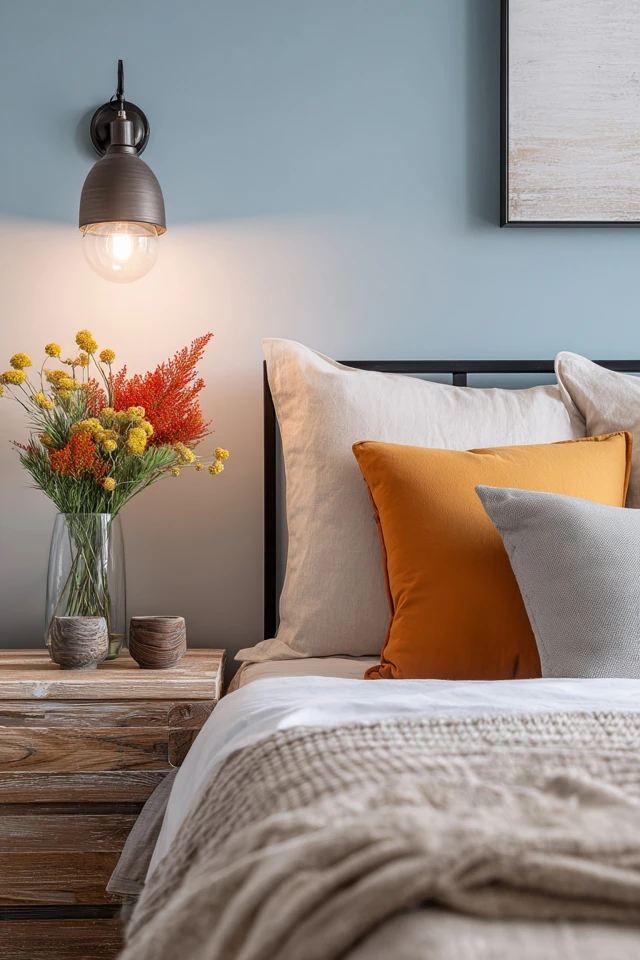
Swap trends in through pillows, art and hardware, and keep the big pieces simple: a solid wood or platform bed in a classic shape will outlast the current look. For more ideas on the rest of the house, try these industrial farmhouse decor tips, or look at an Asian-inspired bedroom if you want something calmer and more minimal.
Frequently asked questions
How can I make a small industrial farmhouse bedroom feel larger?
Use a light, desaturated wall color, furniture with exposed legs and a mirror that catches window light. Keep walkways at least 24 inches wide and the decor minimal.
Can I mix black metal with warm wood without it clashing?
Yes. Limit yourself to two main metal finishes and repeat them in lighting, furniture legs and hardware so they read as intentional.
How do I mix patterns without creating visual chaos?
Keep patterns in one color family and vary the scale: large on the bedding, medium on the rug, small on the pillows. Balance them with plain textured surfaces.
Filed under
ArticlesMeet the author
Written by an architect.
Julio Arco is a passionate architect with years of experience in architecture, interior design, urban design, and housing. He studied at prestigious universities across North America and Europe.

- Name
- Julio Arco
- Job
- Architect and online interior designer
- Studied
- Architecture, ITESM · Urban Design and Housing, McGill
- Partner
- Thor, Australian Shepherd
- Thor’s title
- Head of quality control