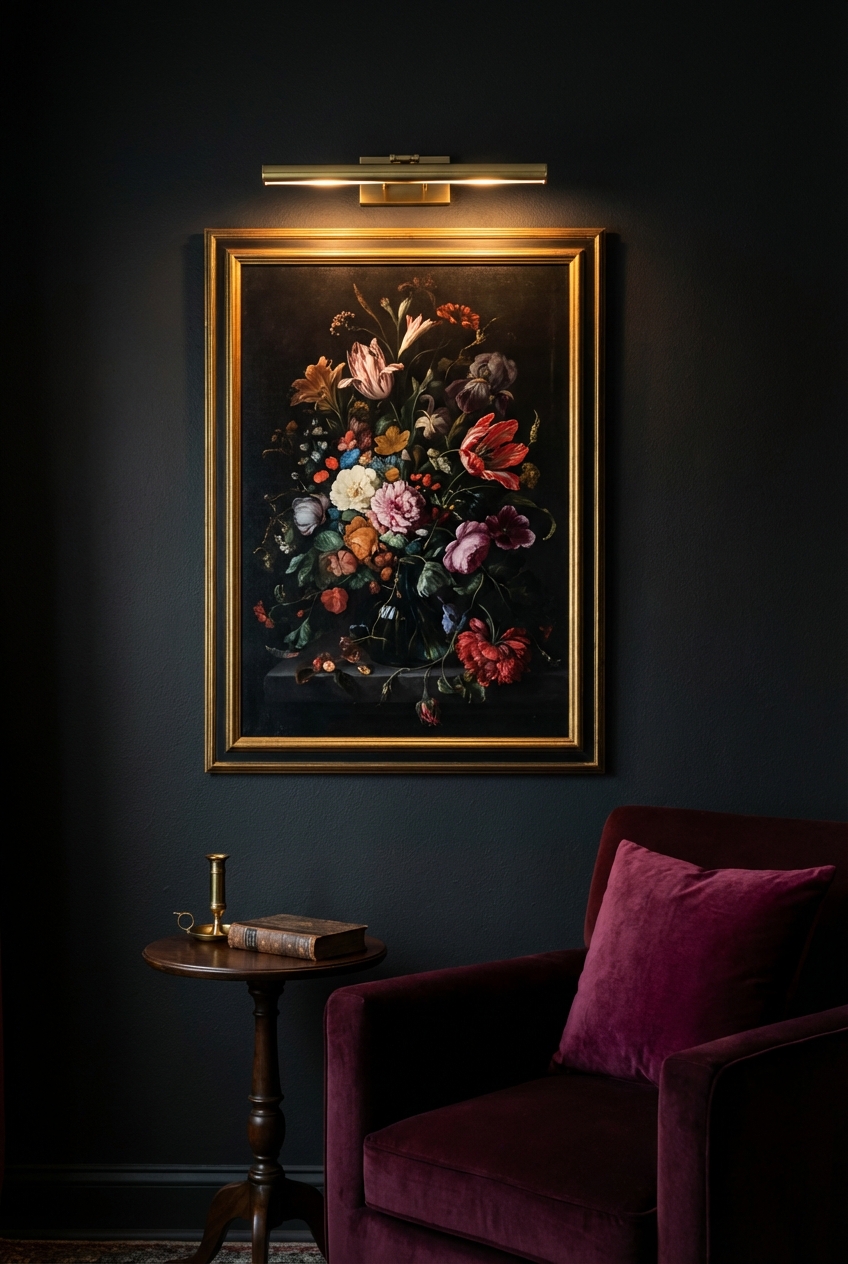
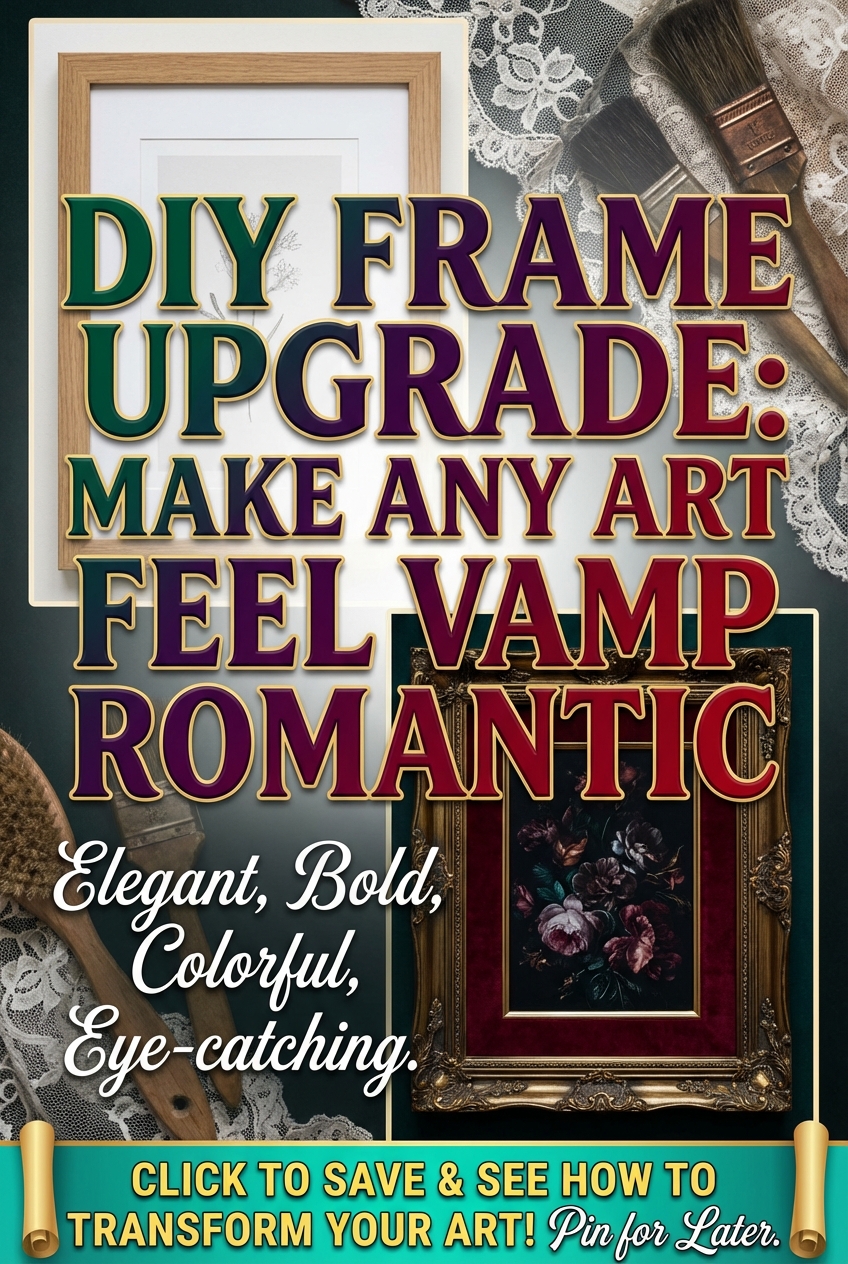
Vamp Romantic Wall Art: DIY Frame Upgrade for Any Print
Turn a thrifted frame into vamp romantic wall art with dark paint, aged gold wax and a velvet mat. Steps, sizing rules and hanging heights included.

By Julio Arco
Architect and online interior designer
In this post
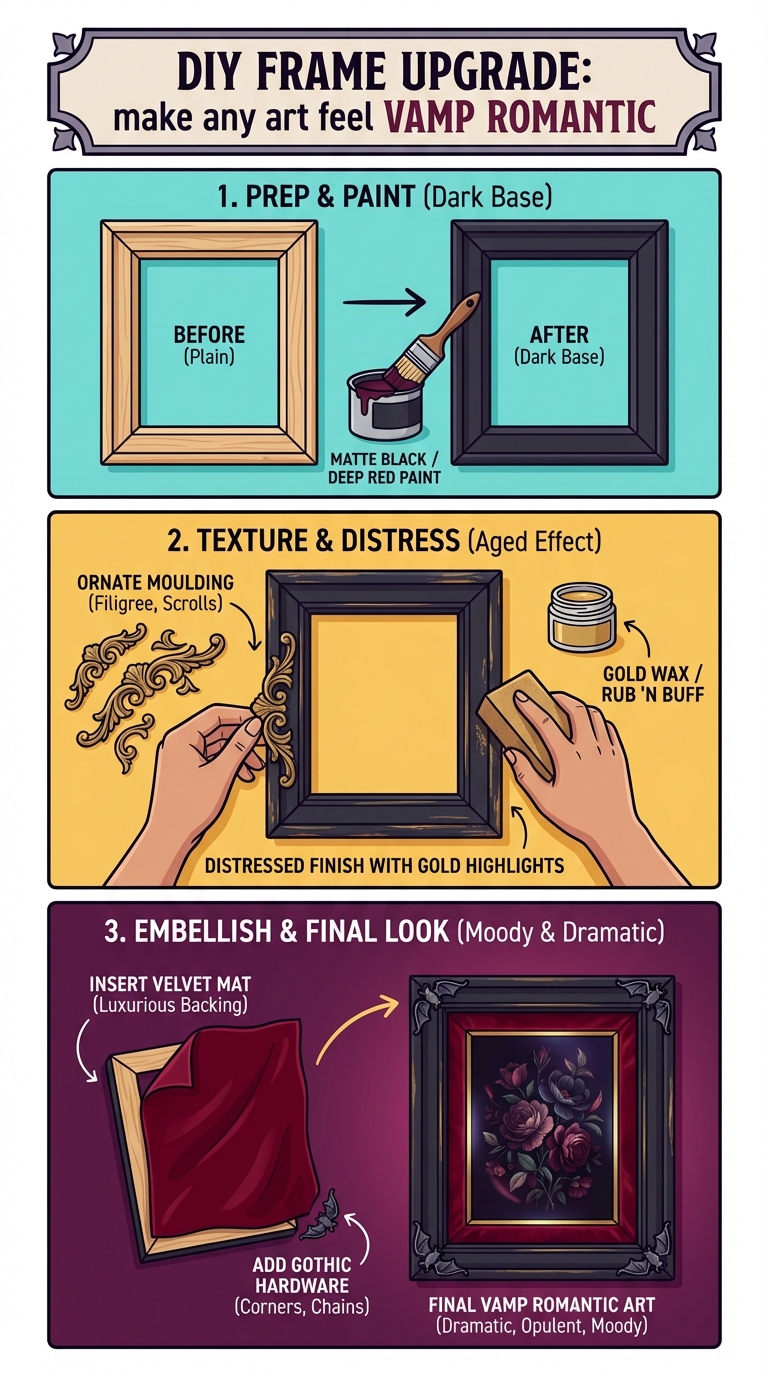
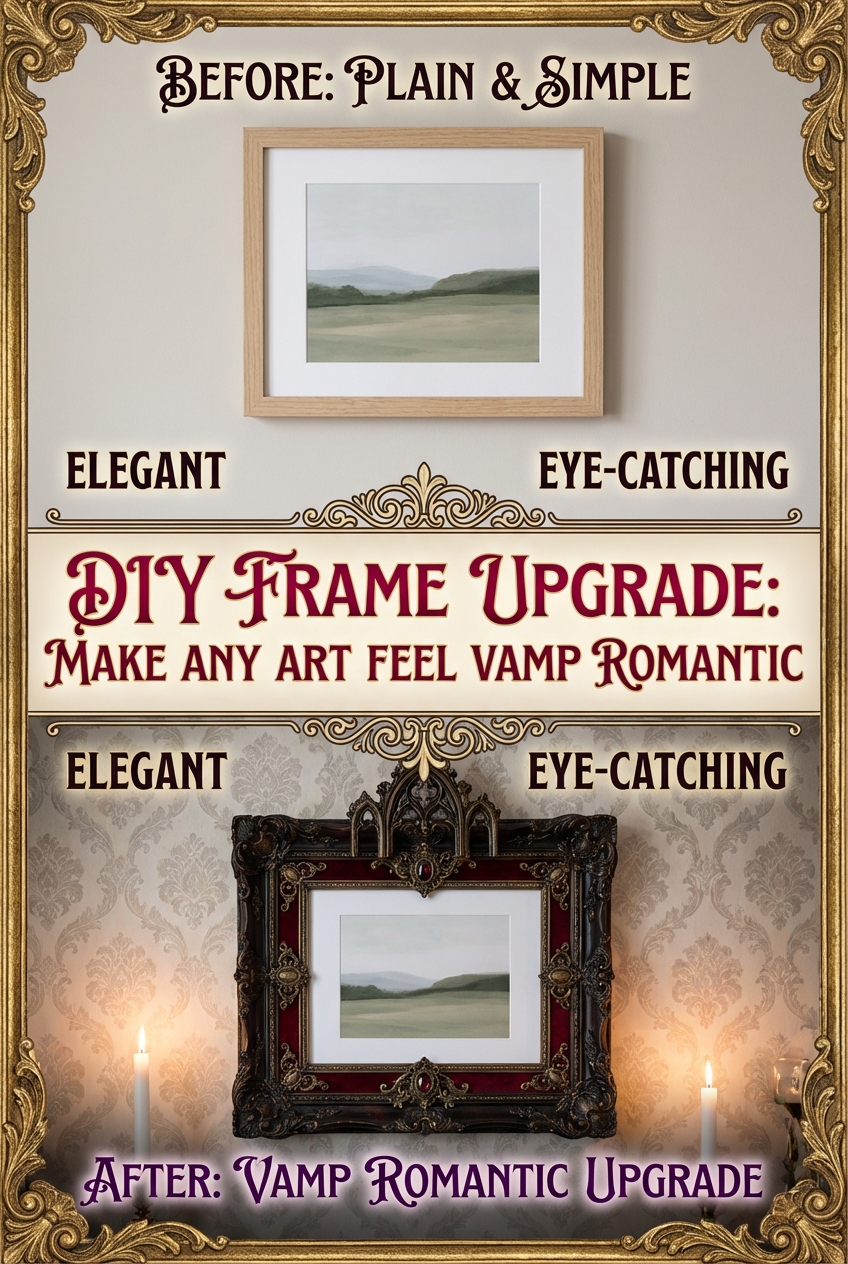
You can make almost any print or thrifted painting look vamp romantic by changing its frame: a heavy, ornate molding painted near-black, rubbed with aged gold wax, and paired with a wide velvet mat. The art inside matters less than the weight and texture around it.
The whole project costs very little if you start with a secondhand frame. Below you'll find what the style looks like, how to build it step by step, and how big and how high to hang the result.
What makes a frame look vamp romantic?
Vamp romantic mixes dark academia moodiness with a bit of old-world luxury: candlelight, velvet, worn gilding. Thin, sleek big-box frames work against it. You want a frame that looks like it has been in the family for a century.
Three things do most of the work:
- Deep molding, such as acanthus leaves, bead-and-reel or a scooped profile. The grooves hold shadow, and shadow is the mood.
- Layered darks: charcoal, espresso and near-black rather than one flat black, with tarnished metallic on the high points only.
- A textured mat. Velvet or silk-wrapped board looks far richer than white paper.
Fresh, shiny gold reads new and a little cheap here. Aim for gold that looks oxidized.
How do you upgrade a frame, step by step?
You don't need woodworking skills. You need a good frame, matte paint, wax and some patience.
1. Find a frame with good bones
Check thrift stores, estate sales and online marketplaces. Ignore the color and the dated art inside; look at the carving. Heavy wood or plaster holds paint and wax well. Flimsy plastic doesn't.
2. Clean and prep the surface
Take out the glass and backing. Wipe the frame with a damp cloth and a drop of dish soap. If the finish is high-gloss, sand it lightly with 220-grit paper so the new paint grips. You don't need to strip it.
3. Paint a near-black base
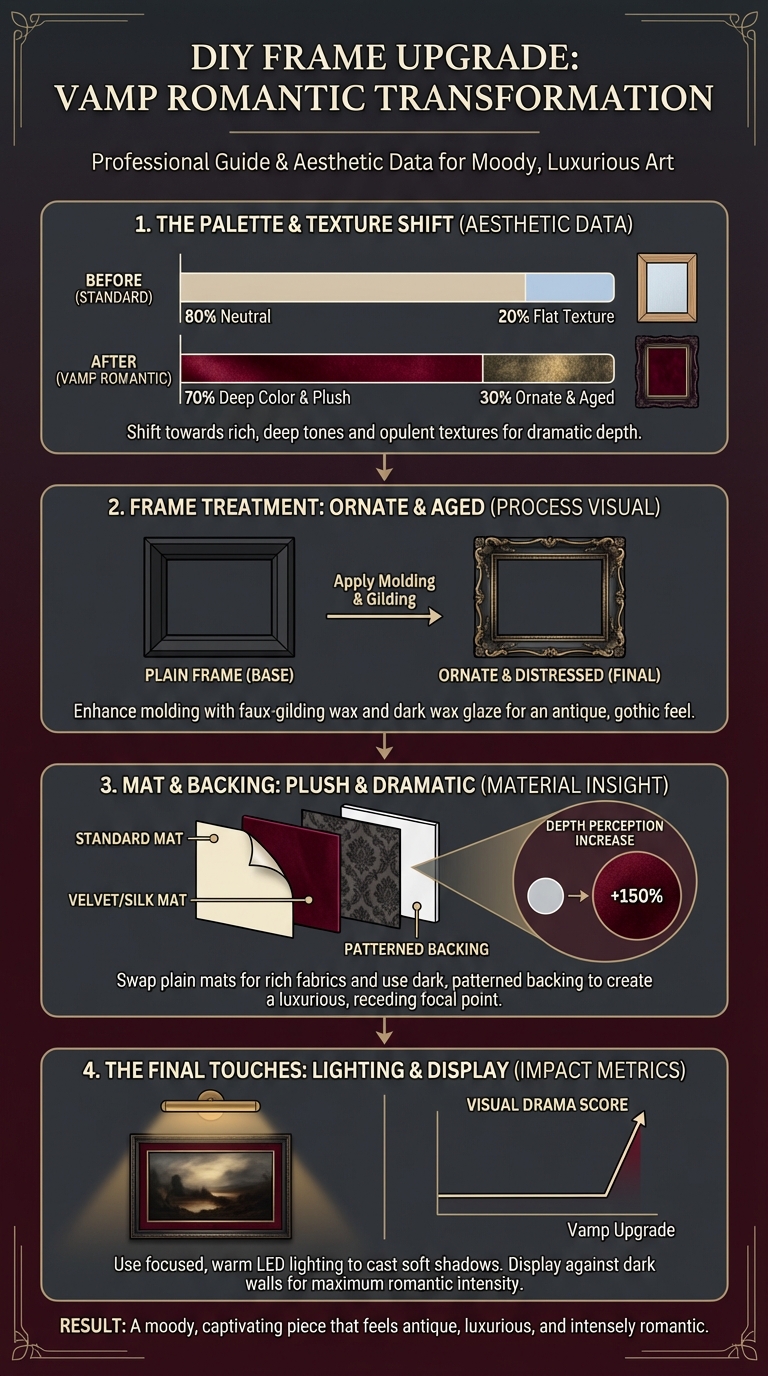
Use chalk paint or a matte acrylic in a near-black, such as deep charcoal or dark navy, instead of true jet black. Work it into the crevices with a natural bristle brush. Two thin coats beat one thick one.
4. Add age with wax
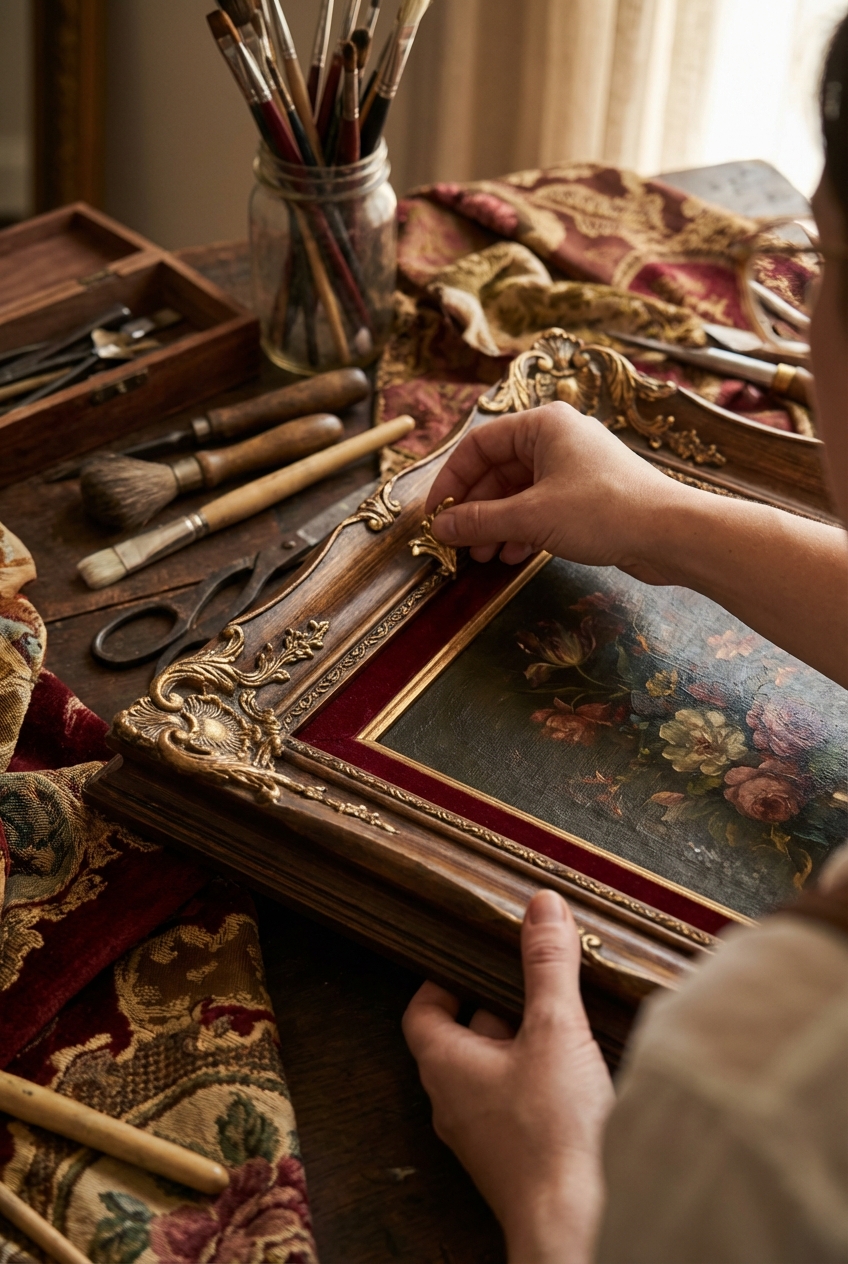
Buff dark furniture wax (espresso or black) into the recesses to deepen the shadows. Then take a little antique gold metallic wax on a fingertip and graze only the highest points. Real gilding wears away from those spots first, so this is what makes it look believable.
5. Wrap the mat in velvet
Use the old cardboard mat as a template. Wrap it in thin velvet and secure the fabric on the back with archival tape, or use adhesive-backed velvet. Burgundy, forest green and midnight black all suit the look. For a bedroom, plum or navy feels softer.
6. Reassemble and light it
Clean the glass with a vinegar-based cleaner (skip ammonia on older art), then put it all back together. A nearby wall sconce or a small picture light will catch the gold highlights. Warm bulbs, about 2700K or lower, keep the shadows soft.
How big should the frame be, and how high should you hang it?
Most people choose frames that are too small for the wall. As an architect, I'd go bigger than feels natural, especially for small art.
- Hang the center of the piece at about 57 inches from the floor, a common gallery height that suits most eye levels.
- Choose a frame at least 2.5 to 4 inches wide. A wide frame makes a 5x7 or 8x10 feel like a keepsake.
- Over a sofa or sideboard, make the art or grouping roughly two-thirds the width of the furniture.
- In a gallery wall, keep gaps tight, about 1.5 to 2.5 inches, for a dense, collected look.
- For a small, meaningful piece, try a 5 or 6 inch mat inside a big frame.
Balance matters as well. Cornell's Principles of Design describes symmetrical balance as equal "weight" on equal sides of a centrally placed fulcrum, which is why a pair of matching dark frames flanking a mirror or console feels so settled.
What does it cost?
Costs vary a lot by where you shop, so treat these as rough tiers rather than quotes.
- Low: a thrifted frame, a sample-size jar of matte paint, one tube of gold wax and fabric scraps for the mat.
- Middle: a new unfinished wood frame with deep molding, archival mats and, if the room is dim, non-reflective glass.
- Splurge: a custom framer, a closed-corner frame with hand-applied gold leaf and a silk-wrapped mat.
Common mistakes and fixes
Bright gold spray paint is the usual culprit. It looks yellow and plasticky. Use a wax or a liquid gilding labeled antique, and if it's still too bright, wash a very thin brown acrylic glaze over it.
Tiny art on a big wall looks lonely. Put a 4x6 photo in an 11x14 frame with a wide velvet mat and it holds its own.
Heavy frames hung on a single wire tend to tip forward. Fit D-rings on both sides of the back so the frame sits flush. Heavy pieces need anchors rated for their weight, so check the packaging and ask a pro if you're unsure about your wall.
Which art suits this look, and where does it go?
Moody wall art prints work best when the palette is limited and the contrast is high: Dutch still life, stormy landscapes, anatomical sketches, vintage portraits. Romantic paintings for wall decor with dark skies or deep backgrounds suit a heavy gold frame particularly well. A modern abstract in a very traditional frame also works, and keeps the room from feeling like a period set. For more picks, see these vamp romantic wall art ideas.
Entryway
Use one large piece in the most ornate frame in the house, above a console with a pair of tall candles.
Living room
If you want unique wall art for a living room, mix oval, square and rectangular frames but keep one palette, such as black and aged gold. The consistency keeps a dramatic wall orderly. A gothic romantic wall art grouping also looks good tucked into a deep, moody color scheme.
Bedroom
Lean romantic rather than vamp: plum or navy mats instead of black, and hang art lower, about 6 to 8 inches above the headboard, so it feels intimate.
Dining room
A wide landscape with a dark sky in a heavy gold frame suits this room. Go slightly larger than you think you need.
Finishing checklist
- The paint is fully matte.
- Gold wax sits only on the high points.
- The mat fabric is tight, with no wrinkles or visible glue.
- The art sits square and doesn't shift.
- The glass is clean on both sides.
- The center is at about 57 inches.
One last detail I recommend: add a brown craft paper dust cover to the back with double-sided tape. Nobody sees it, but it keeps dust out and makes the piece feel properly finished. For more quick upgrades in this style, try these DIY vamp romantic tips. Once the wax is on, dust the frame with a soft dry makeup brush and skip liquid cleaners.
Frequently asked questions
What is whimsical wall art?
Whimsical wall art is playful and imaginative, with exaggerated shapes, storybook scenes or quirky subjects. It's the lighter cousin of moody, gothic pieces, and the two can share a wall if the frames match.
What is the most famous painting of a vampire?
The Vampire by Philip Burne-Jones (1897) is one of the best-known vampire paintings. Edvard Munch's Vampire is another commonly cited work. Either suits a heavy dark frame.
Will dark frames make a small room feel smaller?
Not necessarily. Dark frames on a wall tend to recede visually, but the room still needs enough light so it doesn't feel muddy.
Can I frame a canvas this way?
Yes. Use a floater frame or an open-back frame, and add a liner inside if the canvas is thin to get the same layered texture.
Filed under
ArticlesMeet the author
Written by an architect.
Julio Arco is a passionate architect with years of experience in architecture, interior design, urban design, and housing. He studied at prestigious universities across North America and Europe.

- Name
- Julio Arco
- Job
- Architect and online interior designer
- Studied
- Architecture, ITESM · Urban Design and Housing, McGill
- Partner
- Thor, Australian Shepherd
- Thor’s title
- Head of quality control