Burnt Orange Front Door: Paint Shades and Pairings
Choosing a burnt orange front door? See how to pick the shade, finish and hardware, what colors pair well, and how to paint it step by step.

By Julio Arco
Architect and online interior designer
In this post
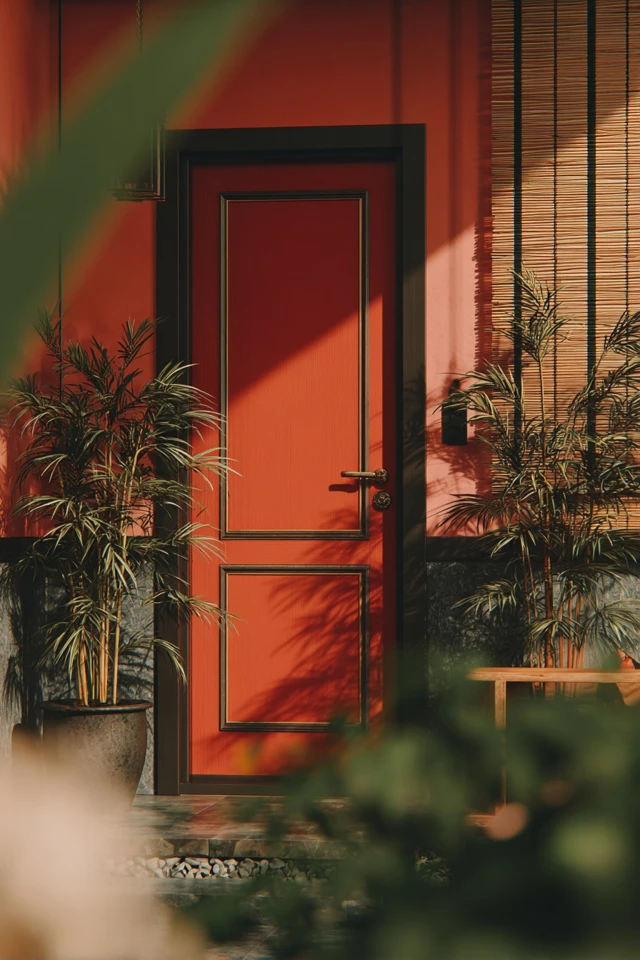
A burnt orange front door works best when the shade leans slightly brown or red, the finish is satin or semi-gloss, and the surroundings are calm: warm white, charcoal, or cool blue-gray. Pick the color in your own light, prep the surface well, and the door will look intentional rather than loud.
If you're nervous about painting something this saturated, that's normal. A door is small, it's easy to repaint, and it's the cheapest way to give a whole facade a personality.
What does an orange front door mean?
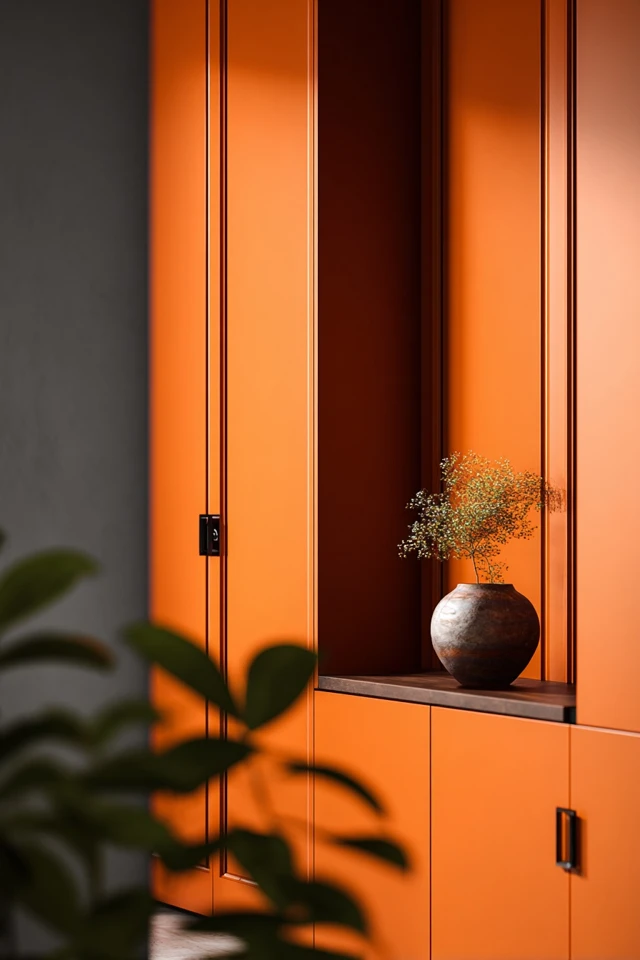
Traditionally, an orange front door reads as welcoming, warm and a little playful. Burnt orange sits on the earthier side of that: it recalls clay, dry leaves and baked brick, so it feels grounded rather than neon.
There's some research behind the idea that color affects us physically. One study of built environments, by Isabella S Bower at Deakin University, found that "blue coloring of the built environment increases autonomic range and is associated with modulations of brain activity linked to emotional processing." That study tested blue, not orange, so I wouldn't promise any specific mood from your door. What it does support is the broader point that wall and surface color isn't purely decoration.
How do you choose the right burnt orange shade?
Burnt orange is a family, not a single color. Three things decide where your shade lands.
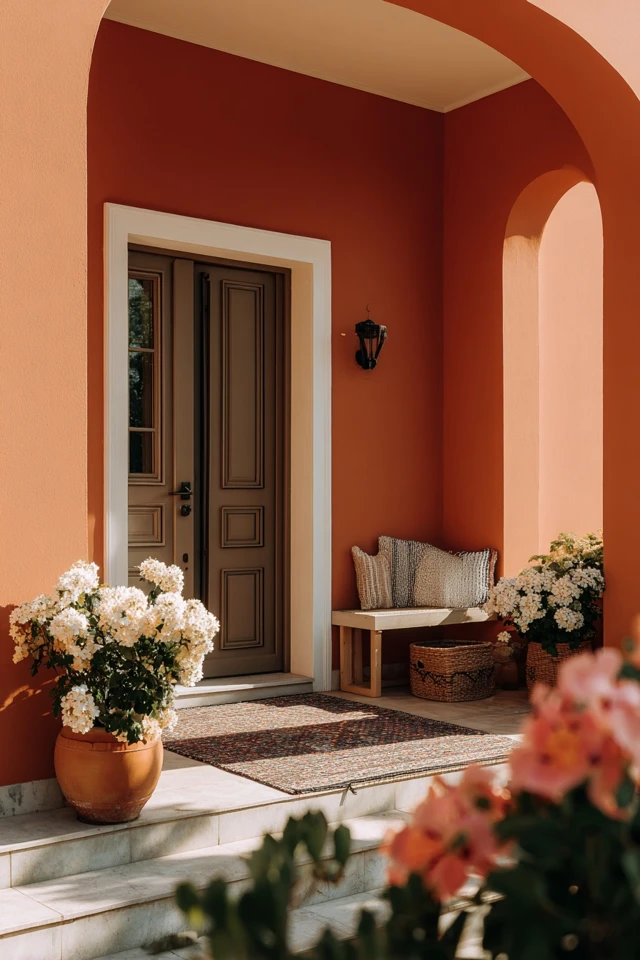
- Undertone: brown or terracotta undertones feel muted and traditional, while red undertones feel richer and more modern. A terracotta front door suits brick, stucco and clay roofs especially well.
- Saturation: a muted, slightly grayed orange is easier to live with for years. A high-chroma orange shows every neighbor's opinion.
- Light: the same paint can look like clay at noon and brick red under a warm porch bulb.
Test before you commit. Paint a large swatch (about 12 by 12 inches) on the door itself or on a board, and look at it in morning, midday and evening. Check it next to your brick, siding or trim, not on a white sheet of paper.
For burnt orange front door paint, buy a sample pot from a few brands rather than guessing from a chip. Chips are small and lighting in the store is not your porch.
Glossy or matte: which finish works on an exterior door?
Glossy surfaces bounce light and show the color at full strength, along with every dent and brush mark. Matte finishes absorb light and look softer, but they scuff and hold dirt more.
For an exterior door that gets weather, hands and maybe a muddy dog paw, I recommend satin or semi-gloss. It wipes clean and the slight sheen gives the orange some depth. Reserve matte for a sheltered, low-traffic door, such as one under a deep porch.
What color compliments burnt orange?
Color pairing is easiest when you decide how much contrast you want.
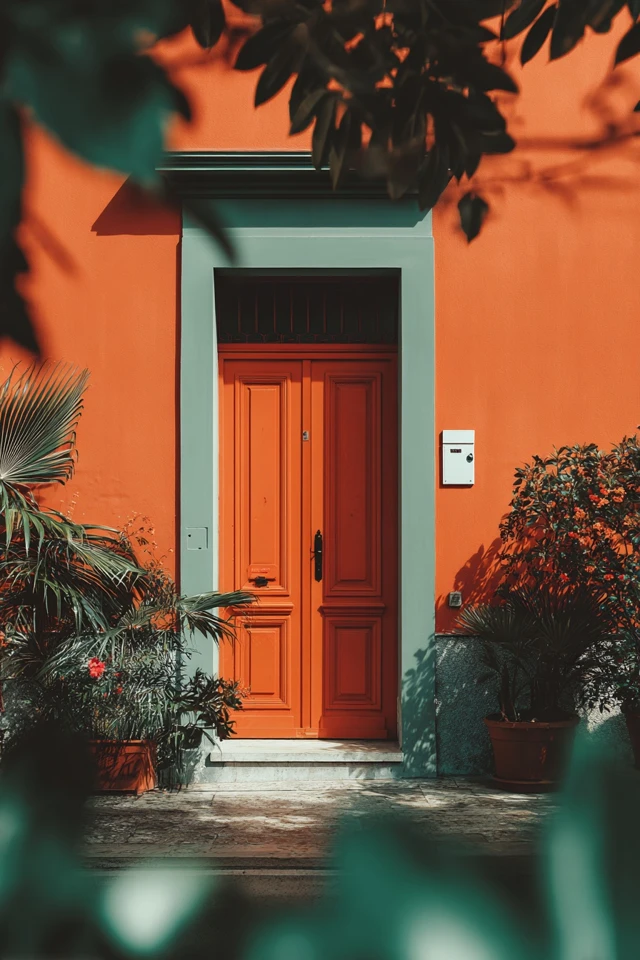
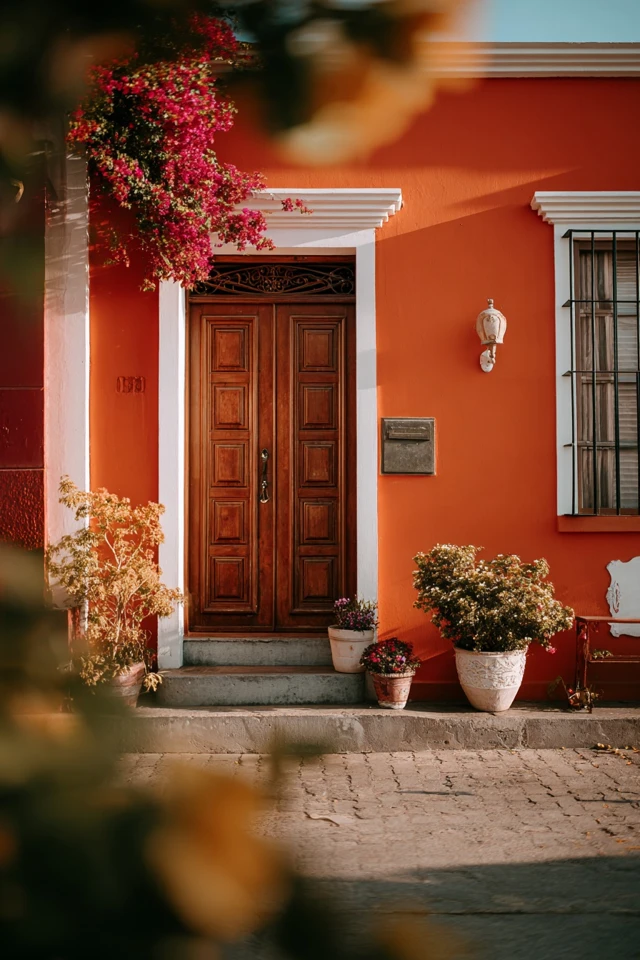
- High contrast: deep blue, teal or blue-gray siding makes burnt orange pop, since the two sit opposite each other on the color wheel.
- Classic: warm white or cream trim with a charcoal or black frame for the surrounding details.
- Tone on tone: beige, sand, greige and terracotta create a layered, quiet look.
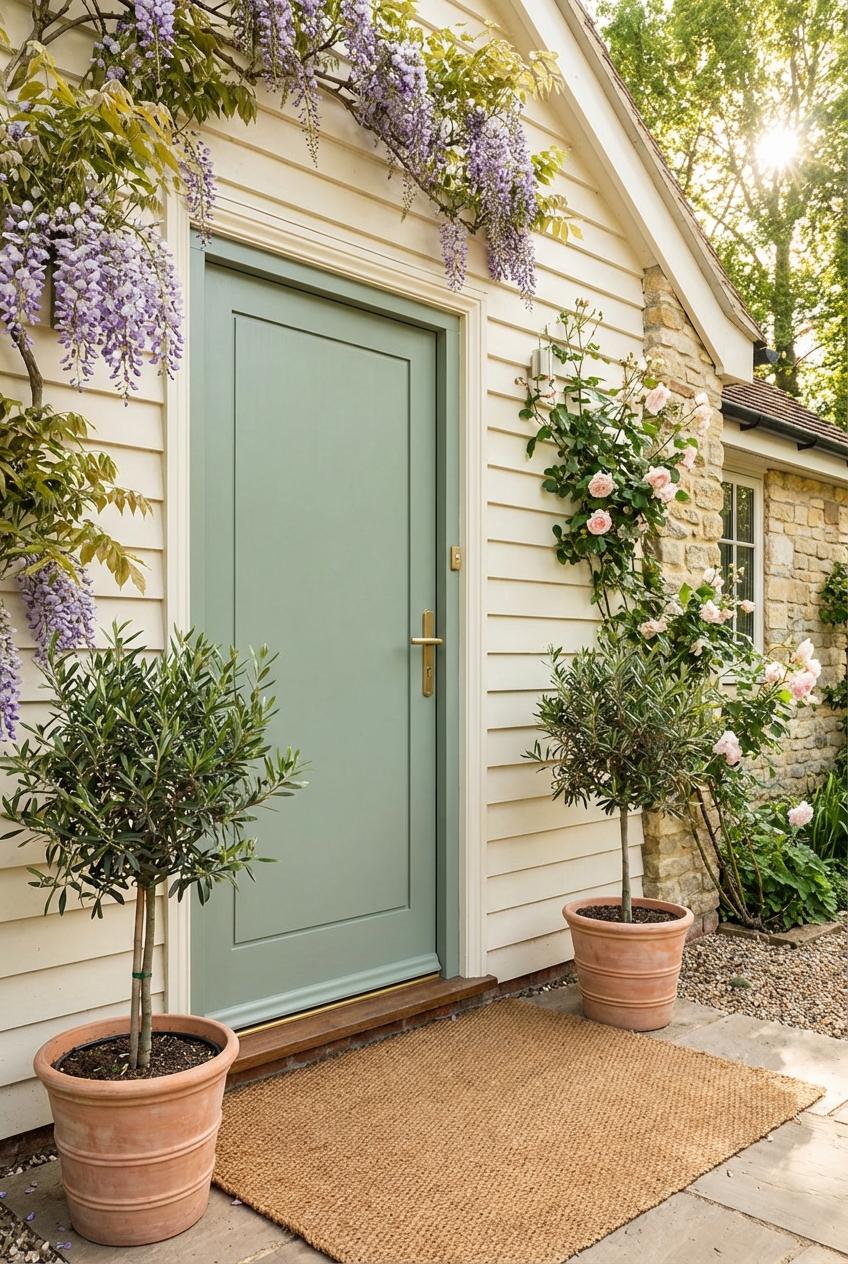
- Natural: sage or olive green planters and plants, which repeat the earthy feel.
Brick and stucco change the math. Red brick already carries orange, so a brown-leaning burnt orange blends in; on cool gray or white stucco, a redder shade stands out more.
Which hardware and details suit it?
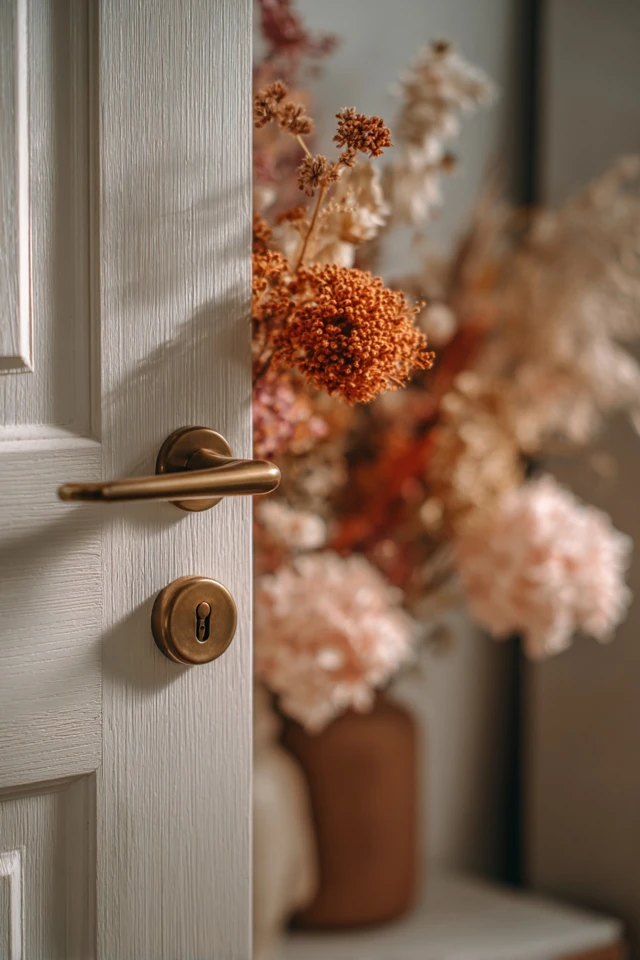
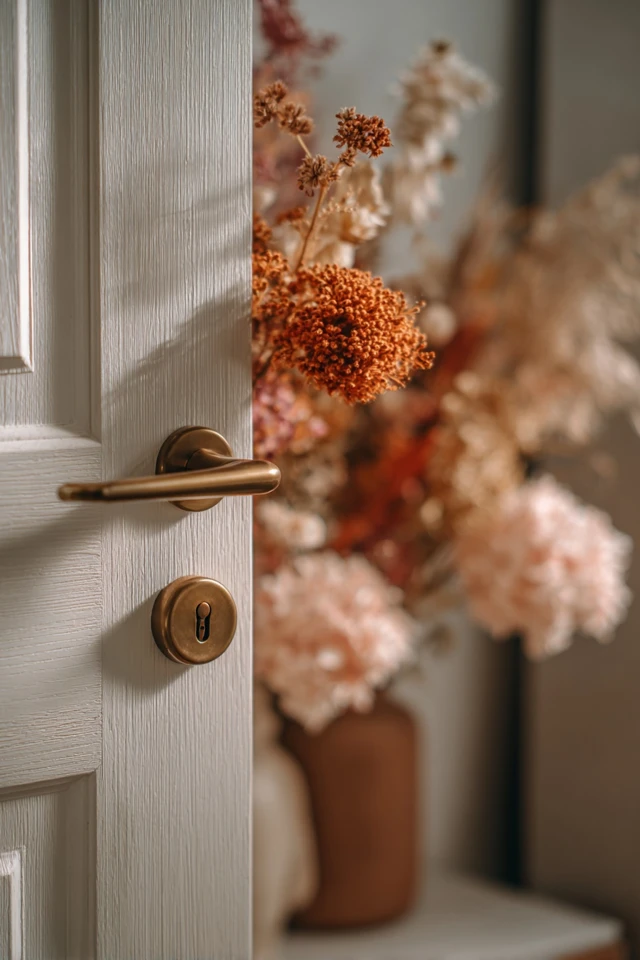
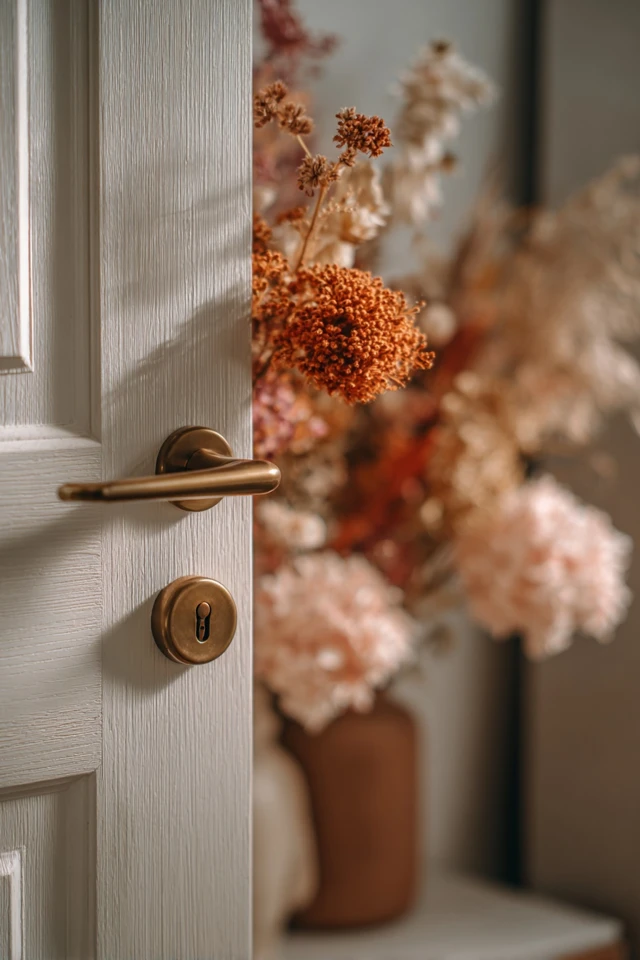
Metal finishes set the tone. Aged brass and oil-rubbed bronze emphasize the warmth. Matte black feels more modern, and brushed nickel gives a cooler, sharper contrast.
Match scale to the door. A tall paneled door in a saturated color usually looks best with simple, clean hardware. If your door has glass or sidelights, painting the frame and leaving the glass clear keeps the color from feeling heavy.
For ideas on other doors in this family, see simple burnt orange door ideas, or the companion post on burnt orange front door makeovers.
How do you paint a metal front door burnt orange?
To paint a metal front door burnt orange, the prep matters more than the color. Steel and fiberglass doors are common, and paint fails on them when the surface is dirty or glossy.
- Remove or tape off the hardware, and take the door off its hinges if you can. Painting it flat gives fewer drips.
- Clean with a degreasing cleaner, rinse, and let it dry fully.
- Sand lightly to dull the old finish, and treat any rust spots.
- Apply a primer made for metal (or the door's material).
- Brush or roll two thin coats of exterior paint, letting each cure as the label says.
- Reinstall the hardware only after the paint has hardened.
Wood doors also need primer, which helps block tannin bleed and lets orange read true. Pick a day that's mild and dry, and check the can for temperature limits.
What should you avoid?
Skip a color you've only seen on a screen, since monitors shift orange noticeably. Avoid a finish that's too flat for a door that is touched daily. And if your home association has color rules, check them before buying paint.
The same shade can also look different inside. If you want the color to continue indoors, a small repeat such as a lamp base or a vase inside the entry ties it together. For a foyer that connects to the door, see foyer makeover ideas.
Frequently asked questions
What does an orange front door signify?
It generally signals warmth and welcome, with a more earthy, grounded feel in burnt orange shades. There's no single official meaning, so choose it for how it looks with your home.
What color compliments burnt orange best?
Deep blue, teal and blue-gray give the strongest contrast, while warm white, cream and charcoal give a classic look. Beige and terracotta tones create a softer, layered effect.
What are the three colors not to paint your front door?
There's no universal rule, but it's wise to avoid colors that clash with your brick or siding, shades you haven't tested in your own light, and anything your HOA prohibits.
Is burnt orange a good color for a small house?
Yes, because a door is a small area of color. Pair it with light walls and simple trim so it reads as an accent.
Filed under
ArticlesMeet the author
Written by an architect.
Julio Arco is a passionate architect with years of experience in architecture, interior design, urban design, and housing. He studied at prestigious universities across North America and Europe.

- Name
- Julio Arco
- Job
- Architect and online interior designer
- Studied
- Architecture, ITESM · Urban Design and Housing, McGill
- Partner
- Thor, Australian Shepherd
- Thor’s title
- Head of quality control