Small Living Room TV Layout: Ideas That Actually Fit
Plan a small living room TV layout that works: pick the right screen size, choose wall, corner or console placement, and arrange seating with room to move.

By Julio Arco
Architect and online interior designer
In this post
- What is the perfect size TV for a small living room?
- Should you mount the TV on the wall?
- Which TV stands and storage work in small spaces?
- How do you place a TV in the corner?
- How do you arrange seating around the TV?
- How can you keep a small living room TV layout on a budget?
- Light, color and finishes that help the room feel bigger
- Frequently asked questions
The simplest small living room TV layout puts the screen on the wall your seating faces, with the sofa about 5 to 8 feet away, the screen center at roughly seated eye level, and a clear walkway of about 30 inches around the furniture. If the wall can't take the TV, a low console or a corner setup does the same job.
Small rooms are very common, and they're easier to plan than they look. Start with the TV and the main seat, then build everything else around that one line of sight.
What is the perfect size TV for a small living room?
Match the screen to the viewing distance, not to the wall. A common rule of thumb is to sit about 1.2 to 1.6 times the screen's diagonal away. For a sofa 6 feet (72 inches) from the TV, that points to a 45 to 60 inch screen. Go bigger and you'll be scanning the picture; go smaller and you'll squint.
Measure from the front edge of the sofa to the wall before you shop. In a very small living room, a 43 to 55 inch screen is usually plenty, and a thin bezel keeps the footprint down.
Should you mount the TV on the wall?
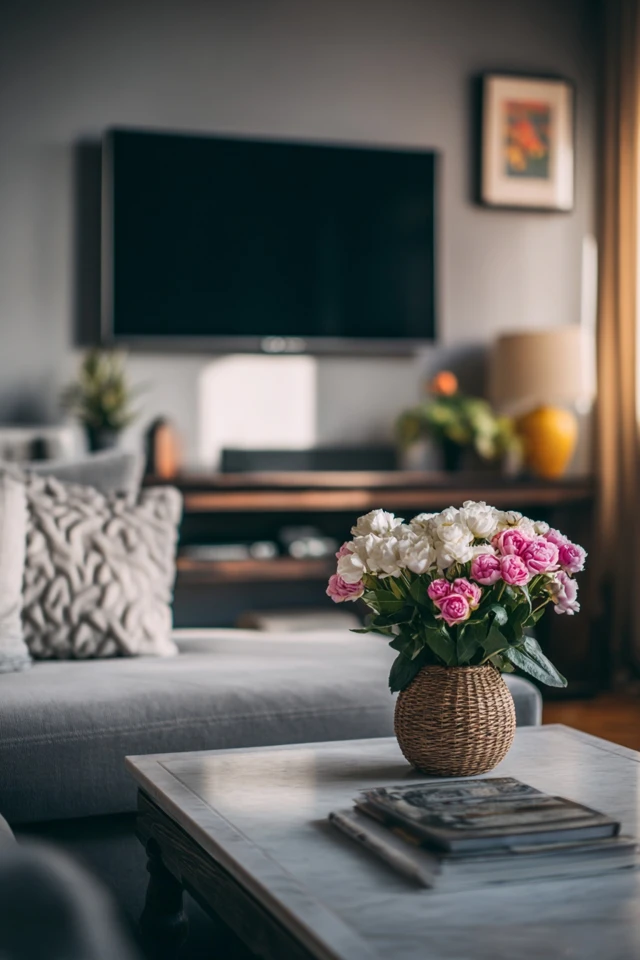
Mounting frees the floor, and in a tight room that matters. A wall-mounted TV needs no stand, so you gain a few square feet and the room reads cleaner. For small living room ideas with a TV on the wall, keep the screen center at about seated eye level, usually 40 to 48 inches from the floor, not up above a fireplace where you'll crane your neck.
- Find the studs, or use anchors rated for the TV's weight. If you're unsure, ask a licensed professional to mount it.
- Run cables through a cord cover or a cable channel painted the wall color.
- Choose a tilting or swivel arm if the sofa sits off to one side.
Renters can skip the drilling with a low console and a slim soundbar. If you have a dog that likes to zoom through the room, a wall mount also keeps the screen out of tail range.
Which TV stands and storage work in small spaces?
Pick a console that's shallower than a standard one, about 12 to 16 inches deep, with legs so you can see floor underneath. Seeing the floor makes a room feel larger. Closed doors hide the router and game consoles; open shelves suit books and a plant or two.
As an architect, I'd choose the console about as wide as the TV or a bit wider, and no wider than the wall section it sits on. Floating shelves on either side add storage without eating floor area. Keep the top third of the wall lighter, with fewer objects, so the screen doesn't compete with clutter.
How do you place a TV in the corner?
A small living room layout with the TV in the corner works when the walls have doors or windows that leave no clear stretch. Use a corner TV stand or a swivel wall arm, and angle the seating toward it. The sofa then sits on the diagonal or along the adjacent wall.
Leave a few inches behind the TV for cables and ventilation. A tall plant or a slim floor lamp next to the screen fills the leftover triangle so the corner doesn't feel like a dead zone. Check the viewing angle from every seat; if someone sees the screen at a sharp slant, move the TV or rotate the seat.
How do you arrange seating around the TV?
Seating needs a straight view of the screen plus room to walk. Keep about 30 to 36 inches for a main path, and about 14 to 18 inches between sofa and coffee table.
One sofa and an accent chair
This is the easiest layout. Put the sofa facing the TV and angle a chair toward it, forming a loose L. A round or oval coffee table avoids sharp corners in tight walkways.
How to arrange two sofas in a small living room
Two sofas face each other only if the room is wide enough, about 8 feet or more between the walls. In a narrower room, put a loveseat facing the TV and a compact sofa at a right angle. Place the TV on the short wall, not between the two sofas, so nobody turns sideways to watch. Choose pieces with slim arms and exposed legs. An L-shaped sectional is another way to fit more seats along two walls.
What about a fireplace?
If your living room has a fireplace, you can set the TV on a side wall and angle the sofa between the two. Mounting a screen above a fireplace is common, but check the heat rating and viewing height first, and ask a licensed pro if you're unsure.
How can you keep a small living room TV layout on a budget?
Rearranging costs nothing, so start there. Pull furniture off the walls a few inches, try the sofa on a different wall, and tape the footprint of the pieces on the floor first.
- Use a secondhand console and swap the hardware or paint it a wall-matching color.
- Put a rug under the front legs of the seating to define the zone.
- Hide cables with adhesive raceways instead of rebuilding the wall.
- Use a storage ottoman as a coffee table and a spare seat.
Light, color and finishes that help the room feel bigger
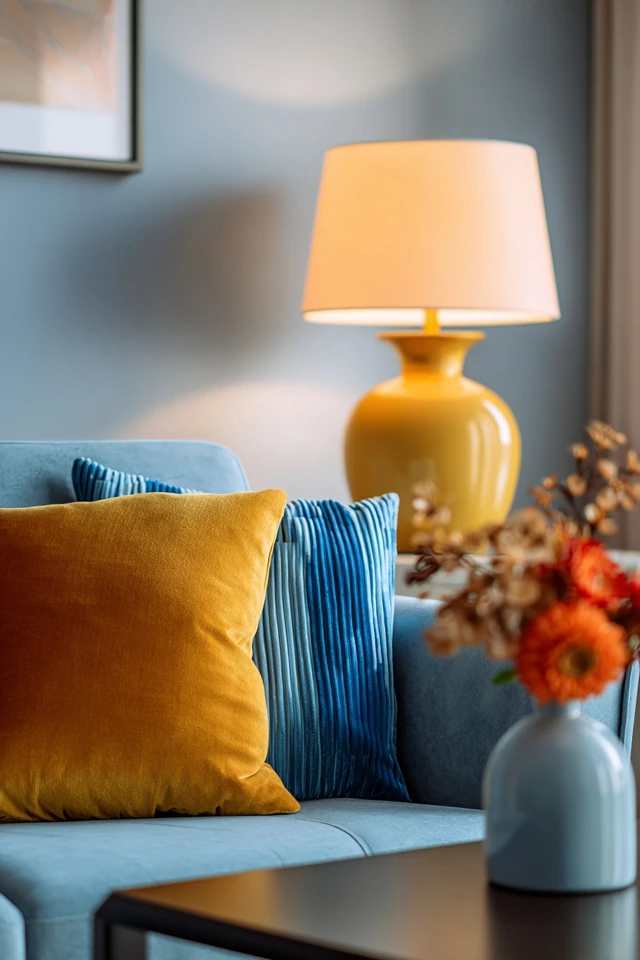
Glare is the TV's enemy. Place the screen perpendicular to the main window, not opposite it, and use curtains you can close during the day. Matte paint around the TV cuts reflections, while lighter wall colors bounce daylight deeper into the room.
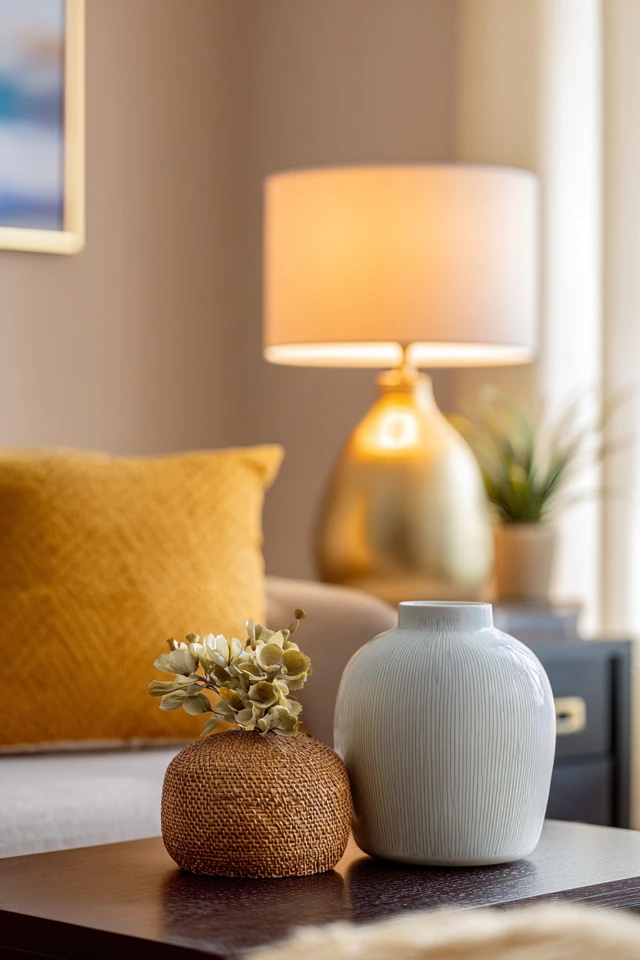
Add a lamp behind or beside the screen. Bias lighting softens the contrast between a bright screen and a dark wall, which is easier on the eyes in the evening. A dimmer lets the same room serve for movie night and for reading.
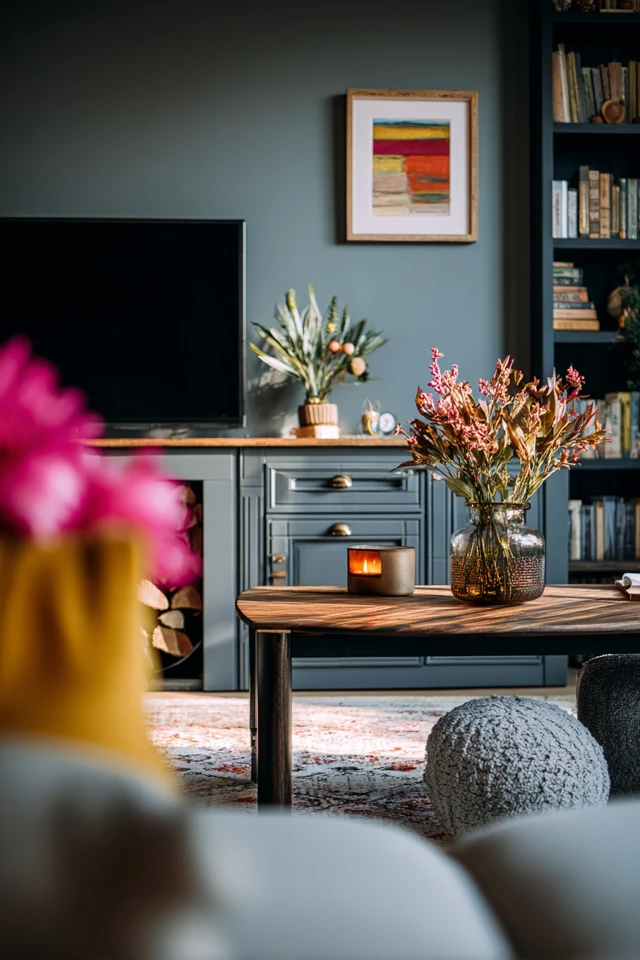
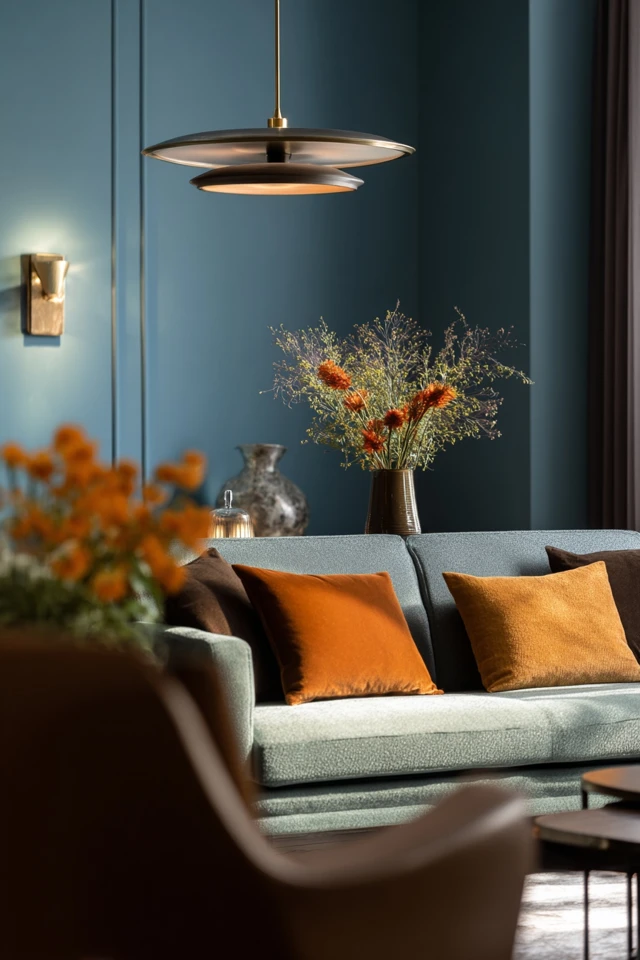
If the TV bothers you visually, paint the wall behind it a deeper tone so the black screen blends in, or frame it with a gallery of art. For more ideas on related spaces, see small family room ideas with a TV and small entertainment room ideas. If your living room also holds a work corner, the small-space home office guide helps with sharing the footprint.
If you like a lighter look overall, white living room ideas pair well with a wall-mounted screen.
Frequently asked questions
What is the 2/3 rule for living rooms?
It's a styling guideline that suggests furniture or decor should cover about two-thirds of a surface or wall, leaving the remaining third open. In a small living room, it keeps a TV wall from looking crowded.
What is the 3-5-7 rule in decorating?
It's a grouping guideline: arrange accessories in odd numbers, such as 3, 5 or 7 items, so displays look balanced. Use it on a console or shelf next to the TV.
What is the perfect size TV for a small living room?
Most small living rooms suit a 43 to 55 inch screen, depending on seating distance. Multiply your distance from the screen by roughly 0.6 to 0.8 to get a starting diagonal.
What are some good TV options for small spaces?
Look for a slim-bezel TV with a wall mount, or a smaller screen on a shallow console. A soundbar saves space compared with floor speakers.
Filed under
ArticlesMeet the author
Written by an architect.
Julio Arco is a passionate architect with years of experience in architecture, interior design, urban design, and housing. He studied at prestigious universities across North America and Europe.

- Name
- Julio Arco
- Job
- Architect and online interior designer
- Studied
- Architecture, ITESM · Urban Design and Housing, McGill
- Partner
- Thor, Australian Shepherd
- Thor’s title
- Head of quality control