Vintage Shabby Chic Kitchen: Cabinets, Paint, Decor
How to build a vintage shabby chic kitchen: cabinet finishes, paint colors, accessories and budget swaps, plus how it differs from plain vintage.

By Julio Arco
Architect and online interior designer
In this post
A vintage shabby chic kitchen comes down to four things: softly worn painted cabinets, a muted palette, a few genuinely old pieces, and plenty of texture. It should look like it has been used and loved, not like it came out of a box that way.
If your kitchen is modern and builder-grade, don't worry. You can get most of the look with paint, hardware and a handful of accessories, and you don't need to start over.
What is the difference between shabby chic and vintage?
Vintage means the piece is actually old, usually decades old, and it keeps the look of its era. Shabby chic is a decorating style: painted furniture, worn edges, soft colors and a relaxed, slightly romantic feel. The pieces can be old or new, as long as they look gently aged.
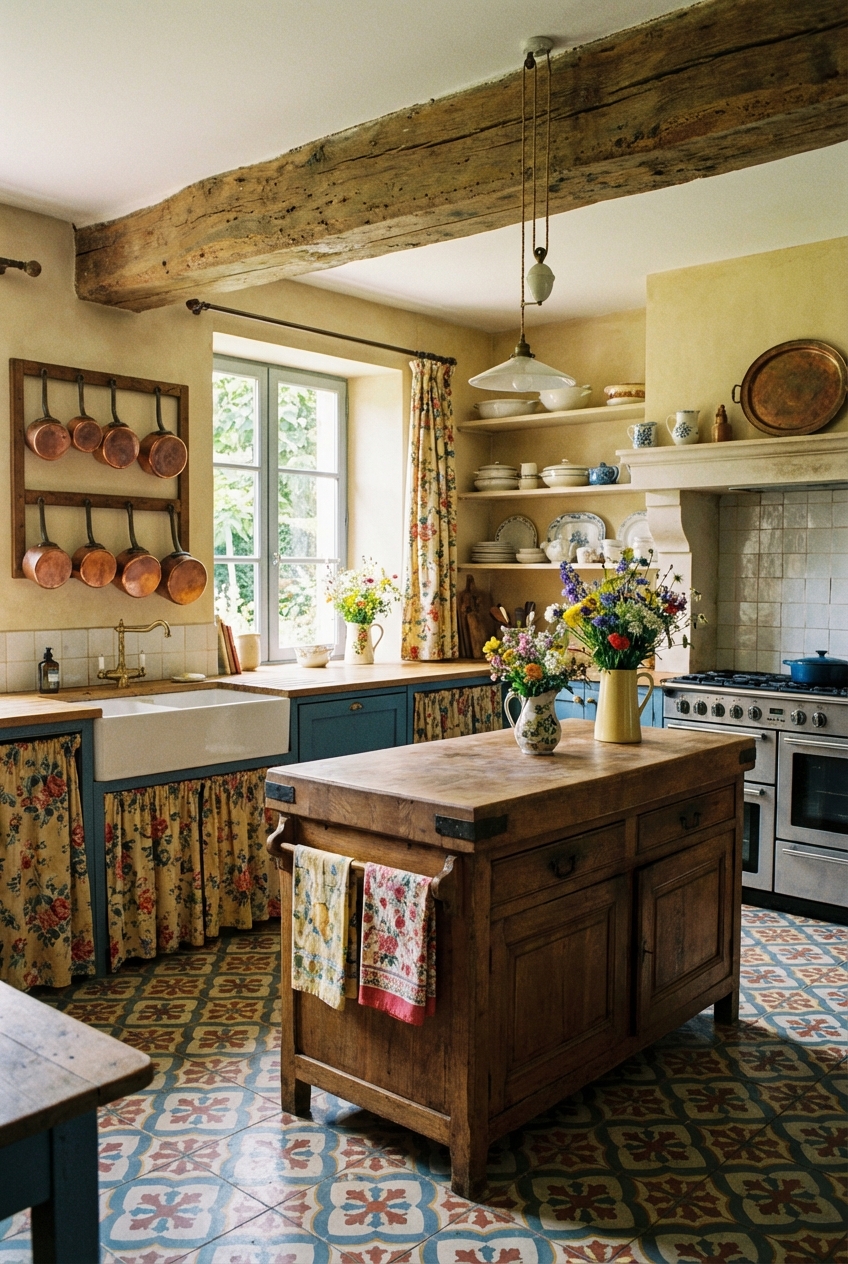
A vintage shabby chic kitchen mixes both. A real old enamel pitcher sits next to a new cabinet with a distressed finish. That mix is also what keeps it from looking like a theme restaurant.
Is shabby chic still in style?
The strict version, with heavy ruffles and everything whitewashed, feels dated to many people. The softer version has lasted because it relies on things that don't go out of fashion: worn wood, painted cabinetry, linen and antiques. A more modern vintage shabby chic kitchen keeps the finishes but trims the ornament, so you see fewer frills and more clean lines.
Cabinets: how to get the worn-painted look
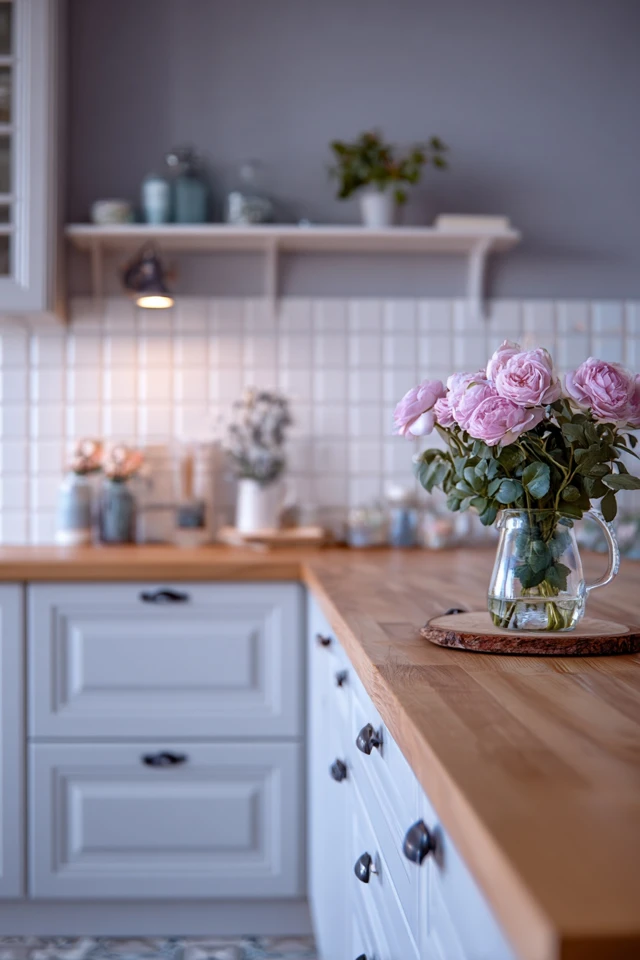
Cabinets set the tone, so start there. Painted, flat-front or shaker doors in a soft color are the classic base. If you want vintage shabby chic kitchen cabinets without replacing anything, sand the doors lightly, prime, paint, then sand the edges and corners where hands and wear would naturally show it.
- Keep distressing to places that really wear: edges, around knobs, the lower rail.
- Mix closed lower cabinets with a few open shelves so you have somewhere to display dishes.
- Swap hardware for ceramic knobs, cup pulls or aged brass. It's the cheapest upgrade with the biggest effect.
- Use a durable water-resistant topcoat on anything near the sink or stove.
As an architect, I'd distress sparingly. A heavily sanded door looks fake, while a lightly worn one reads as honest age. If you have a dog that scratches at lower doors, a slightly worn finish is also forgiving.
Paint colors and finishes
For vintage shabby chic kitchen paint, think muted and a little chalky: warm white, cream, pale gray-green, dusty blue, soft buttery yellow. Low saturation keeps the room calm and lets old wood and metal stand out. Matte and eggshell finishes soften light, while glossy ones bounce it around and show every fingerprint.
Test samples on the wall and the cabinet itself, and look at them in morning and evening light. Cool whites can turn stark under bright bulbs, so choose warm-toned bulbs for this style.
Countertops and surfaces
Butcher block and soapstone suit the look because they age well. Both need some care: Iowa State University Extension notes that soapstone doesn't need sealing but, like butcher block, should be oiled regularly. Pair either with a white or cream tile backsplash. For ideas, see our post on farmhouse backsplashes.
Accessories and decor finds
Good shabby chic kitchen accessories are useful things you'd actually use, and they're easy to find secondhand:
- Enamelware pitchers, colanders and bowls
- Mismatched china on open shelves
- Linen or cotton café curtains and dish towels (washable, which matters in a kitchen)
- A wooden bread board or a crock for utensils
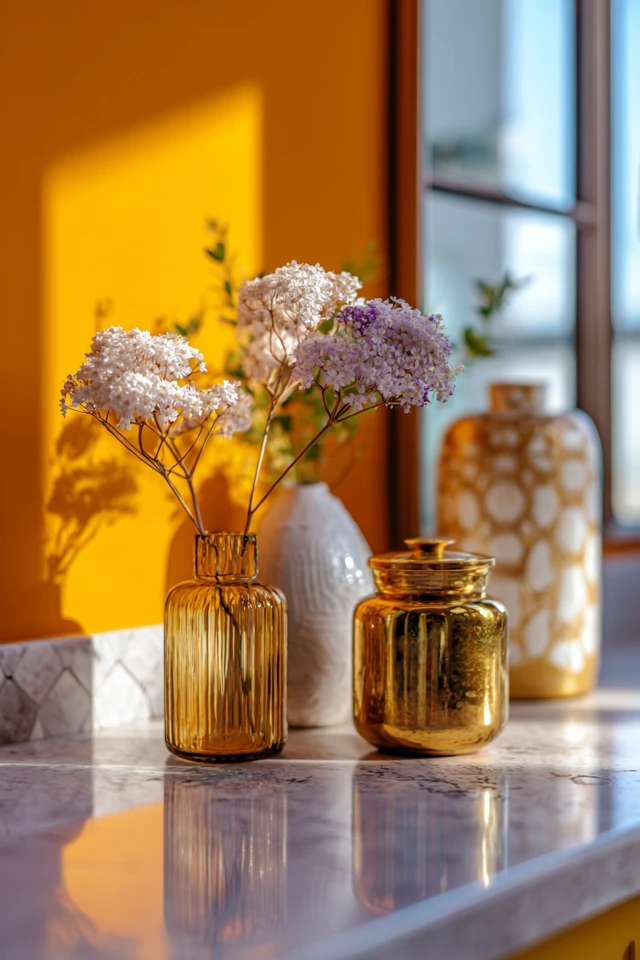
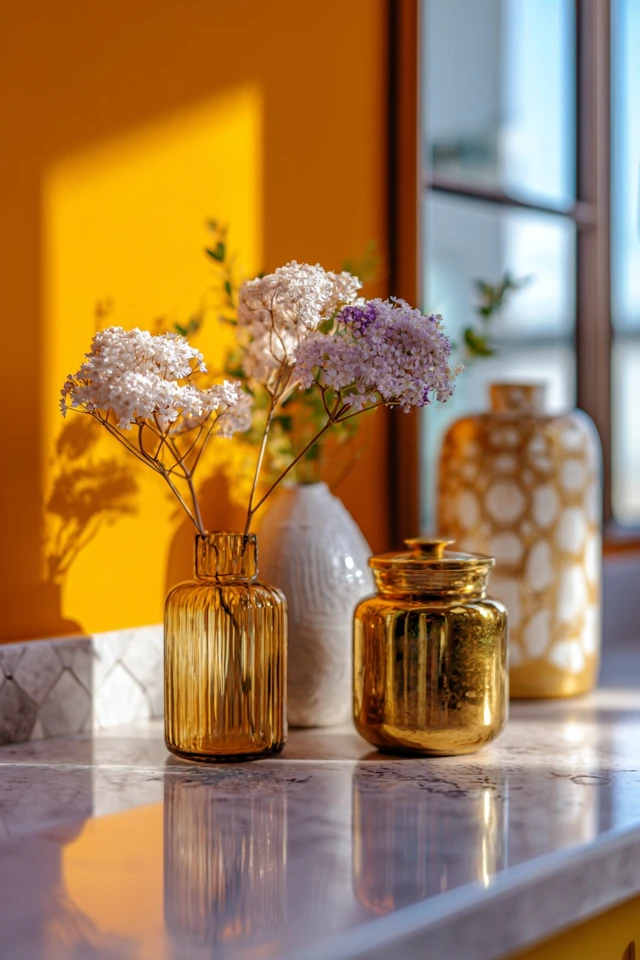
- A small vase of flowers or a pot of herbs on the sill
Stop before it feels crowded. Three or four displayed groupings are plenty, and the counters should stay mostly clear so you can cook.
Shabby chic kitchen ideas on a budget
- Repaint cabinets instead of replacing them.
- Change knobs and pulls.
- Buy dishes, trays and pitchers at thrift stores and flea markets.
- Paint a thrifted table or cart and use it as an island.
- Hang a simple fabric curtain under the sink in place of doors.
If your kitchen also doubles as a work area, our guide to a small kitchen nook shows how to fit a table in tight space. For a lighter, wood-led take, try white and natural wood kitchens. The same look carries into other rooms too, as in this modern shabby chic living room.
Layout and practical details
Leave about 36-42 inches for main walkways and around an island so two people can pass. Choose washable fabrics, and use a runner with a non-slip backing if you want a rug, so a dog's paws or a wet floor won't send it sliding. If you add a plant, check with your vet that it is safe for pets before placing it within reach.
Frequently asked questions
Is shabby chic outdated?
The heavily ornamented, all-white version looks dated to many people. A softer version with muted paint, real wood and fewer frills still feels current.
What is the difference between shabby chic and vintage?
Vintage describes genuinely old pieces from a past era. Shabby chic is a style that can use old or new items, as long as they look softly worn.
What colors work for a vintage shabby chic kitchen?
Warm white, cream, sage, dusty blue and pale yellow are common. Keep them muted and test samples in your own light.
Filed under
ArticlesMeet the author
Written by an architect.
Julio Arco is a passionate architect with years of experience in architecture, interior design, urban design, and housing. He studied at prestigious universities across North America and Europe.

- Name
- Julio Arco
- Job
- Architect and online interior designer
- Studied
- Architecture, ITESM · Urban Design and Housing, McGill
- Partner
- Thor, Australian Shepherd
- Thor’s title
- Head of quality control