Home Office Inspiration to Transform Your Space
Home office shelving ideas for small rooms, walls and DIY builds: where to put shelves, how to hide clutter and how to style them so they look good.

By Julio Arco
Architect and online interior designer
In this post
- Where should shelves go in a home office?
- Which home office wall shelves work best?
- What are good small home office shelving ideas?
- How do you fake a built-in look?
- Is DIY shelving worth it?
- How do you hide clutter and store files?
- How do you make office shelves look nice?
- What are some unique shelving ideas?
- Frequently asked questions
The best shelving for a home office goes up the wall, sits within arm's reach of the desk, and keeps daily items open while paperwork stays behind doors or in bins. Start there, then adjust for your room.
Shelves do more than store things. They set the rhythm of a wall, define where work happens, and decide whether the room feels calm or crowded. Here are the ideas I'd consider first, from small corners to full walls.
Where should shelves go in a home office?
Think about reach before looks. Things you use every day (notebooks, a stapler, the printer paper) belong between hip and shoulder height, close to the desk. Reference books and archives can go higher or farther away.
Keep the wall straight ahead of your screen fairly calm. A busy shelf in your direct line of sight pulls your eyes off the work. If your monitor faces a wall, put shelves to the side or behind you instead.
While you're planning, check your desk setup too. OSHA's computer workstation guidance puts the top of the monitor at or just below eye level, so any shelf directly above the screen should hold light, rarely used items only.
Which home office wall shelves work best?
Layer floating shelves
Floating shelves at staggered heights add depth without the bulk of a bookcase. Use two or three lengths on one wall, with about 10-12 inches of depth for books and 6-8 inches for frames and small objects. Anchor them into studs, especially if they'll hold books, since paper is heavy.
Use the wall behind the desk
Shelves behind your chair are handy for video calls, because they give you a tidy backdrop, and they keep supplies a swivel away. Leave a little clear wall space around the shelves so the arrangement doesn't look jammed in.
Stack shelves toward the ceiling
Tall units use height that otherwise goes to waste. Put heavy and frequently used items low, and keep the top shelves for baskets of seasonal or archive material. A step stool nearby is a better plan than stretching.
What are good small home office shelving ideas?
In a small room, go vertical and shallow. A narrow shelf above the desk, a ladder-style unit in a corner, or a single long shelf running the width of the wall all free up the floor. Keep the finish close to your wall color so the shelves recede and the room reads larger.
A closet office is another option: remove the doors, add a desk-height shelf for the work surface, and fit two or three shelves above. Close the doors or a curtain at the end of the day and the office disappears. If you share the room with a pet, keep low shelves free of anything chewable, and check with your vet about any plants you'd like to add.

How do you fake a built-in look?
Freestanding bookcases can look custom with a few moves. Line up two or three of the same unit along a wall, run them to the ceiling or add a trim piece across the top, and paint everything the wall color. Matching the baseboard height across the units finishes the effect.
If you like the idea of crisp wall detailing around the shelves, take a look at these wall molding ideas.
Is DIY shelving worth it?
Simple shelving is a good DIY project: a solid wood board on steel brackets, or plywood with a finished edge. It costs less than most custom work, and you control the length to fit an awkward wall. Buying makes more sense for tall units or heavy loads, where a ready-made bookcase with a known weight rating saves you guesswork. For anything that involves electrical wiring behind the wall, call a licensed professional.
How do you hide clutter and store files?
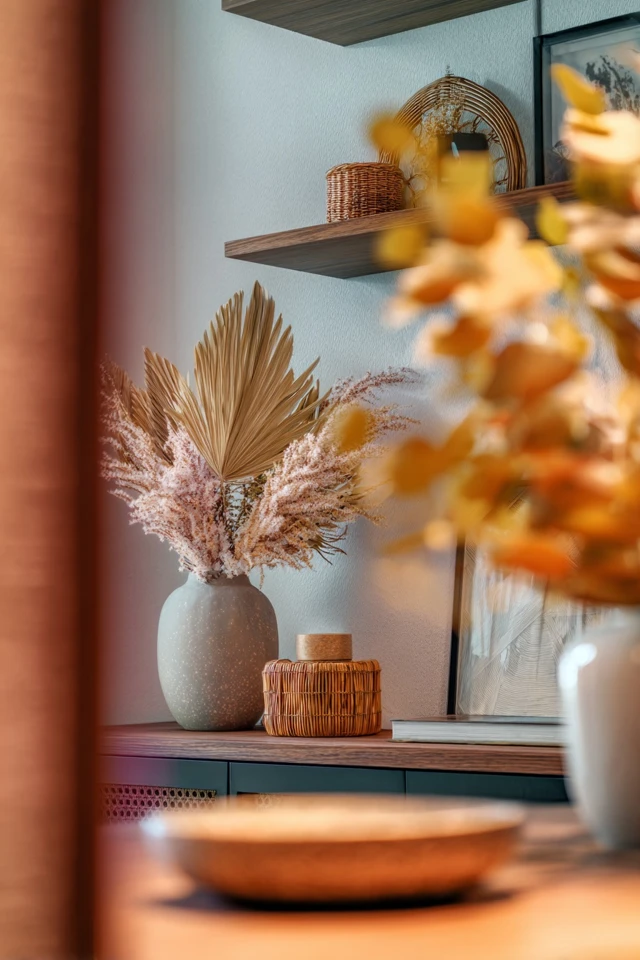
Mix open and closed storage. Closed cabinets or lidded boxes handle paperwork, chargers and anything ugly. For office shelves for files, magazine holders and labeled archive boxes keep paper upright and findable. Open shelves then hold the things you like to look at.
A few small habits help the system last:
- Label bins on the front so you don't have to open them.
- Run cables through a clip or a simple box on the shelf, not loose behind it.
- Sort files once or twice a year and toss what you no longer need.
A pegboard above the desk is also a good companion to shelves, since it holds scissors, headphones and small tools that otherwise sprawl across a surface.
How do you make office shelves look nice?
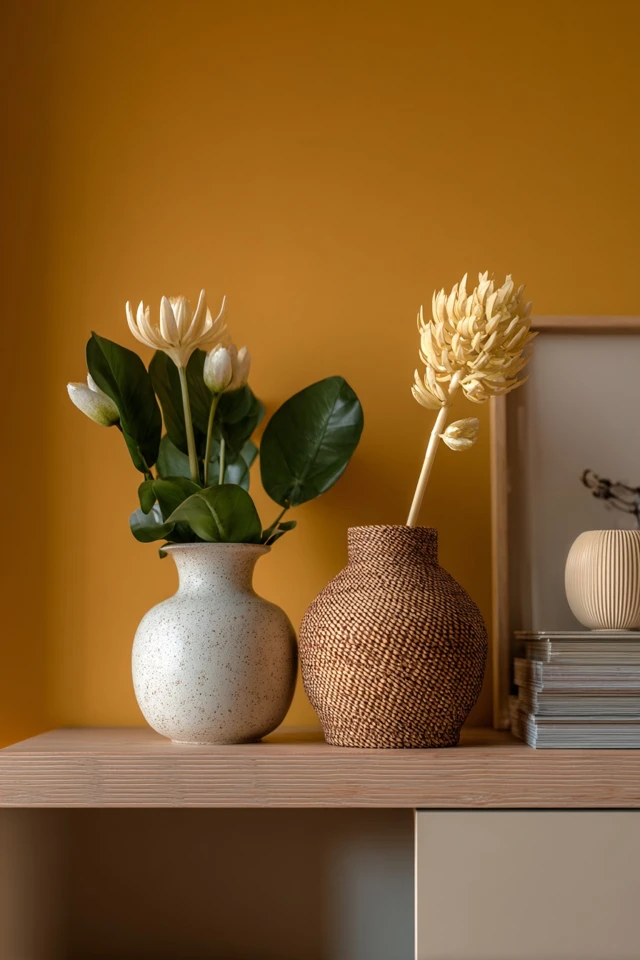
The rule of three works well here: group objects in odd numbers, varying height, such as a stack of books, a small plant and a framed print. Leave some shelf space empty. About a third of the surface left clear makes what's there look intentional.
Some other ways to make a shelf look good:
- Turn some books horizontally to break up the vertical lines.
- Repeat one or two colors across the shelves instead of using many.
- Mix materials: wood, ceramic and metal together look balanced.
- Put a lightweight plant on a higher shelf for softness.
If your office leans monochrome, this black and white office shows how shelves can carry the look with very little color.
What are some unique shelving ideas?
Corner shelves that wrap around a window frame, a shelf that doubles as a picture ledge, or a shallow ledge along the whole wall for rotating art all add character. A wood and metal mix suits a modern rustic room, while woven baskets on open shelves fit a boho setup.
As an architect, I'd pick one standout shelf and keep the rest simple. A single unusual piece reads as a feature, while several compete.
Frequently asked questions
What is the rule of three for shelves?
Group decor in odd numbers, usually three objects of different heights, such as books, a plant and a frame. The uneven count looks more natural than pairs.
Is it cheaper to build or buy shelves?
Simple floating shelves made from a board and brackets are usually cheaper to build. Tall or heavy-duty units are often easier to buy ready-made, since they come with a known weight rating.
How to make office shelves look nice?
Leave some space empty, group items in odd numbers, repeat one or two colors and mix materials like wood, ceramic and metal. Keep paperwork in closed boxes.
What are some unique shelving ideas?
Try shelves wrapping a window, a picture ledge along a wall, a closet office with shelves above the desk, or one statement shelf among simple ones.
Filed under
ArticlesMeet the author
Written by an architect.
Julio Arco is a passionate architect with years of experience in architecture, interior design, urban design, and housing. He studied at prestigious universities across North America and Europe.

- Name
- Julio Arco
- Job
- Architect and online interior designer
- Studied
- Architecture, ITESM · Urban Design and Housing, McGill
- Partner
- Thor, Australian Shepherd
- Thor’s title
- Head of quality control