Keep Pampas Grass From Shedding and Refresh Your Room
Stop dried pampas grass from shedding with a simple outdoor shake and light hairspray seal, then refresh your room with rugs, lamps and a clean edit.

By Julio Arco
Architect and online interior designer
In this post
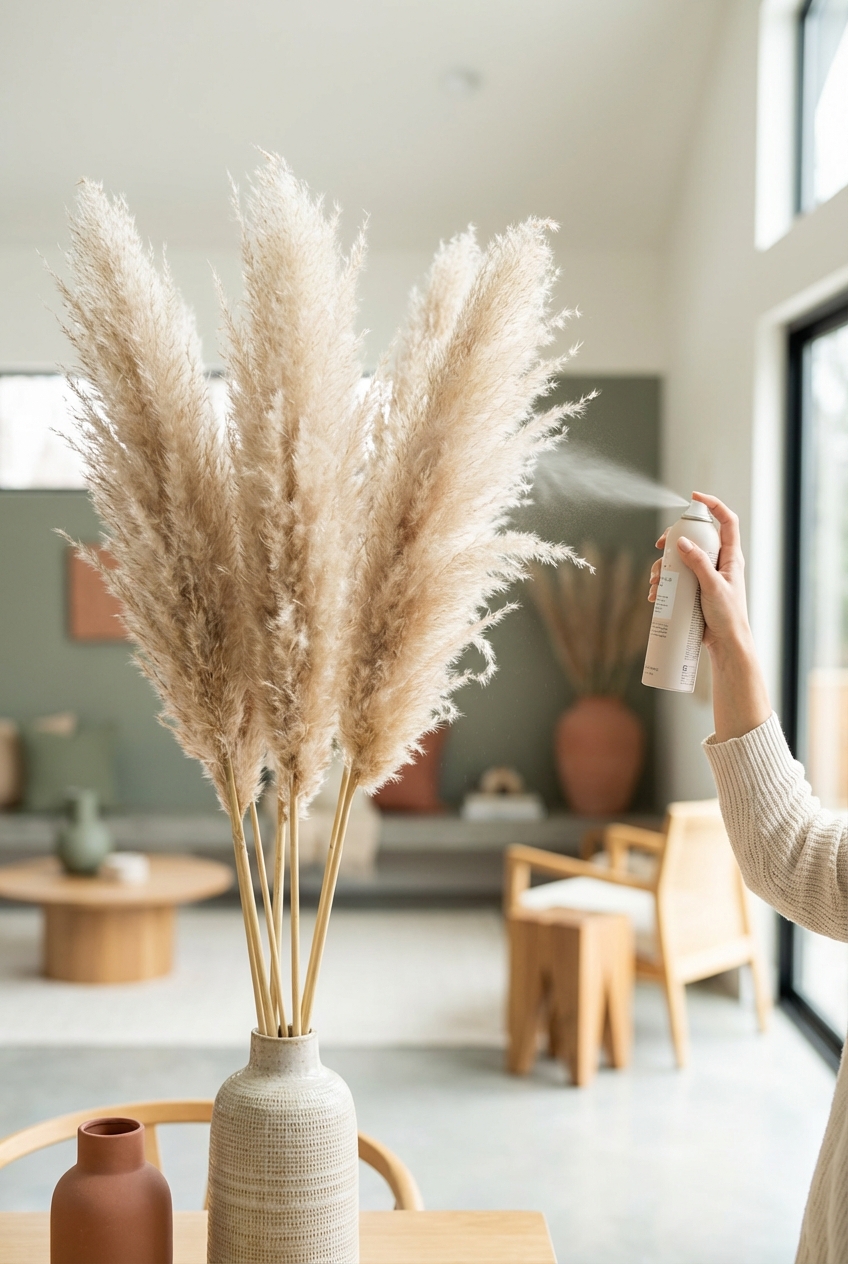
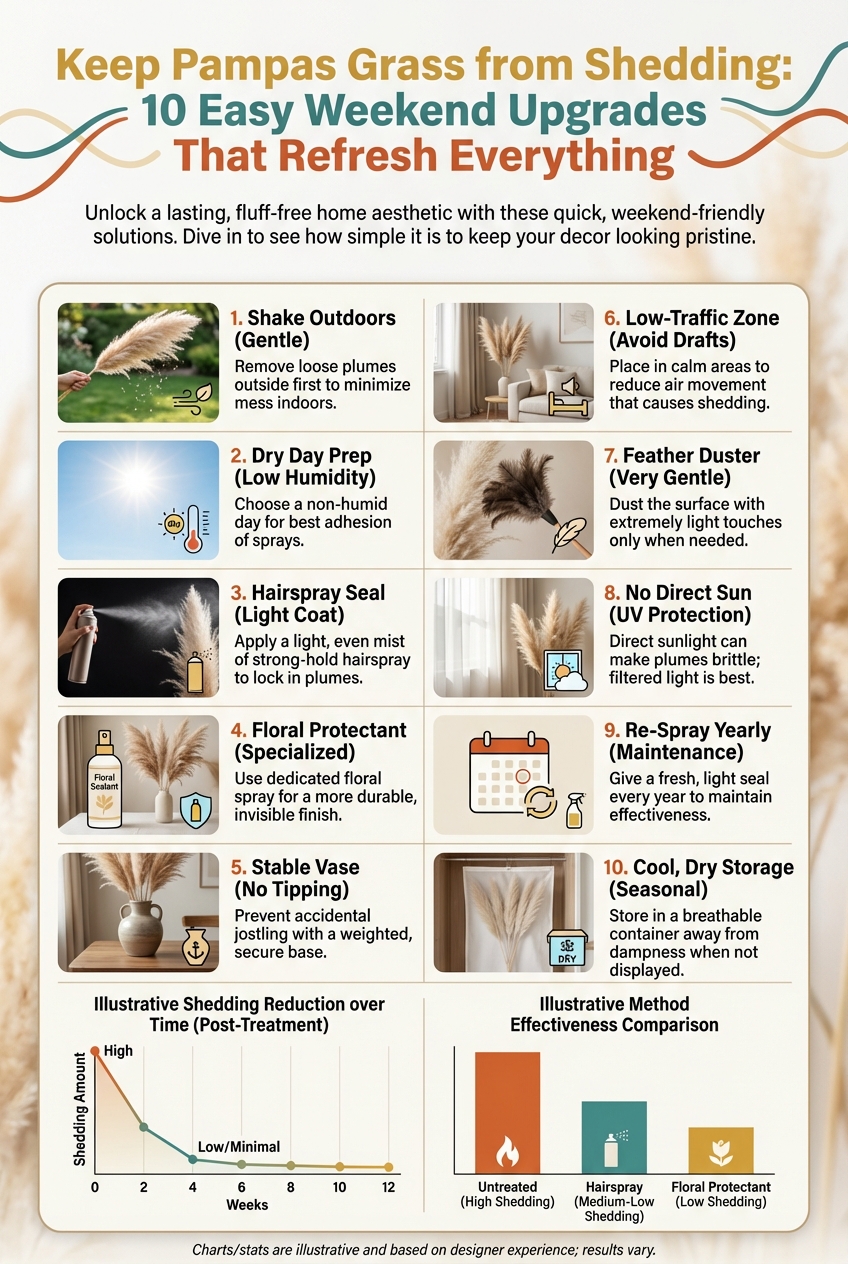
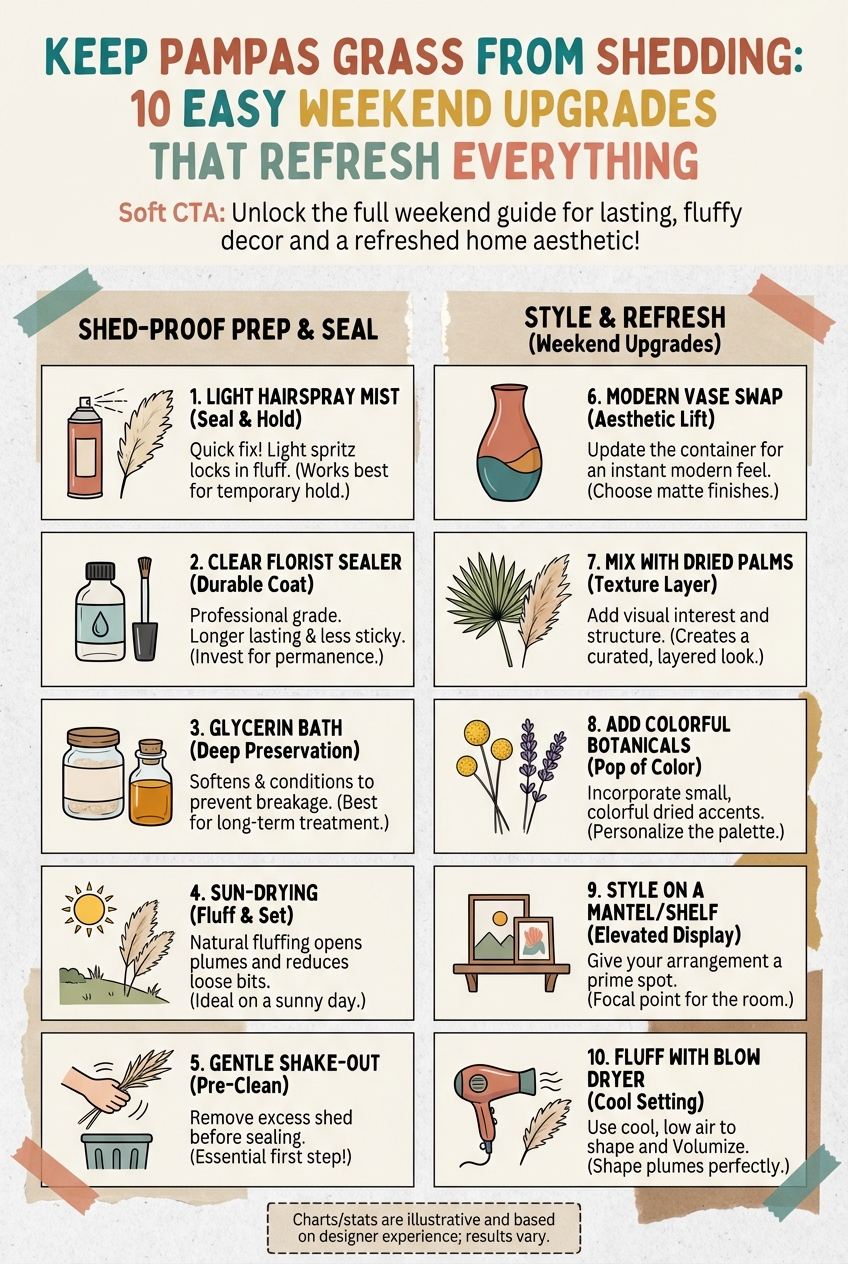
To keep dried pampas grass from shedding, shake every stem outdoors, then mist the plumes lightly with a strong-hold hairspray from 10-12 inches away and let them dry upright. That removes the loose fluff before it lands on your floor and holds the rest in place.
If your living room has ever looked like it was hit by beige confetti a week after you brought the plumes home, you're in good company. Below is the full method, followed by a few weekend changes that suit the look: a better vase, a rug that fits, warmer bulbs and a clearer surface.
How do you stop dried pampas grass from shedding?
Dried plumes shed because the fine seeds and fibers are loose and keep letting go as they age. You can't stop that completely, but you can remove most of it up front and lock down the rest.
- Take the stems outside and shake each one firmly. Never unwrap or shake them indoors. Do this even if the bundle looks tidy.
- Hold a can of strong-hold hairspray 10-12 inches from the plume and mist while rotating the stem. Aim for a light coat that soaks into the fibers. A heavy coat leaves the grass looking wet and crunchy.
- Stand the stems upright in a heavy container and let them dry for at least an hour. Keep them from touching, or they'll stick together and tear when you pull them apart.
Fire and airflow
You're coating dry plant material with a flammable aerosol, so keep treated stems away from candles, fireplaces and other heat sources. Keep them away from HVAC vents too. Constant moving air breaks the seal over time and the shedding starts again. If a stem gets dusty later, take it outside on a dry day and blow it with a hairdryer on its lowest, coolest setting instead of shaking it.
For more on handling the plumes themselves, see how to fluff pampas grass and how to dry pampas grass. There is also a longer walkthrough on keeping pampas shed-free.
Which vase works best for pampas grass?
Pampas is top-heavy, so the vessel does half the work. A good rule of proportion is a vase about one-third the height of the whole arrangement. For 4-foot stems, that means a floor vase around 18-20 inches tall.
Choose a wide mouth, about 6 inches or more, so the plumes can fan out the way they grow. A narrow neck chokes a big bundle and makes it look stiff. If a dog, cat or child could knock it over, I recommend weighing down an opaque vase with sand in the bottom. With clear glass, strip the lower leaves so only clean stalks show.

How should a rug sit under your pampas display?
A rug that is too small makes the whole arrangement look disconnected. These are the usual proportions:
- Living room: at least the front legs of the sofa and chairs on the rug, with the rug extending about 6-10 inches past the sides of the sofa.
- Dining room: about 24 inches of rug beyond the table edge on every side, so chairs stay on it when pulled out.
- Bedroom: starting in front of the nightstands and extending 18-24 inches past the foot of the bed.
If you own a small rug you love, layer it over a larger jute or sisal base. The texture echoes the grass. With a dog that lounges on the floor, I'd pick a soft synthetic rug that is easy to clean over jute, which can be rough on paws and hard to clean after an accident.
What bulbs and lamps flatter dried grass?
Bulbs above about 3500K read blue-white and flatten the warm tones of wood and dried botanicals. Swapping to 2700K (soft white) or 3000K (warm white) is the cheapest change in this list.
Overhead light is functional, not atmospheric, so add two lower sources. A floor lamp beside the pampas throws soft shadows through the plumes in the evening. On a table lamp, the bottom edge of the shade should sit around eye level when you're seated, to avoid glare. As an architect, I'd rather rely on lamps than a single ceiling fixture in a living room. If you rent and can't wire sconces, plug-in or battery-powered options avoid electrical work. Anything involving wiring is a job for a licensed electrician.
Why edit the surfaces around it?
Clear your coffee table, console and shelves completely, then put back only what is useful or that you really like. The pampas will read better against calm surroundings. Leave about 18 inches between the sofa edge and the coffee table, and keep styling low enough not to block conversation. On a bookshelf, leave a few open gaps so the eye has somewhere to rest.
Dried pampas has a faint hay-like smell, so woodsy or amber candles sit well beside it. Keep them well away from the plumes.
If allergies are a concern
Dried plant material sheds dust and fine fibers, even when sealed. If someone in your home is sensitive, a faux version gives you the shape without the fluff. Talk to a doctor for anything beyond mild irritation.
What about living pampas grass outdoors?
Not every reader here owns dried stems. If you're growing the plant, the questions change. Hardy pampas grass (Erianthus ravennae) is hardy in zones 5-9 and grows 8 to 12 feet tall, according to Illinois Extension, and it needs room: the same page notes it forms clumps up to five feet in diameter.
Should pampas grass be cut back every year?
Most gardeners cut it back once a year in late winter, before new growth starts. If you skip it, dead blades pile up and new shoots push through a tangle, which looks messy and makes later cleanup harder.
How to prune pampas grass
Wear thick gloves and long sleeves, because the blade edges are sharp. Cut the whole clump down to a few inches above the ground with sturdy shears or a hedge trimmer, then clear the debris. Check local rules too, since some regions restrict certain pampas species.
What to do with pampas grass in winter
Many people leave the plumes standing through winter for looks and cut them back at the end of the season. Cut stems you want for indoor display before they get weathered, then dry and seal them as above.
A simple weekend order
- Friday: shake and spray the stems outdoors, let them dry overnight away from vents, and buy warm bulbs if needed.
- Saturday morning: clear surfaces, vacuum, and set the rugs.
- Saturday afternoon: arrange the pampas in a weighted vase, style the shelves, swap bulbs and move the lamps.
- Sunday: wipe windows and mirrors to bring in more daylight.
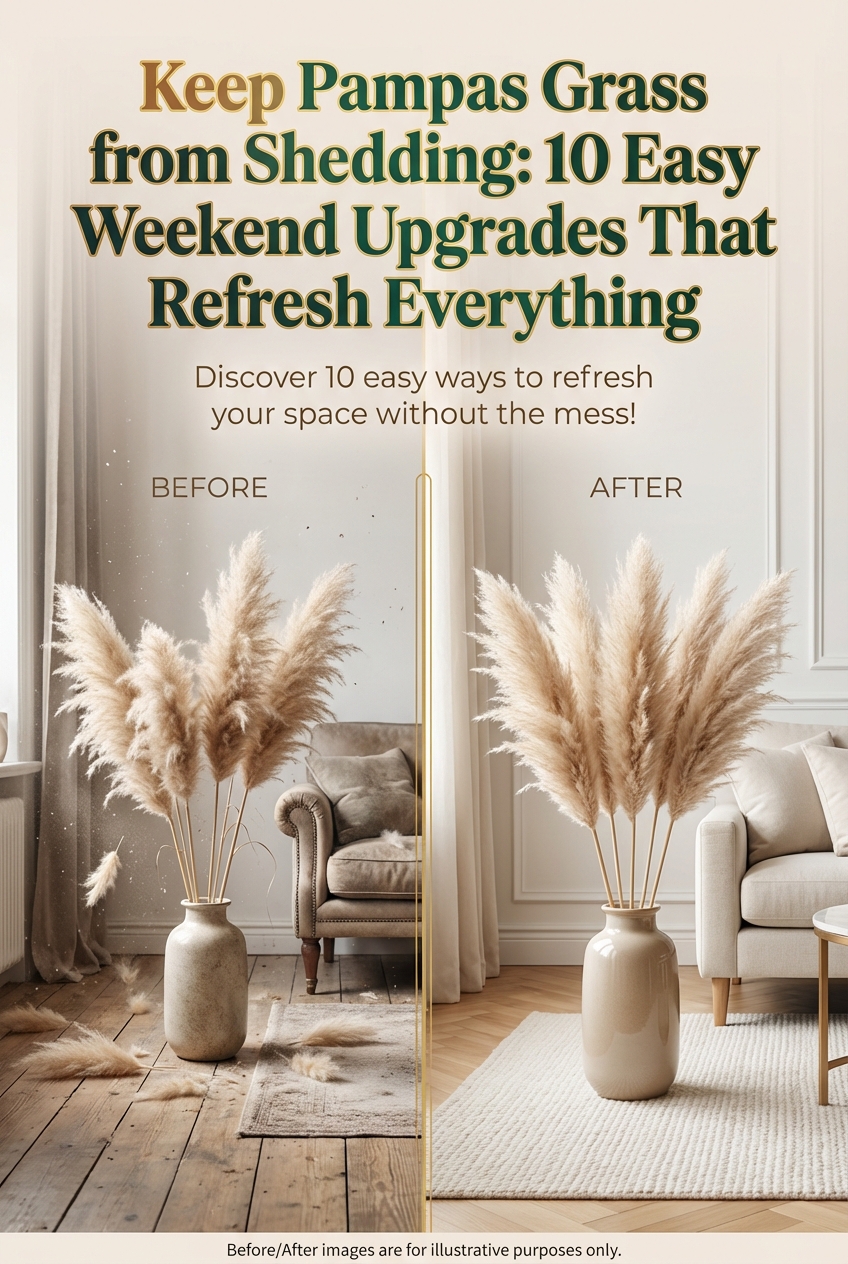
Looking for more weekend projects? Try this 8-step pampas refresh.
Frequently asked questions
What do you do with pampas grass in the winter?
For a living plant outdoors, many gardeners leave the plumes standing and cut the clump back in late winter. For dried stems indoors, keep them dry and away from vents, since damp air and moving air both break them down.
Should pampas grass be cut back every year?
Yes, for a garden plant it is usually cut back once a year in late winter, before new growth begins. This keeps old blades from building up under the new shoots.
Is dried pampas grass safe around cats and dogs?
Check with your vet about your specific pet. Even if a plant isn't listed as toxic, sharp, fibrous blades can cause trouble if chewed, so keep arrangements on high surfaces or in weighted vases.
How often do I need to re-spray dried pampas grass?
Usually once, right after the outdoor shake. If you move the stems or they start shedding again, add a light touch-up, because too much spray can leave them dull and stiff.
Filed under
ArticlesMeet the author
Written by an architect.
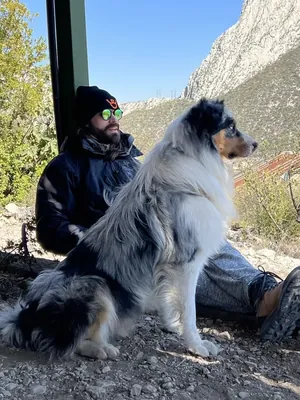
Julio Arco is a passionate architect with years of experience in architecture, interior design, urban design, and housing. He studied at prestigious universities across North America and Europe.
- Name
- Julio Arco
- Job
- Architect and online interior designer
- Studied
- Architecture, ITESM · Urban Design and Housing, McGill
- Partner
- Thor, Australian Shepherd
- Thor’s title
- Head of quality control