Ceiling Design Ideas for Every Room and Budget
Ceiling design ideas that make a plain ceiling look better: paint, beams, tray ceilings, lighting and texture, with sizes and budget picks for each room.

By Julio Arco
Architect and online interior designer

In this post
- How do you make a plain ceiling more attractive?
- Low budget ceiling ideas you can do in a weekend
- Ceiling design ideas for the living room
- Ceiling design ideas for the bedroom
- Ceiling design ideas with lights
- Ceiling design ideas for the kitchen
- Beams, coffers and texture
- Which ceiling design should you choose?
- Frequently asked questions
The quickest way to make a ceiling more attractive is paint: a warm white or a soft color in a matte or eggshell finish costs little and changes how the whole room reads. If you want more than paint, the next steps are wood slats or beams, a tray ceiling with indirect light, or a patterned feature ceiling in a small room.
Most of us ignore the ceiling because we rarely look up. It's also the largest uninterrupted surface in a room, so a small change up there goes a long way. Below are simple ceiling design ideas sorted by room, effort and budget.

How do you make a plain ceiling more attractive?
Start with the cheapest options and stop when the room feels right.
- Repaint in a warm white, or a pale tint pulled from the wall color.
- Swap the fixture for one scaled to the room.
- Add a dimmer and warmer bulbs.
- Paint or add trim, such as crown molding.
- Cover one plane with wood slats, wallpaper or acoustic panels.
Light colors bounce daylight around, while darker ones absorb it and make a room feel more enclosed. That's the same principle as glossy versus matte surfaces: reflection brightens, absorption softens. Use it on purpose. A low ceiling usually benefits from a light, warm tone. A very tall room can handle a mid-tone that brings the ceiling visually down.
Low budget ceiling ideas you can do in a weekend
You don't need a contractor for most of these.
- Paint the ceiling a warm white instead of a stark one. Test samples on the ceiling itself and look at them in morning and evening light.
- Paint existing beams or trim a shade darker than the ceiling to bring out the structure.
- Wallpaper the ceiling of a powder room or small study. A small area keeps cost and risk low.
- Replace cool bulbs with warm ones, about 2700K to 3000K, in living spaces.
- Choose a satin or eggshell finish. It hides small flaws better than gloss while still reflecting a little light.
If you have dogs or cats, a matte or eggshell ceiling is also easy to touch up, and a low-VOC paint is a sensible choice for rooms where pets sleep. Ask your vet if your animal has respiratory problems.
Ceiling design ideas for the living room
A living room ceiling should support the seating layout. Center a pendant or a ceiling feature over the conversation area, not necessarily the middle of the room, and the furniture will look anchored. As an architect, I'd place the rug and sofa group under the main fixture before deciding anything else.
Good options here are exposed or faux wood beams, a tray ceiling, or a simple wood-slat panel above the sofa. Beams add rhythm and pull the eye along the room. Keep them modest in proportion if the ceiling is under about 8.5 feet, because heavy beams on a low ceiling feel oppressive.

Open-plan homes can use a change in ceiling treatment to mark zones. A wood-paneled soffit above the kitchen island, for example, separates cooking from lounging without a wall. For more on shaping a seating zone, see these conversation pit ideas.
Ceiling design ideas for the bedroom
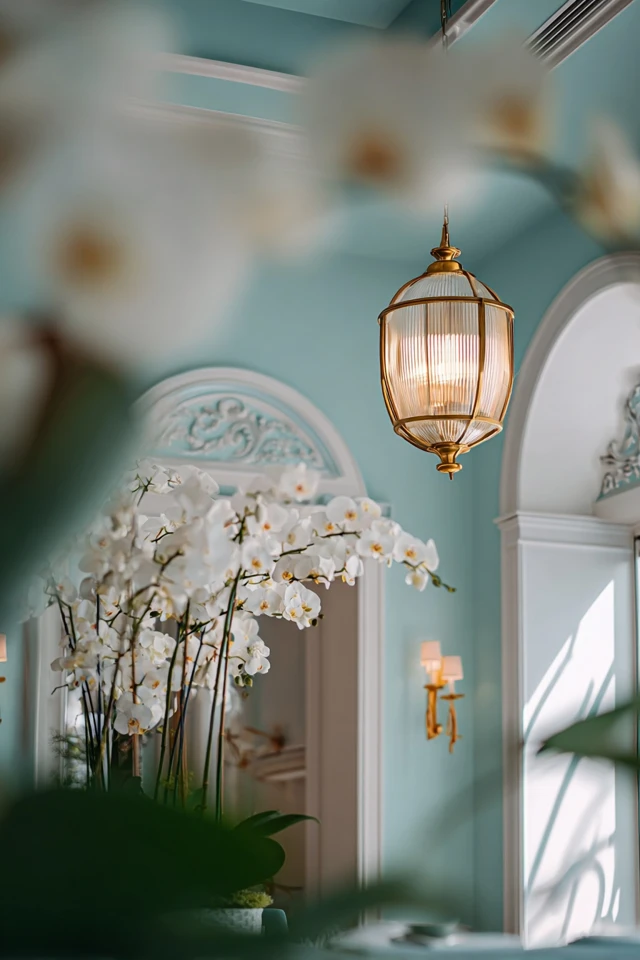
Bedrooms are where a slightly darker or softer ceiling makes sense, because you want the room to feel sheltered. A muted blue-green, a clay tone or a deep neutral in a matte finish absorbs light and reduces glare when you lie in bed looking up. Keep the walls lighter so the room doesn't close in.
Skip bright, exposed bulbs over the bed. Use a dimmable fixture and add side lighting so you rarely need the overhead one at night. If your bedroom has sloped sections, these slanted ceiling ideas cover how to handle them.
Ceiling design ideas with lights
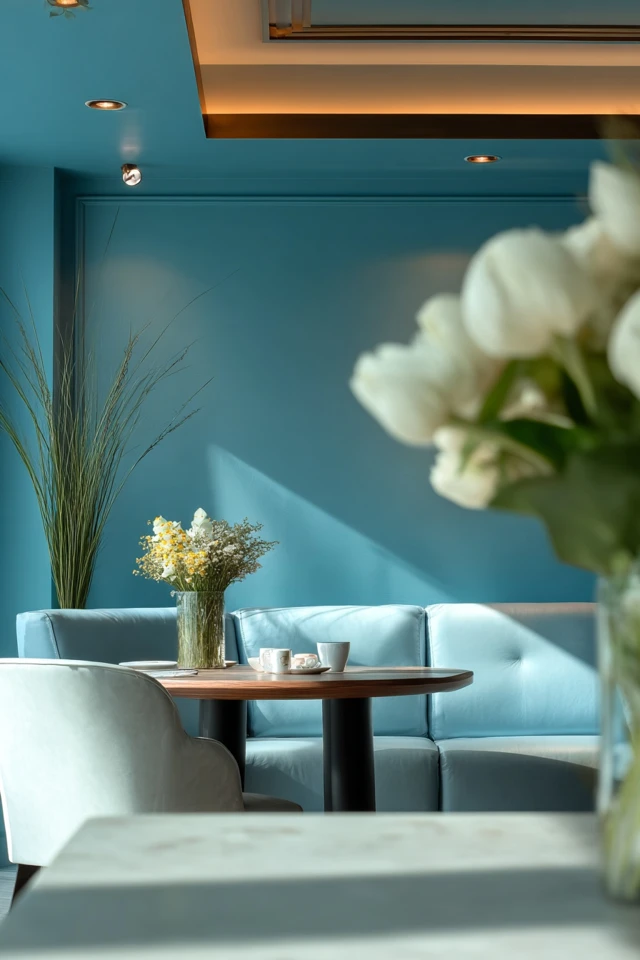
Lighting is where a ceiling does its most useful work. Layer three kinds of light so you can change the mood without moving furniture: general light from recessed or flush fixtures, task light where you work, and accent light on walls or art.
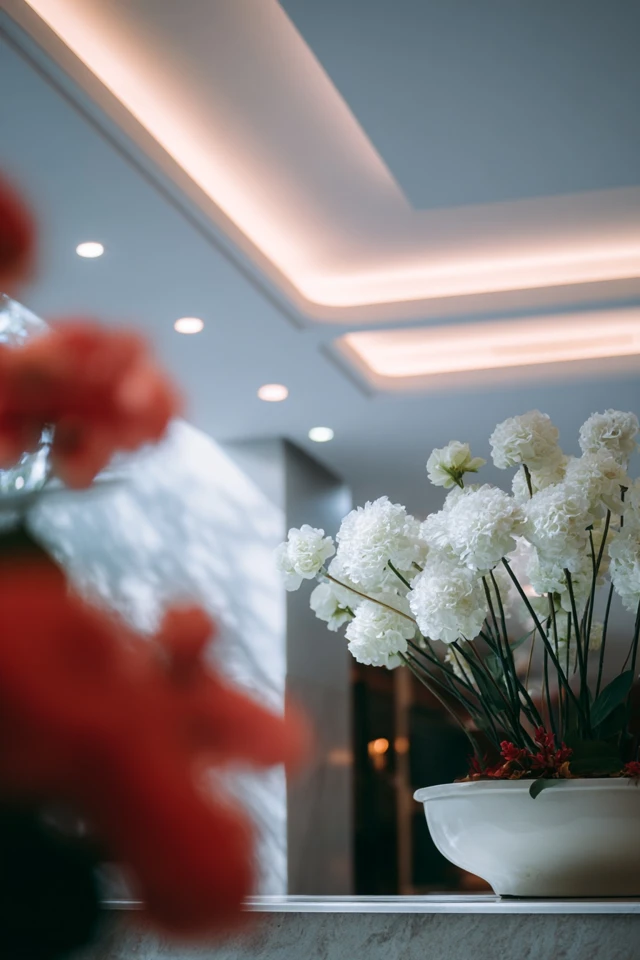
- Tray ceiling with cove lighting: LED strips hidden in the recess wash the ceiling with indirect light. It's soft and flattering, and it needs a ceiling with enough height to spare.
- Pendants over a dining table: hang them roughly 30-36 inches above the tabletop.
- Linear fixtures: a row of lights echoes beams and guides the eye through a hallway or open plan.
- Dimmers on everything: the cheapest upgrade with the biggest effect on evening comfort.
Have an electrician handle any new wiring, recessed housings or cove installations, especially if you're cutting into an existing ceiling.
Ceiling design ideas for the kitchen
Kitchens need durable, wipeable surfaces because of steam and grease. Use paint rated for kitchens, or smooth plaster, and keep the finish satin or semi-gloss. Add pendants over an island and brighter, controllable task light over work areas. Cooler light suits food prep, but keep it on its own switch or dimmer so the room can soften at dinner.
Wood planks can look great in a kitchen, but seal them well and keep them away from the range. Simple, low-profile fixtures keep a compact kitchen feeling open.
Beams, coffers and texture: when to use them
Texture adds warmth and can calm a noisy room. A hand-troweled plaster finish suits a quiet, minimal space. Wood slats or fabric-wrapped panels soften sound in open-plan rooms and home offices. Metallic panels or paint brighten a dark corner but can cause glare, so use them sparingly.
Coffered ceilings suit formal rooms with generous height. In a small room, they eat headroom and look busy. Ornament at the roofline has a long history, too: the National Park Service notes that the dominant feature of Italianate houses was a low, overhanging roof with decorative eave brackets, and builders applied much of the decoration right at that edge. Detail where wall meets ceiling has been popular for a long time, and crown molding is the modern, simple version of it.
Which ceiling design should you choose?
Ask three questions before buying anything. How tall is the ceiling? What does the room do? How much can you spend?
- Under about 8 feet: light paint, flush fixtures, no beams or coffers.
- 8 to 9 feet: slim beams, simple trim, wall-washing light, a feature plane of slats.
- Over 9 feet: tray ceilings, coffers, mid-tone paint, larger pendants.
On trends, the current direction is toward softly colored ceilings, natural wood and indirect lighting rather than heavy ornament. I recommend following trends in paint color and fixtures, which are easy to change, and keeping structure like beams and trim classic. If you like the look of a simple ceiling elsewhere in the house, a home theater room is a good example of how a dark ceiling and acoustic treatment can work together.
Frequently asked questions
What are the current ceiling design trends?
Softly colored or color-matched ceilings, natural wood slats and beams, and indirect cove lighting are popular right now. Heavy ornament is giving way to simpler, quieter detail.
What are some modern ceiling design ideas?
Wood slat panels, tray ceilings with hidden LED strips, linear light fixtures and a single painted or wallpapered feature plane all read as modern. They work best with clean trim and few competing patterns.
How can I make my ceiling more attractive?
Repaint it in a warm white or soft tint, upgrade the light fixture, and add a dimmer. If you want more, add trim, wood slats or wallpaper on one plane.
Should ceiling trim match the walls or stay white?
Either works. White trim frames the room in a classic way, while trim matched to the wall or ceiling color looks softer and can make the room feel taller.
Is it okay to paint a ceiling a bold color?
Yes, especially in a bedroom, powder room or above a defined zone. Keep walls and trim fairly neutral so the room doesn't feel heavy.
Filed under
ArticlesMeet the author
Written by an architect.
Julio Arco is a passionate architect with years of experience in architecture, interior design, urban design, and housing. He studied at prestigious universities across North America and Europe.

- Name
- Julio Arco
- Job
- Architect and online interior designer
- Studied
- Architecture, ITESM · Urban Design and Housing, McGill
- Partner
- Thor, Australian Shepherd
- Thor’s title
- Head of quality control