Asian Interior Design: Cozy, Modern Ideas That Work
Asian interior design made practical: layout, color, natural materials and lighting for a calm, cozy, modern home, with pet-friendly notes.

By Julio Arco
Architect and online interior designer
In this post
Asian interior design comes down to a few repeatable moves: low furniture, open floor space, natural materials, a short color palette and soft, layered light. You don't need a tatami room to use them, and they work in an apartment as well as a house.
Below is how I'd apply each one, in order of how much difference it makes.
What makes a room feel Asian-inspired and modern?
Japanese, Chinese, Korean and Southeast Asian interiors are very different from each other, but the versions people copy at home share a few traits: restraint, a strong link to nature, and furniture that stays close to the floor. Modern versions keep that calm and add comfortable seating and good lighting.
Two ideas carry most of the look. First, leave empty space on purpose, so each object gets room to be seen. Second, repeat a small number of materials instead of mixing many. A room with wood, linen, stone and a little paper or bamboo already reads as cohesive.
How do you lay out the furniture?
Start with the focal point: a window, a low table or a fireplace. Face the seating toward it and keep the middle of the room open.
- Leave about 30-36 inches for main walkways around large pieces.
- Choose a low-profile sofa and a low coffee table, and keep sightlines open so the room feels wider.
- Use a rug big enough that the front legs of the seating sit on it. A small rug chops the room into pieces.
- In open plans, define zones with a low console, a row of planters or a change of rug, not with tall partitions.
For small rooms, I recommend furniture that does two jobs: a storage bench, nesting tables, a fold-down desk. Measure first, then tape the footprints on the floor before you buy anything.
If you're styling a bedroom specifically, our Asian bedroom ideas go deeper on beds and bedding.
Which colors suit a cozy, modern Asian look?
Keep the base quiet: warm greys, soft off-whites, muted greens, pale clay, deep indigo or charcoal. Low-saturation colors sit comfortably next to wood and stone, and they let texture do the work.
Save stronger color for small things you can swap, like cushions, a vase or a single piece of art. Paint a sample on two different walls and look at it in the morning and evening, since light changes a color more than most people expect. A south-facing room warms paint in the afternoon, while north light keeps it cooler.
Which materials and textures work best?
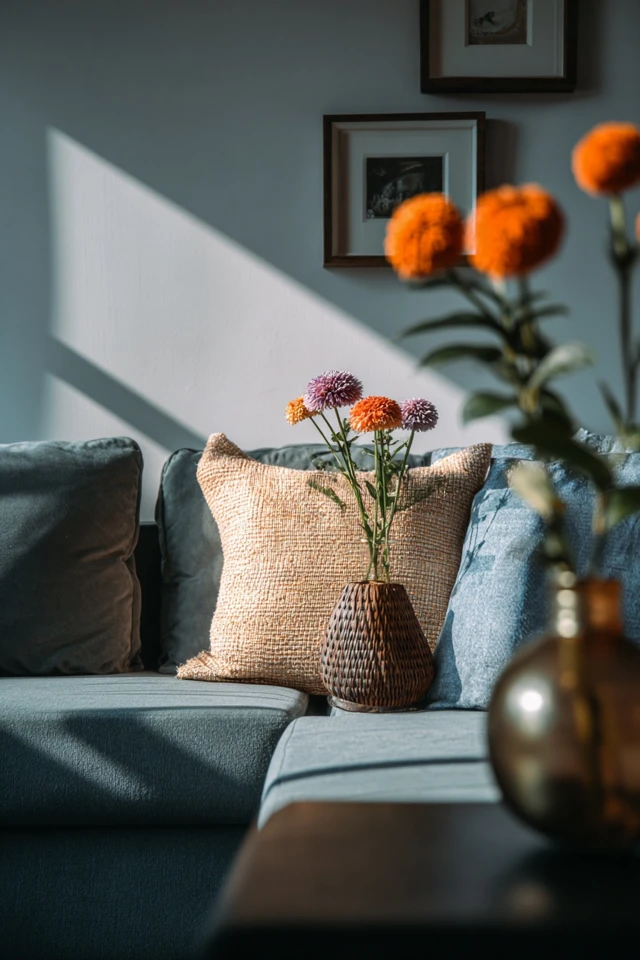
Wood, bamboo, rattan, stone, paper and linen are the classic set. The principle is simple: matte, natural surfaces soften light and sound, while glossy ones bounce both around. A matte timber table with a linen runner feels calmer than a lacquered one with a shiny chrome base.
Aim for three to five materials per room and keep the wood tones close. Layer a coarse throw over a smooth sofa for contrast, and use a flatweave rug where people walk and a plush one under the seating.
Pet-aware choices
If a dog or cat lives with you, pick washable covers and tightly woven fabrics, since loose weaves catch claws. Rattan and bamboo can get chewed or scratched, so test a small piece or place them out of reach. Low furniture is also easy for pets to jump on, so plan for it.
How should you light the room?
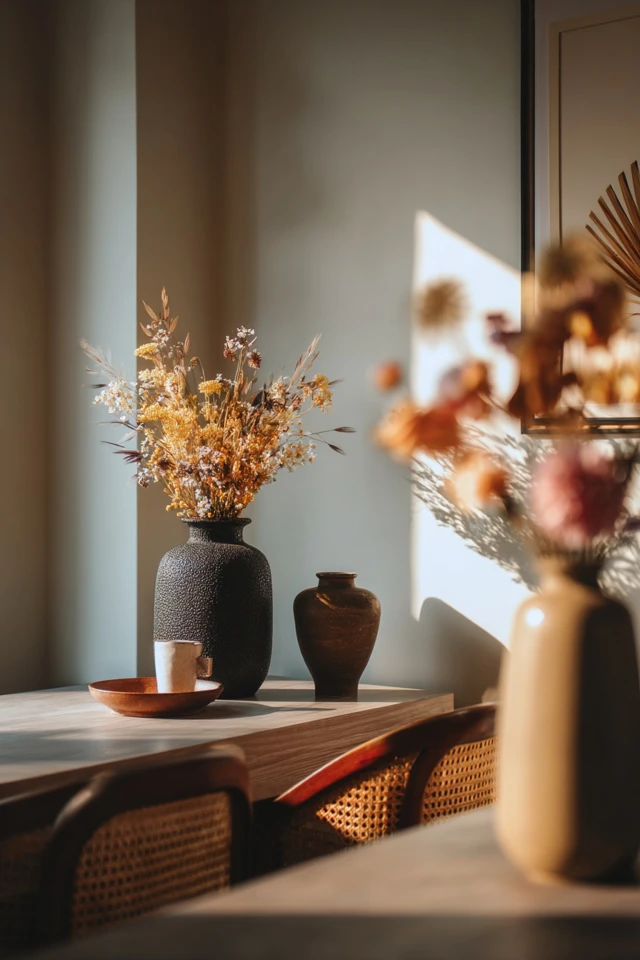
Use several low sources instead of one bright overhead. A paper or fabric pendant, a floor lamp in the seating corner and a small lamp on a shelf give you layers. Warm bulbs on dimmers let the room shift from daytime to evening without effort.
How do you connect the room to a garden?
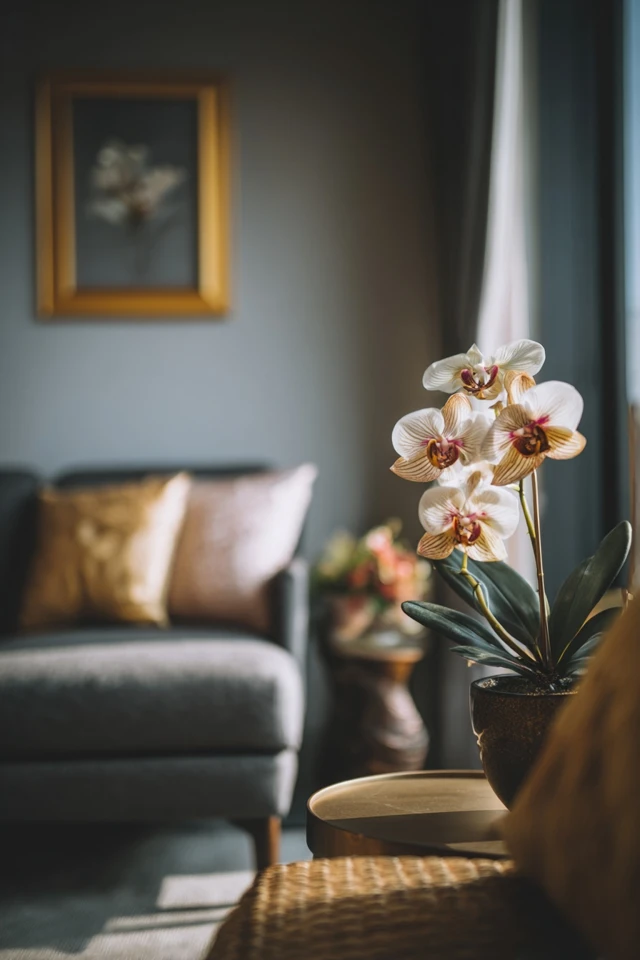
Asian interiors are designed to look outward. Even a balcony or a single window can hold a tiny planting, a bowl of water or a branch in a vase, and that view becomes part of the room.
Michigan State University's Beal Botanical Garden notes that most Asian garden designs are influenced by cultural philosophies, and landscape architect Yun Cao says, "Including culture into the garden makes the space meaningful rather than just a plant collection." The same applies indoors: choose a few pieces that mean something to you instead of buying a set.
If you want to go further outside, look at small Asian garden ideas such as a gravel patch, one specimen plant and a stone, and learn the key elements of a Japanese garden before you plan. Modern Asian landscape design tends to keep the same restraint as the interiors. Our unique garden ideas post has more starting points.
What should you style and declutter?
- Keep shelves partly empty. Three to five objects per shelf is enough, and you can rotate them by season.
- Give each room one focal point, such as a view, a piece of art or a fireplace.
- Keep entry zones calm too: a bench and a closed shoe cabinet go a long way, as in our minimalist entryway ideas.
- Mix patterns lightly: one large, one medium, one small, all from the same color family.
- Add a plant or cut branches for texture.
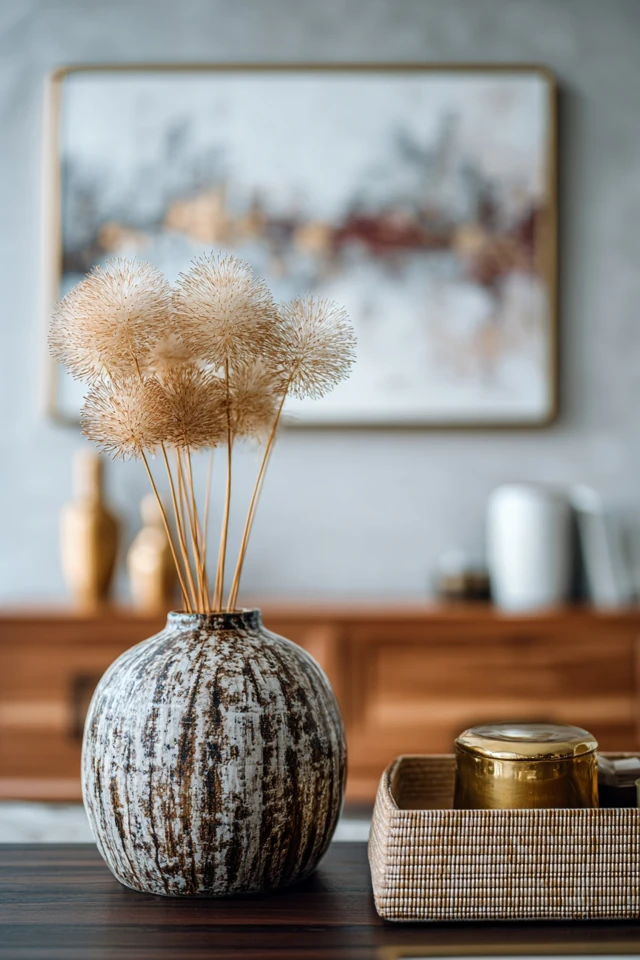
Trends such as handcrafted ceramics and curved furniture are easy to add through accessories. As an architect, I'd put the money into a well-proportioned sofa, good wood finishes and flexible lighting, and treat everything else as swappable.
Frequently asked questions
How can I make a small room feel larger with Asian design principles?
Use low furniture, keep floor space and walkways clear, and stick to a quiet, low-saturation palette. Sheer window treatments let in more daylight.
What paint colors work for a cozy, modern Asian look?
Muted warm greys, soft greens, pale clay and desaturated blues work well. Test samples on different walls and check them at different times of day.
Can Asian design be mixed with other styles?
Yes. It pairs easily with Scandinavian and mid-century modern pieces. Keep the palette limited and repeat the same materials so the room stays cohesive.
Filed under
ArticlesMeet the author
Written by an architect.
Julio Arco is a passionate architect with years of experience in architecture, interior design, urban design, and housing. He studied at prestigious universities across North America and Europe.

- Name
- Julio Arco
- Job
- Architect and online interior designer
- Studied
- Architecture, ITESM · Urban Design and Housing, McGill
- Partner
- Thor, Australian Shepherd
- Thor’s title
- Head of quality control