Shabby Chic Decor Ideas for a Soft, Lived-In Home
Shabby chic decor ideas that work in real homes: soft palettes, vintage furniture, lace and linen, plus tips by room and for small spaces.

By Julio Arco
Architect and online interior designer
In this post
- What is shabby chic decorating style?
- Which colors suit shabby chic?
- How do you choose distressed and mismatched furniture?
- What textures and fabrics fit the look?
- Lighting, windows, and wall decor
- Shabby chic decor ideas for living room and other spaces
- Shabby chic decorating ideas for small spaces
- Simple ways to keep it from looking cluttered
- Frequently asked questions
Shabby chic is a soft, lived-in look built on pale colors, worn vintage furniture, and gentle textiles like linen and lace. To get it at home, start with a white or pastel base, add one or two secondhand pieces with visible age, and layer fabrics that look comfortable rather than new.
It's a forgiving style, which is good news if you share your home with a dog. Slightly scuffed wood and washable linen hide daily wear far better than glossy, pristine finishes.
What is shabby chic decorating style?
The style mixes elegant, often feminine shapes (curved legs, carved details, ruffles) with a deliberately worn finish. Think chipped paint on a dresser, a faded floral cushion, a chandelier with a bit of tarnish. The contrast between refined form and relaxed surface is what makes it work.
Vintage shabby chic decor leans on real age: flea market finds, family pieces, and furniture you repaint yourself. Modern shabby chic decor ideas keep the softness but edit harder. You use fewer objects, cleaner lines, and a tighter palette so the room reads calm instead of cluttered.
Which colors suit shabby chic?
Start with white, cream, or a warm off-white on walls and large furniture. Then add pale pastels in small amounts: dusty rose, sage, powder blue, soft butter yellow. Pick two pastels at most so the room doesn't turn into a candy shop.
Light color also affects how the room feels. Pale walls bounce daylight around, while a matte finish keeps glare soft. Test your paint on two different walls and look at it in the morning and in the evening before committing.
How do you choose distressed and mismatched furniture?
Mismatched is the point, but it still needs a thread. Keep the same color family or the same wood tone across pieces, and vary the shapes. A cream armchair next to a pale gray side table and a painted chest feels collected. Five unrelated finishes feel accidental.
- Look for solid wood with good joints. Surface wear is charming, a wobbly frame isn't.
- Sand and repaint rather than buying pre-distressed pieces, which often look uniform.
- Rub wax or a matte sealer over painted surfaces. Dog claws and paws will add their own patina anyway.
As an architect, I'd anchor each room with one larger vintage piece, like a sideboard or a bed frame, and keep the rest lighter in scale so nothing competes with it.
What textures and fabrics fit the look?
Linen, cotton, lace, ticking stripes, faded florals, and chenille all belong. Layer them: a slipcovered sofa, a crocheted throw, a lace runner on a dresser. Texture does the work that bold color does in other styles.
For pet households, choose washable slipcovers and tightly woven cotton or linen blends. Lace is best kept on shelves and tables, out of reach of claws.
Lighting, windows, and wall decor
Sheer curtains in white or cream let in daylight and soften the view. Add a chandelier, even a small one, or a pair of lamps with fabric shades for a warm glow at night. Dim bulbs flatter worn finishes better than bright cool ones.
On the walls, group mismatched frames, a vintage mirror, or a few plates. Keep the grouping tight, with consistent spacing of about 2 inches between frames, so the collection reads as one composition. Designers talk about this through the Gestalt idea of figure-ground relationship: a pale wall gives the darker frames a clear background to stand out against.
Shabby chic decor ideas for living room and other spaces
Living room
Shabby chic decor ideas for living room spaces start with the sofa. Choose a slipcovered one in white or oatmeal, then add mismatched cushions in two or three related patterns. A distressed coffee table, a rug in a faded floral or plain jute, and a vintage mirror over the mantel finish the set. For more on mixing a relaxed room with texture, see our boho style living room guide.
Bedroom
A painted iron or wood bed, white linen bedding, and a ruffled or quilted throw are enough. Put a small chandelier or a pair of bedside lamps in place of overhead light. If you want a quieter version, the minimalist bedroom approach pairs well with a restrained shabby chic palette.
Kitchen
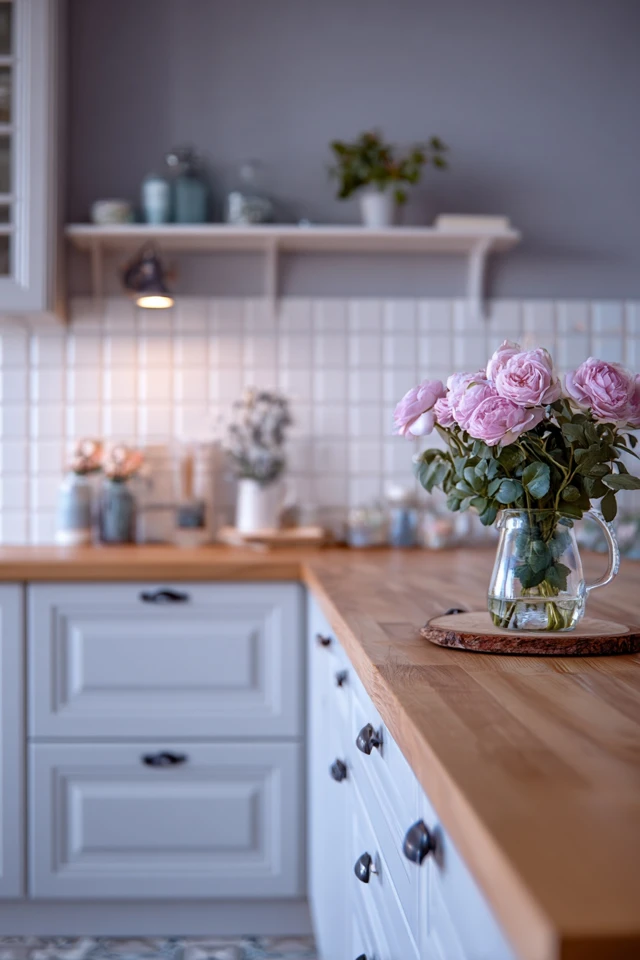
Open shelving with mismatched plates, a farmhouse sink, and cabinets painted in cream or pale green set the tone. Wipeable matte or satin paint holds up better than chalky finishes near the stove. Renters can get the look with fabric café curtains and a vintage rack. See the apartment kitchen aesthetic for small-kitchen layouts.
Bathroom
A framed mirror, white towels, and a small painted stool for plants or soap add the look without remodeling. A sheer privacy curtain suits the style, as covered in our bathroom window ideas.
Shabby chic decorating ideas for small spaces
Small rooms handle this style well if you keep the palette pale and the furniture light. A few habits help:
- Paint walls and large furniture the same off-white to keep the space calm.
- Choose pieces with visible legs, like a small console or a slim chair, so floor shows underneath.
- Hang a large mirror opposite a window to double the daylight.
- Use one vignette per surface: a lamp, a stack of books, a small vase. Group objects in odd numbers and vary heights.
Simple ways to keep it from looking cluttered
Shabby chic is collected, not crowded. Leave some bare wall and clear surface so the worn pieces get room to be seen. Rotate accessories rather than displaying everything at once, and give walkways at least 30 inches so the room still functions with a dog trotting through.
If you like the idea of antique character, the older American house styles show where much of the ornament comes from. The National Park Service notes the Italianate style was most prevalent between the 1850s and the 1880s, and its decorative brackets and trim are a good reference for salvaged architectural pieces.
Frequently asked questions
Is shabby chic still in style?
Yes, in a softer, edited form. Today's version uses fewer objects, cleaner lines, and a tighter palette than the heavily ruffled versions of earlier decades.
What is shabby chic decorating style?
It combines pale colors, worn vintage furniture, and soft fabrics like linen and lace. The look pairs elegant shapes with a faded or distressed finish.
What is the 3-5-7 rule in decorating?
It's a styling guideline that groups objects in odd numbers, such as three, five, or seven, with varied heights. It helps vignettes look balanced without being symmetrical.
What are some examples of shabby chic style?
A painted dresser with worn edges, a slipcovered white sofa, a crystal chandelier, lace curtains, and mismatched floral cushions are typical examples.
Filed under
ArticlesMeet the author
Written by an architect.
Julio Arco is a passionate architect with years of experience in architecture, interior design, urban design, and housing. He studied at prestigious universities across North America and Europe.

- Name
- Julio Arco
- Job
- Architect and online interior designer
- Studied
- Architecture, ITESM · Urban Design and Housing, McGill
- Partner
- Thor, Australian Shepherd
- Thor’s title
- Head of quality control