Living Room Makeover Plan: A Cozy Cabin Look in a Weekend
A living room makeover plan you can finish in a weekend: layout rules, a 60-30-10 palette, budget tiers and cozy modern cabin styling.

By Julio Arco
Architect and online interior designer
In this post
- What is the modern cabin look, and who is it for?
- Which materials make it work?
- How do you plan the layout and proportions?
- How do you choose colors? The 60-30-10 rule
- The weekend plan, step by step
- What if your budget is small?
- What makes this look go wrong?
- Small living room makeover ideas
- Finishing touches
- Frequently asked questions
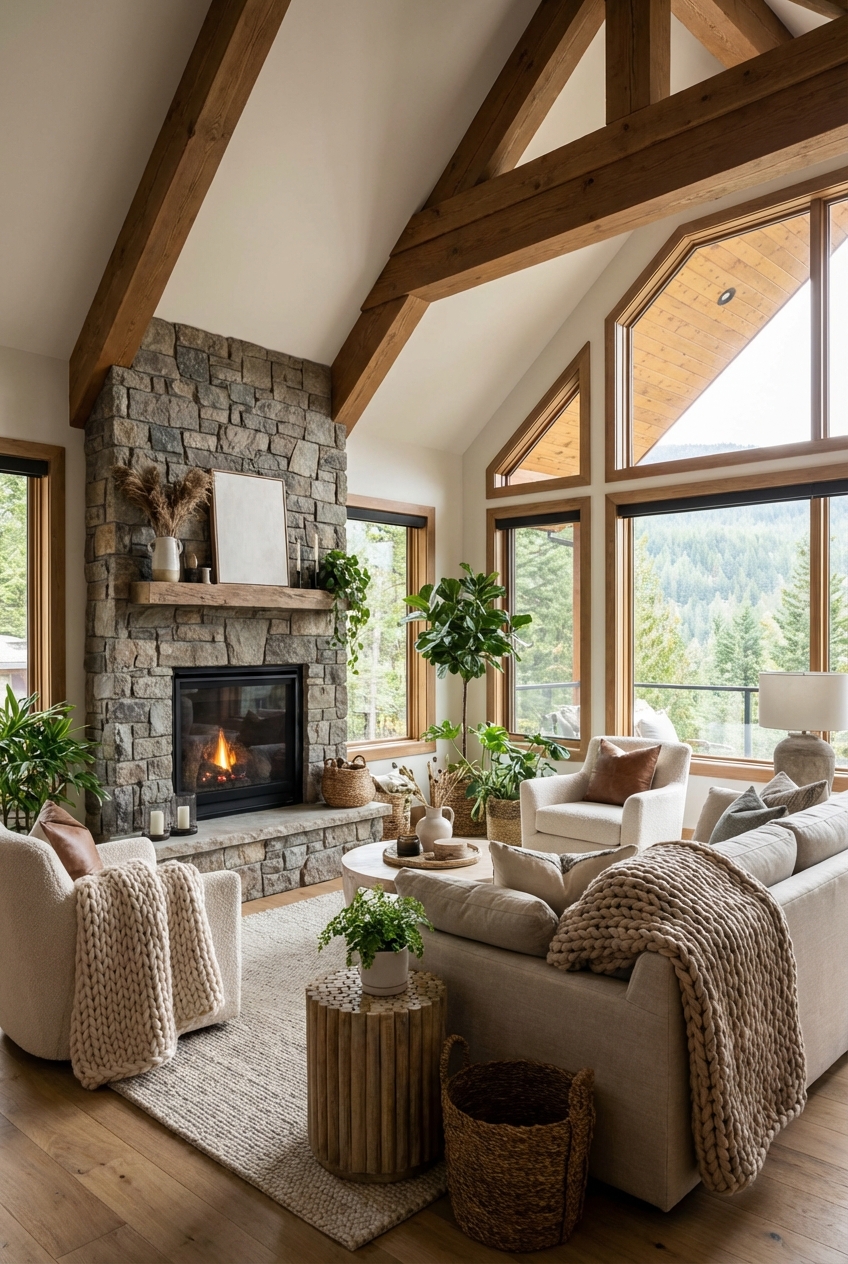
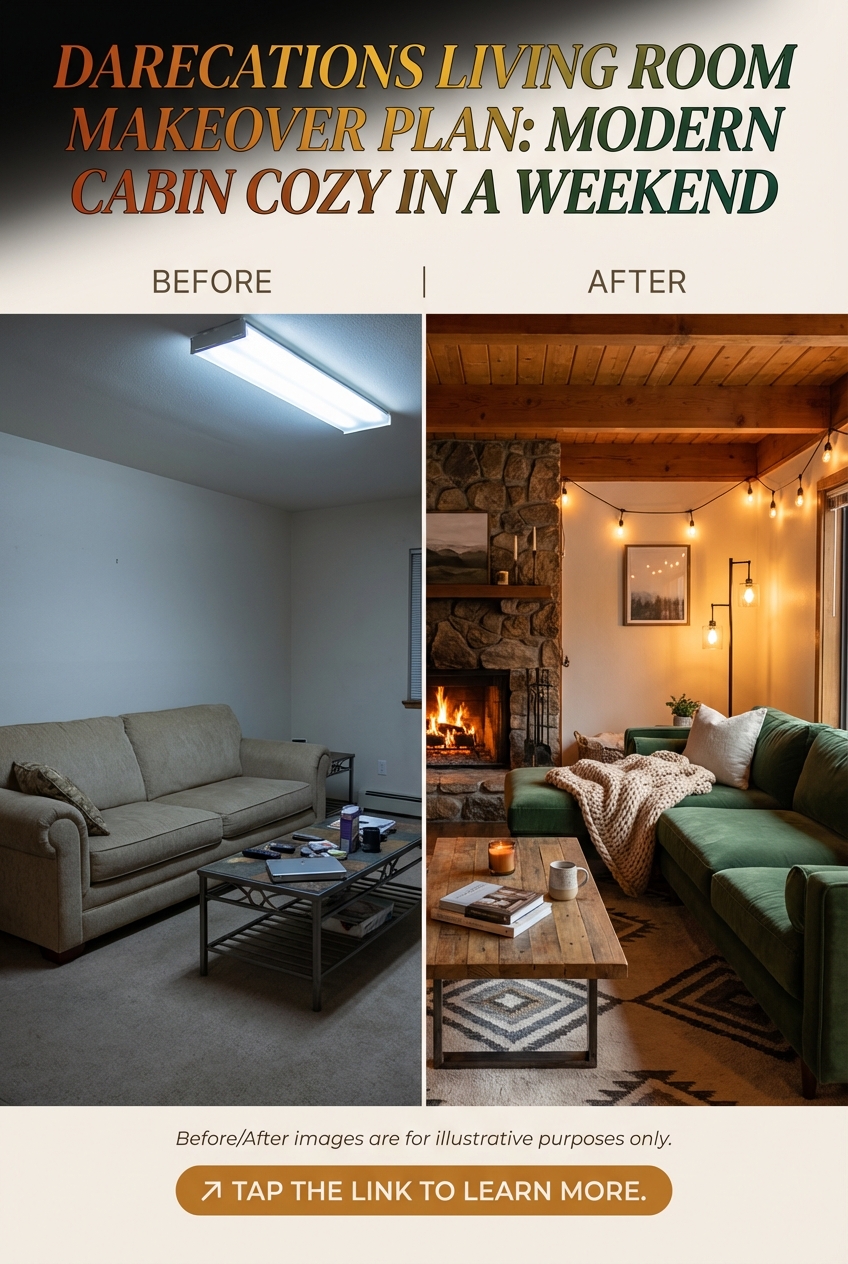
A good living room makeover plan goes in this order: measure the room, set the layout, choose a palette, add layered light, then style. This simple living room makeover plan applies that order to a modern cabin look (warm wood, leather, wool and matte metal) that fits an ordinary house or apartment, and it fits into one weekend.
The look has nothing to do with plaid bears or canoe paddles on the wall. It relies on honest materials, several light sources and furniture that can take daily life, including dogs and kids.
What is the modern cabin look, and who is it for?
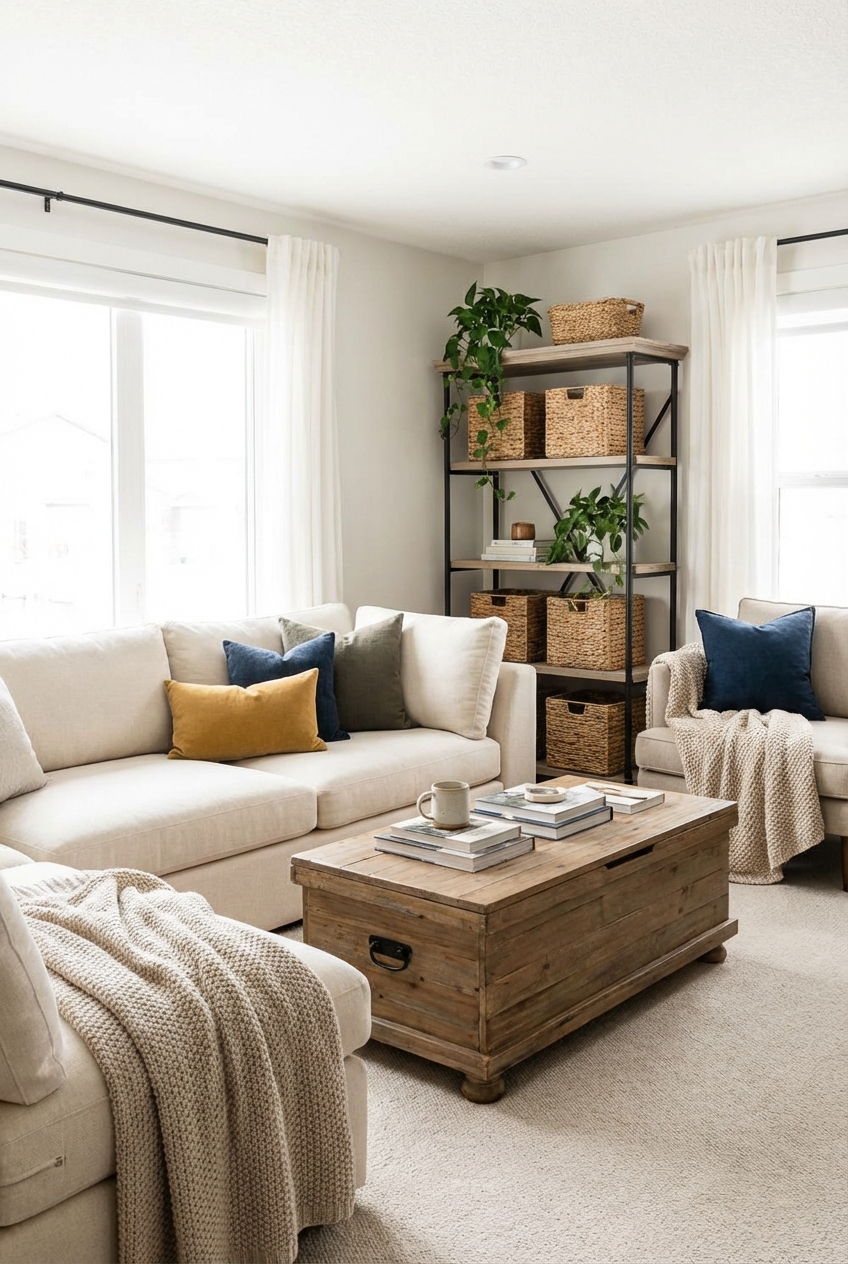
It takes the clean lines of mid-century or Scandinavian furniture and wraps them in the texture of a mountain lodge. Leather, oiled wood and heavy woven fabrics tend to look better as they age, so a scratch reads as character instead of damage. That makes the style forgiving for pet owners and families.
It also suits renters. The look comes from rugs, furniture and lamps, not beams or stone walls, so it packs up when you move.
Which materials make it work?
- Wood: matte or oiled white oak, walnut or pine. Skip high-gloss finishes. When you mix woods, keep the undertones close.
- Leather: cognac or charcoal. If a whole sofa is too much, a leather ottoman or sling chair does the job.
- Textiles: bouclé, shearling, chunky knits and heavy linen. A thin flat-weave rug will look flimsy here; a thick wool or jute rug feels right underfoot.
- Metal: matte black, oil-rubbed bronze or antiqued brass instead of chrome.
- Stone and pottery: a concrete side table or a rough ceramic lamp base adds weight.
If you leave out the wood, the room feels cold. If you leave out the modern lines, it can feel like a secondhand shop.
How do you plan the layout and proportions?
Start by drawing the room to scale on paper or in any free floor-plan app, then cut out your furniture at the same scale. It takes twenty minutes and saves a lot of lifting. These are the measurements I rely on.
How big should the rug be?
Big enough that at least the front legs of every seat rest on it; all legs is better. In most living rooms that means 8x10 as a minimum, or 9x12 in an open plan. Leave roughly 12-18 inches of bare floor around the edge to frame it.
How much space do you need to walk and sit?
Allow about 30-36 inches for main walkways. Keep the coffee table about 14-18 inches from the sofa: close enough to reach a mug, far enough to save your shins.
Where should curtains go?
Hang the rod high, a few inches below the ceiling, and extend it 6-10 inches past the window frame on each side. The curtains then clear the glass when open and the ceiling looks taller.
Should furniture sit against the walls?
As an architect, I'd pull the sofa off the wall, even a few inches, and float the seating group if the room allows. Pushing everything to the perimeter leaves an empty middle that feels like a dance floor.

How do you choose colors? The 60-30-10 rule
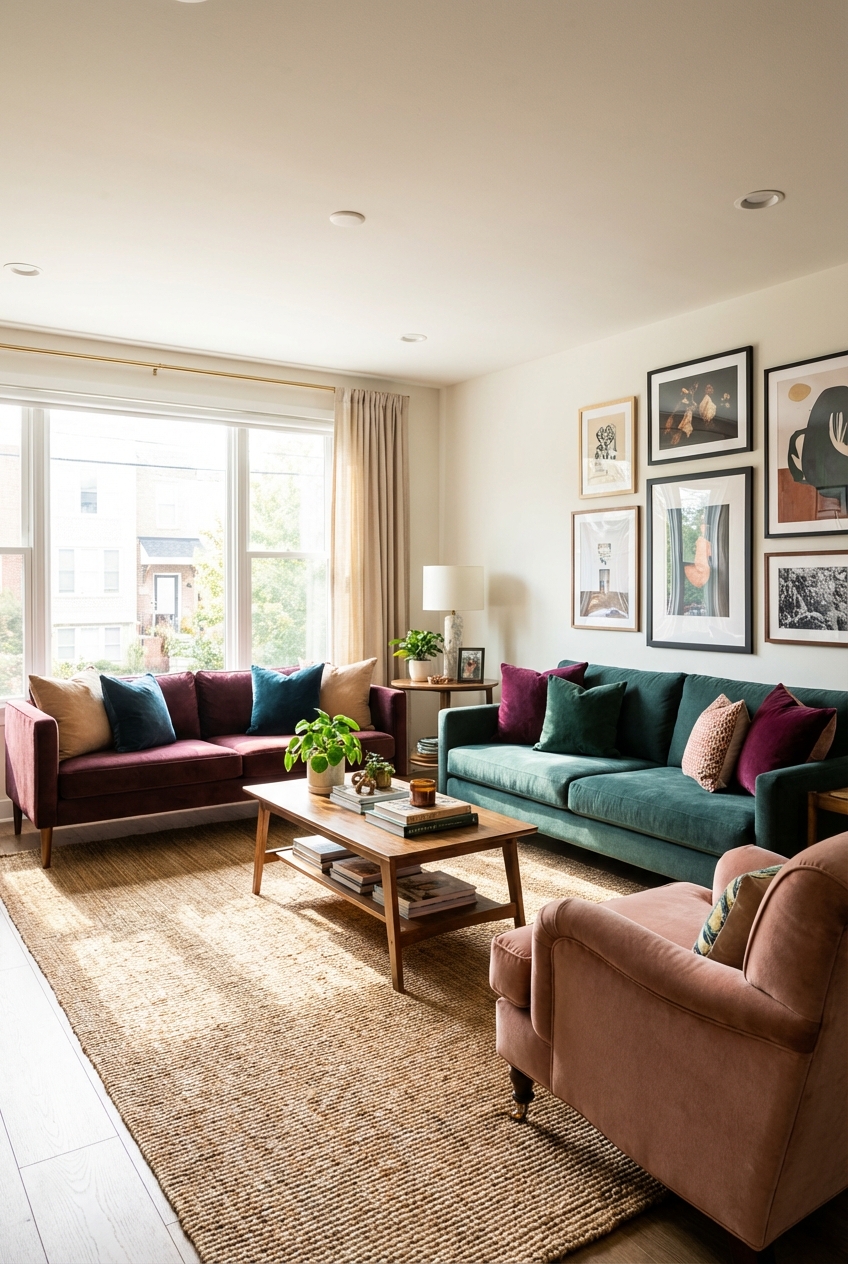
The 60-30-10 rule splits the room into a dominant color for about 60 percent (walls, large rug, sofa), a secondary color for about 30 percent (curtains, chairs) and an accent for about 10 percent (pillows, art, a lamp). In a cabin palette, the 60 is usually a warm white or a deep green, the 30 is wood and leather tones, and the 10 is matte black or a rust accent.
Balance matters because color has weight. As NYIAD's makeover article puts it, color adds visual weight the way a large object does, so too much in one place throws off the balance. Repeat each color in at least two spots in the room.
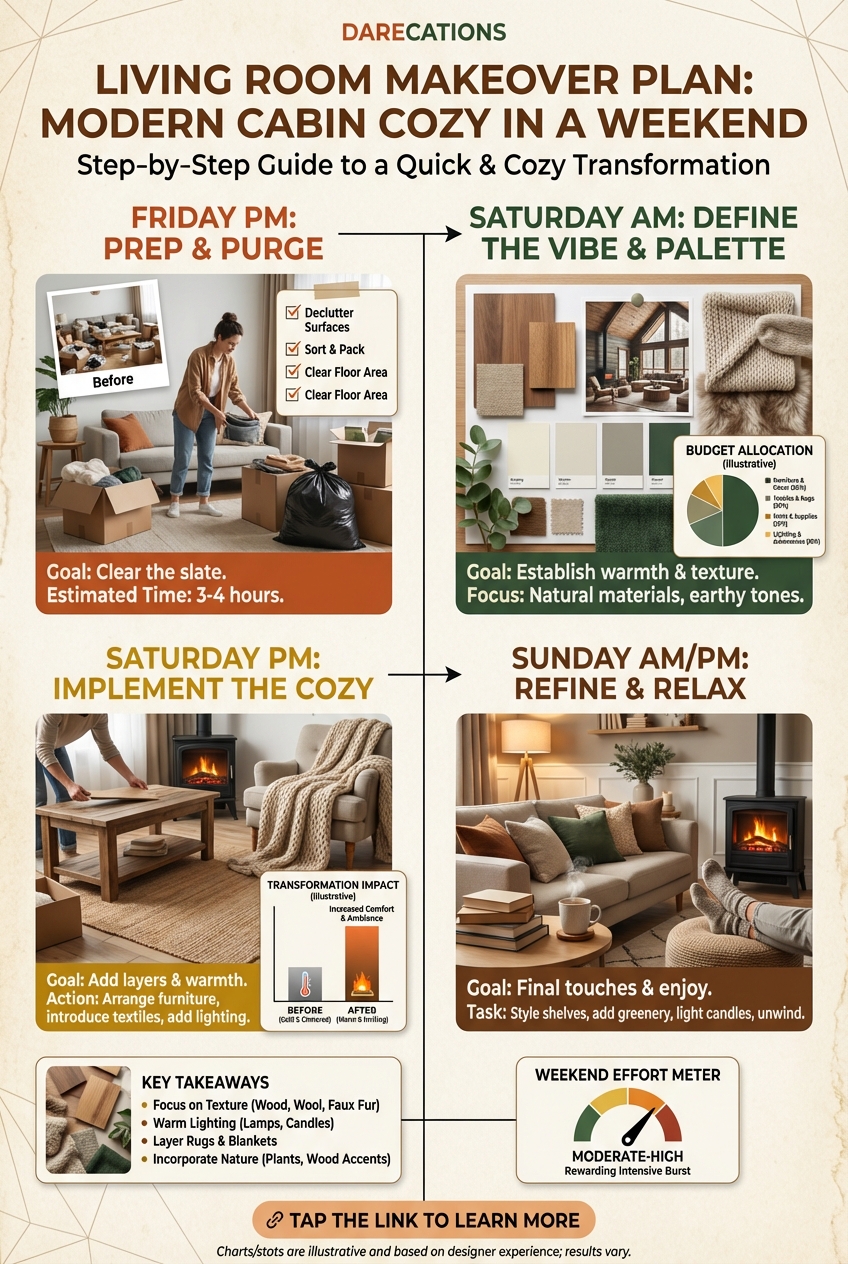
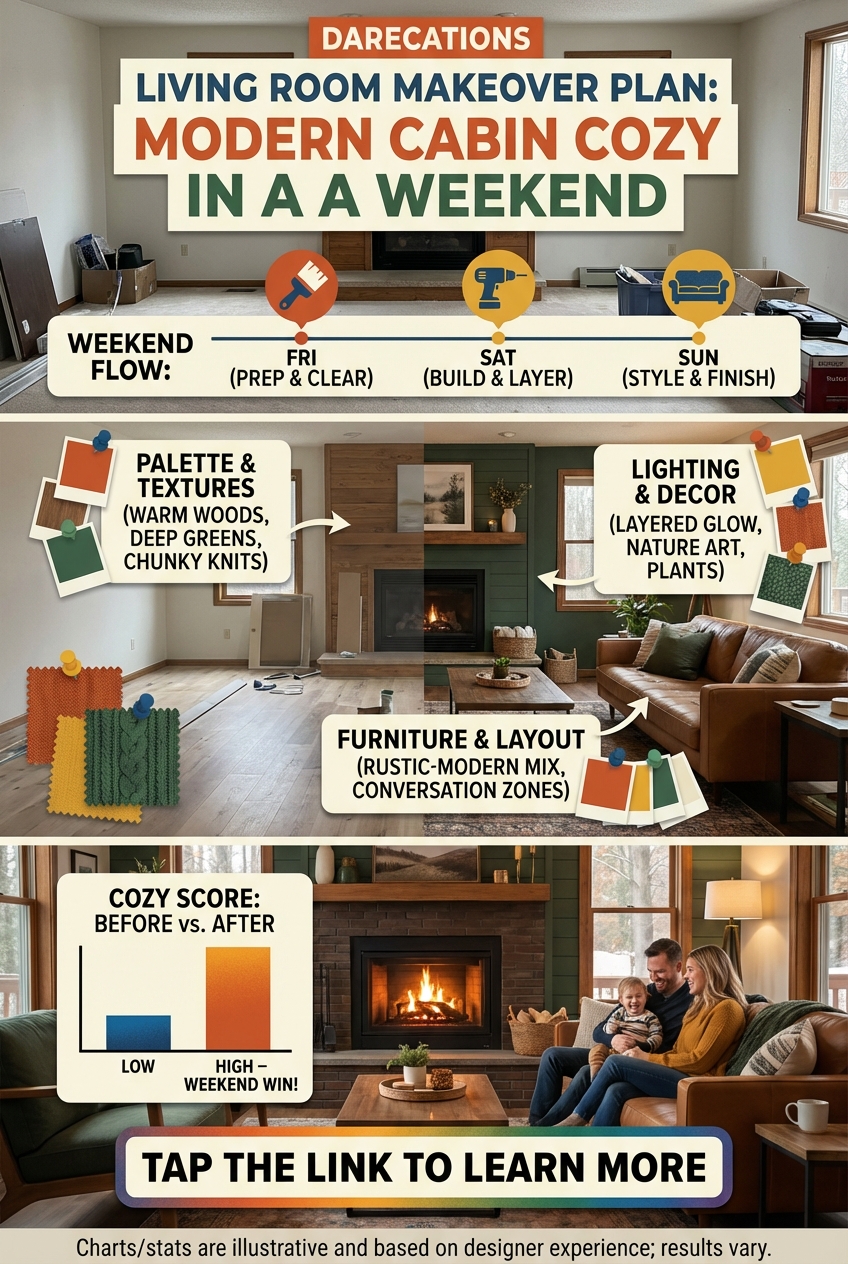
The weekend plan, step by step
Friday evening: clear and prep
Empty the room as much as you can. Take down art, roll up the rug, patch holes and touch up paint. If you're painting the whole room, do it now.
Saturday morning: rug and big pieces
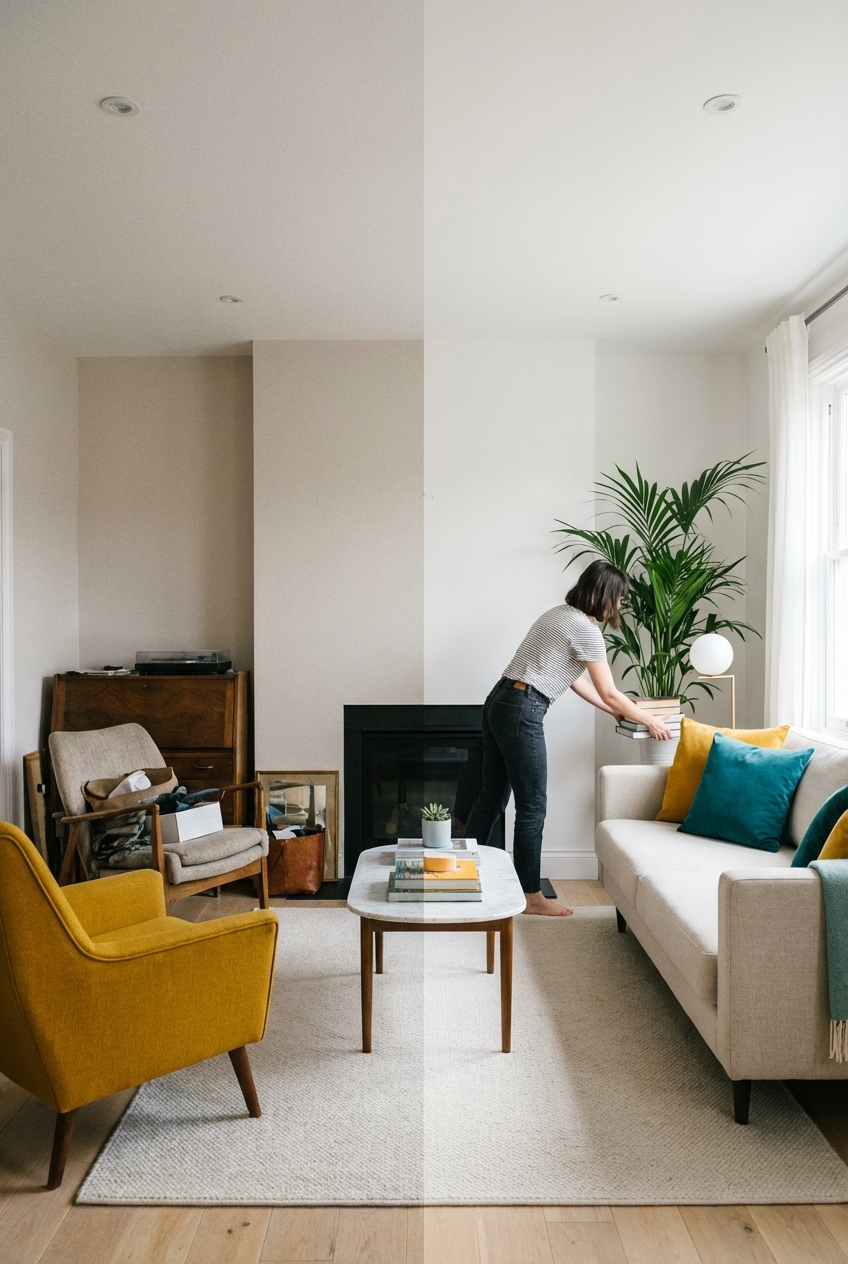
Lay the rug first, because it decides where everything else sits. Then bring in the sofa and armchairs. Try new arrangements instead of putting things back where they used to be, such as angling chairs toward a fireplace or window.
Saturday afternoon: tables and lamps
Make sure every seat has a surface within arm's reach. Then add lamps: floor lamps in dark corners and table lamps on side tables. Turn off the ceiling light and see if the lamps alone give enough glow. If they don't, add another lamp. Aim for at least three sources at different heights, with warm white bulbs of about 2700K.
Sunday morning: textiles
Drape throws, swap in wool or velvet pillow covers and hang the curtains. Steam out the fold lines, since wrinkled curtains make a room look messy quickly.
Sunday afternoon: art and shelves
Hang art with its center at about 57-60 inches from the floor. Over a sofa, leave roughly 6-10 inches between the sofa top and the frame. On shelves, mix vertical and horizontal books with a few organic objects and leave gaps. Crowded shelves read as clutter.
What if your budget is small?
Free living room updates on a budget start with what you own: rearrange the furniture, move lamps from other rooms, pull the sofa off the wall and clear the surfaces. After that, spend where the room changes most.
Low budget
Keep your sofa and add a heavy linen throw or a slipcover. Buy a large jute rug and two lamps. Print public-domain landscape prints and frame them in thrifted wood frames. A single wall in deep charcoal or forest green gives a focal point without new furniture.
Mid-range
Upgrade the sofa or main armchairs, and choose a wool-blend rug, which is softer than jute. Replace a builder-grade ceiling fixture with a matte black one and add a proper reading lamp.
Splurge
Full-grain leather seating, a hand-knotted vintage rug, built-in shelving beside a fireplace and custom window treatments in heavy linen or wool felt. These are the pieces that last for decades.
What makes this look go wrong?
Too much wood is the most common problem. Wood floor, wood walls and wood table together start to feel like a sauna. Break it up with a rug, painted surfaces, and metal or stone side tables.
Buying a matched sofa, loveseat and chair set is the second. Keep the sofa and bring in two contrasting armchairs, for example cognac leather against a gray fabric sofa.
The third is flat lighting. A single ceiling fixture casts harsh shadows. Layer ambient light, task light for reading and a soft accent such as a picture light or candles.
Other things that date a room: a rug that's too small, furniture pushed against every wall, bright chrome next to warm woods, and cords left in plain view. Tuck cords behind furniture legs and tie them with Velcro.
Small living room makeover ideas
In a small room, choose apartment-scale furniture with clean lines and warm textures, and avoid oversized puffy pieces. A mirror opposite a window bounces daylight around. Tall bookcases, large art and floor-to-ceiling curtains draw the eye up, which also helps renters who can't change the architecture.
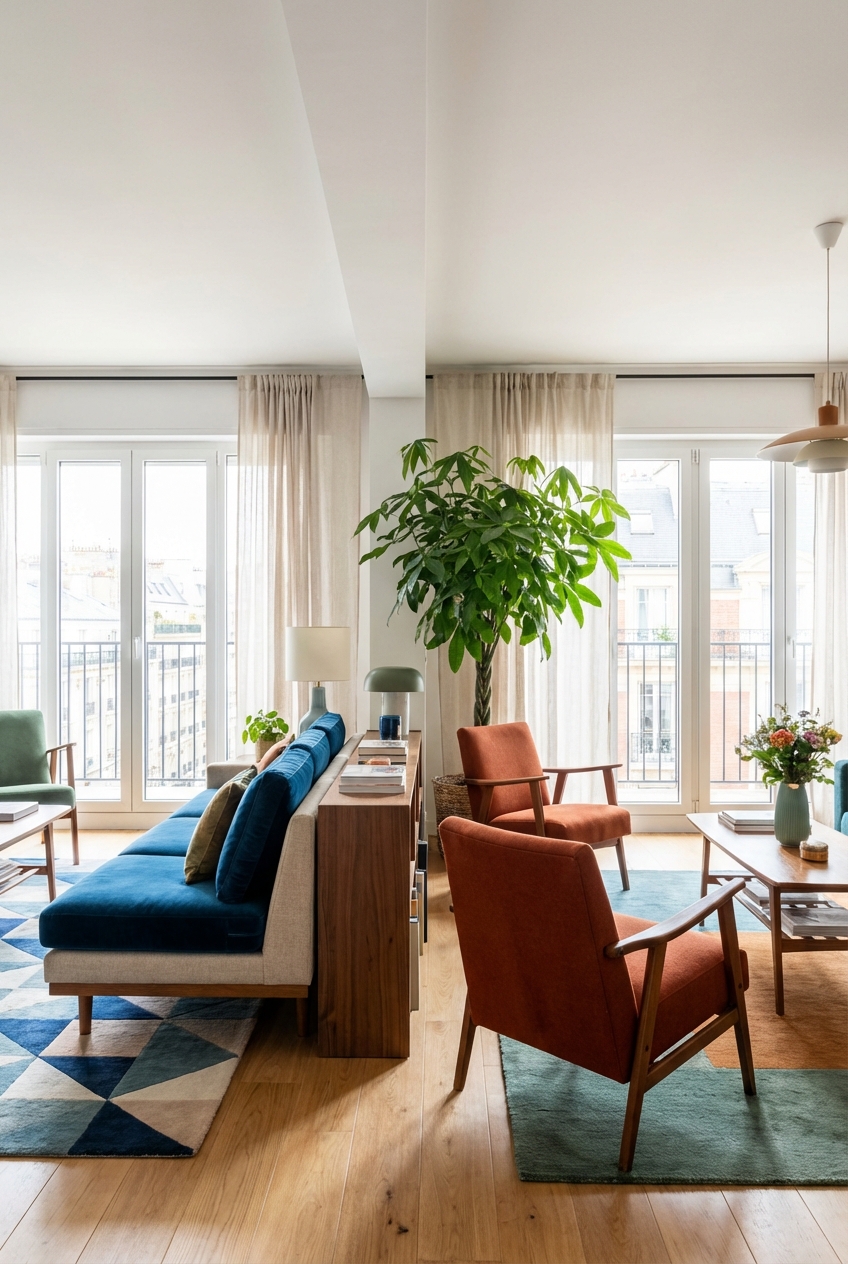
If your living room opens onto the kitchen, define the seating zone with a rug and turn the back of the sofa toward the kitchen to form a soft wall. For more on this, see living room partition ideas.
Finishing touches
- Add a plant or a vase of dried branches. If you have pets, check with your vet or the ASPCA plant list before bringing in a new plant.
- Keep a blanket within reach of every seat.
- Choose a woody or amber scent over a sweet floral one.
- Add things you actually use, like books you read and a tray for coasters, so the room looks lived in.
One more design idea that helps with styling: we see objects as a figure against a ground. This is the figure-ground relationship in Gestalt psychology. A dark lamp against a pale wall or a wooden bowl on a plain shelf reads clearly because the background stays calm.
For more cabin-leaning ideas, try these living room tips, small cabin interior tips or easy wood cabin makeover ideas. If you prefer a lighter look, minimalist living room tips may suit you better.
Frequently asked questions
What is the 3-5-7 rule in decorating?
It's a styling guideline that groups decor in odd numbers (three, five or seven items) because uneven groupings look more natural than pairs. Vary the height and texture within each group.
Is there a free app that will help me design my living room?
Yes, several free room-planner apps and websites let you draw a floor plan and place furniture. Paper and a tape measure work too: draw the room to scale and cut out furniture shapes.
What is the 60-30-10 rule for decorating living rooms?
Use one dominant color for about 60 percent of the room, a second for about 30 percent and an accent for about 10 percent. It keeps the palette balanced without much effort.
Can I mix black and brown in this style?
Yes. Black metal grounds warm wood tones, but repeat the black in at least two or three places, such as a lamp, a frame and a chair leg, so it looks planned.
What if my room has wall-to-wall carpet?
Layer a thick rug over it to define the seating area. Pick one stiff enough that it won't ripple underfoot.
Filed under
ArticlesMeet the author
Written by an architect.
Julio Arco is a passionate architect with years of experience in architecture, interior design, urban design, and housing. He studied at prestigious universities across North America and Europe.

- Name
- Julio Arco
- Job
- Architect and online interior designer
- Studied
- Architecture, ITESM · Urban Design and Housing, McGill
- Partner
- Thor, Australian Shepherd
- Thor’s title
- Head of quality control