Small Home Theater Ideas: Layout, Screen, Sound, Lighting

By Julio Arco
Architect and online interior designer
In this post
- Which room or corner works best?
- What is a good small theater room layout?
- How do you choose screen size and placement?
- What seating fits a small home theater?
- How dark should the walls be?
- What lighting makes a room feel like a theater?
- How do you improve sound in a small room?
- How can you build a cheap home theater?
- Storage and finishing touches
- Frequently asked questions
You don't need a dedicated basement to get a good home theater. A small room works well if you pick one wall for the screen, sit close enough to fill your view, keep the walls dark and matte, and put soft materials where sound bounces.
Below are the decisions in the order I'd make them, with ways to keep costs down. If your setup is a living room that does double duty, the small media room aesthetic ideas post pairs well with this one.
Which room or corner works best?
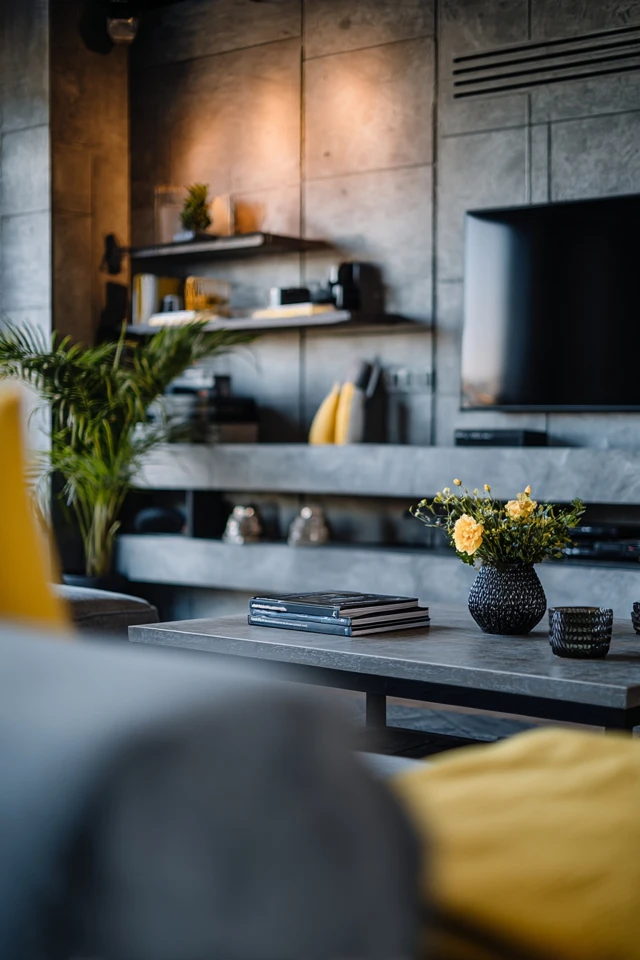
Choose the room you can darken and close off most easily. A spare bedroom, a den or a basement corner beats a bright living room with three windows. Rectangular rooms are easier than square ones, because you can put the screen on a short wall and seat everyone facing the length of the room.
Check three things before buying anything: where the windows are, where the outlets are, and where the door swings. Doors and windows decide your layout more than taste does.
What is a good small theater room layout?
Put the screen on the shortest wall with the main seat centered on it. Keep the other seats within roughly 30 degrees of that center line, or the picture looks stretched from the sides.
- Leave a clear path to the door so nobody crosses the screen mid-movie.
- Pull the sofa a little off the back wall if you can. It tightens bass and gives you room for a speaker or a shelf.
- In an open-plan home, a rug and a lamp on the media side mark the zone without walls.
- Keep tall shelving away from the speaker line so it doesn't block the sound.
How do you choose screen size and placement?
Sit about 1 to 1.5 times the screen's diagonal away for a cinematic feel. In a room with a 9-foot seating distance, that points to a screen somewhere around 85 to 110 inches. Smaller rooms often suit a 55 to 75 inch TV instead, and a wall-mounted TV frees floor space.
A projector fits tight budgets well, since a large picture costs less than a large TV. It needs a dark room, a solid surface (a painted wall works to start) and a spot to mount it, so plan the power outlet before you commit.
What seating fits a small home theater?
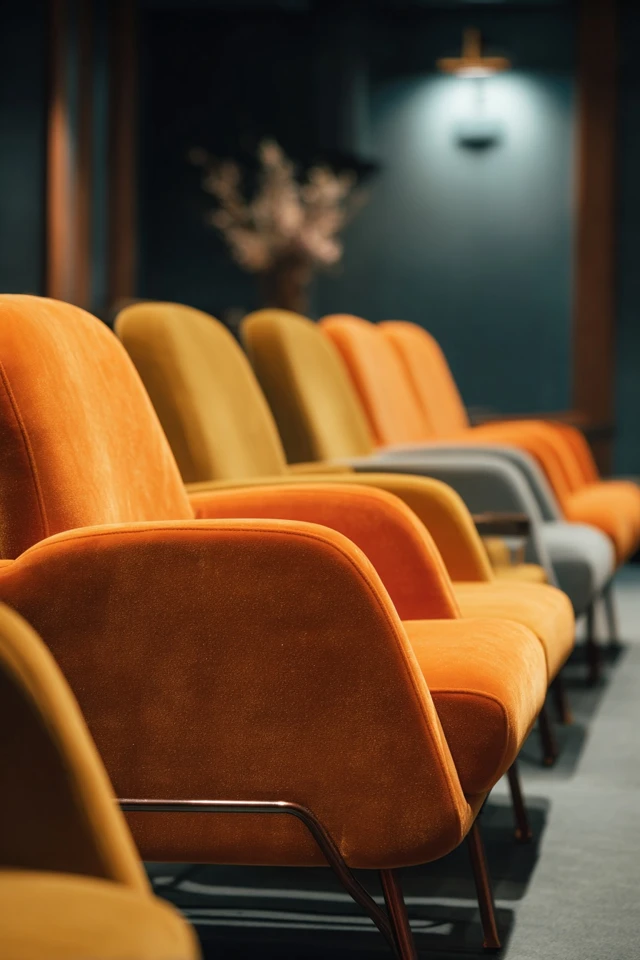
A compact loveseat, a small sectional or two deep armchairs usually beats a big recliner set. Add ottomans that tuck underneath, and choose a depth you can actually lounge in for two hours.
If a dog is allowed on the furniture, choose tightly woven or performance fabric and covers you can wash. As an architect, I'd spend the seating budget first, because comfort decides how often the room gets used.
How dark should the walls be?
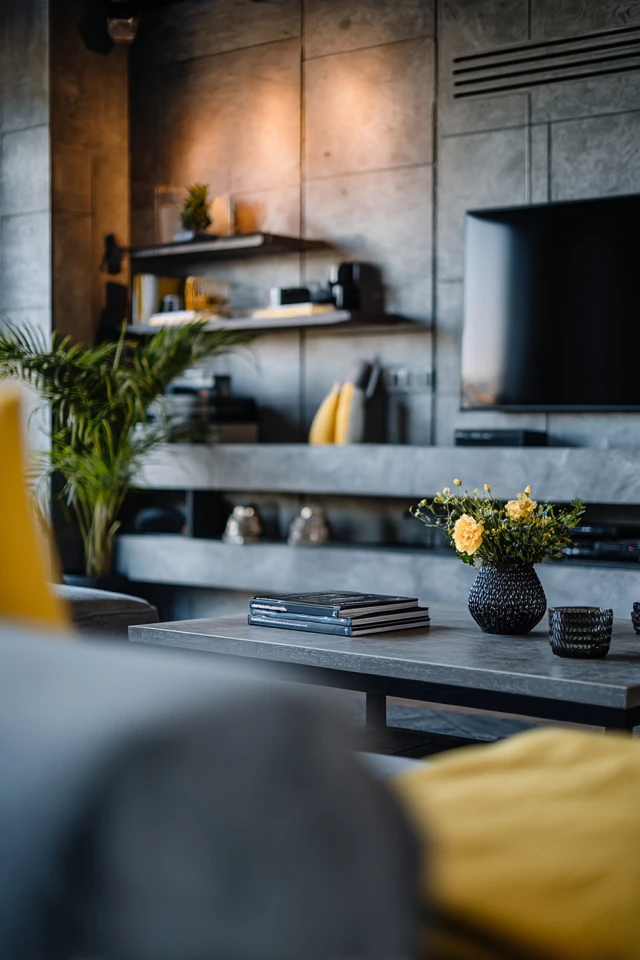
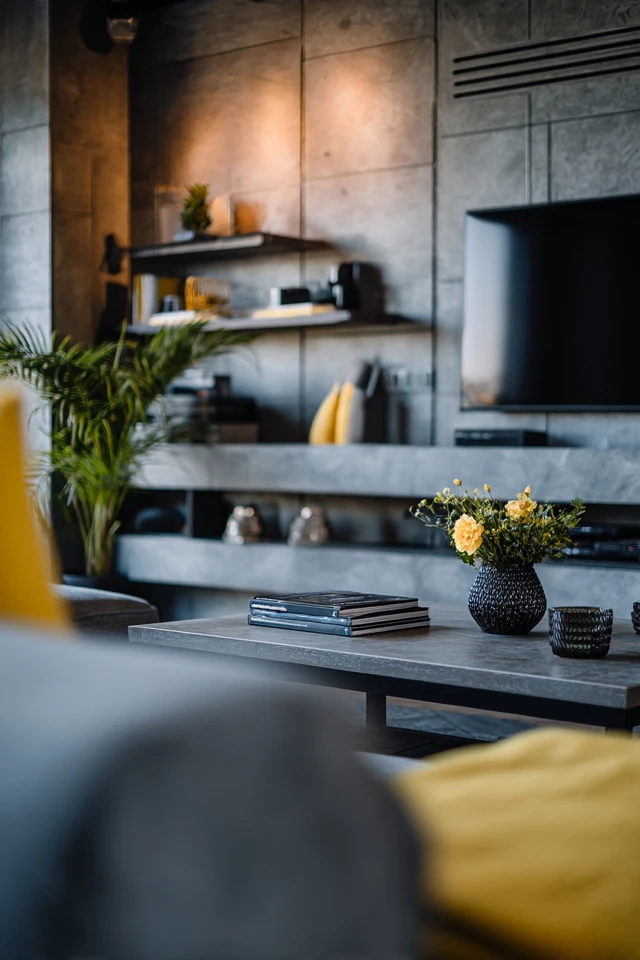
Dark, matte walls reduce reflected light and keep your eye on the screen. Deep slate, charcoal, olive or a warm dark greige all work. Glossy paint bounces light and creates glare, so choose matte or flat.
Dark paint is a cheap upgrade, and it suits a small space that you only use at night. Add blackout curtains or cellular shades on windows. Test a paint sample next to the screen at night and in daylight before committing.
What lighting makes a room feel like a theater?
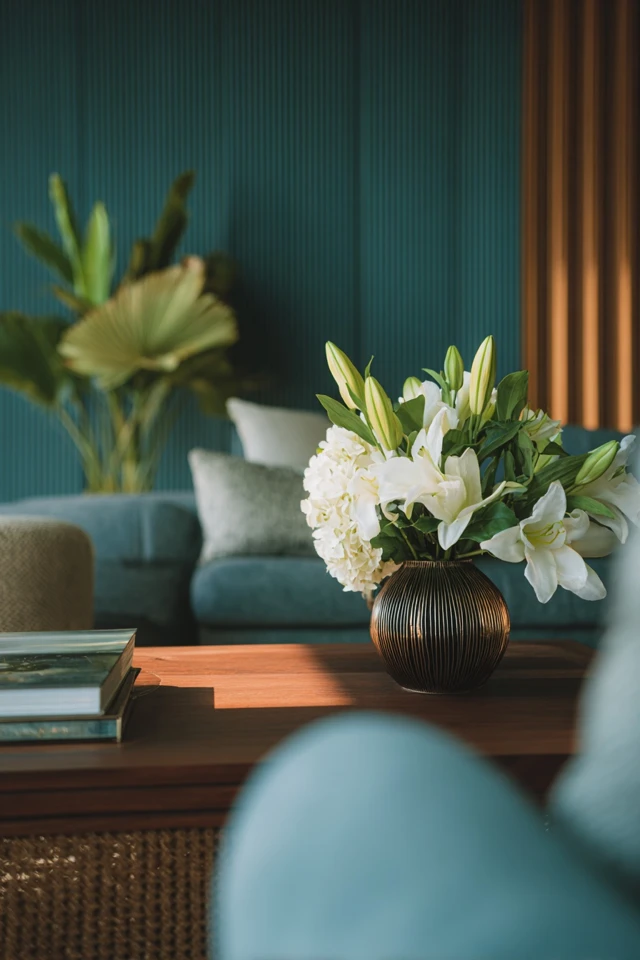
Use several low sources you can dim instead of one overhead light: a lamp, wall sconces, and an LED strip behind the screen or under a shelf. A dimmer on the main fixture helps. Warm bulbs feel cozier, and color temperature is one of the main ways light is described, as the Department of Energy's color and spectrum page explains.
LEDs suit this job. The Department of Energy notes that good-quality white LED products are expected to last 30,000 to 50,000 hours or longer, so strips and bulbs behind a screen rarely need replacing.
Light at night also affects sleep. The U.S. Department of Energy states that "Light plays a key role in setting and regulating the body's biological clock." If you watch late, dim the room and pick warm bulbs for the final hour.
How do you improve sound in a small room?
Small rooms echo, so soften them. A thick rug, heavy curtains, upholstered panels and a full bookshelf all absorb sound. Concentrate on the wall behind the seats, the side walls at ear height and the spot opposite the screen.
For speakers, a soundbar with a subwoofer is the simplest setup. If you go with surround speakers, put the front pair beside the screen at ear height and the rear pair at the sides or just behind the seats. Place the speakers before you run wires, so you can hide them in cord channels.
How can you build a cheap home theater?
For a home theater on a budget, spend in this order: seating, darkness, sound, then screen size. Paint, blackout curtains and a rug cost little and change the room most. DIY acoustic panels, made from a wood frame, insulation and fabric, cost less than store-bought ones. Skip any cutting or insulation work you aren't comfortable with, and wear a mask when handling it.
- Pick the room and wall for the screen.
- Paint matte and block the windows.
- Add the best seating you can afford.
- Set up a soundbar or small speaker system, then treat the walls with textiles.
- Add dimmable lamps or an LED strip.
Storage and finishing touches
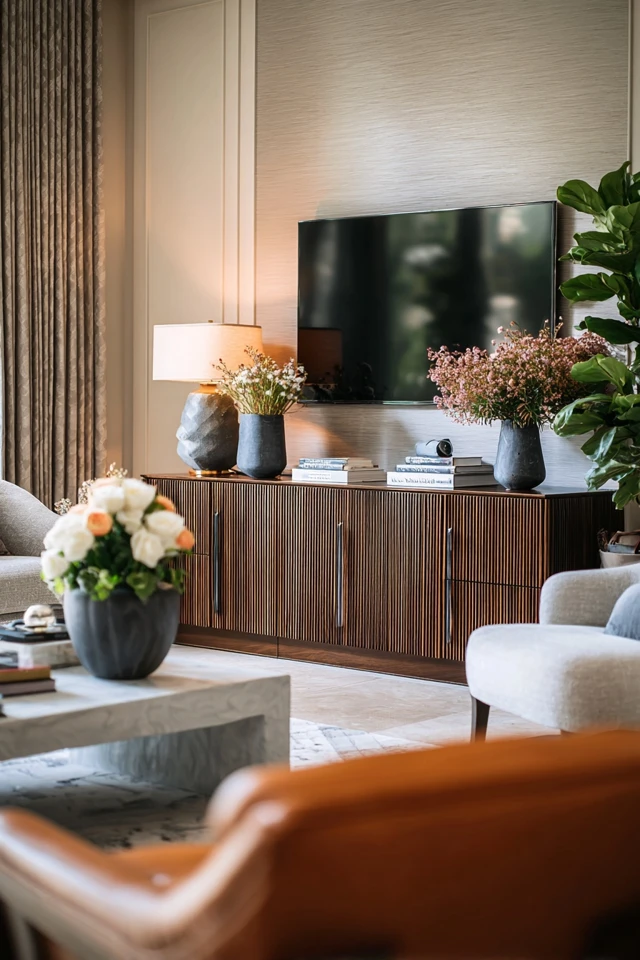
Hide the clutter first. A low media cabinet with ventilation, cord channels and a basket for remotes keeps the room calm. Then add a few touches: framed film posters, a shelf of favorite discs or books, and a throw blanket for each seat.
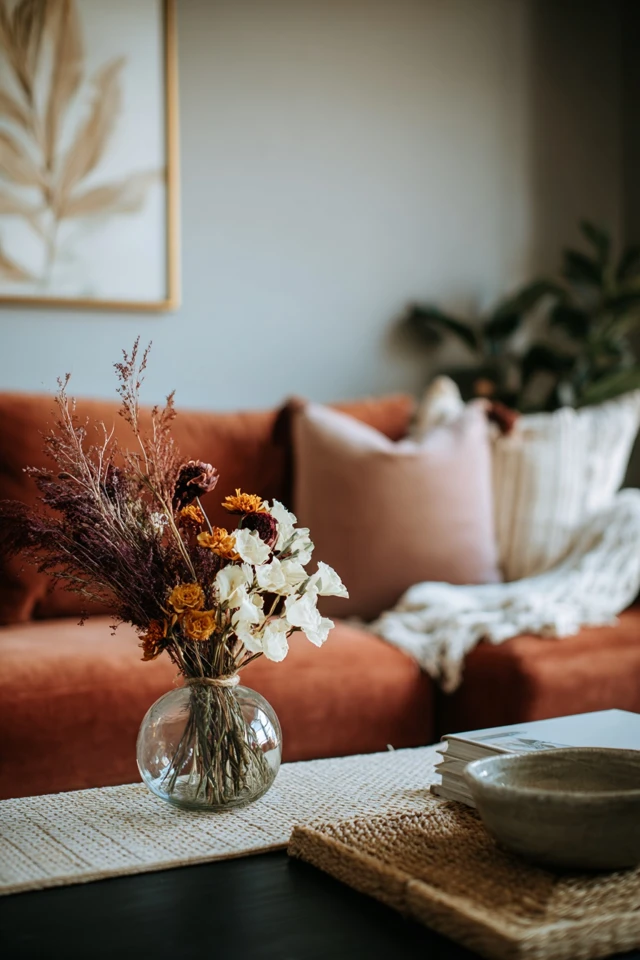
Have electrical work such as new outlets or in-wall wiring done by a licensed electrician. If your theater is a corner of a larger room, the TV room ideas have more layouts to borrow, and the brick wall living room post shows how a textured wall can help with sound.
Frequently asked questions
What is the best home theater setup for a small room?
A wall-mounted TV or projector on the short wall, a compact sofa centered on it, a soundbar with subwoofer, dark matte walls and dimmable lighting. Add a rug and curtains to cut echo.
How to make a cheap home theater?
Start with paint, blackout curtains and comfortable seating, then add a soundbar and a projector or modest TV. DIY acoustic panels and an LED strip add atmosphere for little money.
How to setup a mini theater at home?
Pick a dark room, mount the screen on one wall and center the main seat about 1 to 1.5 diagonals away. Place speakers at ear height, hide the cables and add dimmable lights.
Do you need acoustic panels in a small home theater?
They help, but you can start with a thick rug, heavy curtains and soft furniture. Add panels on the walls beside and behind the seats if the room still sounds echoey.
Filed under
ArticlesMeet the author
Written by an architect.
Julio Arco is a passionate architect with years of experience in architecture, interior design, urban design, and housing. He studied at prestigious universities across North America and Europe.

- Name
- Julio Arco
- Job
- Architect and online interior designer
- Studied
- Architecture, ITESM · Urban Design and Housing, McGill
- Partner
- Thor, Australian Shepherd
- Thor’s title
- Head of quality control