Small Home Theater Ideas: Layout, Screen, Seating, Sound

By Julio Arco
Architect and online interior designer
In this post
- How big should a small home theater room be?
- Start the small theater room layout with the screen
- What seating works in a small room?
- How do you control light for a cinematic mood?
- How do you handle sound in a small room?
- Small home theater ideas on a budget
- Storage and decor that stay quiet
- Frequently asked questions
A small home theater works when you decide three things in order: where the screen goes, where people sit relative to it, and how you control light. Sound, color and decor come after that. You don't need a big room for any of this, and a spare bedroom, a living room corner or a basement nook can all do the job.
Below is the order I'd follow, with sizes that are well established and some budget shortcuts along the way.
How big should a small home theater room be?
There is no minimum size. A room of about 10 by 12 feet already fits a sofa or loveseat, a screen and a small console. What matters more is the proportion between the screen and the seating distance than the square footage.
A common starting point is to sit about 1.5 to 2.5 times the screen's diagonal away. For a 65-inch TV, that is roughly 8 to 13 feet. In a short room, go toward the lower end and pick a sharper screen rather than a bigger one. Oversized screens in tight rooms tire your eyes.
Start the small theater room layout with the screen
The screen wall decides everything else: seating, speakers and cable runs. Pick the wall with no window, or the one you can most easily darken. Then work outward.
- Place the screen so its center sits at about seated eye level, not high over a fireplace if you can avoid it. If a fireplace wall is your only option, these fireplace and TV layouts show how to handle it.
- Put the main seat on the room's centerline, facing the screen directly.
- Pull furniture a few inches off the walls when you can. It leaves space for cables and helps sound behave.
- Leave a clear path of about 30 inches to the seats so nobody crosses the screen on the way in.
Open-plan rooms
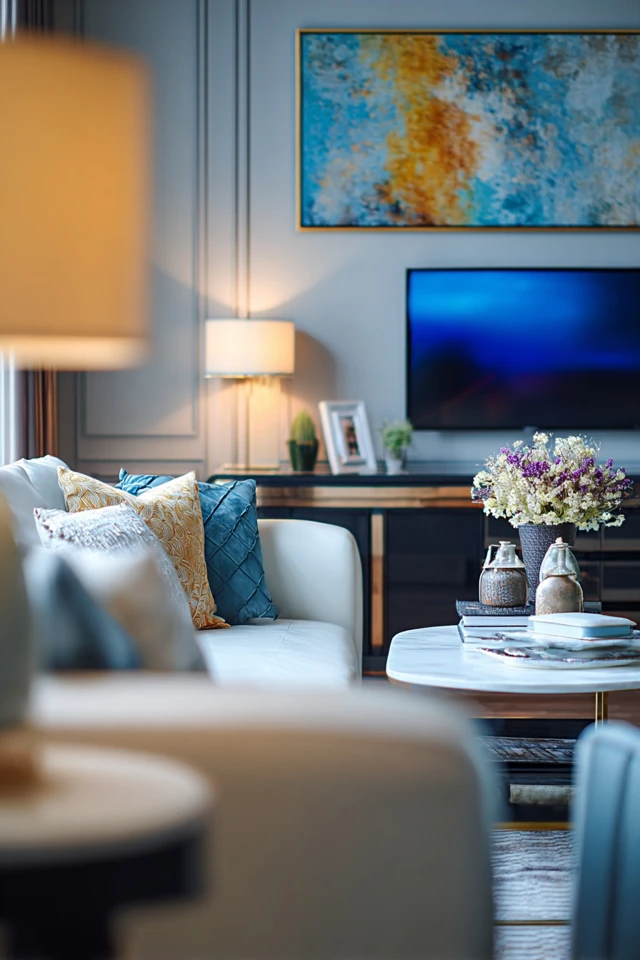
If the theater shares space with a living area, define it with a rug under the seating, a separate lamp or two on dimmers, and a low console behind the sofa as a soft divider. You get a cinema zone without building a wall.
What seating works in a small room?
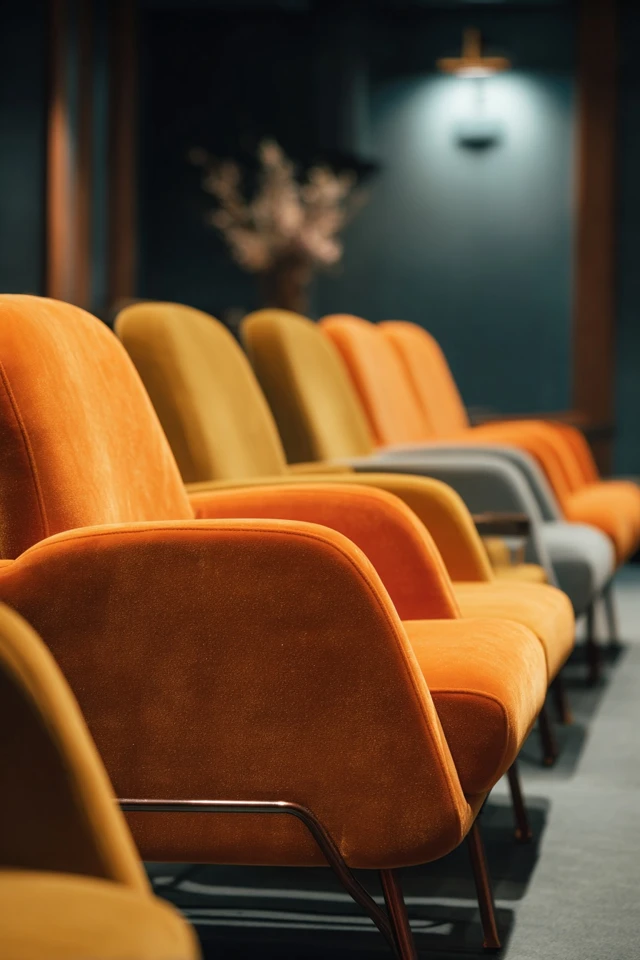
A compact loveseat, a small sectional or two slim recliners suit most small rooms. Pick pieces with low backs so they don't block sightlines or crowd the space visually. Modular seating is handy because it rearranges for guests.
If a dog or cat shares the couch (most do), I recommend removable, washable covers or a tightly woven fabric. Long movies and pet hair go together.
How do you control light for a cinematic mood?
Dark walls help, but light control matters more. Blackout curtains or roller shades take care of daylight. Then layer the lamps: a dimmable overhead, a reading lamp by the seat, and a low uplight or wall sconce for a glow that doesn't hit the screen.
Choose warm bulbs, around 2700K to 3000K, for evening viewing. Color temperature is one of the main ways light appearance is described, according to the U.S. Department of Energy's page on color and spectrum. LEDs also suit a theater because they dim well and last long. The DOE notes that good-quality white LED products are expected to last 30,000 to 50,000 hours or longer.
Keep bias lighting behind the screen low, and avoid anything bright at night that you don't need. The joint IES and IDA principles on light at night say it plainly: use "the minimum amount of light necessary". For a theater, that means a dim path light and nothing more.
Paint colors
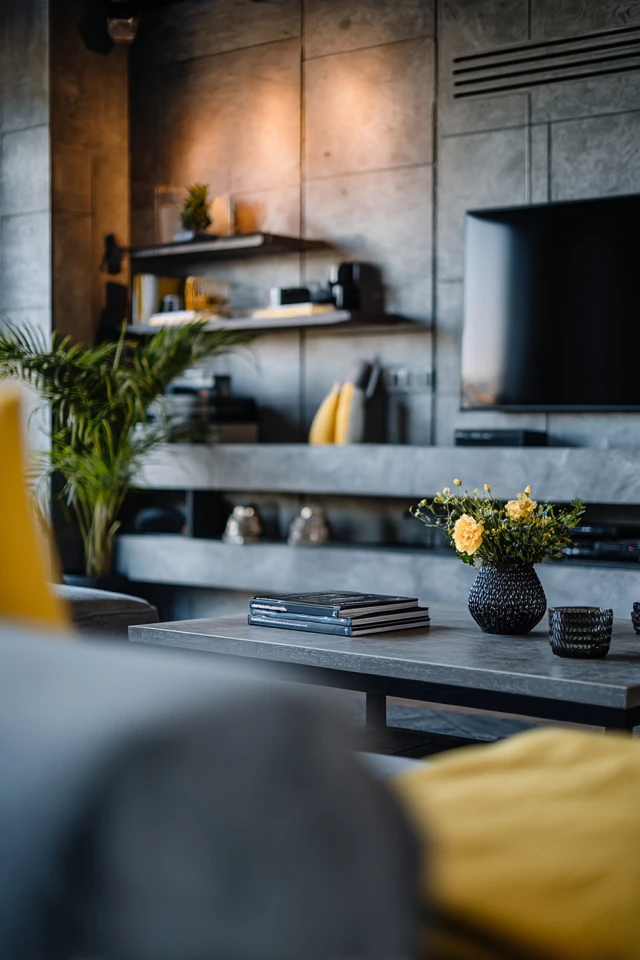
Deep, matte colors such as charcoal, navy or olive absorb light and cut glare. Use them on the screen wall and keep the other walls a shade or two lighter so the room doesn't feel like a cave. Matte finishes are the better choice: glossy paint bounces the screen's light around and creates reflections.
How do you handle sound in a small room?
Small rooms echo, and soft materials are the cheapest fix. A wool or thick pile rug, heavy curtains, upholstered seating and a bookcase filled with books all absorb sound. If you still hear echo when you clap, add fabric-wrapped acoustic panels at the first reflection points on the side walls, or behind the seats.
For the best home theater setup for a small room, a soundbar with a subwoofer is plenty. If you go for surround speakers, place the front left and right speakers at the sides of the screen, and the rear speakers at the sides or just behind the seating, at about ear height or slightly above. Shared walls with neighbors or sleeping family members may need more than soft furnishings, so ask a contractor about real soundproofing.
Small home theater ideas on a budget
Most of the atmosphere costs little. If you're wondering how to make a cheap home theater, spend on the screen and the seat, and improvise the rest.
- Use blackout curtains or liners instead of renovating windows.
- Paint one wall a deep matte color yourself, which is an easy weekend job.
- Replace overhead bulbs with warm dimmable LEDs and add a plug-in sconce.
- Use a projector with a pull-down screen if wall space is short. It also disappears when you don't need it.
- Hang a thick quilt or tapestry on a bare wall as a stand-in for panels.
- Hide cables in a cord cover or a console with doors.
These also work as small home theater ideas for small spaces, since nothing here needs floor area.
Storage and decor that stay quiet
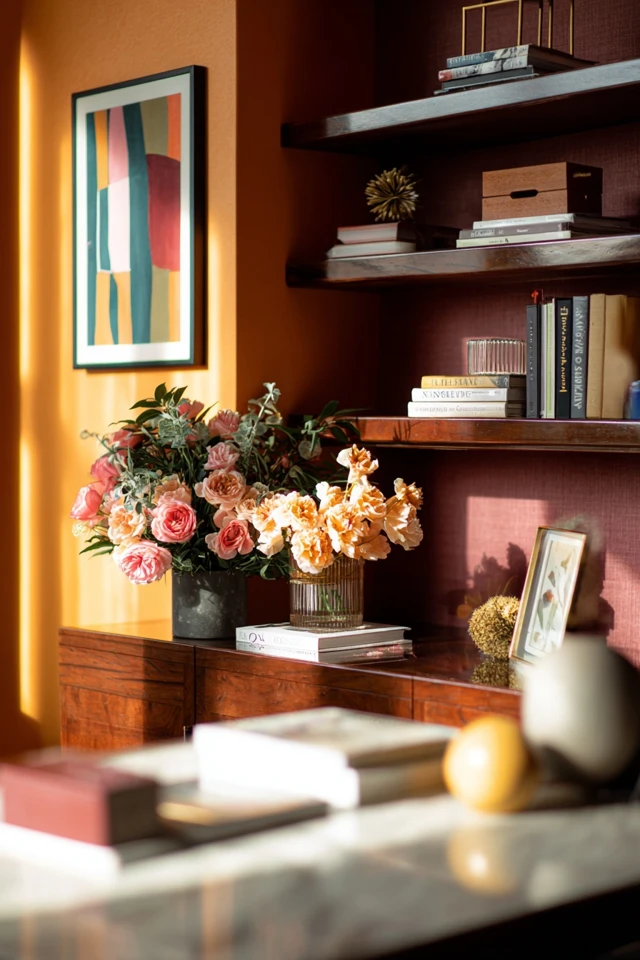
Clutter breaks the mood fast. Use a console with doors or baskets for remotes and game controllers, and keep wall shelves for a few objects. Pick one metal finish for lamps and hardware, and let a rug, a throw and a couple of pillows supply color. A small plant by a window softens a dark room, but check with your vet that it is safe before you bring it home if you have pets.
If you are turning a room that also serves another purpose, such as an office, this kitchen home office post has ideas for sharing a room, and the bedroom lighting post covers dimmer and lamp layering in more detail.
Frequently asked questions
What is the best home theater setup for a small room?
A single screen on the window-free wall, a loveseat or compact sofa on the centerline, and a soundbar with a subwoofer. Add blackout curtains and dimmable warm lights.
How to make a cheap home theater?
Spend on the screen and seating, then use curtains, a rug and a paint color for atmosphere. A projector and pull-down screen can also cost less than a large TV.
How to setup a mini theatre at home?
Choose a dark wall, set the screen at seated eye level, and place seating about 1.5 to 2.5 times the screen diagonal away. Then add light control and speakers.
Do I need acoustic panels in a small home theater?
Not always. Rugs, curtains and upholstered seating often tame the echo. Add panels if you still hear a flutter when you clap.
Filed under
ArticlesMeet the author
Written by an architect.
Julio Arco is a passionate architect with years of experience in architecture, interior design, urban design, and housing. He studied at prestigious universities across North America and Europe.

- Name
- Julio Arco
- Job
- Architect and online interior designer
- Studied
- Architecture, ITESM · Urban Design and Housing, McGill
- Partner
- Thor, Australian Shepherd
- Thor’s title
- Head of quality control