Minimalist Neutral Living Room: Ideas That Actually Work
Build a minimalist neutral living room with a tight palette, layered textures, smart storage and clear surfaces. Includes small-space and no-sofa layouts.

By Julio Arco
Architect and online interior designer
In this post
- What is the best neutral color for a living room?
- How do you limit the palette without making it boring?
- How do you use natural light?
- How do you mix textures in a neutral room?
- Which layout works for a minimalist living room small space?
- Can you have a minimalist living room without a sofa?
- Where does the TV go, and what about storage?
- What belongs on the walls?
- How do you add plants and one accent?
- Frequently asked questions
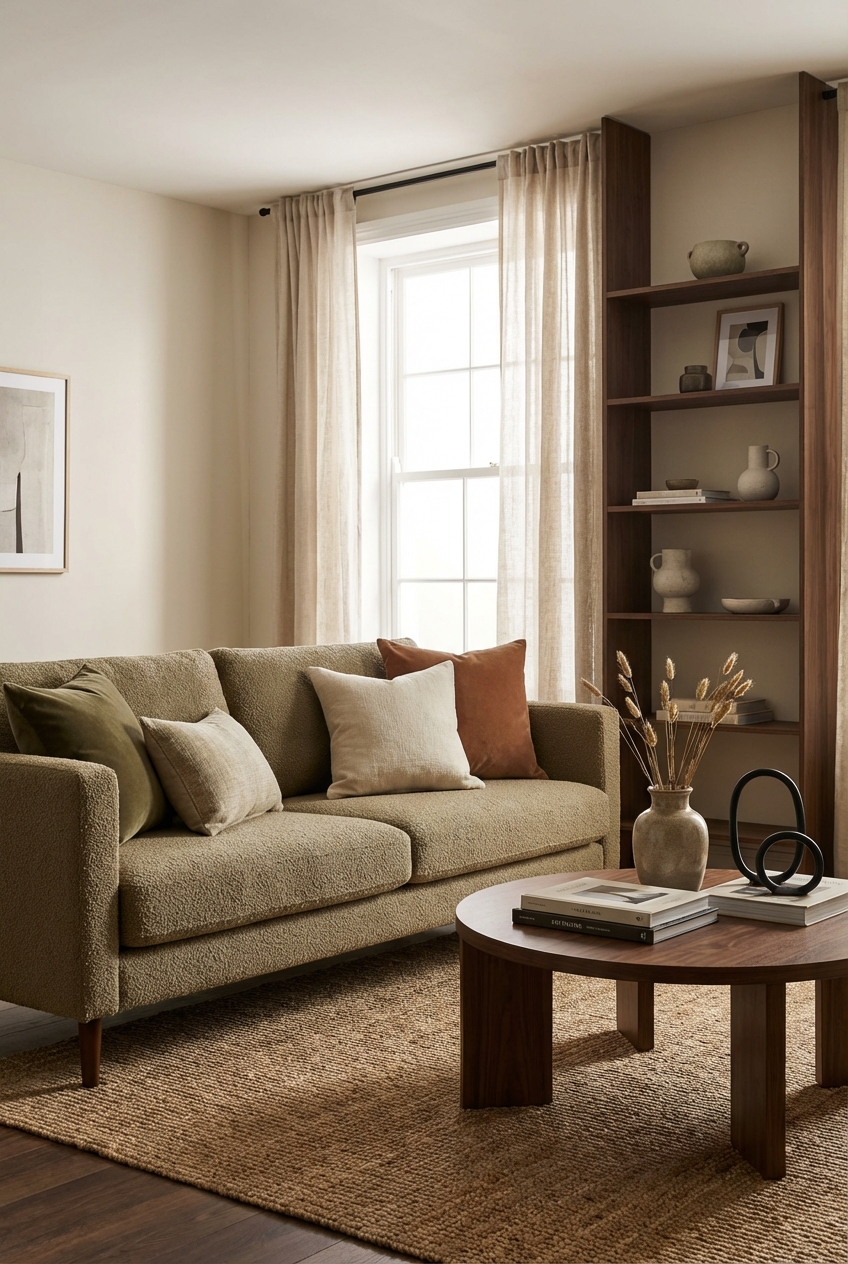
A minimalist neutral living room comes down to three decisions: keep the palette small, keep the surfaces clear, and add interest through texture instead of color. Black and white are neutrals too, so the old black-and-white approach still works. A pale base with a few dark pieces gives you the same calm look.
If your living room feels cluttered or flat, you don't need to start over. Most of these changes take a weekend and a few trips to the donation bin.
What is the best neutral color for a living room?
There isn't one answer, because it depends on your light. A warm white or soft greige suits rooms that face north and get cool, bluish daylight. A crisper white or light gray works in sunny south-facing rooms, where warm tones can turn yellow by afternoon.
Check the undertone before you commit. A white with blue in it reads cooler, and a black with brown in it reads warmer. Paint large swatches on two walls and look at them in the morning, at midday and under lamps at night.
As an architect, I recommend picking one base neutral, one deeper neutral (charcoal, espresso, black) and one natural material, usually wood. That is the whole palette.
How do you limit the palette without making it boring?
Repetition does the work. Pick two or three tones and repeat each one at least twice around the room: a black lamp base and a black frame, a cream throw and a cream curtain. The eye reads the repeats as a plan.
Contrast also helps you see shapes. In perception research, the figure-ground relationship is described as the first Gestalt principle: we visually sort a scene into figure and ground. A dark armchair against a pale wall is a clear figure. Put it against a dark wall and it disappears.
Color does affect how we respond to a room. One study from Deakin University found that blue coloring of the built environment increases autonomic range and is associated with modulations of brain activity linked to emotional processing. That is a reason to treat any accent color as a deliberate choice, not a leftover.
How do you use natural light?
Keep the window clear. Light curtains hung high and wide let the glass show, and a pale wall opposite the window bounces daylight deeper into the room. A mirror across from a window does the same.
Layer artificial light too: one overhead source, a floor lamp and a table lamp, ideally on dimmers. Glossy surfaces throw sharp highlights, while matte ones soften them, so mix both sparingly.
How do you mix textures in a neutral room?
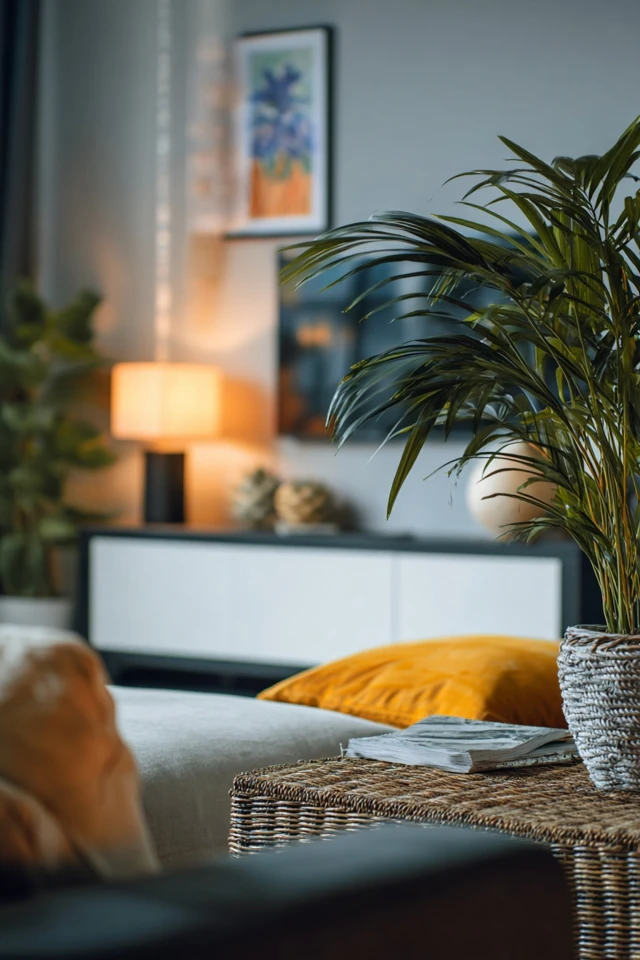
When the colors are quiet, texture carries the room. Pair a linen sofa with a wool throw, a bouclé chair with a smooth ceramic vase, and light oak against matte black metal.
- Stay in one temperature: warm whites go with brass and walnut, cool whites with chrome and gray oak.
- Use at least three different surfaces: something nubby, something smooth, something woven.
- Keep patterns to one scale per surface, for example a large graphic on the rug and nothing busy on the pillows.
If a dog or cat lives with you, choose tightly woven or performance fabrics and washable covers for any light-colored seating. Loose bouclé loops can snag on claws.
Which layout works for a minimalist living room small space?
Start with the focal point (window, fireplace or TV) and arrange seating to face it or each other. Leave about 30-36 inches for the main walkway so the room doesn't feel like an obstacle course.
- Paint walls and ceiling in light, reflective tones to add perceived height.
- Choose pieces with visible legs, so you can see floor underneath.
- Use storage ottomans and nesting tables instead of extra furniture.
- Add one slim vertical dark element, like a shelf or a black trim line, for definition.
More ideas for tight rooms are in our small living room ideas post.
Can you have a minimalist living room without a sofa?
Yes. Two armchairs facing each other, a low daybed, or a pair of benches around a coffee table all make a conversation area. This frees floor space and keeps the look light.
Use a large rug to define the seating zone, and make sure you still have a comfortable place to sit for an hour. I'd add floor cushions only if you'll really use them, since they tend to migrate and clutter the room.
Where does the TV go, and what about storage?
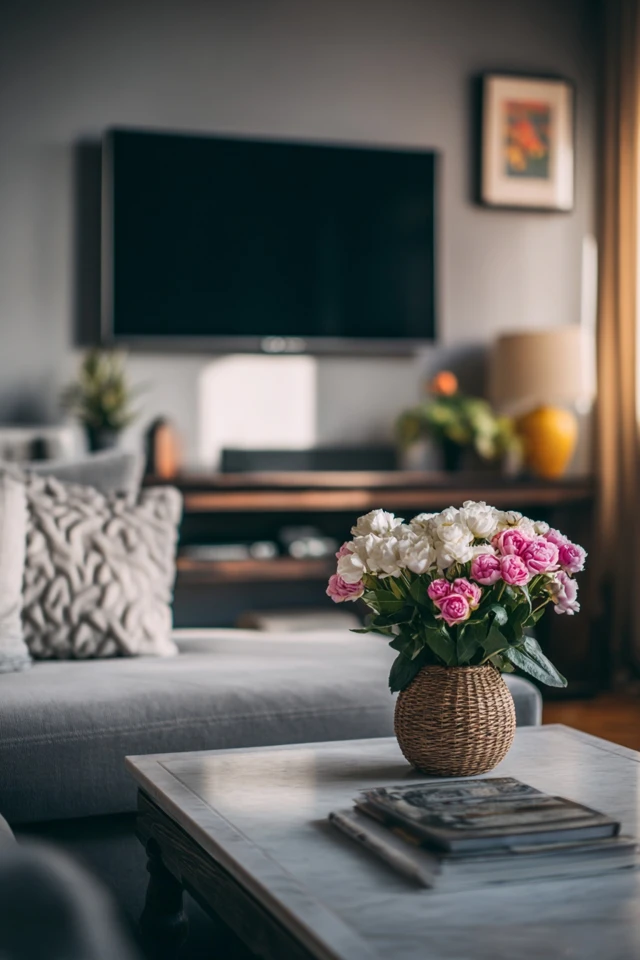
Put the TV on a low console with closed doors, so cables, remotes and pet gear stay out of sight. A TV doesn't have to be hidden, but a dark screen on a pale wall becomes the biggest object in the room, so keep what surrounds it quiet.
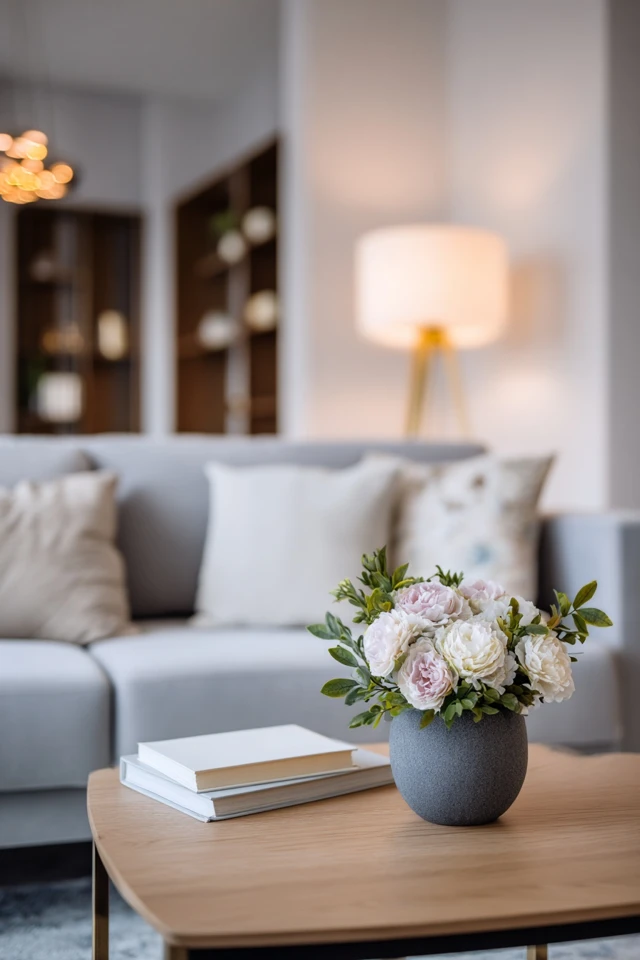
Closed storage is the quickest route to clear surfaces. Leave a few things on display, such as a bowl, a plant and one stack of books, and put the rest away. For a family setup, see small family room ideas with a TV.

What belongs on the walls?
For minimalist living room wall decor, fewer and larger works better than many small frames. One oversized print, a pair of matching frames or a single mirror is enough. Hang art with its center around 57-60 inches from the floor, and keep it related to the sofa or console below it.
Use matte frames in your deeper neutral and wide mats, which give a simple image breathing room.
How do you add plants and one accent?
Plants soften a high-contrast room better than any accessory. Choose one or two larger plants over a crowd of small pots. If you have pets, check the plant against the ASPCA toxic plant list and ask your vet before bringing it home.
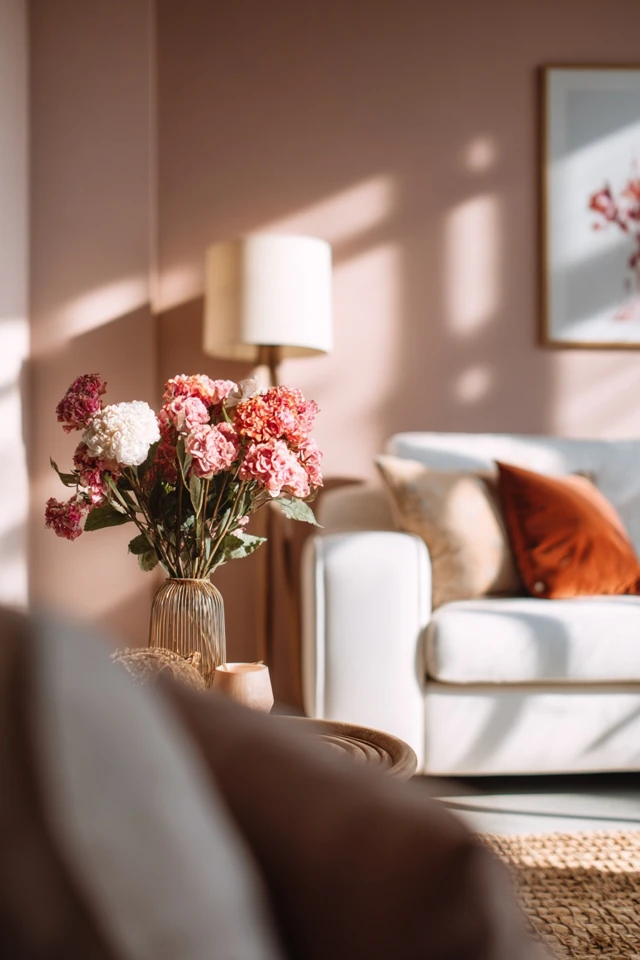
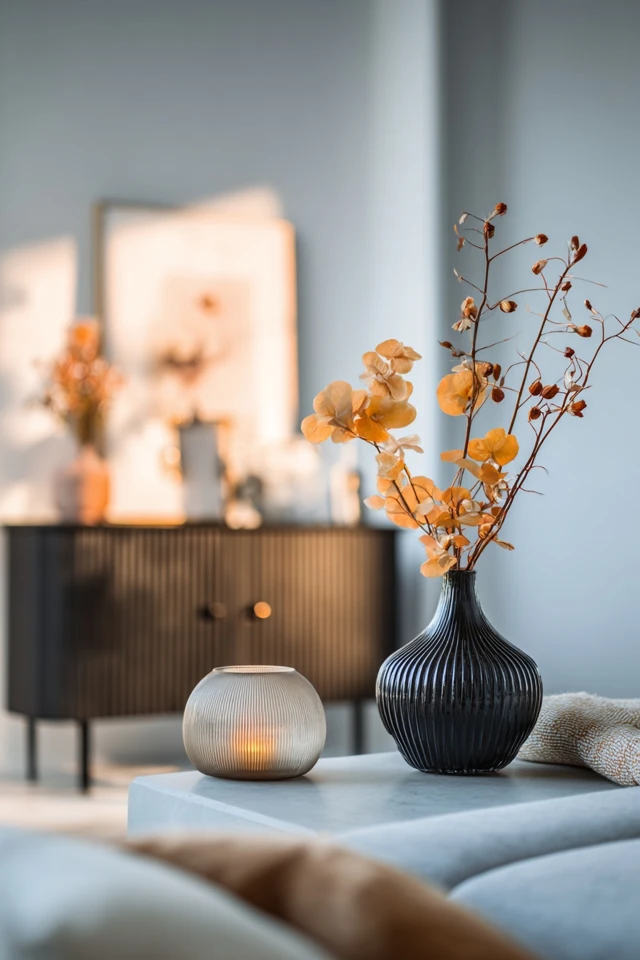
For an accent, pick a single color, such as muted green or terracotta, and bring it in through art or one chair. Related reading: white living room tips.
Frequently asked questions
What is the 3-5-7 rule in decorating?
It is a styling guideline that groups objects in odd numbers (3, 5 or 7) because uneven groupings look more natural than pairs. In a minimalist room, use it for one or two vignettes, such as a tray, a vase and a book on a console.
What is the 2/3 rule for living rooms?
It is a loose proportion guide: roughly two-thirds of the room in your main neutral and one-third in contrast or accent tones. It keeps a neutral room balanced instead of flat.
How do I keep white upholstery clean in a family home?
Choose performance fabrics or removable, washable slipcovers, vacuum often and treat stains quickly. Where pets are on the furniture, a washable throw over the favorite spot saves the sofa.
Can I add color to a neutral living room?
Yes. Use one or two accent hues through art, a single chair or seasonal accessories, and keep the rest of the palette unchanged.
Filed under
ArticlesMeet the author
Written by an architect.
Julio Arco is a passionate architect with years of experience in architecture, interior design, urban design, and housing. He studied at prestigious universities across North America and Europe.

- Name
- Julio Arco
- Job
- Architect and online interior designer
- Studied
- Architecture, ITESM · Urban Design and Housing, McGill
- Partner
- Thor, Australian Shepherd
- Thor’s title
- Head of quality control