Japanese Bathroom Design: Materials, Layout and Ideas
What makes a Japanese bathroom, and how to build one at home: wet and dry zones, a deep soaking tub, wood and stone, soft light and small-space tips.

By Julio Arco
Architect and online interior designer
In this post
A Japanese style bathroom separates washing from soaking. You rinse off first, usually seated, and then settle into a deep tub to relax. Around that routine you get natural materials, a calm palette and very little clutter.
You can borrow the idea in almost any home, even a rental. Below is what defines the style, which materials work, and how to adapt the layout to a small room.
What is a Japanese style bathroom?
The bathroom is a place to unwind, not just to get clean. Japanese-style bathing, as a review in the National Institutes of Health's PMC archive describes it, involves soaking in hot water up to the shoulders in a deep bathtub, which sets it apart from Western-style bathing. The tub is for soaking only. Soap and shampoo stay in the washing area.
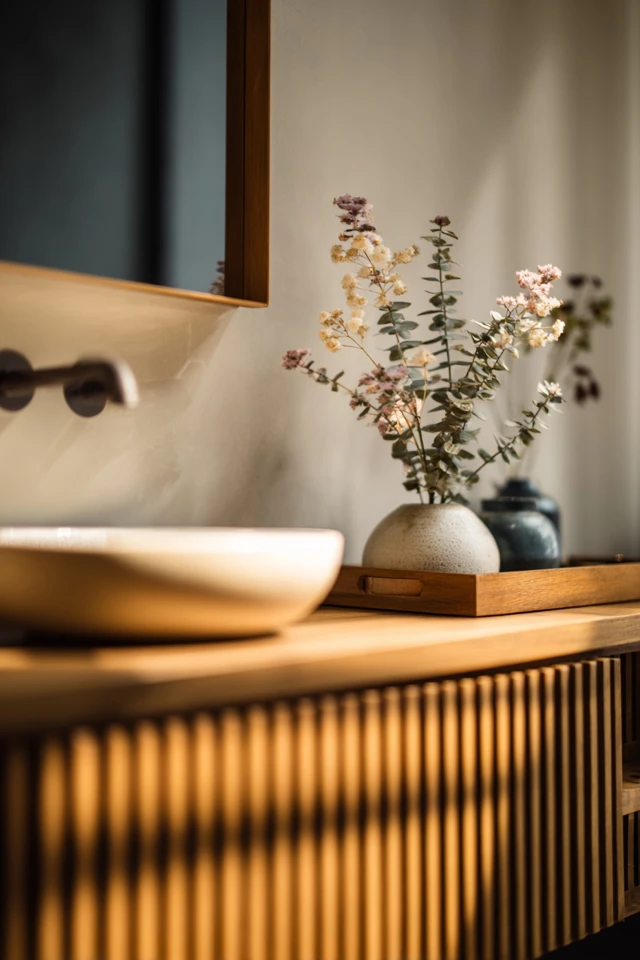
That one habit drives the design. You need a spot that can get wet (a floor drain or a tiled wet zone), a deep tub, and a dry area for towels and the sink. Everything else is restraint: few objects, quiet colors, and wood, stone or plaster instead of glossy decoration.
How to make a Japanese style bathroom
Work in this order, because the layout decides what the finishes need to do.
- Decide where the wet zone ends. A glass panel, a change in tile, or a small step can mark it.
- Choose the tub. The deepest one that fits is usually the right call.
- Pick two or three materials and repeat them, for example wood, matte tile and one stone.
- Set up lighting you can dim, then add storage that hides everyday clutter.
- Finish with a few objects: a stool, a bucket, a plant.
Soaking tubs: ofuro and hinoki ideas
A traditional ofuro is deep and relatively compact, so you sit upright with water at shoulder height. Freestanding versions in acrylic or stone-look resin are the easy way to get that depth without a remodel. A wood tub, such as hinoki (a Japanese cypress), looks wonderful but needs drying and airing after use, so be honest about how much upkeep you'll do.
If a full tub is out of reach, a compact deep tub in a corner is better than a long shallow one. As an architect, I'd spend the budget on depth and a comfortable backrest angle before any decorative extras.
Wet and dry zones, with or without a tub
A Japanese bathroom design with shower works well when the shower is a walk-in area with a bench or low stool and a handheld head. Keep the floor sloped to a drain and use a frameless glass panel so the room still reads as one space.
Warmth matters too. The same NIH review notes that, for safe and comfortable winter bathing, the dressing room or bathroom temperature should be kept at 20 °C or higher, and several degrees more is recommended for older people. If your bathroom runs cold, think about a heated floor or a towel warmer, and ask a licensed electrician before adding either.
Best natural materials
Wood
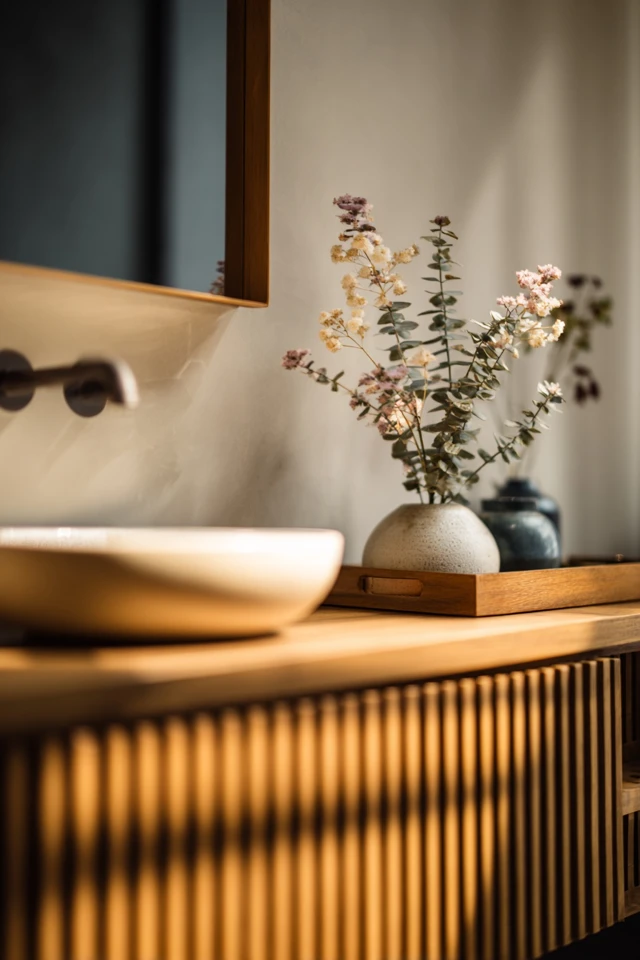
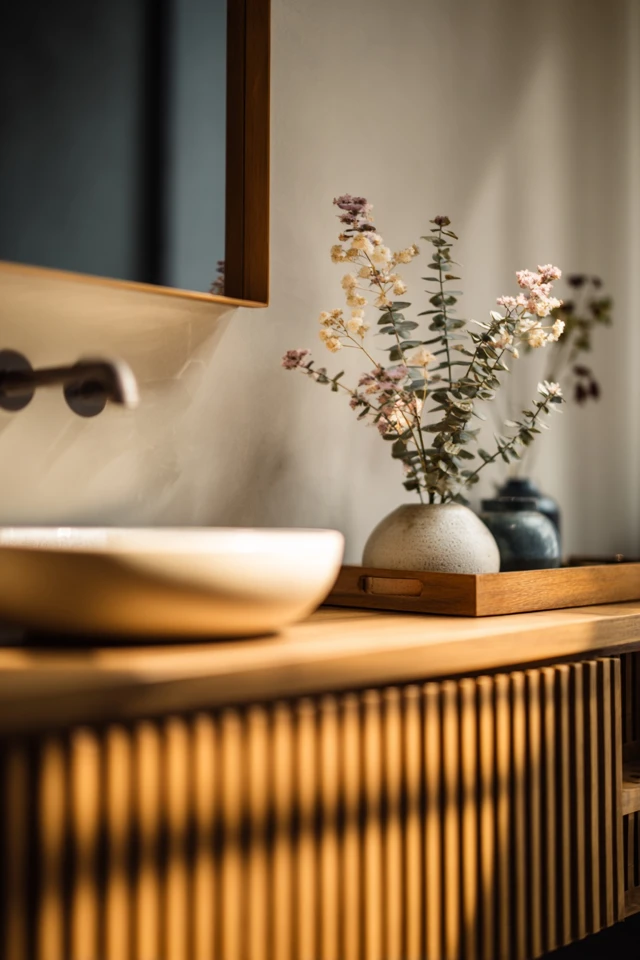
Use water-tolerant species or sealed wood for stools, slatted screens and vanities. Warm grain softens cool tile. Leave a small gap so air can move behind wood, and wipe it down after showers.
Stone, pebbles and tile
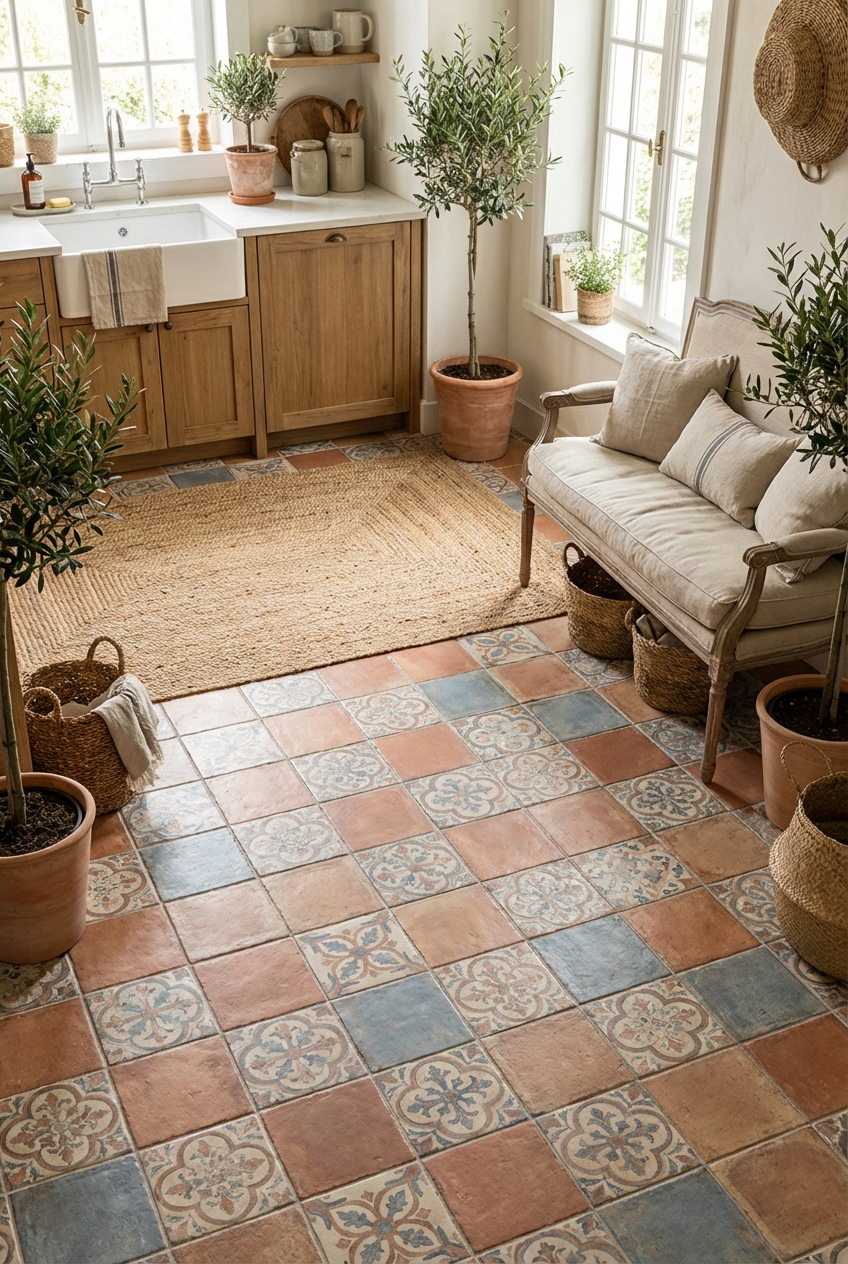
Honed or tumbled stone feels better underfoot than polished. Matte ceramic tile in a large format keeps grout lines to a minimum, which looks calmer and is easier to clean. Pebble mats or a pebble border give a nice texture, though they're harder to scrub, so use them in small doses. If you like soapstone, remember that, according to Iowa State University Extension, it doesn't need sealing but does need regular oiling.
Fabrics
Cotton, linen and hemp towels dry quickly and suit the look. If you share the bathroom with a dog who likes to flop on the mat, pick a washable cotton mat over anything thick or loose. Thick, loose floor coverings are also a tripping and mobility problem, a point the U.S. Access Board makes about carpet in accessibility guidance.
Neutral palettes and soft lighting
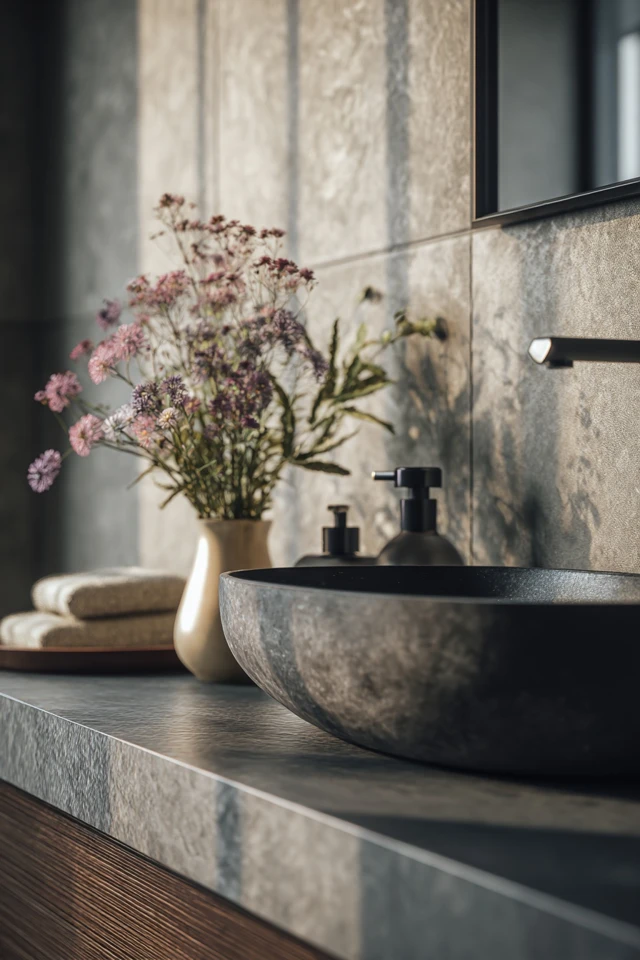
Stay with low-saturation colors: warm white, pale ash, sage, slate, charcoal. Light, warm neutrals feel cozy, while cooler grays and blue-greens read cleaner and more spacious. One deeper accent, like an indigo towel, is plenty.
Lighting does as much as color. Use warm bulbs, put them on a dimmer, and combine a soft ceiling light with a sconce or mirror light at the sink. Glossy surfaces bounce light and create sharp reflections, while matte plaster and honed stone absorb it, which is the softer mood you're after in the evening.
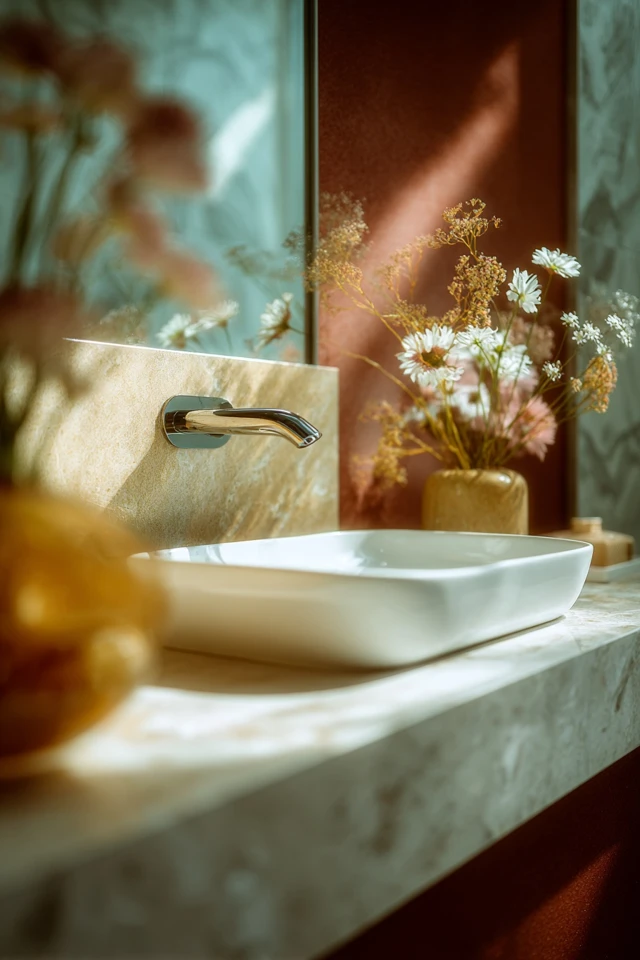
Small Japanese bathroom design
A small Japanese bathroom design is actually close to the original idea, since compact wet rooms are common there. Some tactics that fit a tight footprint:
- Treat the whole room as a wet zone with a floor drain, if your plumbing and building rules allow it. Check with a licensed plumber first.
- Choose a deep, short tub over a long one.
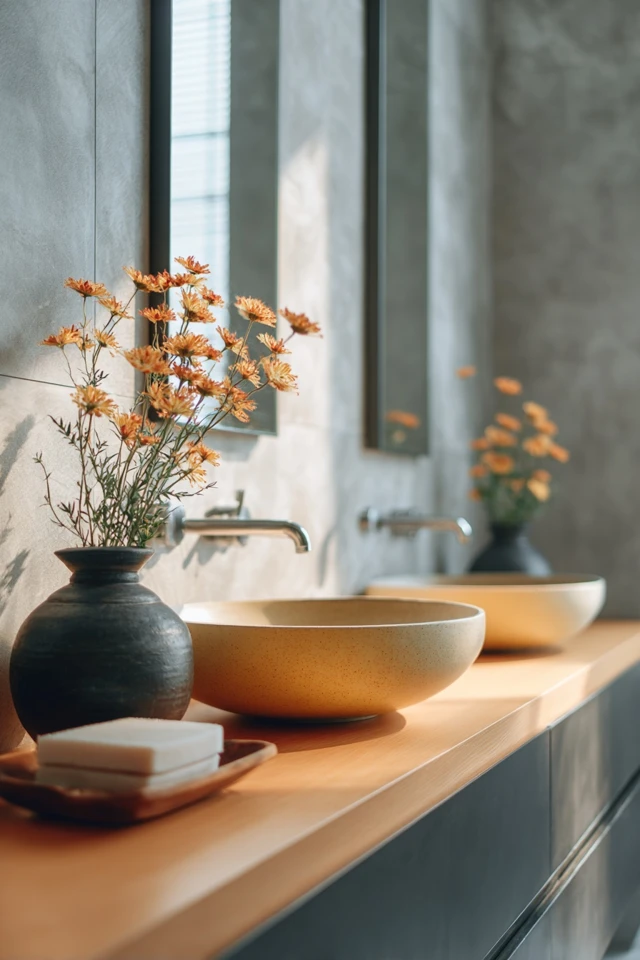
- Hang a wall-mounted vanity and recessed niches to free floor space.
- Use hooks instead of towel stacks, and keep one tray on the counter.
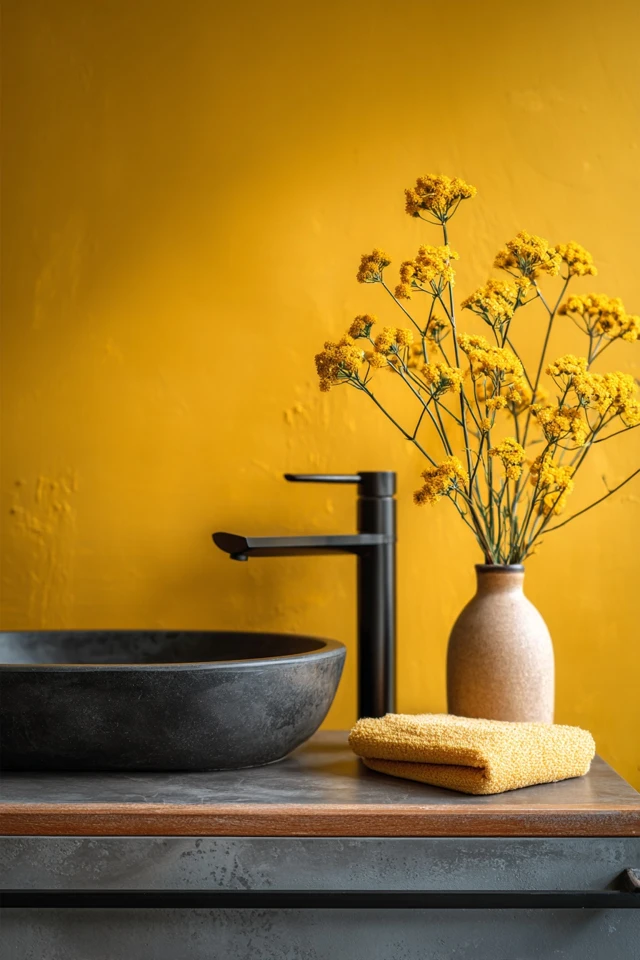
For a modern Japanese bathroom design, add matte black fixtures against pale plaster or wood, and keep metals to one or two finishes.
Bamboo, plants and useful accessories
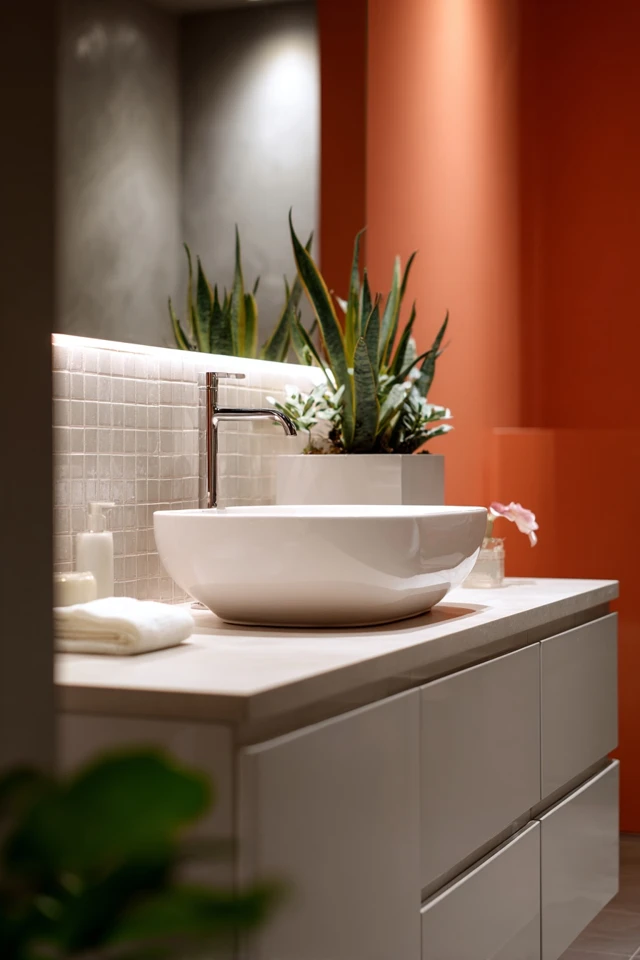
A bamboo mat, a slatted screen or a single plant is enough. Snake plants and ZZ plants tolerate low light and humidity, but keep any plant out of reach of pets and check with your vet if your dog or cat chews leaves.
Practical extras are part of the look: a low wooden stool, a wash bucket, a tub cover to hold heat, and a basket for towels. Pick pieces you'll actually use.
For more bathroom inspiration, see our related Japanese bathroom design post, the apartment bathroom decor ideas, and some bathroom wall art ideas that suit a quiet palette.
Frequently asked questions
What does a bathroom look like in Japan?
Typically a separate wet area with a drain, a stool and handheld shower, plus a deep tub used only for soaking. Finishes are simple: tile, wood and light colors.
Can I get a Japanese style bathroom in a small apartment?
Yes. A compact deep tub or a walk-in shower with a stool, wall-mounted storage and a calm palette gets you most of the look. Check building and plumbing rules before changing drains.
Do I need a hinoki wood tub?
No. An acrylic or resin deep tub gives you the soaking experience with far less upkeep. Wood tubs need drying and airing after each use.
Filed under
ArticlesMeet the author
Written by an architect.
Julio Arco is a passionate architect with years of experience in architecture, interior design, urban design, and housing. He studied at prestigious universities across North America and Europe.

- Name
- Julio Arco
- Job
- Architect and online interior designer
- Studied
- Architecture, ITESM · Urban Design and Housing, McGill
- Partner
- Thor, Australian Shepherd
- Thor’s title
- Head of quality control