Room Divider Ideas: 10 Ways to Split a Room
Room divider ideas for small spaces, living rooms and home offices, from curtains and bookcases to DIY screens, with sizes and pet-friendly tips.

By Julio Arco
Architect and online interior designer
In this post
- How do you decide which divider fits?
- Use curtains for the cheapest, fastest split
- Style a bookcase or open shelves as a divider
- Try folding screens for flexible room divider ideas for small…
- What can you build yourself?
- Add sliding panels or pocket doors for real privacy
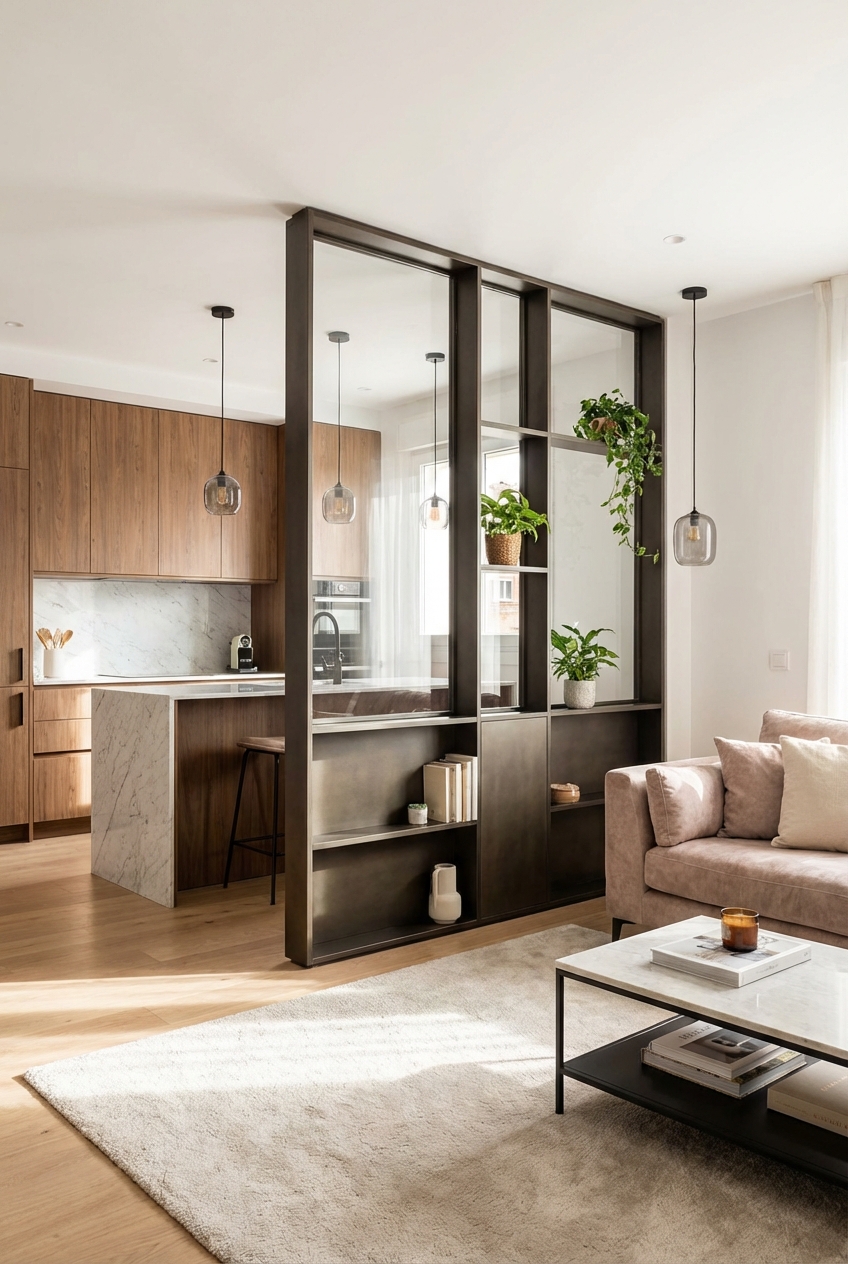
- Consider glass partitions and half walls
- Keep light flowing through the space
- Dividers for home offices and hidden equipment
- Frequently asked questions
The easiest way to divide a room is to choose a divider that matches how much separation you need. A curtain or open shelf gives you a soft boundary, a folding screen gives you flexibility, and a sliding panel or half wall gives you real privacy. Pick the lightest option that does the job.
Most rooms don't come with the walls you wish they had, so don't feel bad if your studio, open-plan living room or spare corner needs a little help. Below are ideas from cheap to built-in, with notes on small spaces, privacy and pets.
How do you decide which divider fits?
Start with three questions. Do you need to block sight, sound or just define a zone? Does the divider need to move? Does natural light need to pass through?
Measure the floor area and the ceiling height before you buy anything. Leave about 30-36 inches for a main walkway, and about 24 inches for a secondary path. A divider that pinches those clearances will feel wrong no matter how pretty it is.
Use curtains for the cheapest, fastest split
Curtains are among the most affordable room divider ideas, and one of the few that works in a rental. Hang a ceiling-mounted track or a tension rod, and let the fabric fall to just above the floor. Heavier, lined fabric blocks more sight and softens noise. Sheer linen lets light through and still marks the edge of a zone.
If you have a dog, choose a washable fabric and keep the hem clear of the floor, because curtains at nose height get tugged and slobbered on. Pull-back hooks keep the area open when you don't need privacy.
Style a bookcase or open shelves as a divider
An open shelving unit placed perpendicular to a wall splits a room while keeping storage. Choose one without a back panel so light and sightlines continue through. Fill only some of the cubbies, and mix books with baskets and a plant or two, so the unit feels light.
Anchor tall units to the wall or floor. As an architect, I recommend this for any freestanding shelf in a home with a dog or kids, since a wagging tail or a climbing child can tip an unsecured piece.
Try folding screens for flexible room divider ideas for small spaces
A folding screen is the simplest fix when floor space is tight. It stands without installation, folds flat for storage, and moves when you rearrange. Three or four panels give enough width to hide a desk, a bed or a laundry basket.
For room divider ideas for privacy, pick a solid or woven panel. For a lighter feel, choose slats or rattan. Screens are also the easiest way to hide a treadmill: a 5-6 foot tall screen is enough to block the view from the sofa, and you can fold it aside on workout days.
What can you build yourself?
DIY room divider ideas are a good match for a weekend and a modest budget. A few that work well:
- A hinged screen made from three framed panels covered in fabric or cork.
- A slatted wood partition on a simple base, with vertical battens spaced a few inches apart.
- Hanging plants or macramé panels on a ceiling hook rail.
- Stacked crates or cubes secured together to form a low shelf wall.
These also answer the question of the cheapest way to partition a room. Fabric, rope and a curtain rod cost less than almost anything else, and you can use furniture you already own. A sofa with its back to the room, with a console table behind it, is a divider that costs nothing.
Add sliding panels or pocket doors for real privacy
Sliding panels on a ceiling track close off a zone completely and slide away when you want the room open. They suit a home office or a guest corner in a living area. Frosted or reeded panels pass light while hiding detail.
This is a job for a proper installer if the track mounts into the ceiling or if a wall has to be opened for a pocket door. Check for wiring and structure first.
Consider glass partitions and half walls
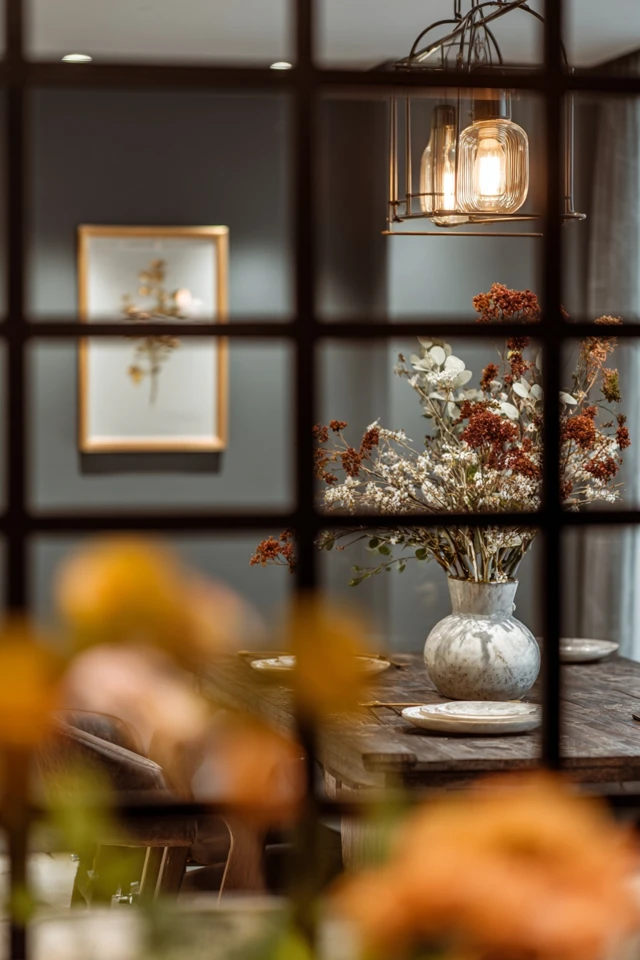
Glass and steel partitions divide a room without taking daylight with them. They cost more and need professional installation, but they suit an apartment where one room has windows and the other does not. Pets will leave nose prints on glass, so budget for cleaning.
For living room half wall room divider ideas, a wall about 36-42 inches high marks the edge of a zone and still lets you talk across it. A half wall can double as a bar top or a shelf for lamps and plants. A floor-to-ceiling slatted wall gives more privacy while still letting light slip between the slats.
Keep light flowing through the space
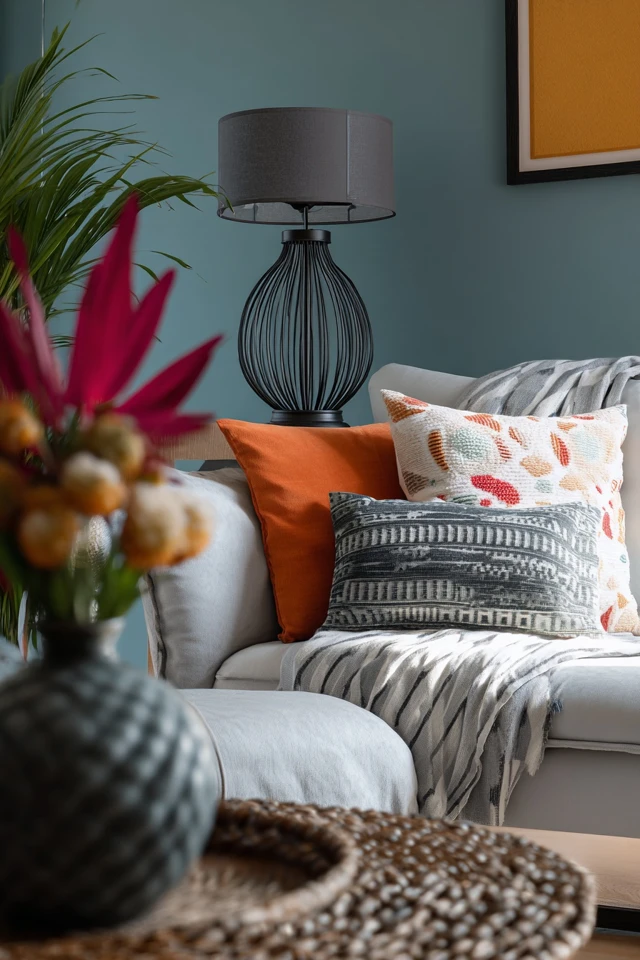
Light is what makes a divided room feel like one home instead of two boxes. Place solid dividers at a right angle to the window so they don't cast the far side into shadow. Glossy surfaces bounce light around, while matte surfaces absorb it, so a glossy lacquered panel can brighten a dim corner and a matte fabric one can quiet it.
Use open or translucent materials on the side nearest the window, and put your solid, private pieces on the far side.
Dividers for home offices and hidden equipment
A work zone needs visual quiet more than silence. Place the desk so you face the divider, not the rest of the room, and choose a divider tall enough to block the TV or kitchen from your line of sight. For bulky gear such as a treadmill, a printer or a rack of cables, a cabinet-style divider or a shelf with doors hides it and gives you storage.
Keep ventilation in mind around electronics and don't box in a power strip. If you're adding outlets or lighting to a new partition, hire a licensed electrician.
If your layout problem is a bed in the middle of an open room, see our ideas for placing a bed in a corner, and for studio sleeping zones, our apartment bedroom post has more layout tips. For dividing a media area, TV room ideas may help.
Frequently asked questions
What is the cheapest way to partition a room?
A curtain on a tension rod or ceiling track is usually the lowest-cost option. Existing furniture, such as a bookcase or a sofa with its back to the room, costs nothing.
What can I use instead of a room divider?
Use furniture you already own: an open bookcase, a console behind a sofa, a large plant, or a rug that marks the zone. Lighting changes can also separate areas.
How to creatively divide a room?
Try a slatted wood partition, hanging plants, a fabric-covered DIY screen or a half wall that doubles as a shelf. Choose open designs where you want light to pass.
How tall should a room divider be for privacy?
For seated privacy, about 5-6 feet blocks most sightlines. For full visual separation while standing, aim for 6 feet or taller.
Filed under
ArticlesMeet the author
Written by an architect.
Julio Arco is a passionate architect with years of experience in architecture, interior design, urban design, and housing. He studied at prestigious universities across North America and Europe.

- Name
- Julio Arco
- Job
- Architect and online interior designer
- Studied
- Architecture, ITESM · Urban Design and Housing, McGill
- Partner
- Thor, Australian Shepherd
- Thor’s title
- Head of quality control