Shiplap Walls: Ideas, Installation Basics and Costs
Shiplap walls explained: horizontal vs vertical boards, modern and TV wall ideas, how to attach boards, and what drives the cost of a project.

By Julio Arco
Architect and online interior designer
In this post
- What is shiplap, exactly?
- Horizontal or vertical shiplap?
- Where do shiplap walls work best?
- Modern shiplap wall ideas
- Shiplap, wall molding or brick?
- Choosing boards or panels
- How to attach shiplap to a wall
- Finishing edges and trim
- How much do shiplap walls cost?
- Keeping shiplap clean
- Frequently asked questions
Shiplap walls are wood boards (or wood-look panels) fixed edge to edge, so the joints form a repeating line across the wall. Run them horizontally and the room reads wider. Run them vertically and it reads taller. Paint them white and they add texture without much noise.
If you're choosing between styles, start with the room's proportions and the wall's job (a backdrop for a TV, a headboard wall, an entry). The rest, color, board width and finish, follows from that.
What is shiplap, exactly?
Traditional shiplap has a notch (a rabbet) cut along the edges so each board overlaps the next. Many boards sold today for interiors are tongue-and-groove or simple square-edge boards spaced with a small gap. On a finished wall they look nearly the same, and most people use the word for all of them.
The gap or groove between boards is what creates the shadow line. A narrow board gives you more lines and a finer, busier pattern. A wide board gives fewer lines and a calmer, more modern look.
Horizontal or vertical shiplap?
Horizontal boards lead the eye side to side, which helps a narrow room or a short wall feel broader. It's the classic coastal and farmhouse look.
A vertical shiplap wall draws the eye up. It suits rooms with average or low ceilings, stairwells and narrow hallways. As an architect, I'd keep to one direction per room. Mixing orientations on neighboring walls tends to look accidental unless there's a clear reason, like a niche or a stair.
Where do shiplap walls work best?
Behind the TV
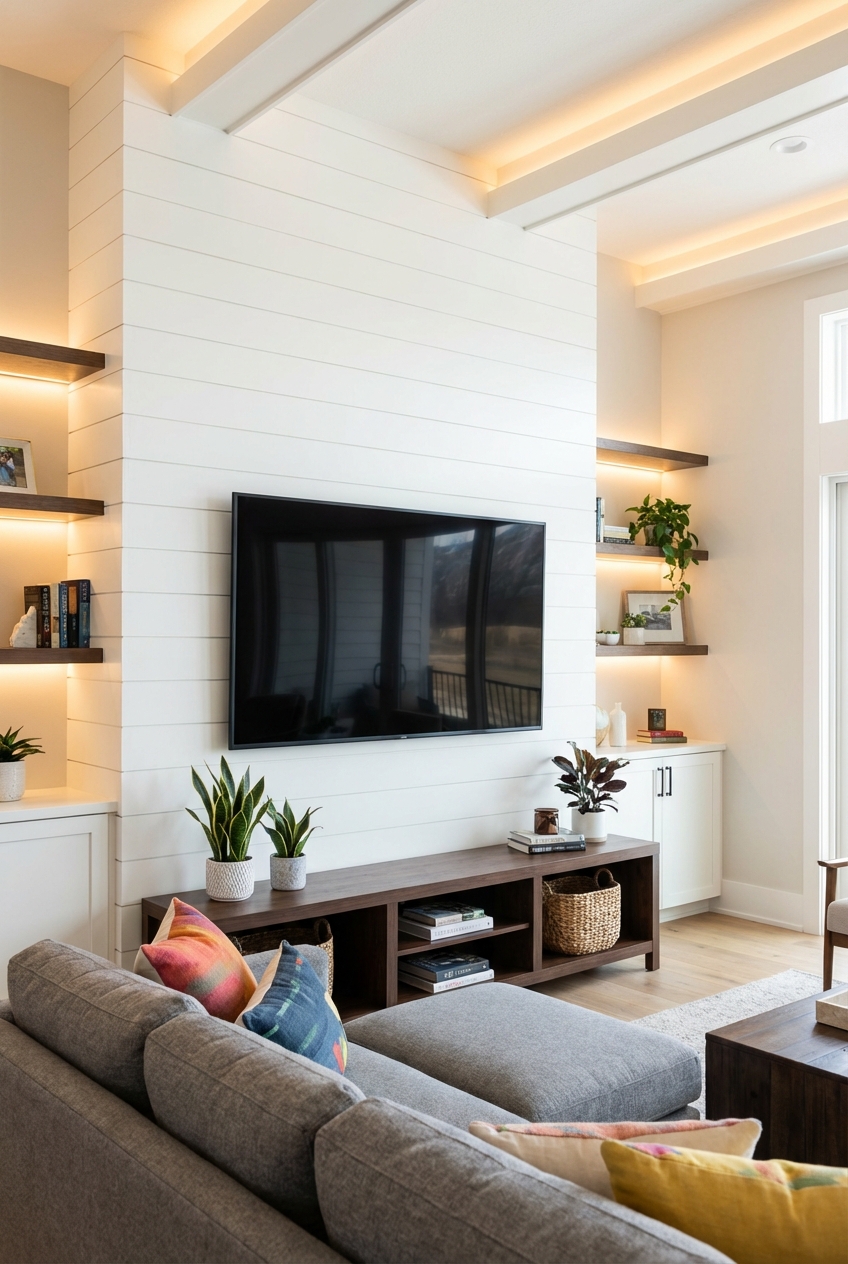
A shiplap TV wall gives a dark screen a textured backdrop so it doesn't sit like a black hole on a flat wall. Paint the boards a mid or deep tone and the screen blends in even more. Plan cable routing before you install, and leave the power and in-wall cable work to a licensed electrician.
Bedroom headboard wall
Boards behind the bed make a built-in headboard. Extend them a bit wider than the bed on each side so the edges don't feel pinched.
Entry, mudroom and hallway
These are the places where pets and bags rub the wall. Painted boards in a satin or semi-gloss finish wipe clean far better than flat paint on drywall. Paw prints and muddy leans are easier to deal with on a hard, sealed surface.
Bathrooms
Use PVC or other moisture-resistant boards, seal the edges, and ventilate well. Raw wood near a shower is a poor bet.
Modern shiplap wall ideas
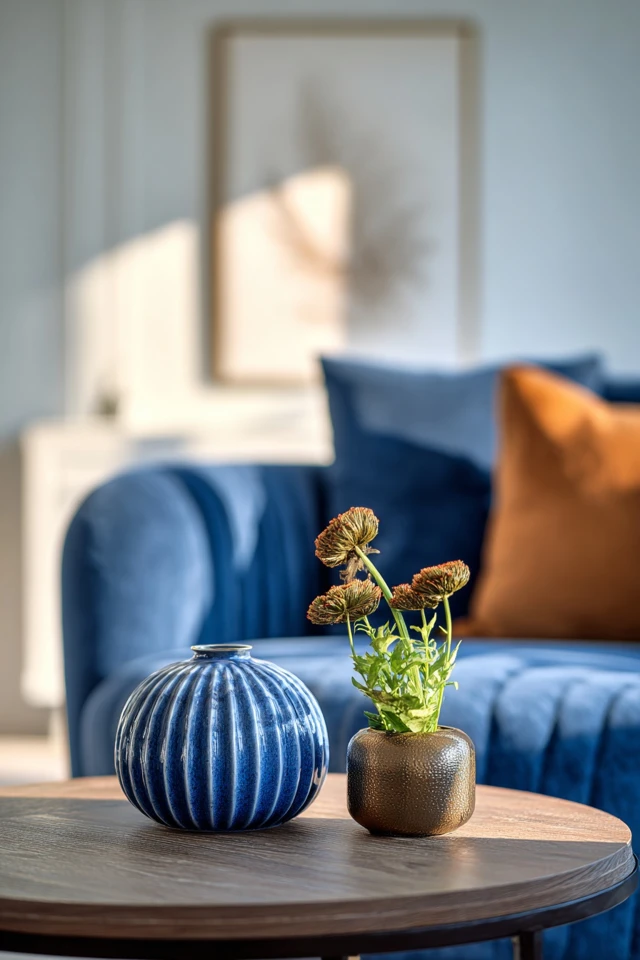
A modern shiplap wall usually means wider boards, tighter joints and a single color. A few directions that work:
- Tonal paint: walls and boards in the same color, so only the shadow lines show.
- Dark and moody: charcoal, navy or deep green on one feature wall.
- Half-height: boards up to chair-rail or wainscot height, with paint or wallpaper above.
- Black or brass accents: slim sconces and frames against the lines.
White shiplap walls are the safest choice and a good fit for small rooms. Pick a white with a warm undertone if the room faces north, since cool whites can look gray there. For more ideas by room, see our modern shiplap accent wall ideas.
Shiplap, wall molding or brick?
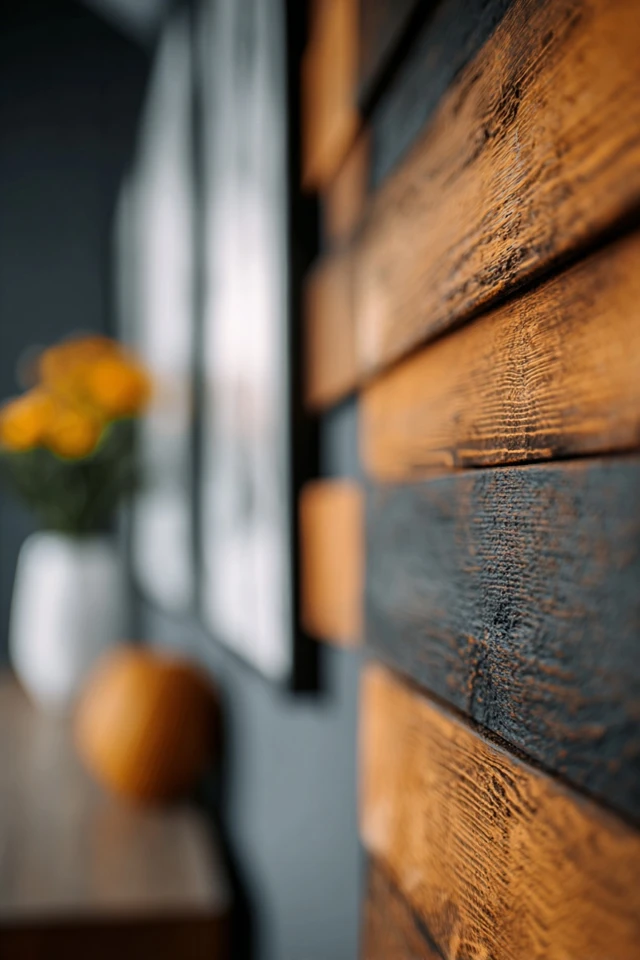
Shiplap suits a relaxed, casual look. If you want something more formal, wall molding reads more traditional. For an industrial feel, compare it with brick wall design.
The profile has long roots. The National Park Service notes that Greek Revival builders worked with boxy, rectangular buildings, and wood siding of this kind was part of the American carpenter's toolkit. Bringing it indoors is a more recent habit.
Choosing boards or panels
- Solid wood: real grain, can be stained, moves with humidity.
- MDF or engineered boards: smooth, cheaper and stable, but swell if soaked. Seal the seams in damp rooms.
- PVC: waterproof, good for bathrooms and laundry rooms.
- Shiplap wall panels: sheets with grooves pre-cut, faster to hang and with fewer joints, though the repeat can look mechanical on a big wall.
I recommend buying a few extra boards over what you measure. Cuts around outlets and corners always eat more than expected.
How to attach shiplap to a wall
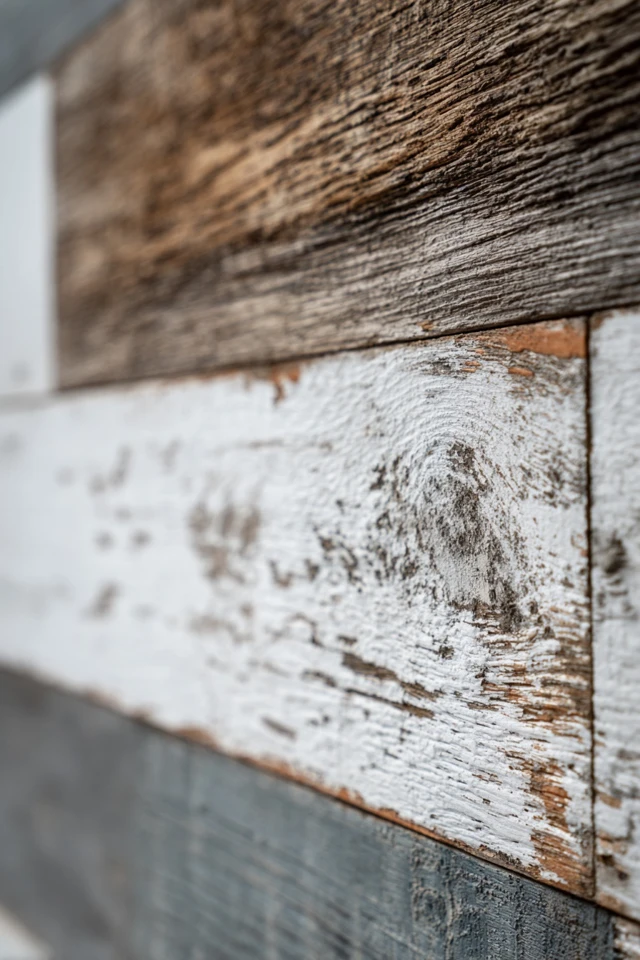
- Find the studs with a stud finder and mark them with a vertical line of tape.
- Let the boards sit in the room for a couple of days so they adjust to the humidity.
- Start at the bottom (or the top, if the ceiling is more level than the floor) and check each board with a level.
- Nail through the boards into studs with a brad or finish nailer, or use construction adhesive plus nails.
- Use spacers, such as nickels or small offcuts, to keep the gaps even.
- Cut openings for outlets and switches, turn off the power first, and bring outlet boxes flush with the new surface. A licensed electrician should handle any extension of wiring.
- Fill nail holes, caulk the edges, then prime and paint.
Paint the gaps before you hang the boards if the wall color behind is different. It avoids a sliver of bare wall showing through.
Finishing edges and trim
Corners and edges decide whether the wall looks built or stuck on. Use a trim piece or a mitered return at outside corners, and a small baseboard or cap rail at the bottom and top. Caulk where boards meet trim. Stained wood can take a clear sealer, while painted boards hold up best with a satin or semi-gloss paint.
How much do shiplap walls cost?
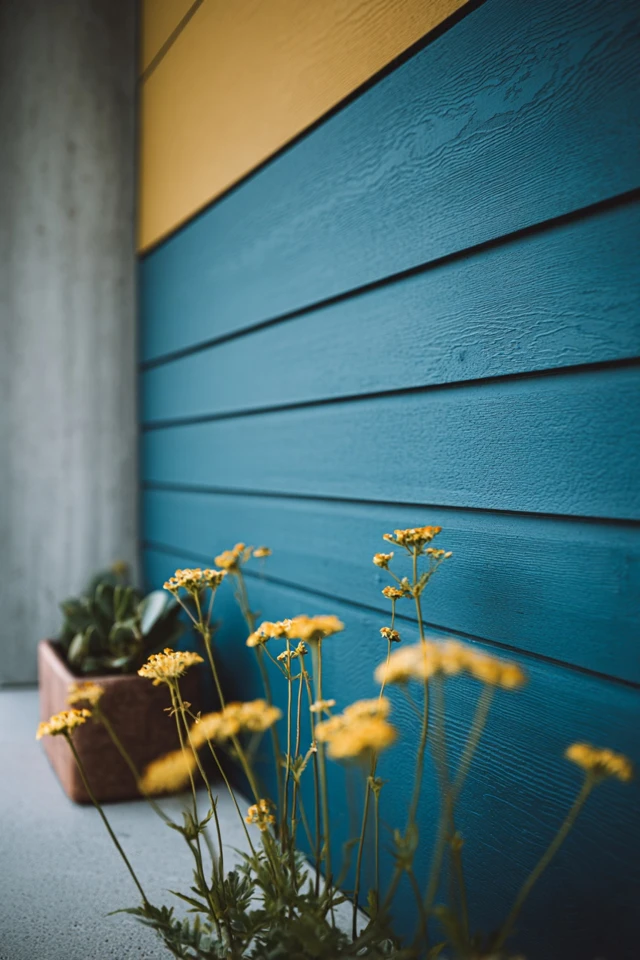
The price depends on the material, the wall size and whether you hire a carpenter. Real wood costs more than MDF, and PVC sits in the middle. Labor, paint, nails and trim add up too. Get a measured quote from local suppliers instead of relying on a generic number, and compare it with the cost of repairing and painting plain drywall, which is cheaper but gives no texture.
Keeping shiplap clean
Dust the grooves with a soft brush or vacuum attachment. Wipe painted boards with a damp cloth and mild soap, and don't soak the seams. If a dog likes to lean on the wall, a washable satin paint is the practical choice.
Frequently asked questions
What are the downsides of shiplap?
The grooves collect dust, wood boards can shift with humidity, and installation takes more time than painting a flat wall. Seams may need caulking and touch-ups over time.
Is it cheaper to drywall or shiplap?
Drywall with paint is usually cheaper than shiplap boards, since shiplap adds material, cutting and finishing work. Shiplap does give you texture that drywall alone doesn't.
Is shiplap out of style?
Shiplap has moved away from the rustic farmhouse look toward wider boards, tonal paint and cleaner lines. Painted in a color that suits your room, it stays a flexible backdrop.
How to attach shiplap to a wall?
Locate the studs, level the first board, and nail each board into the studs, using spacers for even gaps. Fill holes, caulk and paint to finish.
Filed under
ArticlesMeet the author
Written by an architect.
Julio Arco is a passionate architect with years of experience in architecture, interior design, urban design, and housing. He studied at prestigious universities across North America and Europe.

- Name
- Julio Arco
- Job
- Architect and online interior designer
- Studied
- Architecture, ITESM · Urban Design and Housing, McGill
- Partner
- Thor, Australian Shepherd
- Thor’s title
- Head of quality control