Teal Accent Wall Inspiration to Transform Your Space
Choose bedroom accent wall colors with confidence: calming blues, teal, greens and dark neutrals, plus which wall to paint and how dark to go.

By Julio Arco
Architect and online interior designer
In this post
- Which bedroom accent wall colors feel calm?
- Why teal works so well behind a bed
- Should an accent wall be lighter or darker?
- What is the rule for accent walls?
- How do finish and light change the color?
- Layering texture so the wall doesn't feel flat
- Practical tips for pet owners and renters
- Frequently asked questions
If you want one color that feels restful and still has personality, start with teal. It sits between blue and green, so it reads calm without going flat. The best color for a bedroom accent wall is the one you can live with at 11 p.m. and at 7 a.m., and deep, slightly grayed teals, soft blues and muted greens usually pass that test.
This post covers which colors work, which wall to paint, whether the accent should be lighter or darker than the rest, and how finish and light change the result.
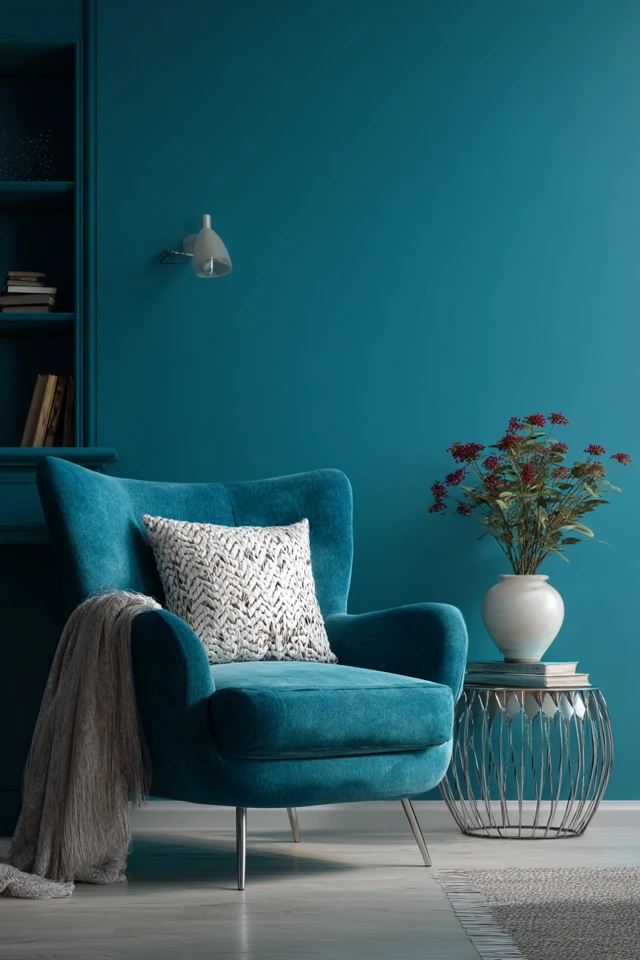
Which bedroom accent wall colors feel calm?
Blue is the safest place to begin. In a study led by Isabella S Bower at Deakin University, researchers reported that "The findings show that blue coloring of the built environment increases autonomic range and is associated with modulations of brain activity linked to emotional processing." That is a finding about responses to blue environments, not a promise that blue puts everyone to sleep, so treat it as a reason to test blue-leaning shades rather than a rule.
For soothing wall colors for a bedroom, these are the families I'd look at first:
- Teal and blue-green with a gray undertone. They carry the cool feel of blue and a bit of the warmth of green.
- Soft, dusty blues, which work well in rooms with plenty of daylight.
- Muted sage and olive greens, which pair easily with wood furniture and plants.
- Dark neutrals such as charcoal, navy and deep brown-gray, for a cocooning feel.
- Warm whites and greige, if you want the wall to recede.
Highly saturated colors are livelier. Desaturated ones, with some gray in them, feel quieter, which is usually what you want where you sleep.
Why teal works so well behind a bed
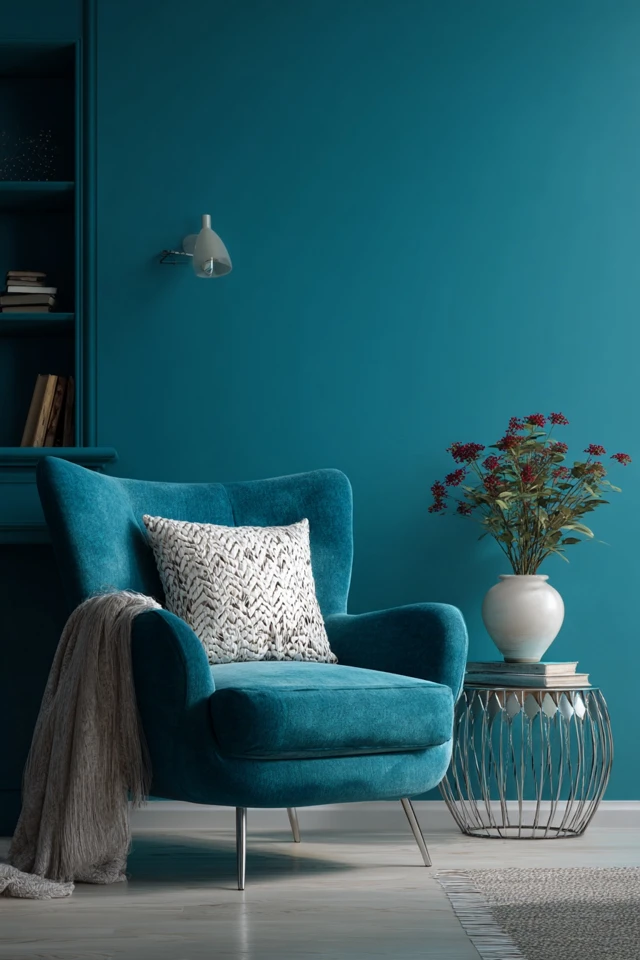
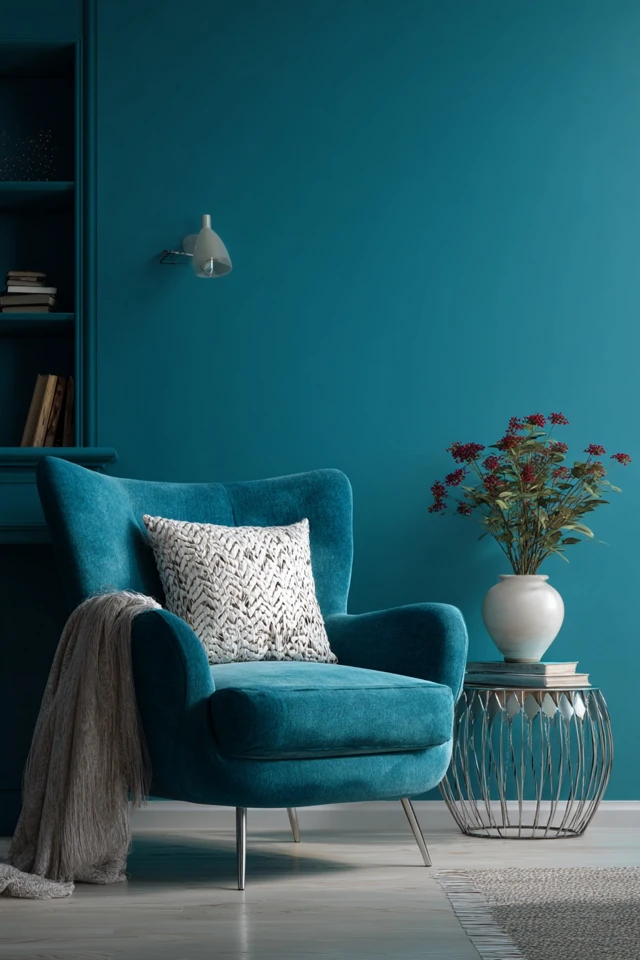
Teal is forgiving. It looks good with warm oak and walnut, brass or black hardware, linen, velvet and white bedding. If you have dark brown bedroom furniture, teal gives it contrast without the heaviness of a brown-on-brown room.
A deep teal on the wall behind the headboard also frames the bed as the focal point. Keep the bedding lighter so the wall has something to push against. If you prefer a quieter neutral, the ideas in this gray accent wall bedroom post follow the same logic.
Should an accent wall be lighter or darker?
Darker is the usual answer. A deeper shade on one wall adds depth and makes the other walls look lighter by comparison. Going lighter than the rest of the room rarely reads as an accent at all.
There are exceptions. In a small, dim bedroom, a very dark wall can feel close. In that case choose a mid-tone, or keep the ceiling and trim light so the room still has an edge of brightness. As an architect, I'd rather see a confident mid-tone than a dark color that makes the room feel smaller than it is.
What is the rule for accent walls?
There's no strict rule, but a few guidelines hold up:
- Paint one wall, usually the one you see first from the door or the one behind the bed.
- Pick a wall without many interruptions. A wall broken up by a door, a vent and a window is hard to read as a single color block.
- Keep the other walls in a related neutral, so the accent has company.
- Pull one or two supporting colors from your bedding or art, then stop.
What about a bedroom accent wall with two windows?
Two windows on one wall make it a poor candidate, because the wall is already busy and the color gets chopped into pieces. Paint the wall behind the bed instead. If the bed has to sit between the windows, paint that whole wall in one color and keep the curtains close to the wall tone so the windows don't fight with it.
How do finish and light change the color?
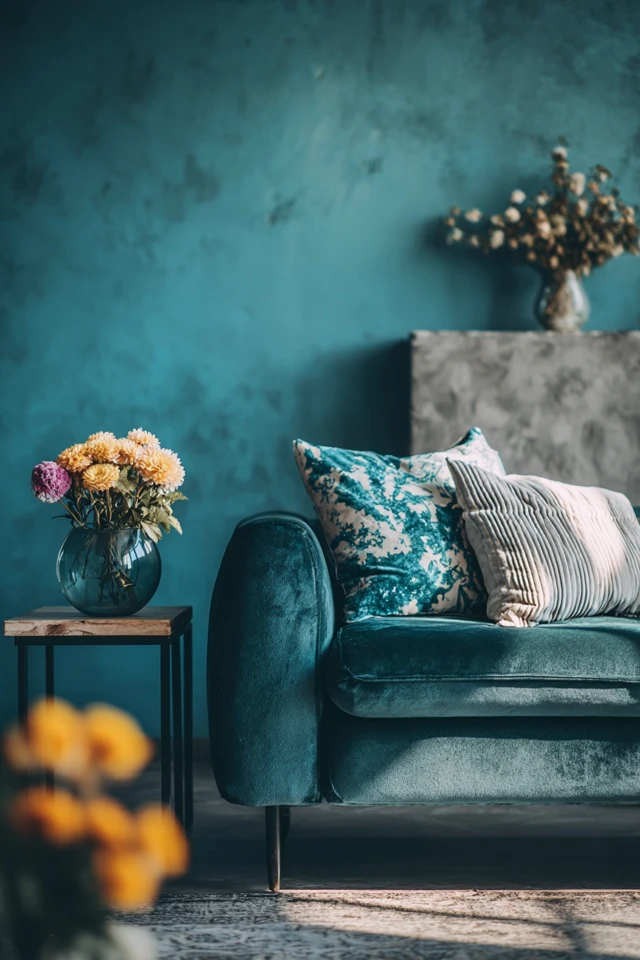
Matte finishes absorb light and look soft, which suits bedrooms. Eggshell or satin reflects a little more and holds up better to scuffs. Glossier paint belongs on trim and doors: the New York Institute of Art and Design notes that "Doors and moldings should be painted using a glossier paint finish than the walls themselves. This makes them durable and easy to clean."
Light changes everything. Daylight makes teal brighter and more blue-green. Warm bulbs push it toward a richer, deeper tone, and cool LEDs make it look sharper. Paint a sample patch of about 12 by 12 inches on the intended wall and look at it in the morning, afternoon and evening before you buy gallons. If you're choosing between a north-facing and a south-facing room, expect the same paint to look cooler in the north one.

Layering texture so the wall doesn't feel flat
A single saturated wall looks best with variety around it. Warm wood, a woven rug, linen or velvet, and a few plants soften the color and make it feel lived in. Metals like brass add warmth against teal, while matte black or brushed nickel look more modern.
If you want texture on the wall itself, paint over molding or boards. Wall molding ideas and shiplap wall ideas both take a dark color well, since the shadows add depth.
Practical tips for pet owners and renters
- Choose a washable paint on the lower part of the wall if a dog or cat sleeps in the room. Muddy paws and scratching happen.
- Keep a small can of the exact color for touch-ups and label it with the room and date.
- Renters can paint a removable panel or large board, or ask the landlord first. Painted walls often need to be returned to the original color.
- Leave about 30-36 inches for main walkways so the accent wall isn't blocked by furniture.
Painting itself is simple, but if the wall needs repair or you suspect old lead paint in an older home, bring in a licensed professional before sanding.
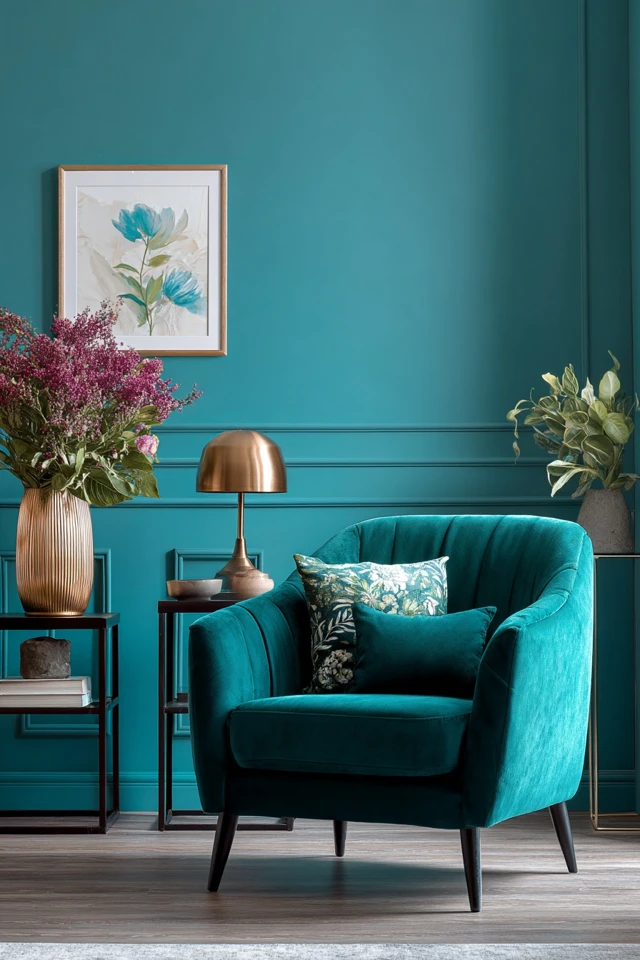
Start with one sample patch, live with it for a few days, and let the evening light make the final call.
Frequently asked questions
What is Joanna Gaines' favorite bedroom color?
There is no verified answer to cite here, so it's better to choose by your own light and furniture. Soft, muted shades are a safe starting point for most bedrooms.
Will a teal accent wall make a small bedroom feel smaller?
It can if the shade is very dark and the trim is dark too. A lighter, grayed teal with light ceiling and trim keeps the room open.
Is it better to paint the whole bedroom or just one accent wall?
A full-room color feels enveloping and works in larger or bright rooms. One accent wall is easier to commit to and suits smaller rooms and rentals.
How do I choose the right shade of teal?
Test samples on the actual wall and check them at different times of day. North-facing rooms tend to look cooler, so a slightly warmer teal can balance them.
Filed under
ArticlesMeet the author
Written by an architect.
Julio Arco is a passionate architect with years of experience in architecture, interior design, urban design, and housing. He studied at prestigious universities across North America and Europe.

- Name
- Julio Arco
- Job
- Architect and online interior designer
- Studied
- Architecture, ITESM · Urban Design and Housing, McGill
- Partner
- Thor, Australian Shepherd
- Thor’s title
- Head of quality control