Sunken Bathtub Ideas and Trends Worth Trying
Sunken bathtub ideas covering depth, steps, materials, lighting and safety, plus what to ask your contractor before you cut into the floor.

By Julio Arco
Architect and online interior designer
In this post
A sunken bathtub sets the bathing surface at or below floor level, so you step down into it instead of climbing over a rim. It works best in a bathroom with enough floor area for a gentle step or two, a structure that can handle the drop, and a layout where the tub gets the best view or light in the room.
The idea is the same one behind a sunken living room: a change in level makes a space feel set apart. In a bathroom that translates into privacy and a slower pace. Here are the trends worth trying, and the practical details that decide whether the tub is a pleasure or a headache.
Is a sunken bathtub right for your bathroom?
Start with the structure, because it limits everything else. A tub dropped into a concrete slab is far easier to build than one set into a wood-framed upper floor, where the joists sit right where the recess wants to go. On an upper level, the floor may need reframing, and that is a job for a licensed contractor or structural engineer, not a weekend project.
Plumbing is the second check. The drain needs a proper slope and the trap must stay reachable. If the bathroom sits at ground or basement level, ask early where the drain line runs. Our post on basement bedroom ideas covers some of the below-grade issues, like moisture and ceiling height, that also apply to a lowered bath.
It's very common to love the look and then discover the floor can't take it. A semi-sunken tub, with the rim about a step above the floor and a platform around it, gives much of the same feel with far less demolition. As an architect, I'd look at that option first for any upper-floor bathroom.
How deep should a sunken tub go?
A standard stair riser is about 7 inches, so one or two steps down covers a drop of roughly 7 to 15 inches. That's enough to feel sunken without making the exit a climb. Deeper drops look dramatic, but getting out of a deep tub with wet feet is where most accidents happen.
Make the steps wide and consistent, with the same riser height every time. Uneven steps are a trip hazard even when you are looking at them.
Which sunken bathtub trends are worth trying?
Curved edges and organic shapes
Rounded and oval recesses soften the hard geometry of a bathroom and are kinder to hips and knees. Curves also hide the slight misalignments that tile cuts create around a corner.
Built-in steps that double as seats
A wide step can be a bench for towels, a plant, or a place to sit while the tub fills. Make it deep enough to sit on, about 14 to 16 inches, and give it a slip-resistant finish.
Matte, textured surfaces
Honed stone, textured porcelain and matte tile hide water spots and give your feet better grip than polished surfaces. Glossy finishes bounce light and show every splash. Matte ones absorb it and read calmer, which suits a room meant for winding down.
A single window view
Because you sit lower, a window placed at seated eye level frames the view better than a tall one. Use frosted glass on the lower part if the window faces a neighbor.
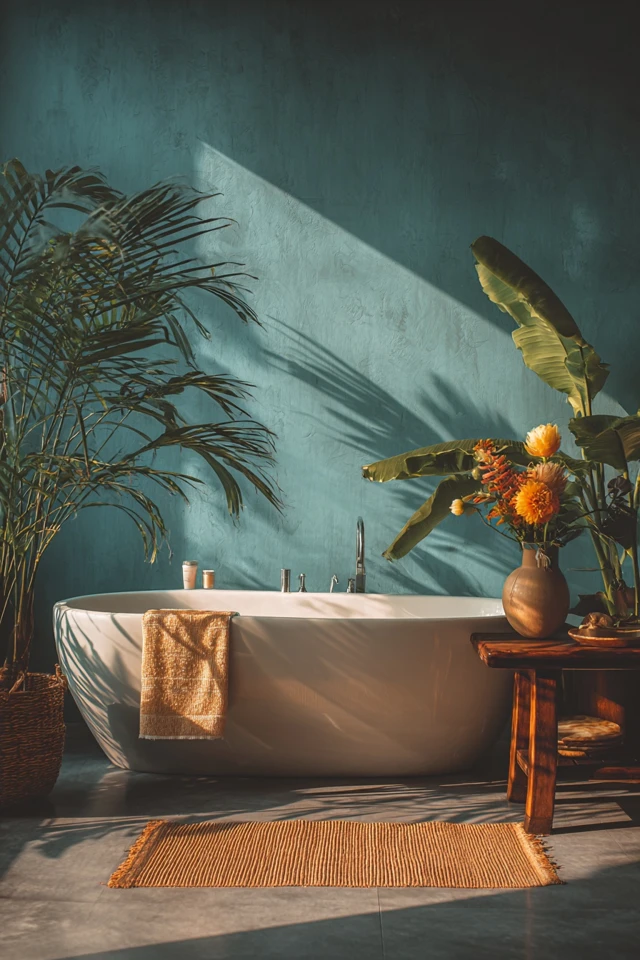
What materials and colors work around a sunken tub?
Keep the palette short. Stone, wood and one metal is plenty, and repeating the same metal on the faucet, towel bar and light fixtures ties them together. Teak and similar tight-grained woods tolerate moisture, but any wood near a tub needs a proper sealed finish and good ventilation.
For color, soft blue-greens and warm neutrals both work. Cool tones feel like water, warm tones feel cozy in cold climates. If you're weighing a muted palette, the gray bathroom ideas post shows how to keep gray from turning cold. Test samples next to the tub in the room's own light, morning and evening, before you commit to a tile.
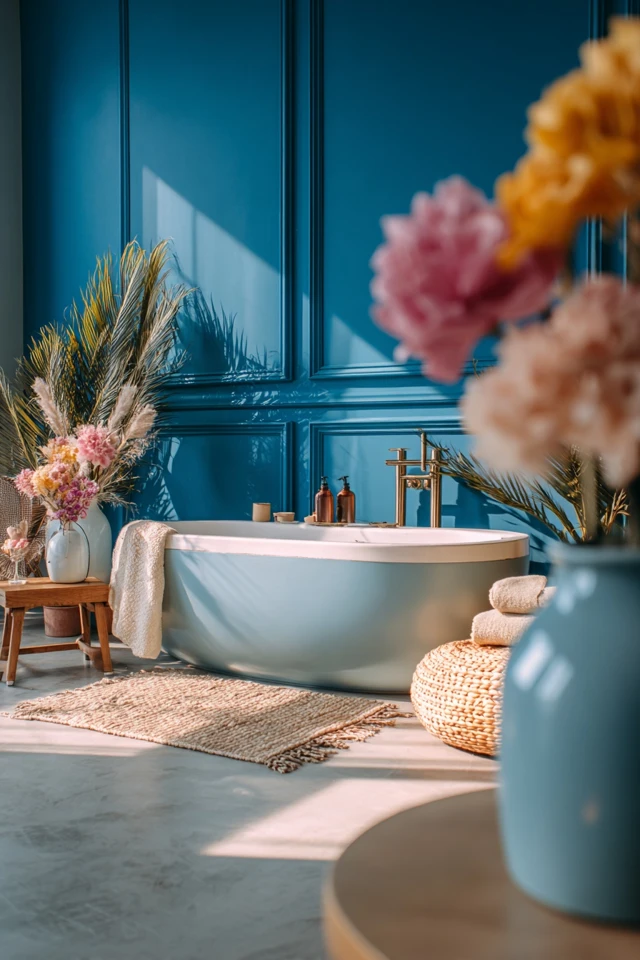
How do you light and ventilate a sunken bath?
Low-level lighting does the most work here. A recessed LED strip under the lip or along the steps marks the edge of the drop and gives a soft glow. Use fixtures rated for damp or wet locations, and have a licensed electrician install anything near the water.
Add a dimmable overhead light for cleaning and a warmer wall light for bathing. A quiet, properly sized exhaust fan matters more than most people expect: a recessed tub holds humidity at the lowest point of the room, and poor ventilation invites mildew on grout and nearby fabrics. Radiant floor heating is a nice extra on the steps.
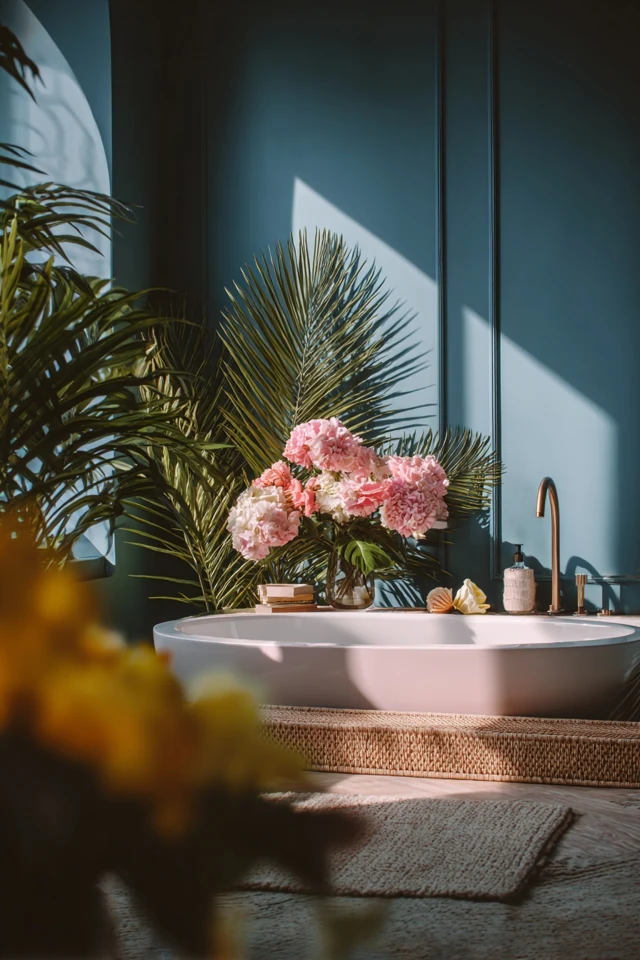
Is a sunken bathtub safe?
It can be, with the right details. Use slip-resistant surfaces on every step and the tub floor, add a grab bar or handrail at the entry, and keep the lighting on a switch you can reach before you step down. For older adults or anyone with limited mobility, a shallow drop or a conventional tub is the safer choice.
If you share your home with a dog, close the bathroom door when the tub is full. A low rim is easy for a curious dog to walk right into, and wet stone is slippery on paws. Keep the area dry with a washable, grippy mat on the landing.
Last, cleaning. Without a rim, dirt and water collect on the surrounding deck. A sloped deck that drains back into the tub, or a deck with its own small drain, makes upkeep much easier. Ask your installer about both before the tile goes down.
Frequently asked questions
Will a sunken bathtub make a small bathroom feel smaller?
Not if you keep the drop to a single step, use light-reflecting surfaces and keep sightlines clear. A sunken tub takes up the same floor area as a regular one, so the main risk is a recess that crowds the walking path.
What are the disadvantages of a sunken bathtub?
They cost more to build, need structural and plumbing planning, are harder to clean around, and add a trip risk when the floor is wet. They also suit upper floors poorly unless the framing can be modified.
Can you put a sunken tub on a second floor?
Sometimes, but the floor joists and the drain run must allow it, and the extra water weight needs checking. A structural engineer or licensed contractor should confirm before any cutting. A raised platform with a semi-sunken tub is often the easier route.
Is a sunken tub a good idea for resale?
It depends on your market and buyers, and some people see it as a hazard or a maintenance burden. Keeping the tile and fixtures neutral makes a later change easier.
Filed under
ArticlesMeet the author
Written by an architect.
Julio Arco is a passionate architect with years of experience in architecture, interior design, urban design, and housing. He studied at prestigious universities across North America and Europe.

- Name
- Julio Arco
- Job
- Architect and online interior designer
- Studied
- Architecture, ITESM · Urban Design and Housing, McGill
- Partner
- Thor, Australian Shepherd
- Thor’s title
- Head of quality control