Playroom Ideas for an Attic: Layout, Color, Storage

By Julio Arco
Architect and online interior designer
In this post
- What should every playroom have?
- How do you lay out an attic playroom?
- Small playroom ideas that save floor space
- Playroom storage ideas that kids can actually use
- Which colors work in a playroom?
- Cool things to put in a playroom
- Playroom ideas that grow with kids
- Materials, comfort and safety
- Frequently asked questions
The best playroom ideas for an attic start with the roof: keep the middle of the room open, push storage and seating into the low sides under the slope, and let the tallest part of the ceiling be where kids stand and move. Add a washable rug, a calm wall color and storage children can reach, and you have a room that works.
Attics are awkward spaces, and that's fine. Sloped ceilings, knee walls and odd corners are a good fit for play, because kids love a nook. Here is how to use them.
What should every playroom have?
Whatever the size, a playroom needs a few basics:
- A clear, soft floor area for active play, usually a low-pile rug over a hard floor.
- Storage that a child can open without help.
- A table and a chair at child height for drawing and building.
- A quiet corner with cushions and a few books.
- Good lighting at more than one level: overhead, plus a lamp where reading or crafts happen.
- A place for adults to sit and see the whole room.
Everything else is optional. If you're short on space, the table and the quiet corner are the first things I'd protect.
How do you lay out an attic playroom?
Use the headroom wisely
Measure where the ceiling is high enough for an adult to stand comfortably, and keep that strip as the walkway and open play area. Under the low edge, where a child can still sit or kneel, put the things that don't need height: low shelves, a bench with storage, floor cushions, a reading nook. Tall furniture goes only where the ceiling allows it.
Divide the room into zones
Active play, making things, reading and storage each get a spot. Rugs, a low shelf or a change in lighting mark the edges without blocking sightlines. Face the seating toward the busiest zone so you can supervise from a chair.
Anchor tall furniture
Attic walls often have knee walls and sloped framing, so shelving may not sit where you expect. Anchor any bookcase or tall unit to solid framing, not just drywall. If you're unsure what's behind the wall, ask a licensed contractor.
Small playroom ideas that save floor space
If your attic is tight, these small playroom ideas work well, and they double as playroom ideas for small spaces anywhere in the house:
- Wall-mounted hooks and open cubbies keep the floor free.
- A built-in or freestanding bench with storage under the seat gives you seating and a toy chest in one piece.
- A fold-down table or nesting tables appear for crafts and tuck away after.
- Light, quiet wall colors and a single color family in the furniture make the room look calmer and larger.
Playroom storage ideas that kids can actually use
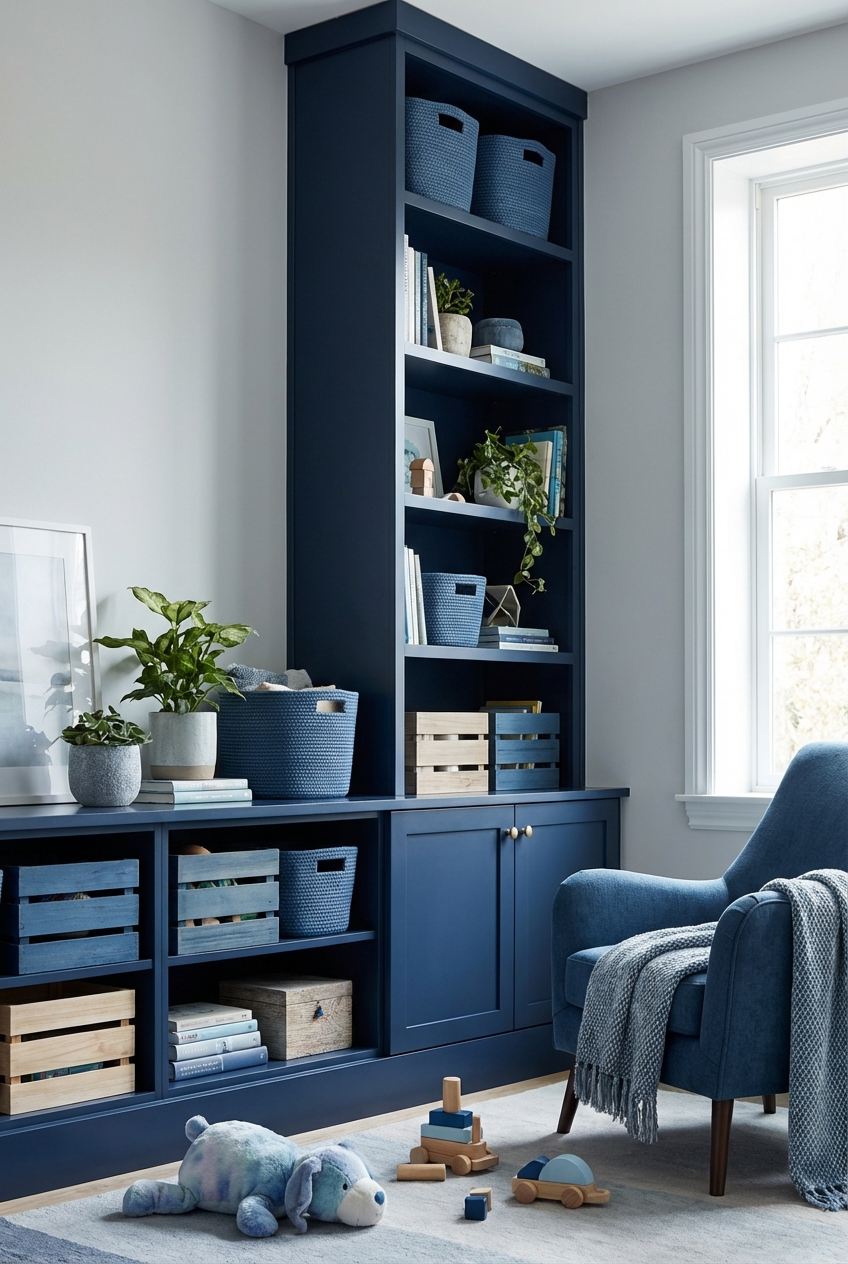
Storage fails when only an adult can reach it. Put everyday toys in open bins or low cubbies at child height, and use labels with pictures for kids who can't read yet. Keep puzzles, small parts and craft supplies in higher cabinets with child locks.
Rotating toys helps too. Keep about half in a closed cabinet and swap them every few weeks, so the room never holds everything at once. For a related approach in another room, see our post on a bed on wheels, which also uses hidden storage in a tight footprint.
One practical attic note: heat builds up under a roof. Keep crayons, art supplies with glue or wax, and anything else heat-sensitive in a spot that doesn't bake in summer, and check the storage areas before filling them.
A magnetic wall for art and learning
A DIY magnetic wall is an easy way to turn a bare knee wall or gable end into storage and display. Mount a sheet of magnetic-receptive metal or paint a wall with magnetic primer, then add magnetic tape or clips for artwork, letters and light toys. Check that the wall surface can take the weight and that nothing small and strong, like loose magnets, is within reach of toddlers.

Which colors work in a playroom?
Color changes how a room feels, and attics with limited daylight need extra care. Cooler tones such as soft blue and sage green tend to feel calming, so they suit reading corners. Warmer tones like coral or mustard feel more lively, so use them for accents in active areas.
Keep walls fairly quiet and bring in saturated colors through rugs, cushions and art that you can change. Test paint samples at the time of day the room is used most, since low attic light can shift a color. Choose low-VOC paint and wipeable finishes.
Cool things to put in a playroom
If you want something beyond the basics, a few ideas that earn their space:
- A reading tent or a built-in window seat with cushions.
- An easel or a roll of paper on a wall-mounted holder.
- A magnetic or pegboard wall for rotating art.
- A small stage corner with a curtain for puppets and dress-up.
- A soft climbing or crash zone with floor cushions.
Playroom ideas that grow with kids
Kids don't really outgrow a playroom so much as change how they use it. Toddlers need open floor and low bins. School-age children want a table, books and craft supplies. Teens often want a lounge or a hangout space with a sofa and a screen.
As an architect, I'd choose adjustable pieces: a bench instead of a themed toy chest, shelving with movable shelves, a table with adjustable legs, and neutral walls. Swap the bins, rug and art as ages change, and the room doesn't need rebuilding. For a teen version of the same idea, our post on chic bedroom ideas shows how to keep a room calm while adding personality.
Materials, comfort and safety
Washable fabrics and low-pile rugs make the main play area easier to clean, while a plusher rug can stay in the reading nook. Wood, cork and other natural materials add warmth and help soften sound, which matters under a sloped roof where echo builds up. Rounded edges, non-slip rug pads and anchored shelving are worth the effort. If the attic has stairs, add a gate or door at the top for young children.
If pets share the room, choose rugs and cushions with removable covers, and keep small toy parts out of reach. For anything about your pet's health, check with your vet.
Frequently asked questions
What should every playroom have?
A soft open floor, child-height storage, a small table and chair, a quiet reading corner and decent lighting. Adults also need a seat with a view of the whole room.
What are some cool things to put in my playroom?
A reading tent, an easel, a magnetic wall for artwork, a small puppet stage and floor cushions for climbing or lounging are popular and low-cost choices.
At what age do kids outgrow a playroom?
There's no fixed age. Many kids shift from toys to games, crafts and hanging out somewhere between the early school years and the teens, so a flexible room can change with them.
What are some ideas for a small playroom?
Use wall hooks, open cubbies, a bench with storage inside and a fold-down table. Keep the colors light and consistent so the room feels larger.
Filed under
ArticlesMeet the author
Written by an architect.
Julio Arco is a passionate architect with years of experience in architecture, interior design, urban design, and housing. He studied at prestigious universities across North America and Europe.

- Name
- Julio Arco
- Job
- Architect and online interior designer
- Studied
- Architecture, ITESM · Urban Design and Housing, McGill
- Partner
- Thor, Australian Shepherd
- Thor’s title
- Head of quality control