Timeless Kitchen Pantry Ideas For Small Spaces Decor for a Chic Home
Small pantry ideas that work: vertical shelves, pull-outs, door storage, light and paint, plus rotation tips to make a tiny pantry hold more.

By Julio Arco
Architect and online interior designer
In this post
- How do you maximize a tiny pantry?
- Stack shelves and use vertical space
- Slide, pull out and hide storage
- Use the door and any dead wall
- Choose a door or go doorless
- Mix open and closed storage
- Add an appliance garage or a corner pantry
- Where should you put food, and where not?
- Use paint, light and finishes
- Keep it working
- Which small pantry layout works best?
- Frequently asked questions
The fastest way to get more out of a small pantry is to use the full height of the space, bring the back of every shelf within reach, and put the door to work. Paint, lighting and matching containers come after that and make it pleasant to use.
Most small kitchens have a tight pantry, so don't feel bad if yours is a narrow cabinet or a converted broom closet. Below are small pantry ideas for small spaces, roughly in the order I'd tackle them.
How do you maximize a tiny pantry?
Start with what you own. Pull everything out, toss expired items, and group the rest by use: baking, breakfast, snacks, canned goods, oils and spices. Duplicates are the usual culprit, and a pantry with three open bags of rice is not a storage problem.
Then measure. Note the width, depth and height of each shelf, and the clear opening of the door. Concrete numbers stop you from buying bins that almost fit.
Stack shelves and use vertical space
Most pantries waste the air between shelves. Add one or two extra shelves, or shelf risers, so cans and jars sit in tiers and you can see every label. You can also make a riser yourself: Illinois Extension's Eat.Move.Save. suggests resting a piece of wood or cardboard on two cans of the same size as a makeshift shelf. That's about as budget-friendly as it gets.
Put heavy items (flour, canned tomatoes, oil) low, daily items between waist and eye level, and light, rarely used things up high. Keep a small step stool inside the pantry or nearby.
Slide, pull out and hide storage
Deep shelves hide food in the back. Pull-out drawers or sliding baskets fix that, and in a narrow cabinet they are the single upgrade I'd spend money on first. If a custom pull-out is out of budget, shallow bins that slide forward like drawers give you a similar effect.
Narrow shelves, around 6-8 inches deep, also work well because nothing gets buried. They suit a small walk-in pantry, where a deep shelf on each side can make the aisle too tight to use comfortably.
Use the door and any dead wall
The back of the pantry door is free real estate. A slim rack or an over-the-door organizer holds spices, packets, foil and bags. Check that the door still closes with the rack loaded, and that the shelf edges don't hit it.
A broom closet or a gap beside the refrigerator can become a pantry with custom-fit shelves. If you want more ideas for kitchens that have no pantry at all, see how to organize a small kitchen without a pantry, and for a layout built from scratch, creating a pantry in a small kitchen.
Choose a door or go doorless
A solid door hides clutter, which is useful when the pantry is visible from the living area. A pocket or sliding door saves swing space in a tight kitchen. Going doorless or using a curtain works if you keep shelves tidy and want the pantry to read as part of the room.
If you have a dog or cat that raids low shelves, I recommend a closing door or a latch on the lower section. Keep pet treats and anything you wouldn't want eaten out of reach, and check with your vet about which human foods are unsafe for your animal.
Mix open and closed storage
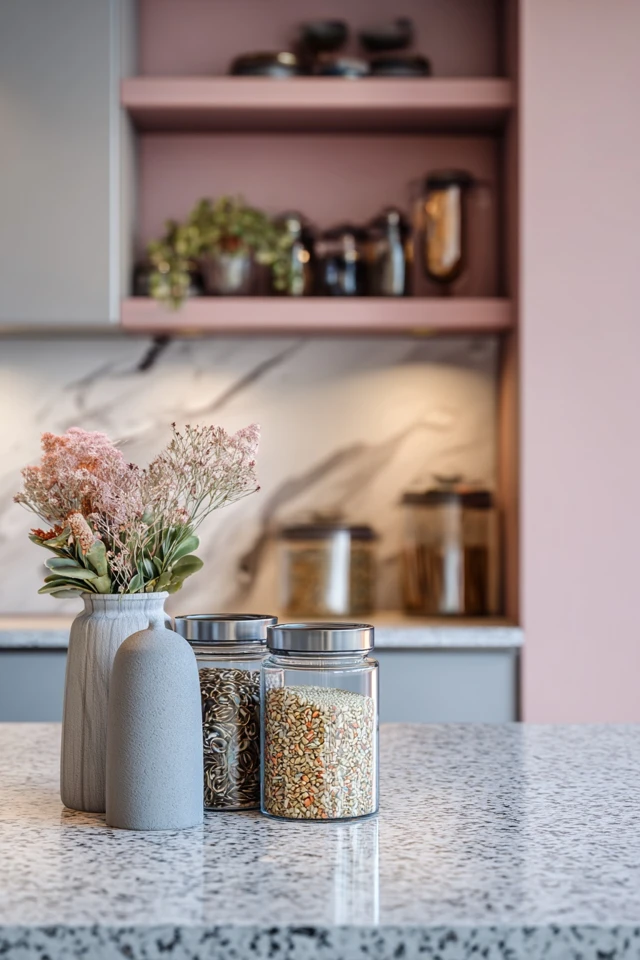
Open shelves look good but show every mismatched box. A practical split is closed bins or baskets on lower shelves for bulky, messy items, and open shelves at eye level for the things you use daily. Woven baskets and linen liners hide clutter and add texture.
Matching containers help too. Clear, labeled jars for grains, pasta and snacks make stock easy to read at a glance. Decant only what suits it: leave items in their original packaging if you need the cooking instructions or dates.
Add an appliance garage or a corner pantry
If small appliances take over the counter, give them a shelf in the pantry or a counter-level cabinet with a lift-up door. A toaster or blender that lives behind a door frees the work surface you actually cook on.
An unused nook, the end of a run of cabinets or a corner can hold a tall, narrow pantry cabinet. Even 12-15 inches of width holds a surprising amount when shelves are shallow.
Where should you put food, and where not?
Location matters for food quality. Ohioline notes that cabinets above the range, near the dishwasher or next to the refrigerator exhaust are too warm for keeping food at top quality. Use those for dishes, pots and pans instead, and keep the food in a cooler cabinet or closet.
Use paint, light and finishes
Light, low-saturation colors such as warm white, pale greige or soft sage make a small pantry feel bigger. A deeper color on the back wall or inside of the door adds depth without much cost, and it's a good DIY project.
Add LED strips under shelves so you can see to the back. Warm bulbs, about 2700K-3000K, make food look appetizing. Test paint samples under the pantry's actual light before committing, since a closet can look very different from the rest of the kitchen.
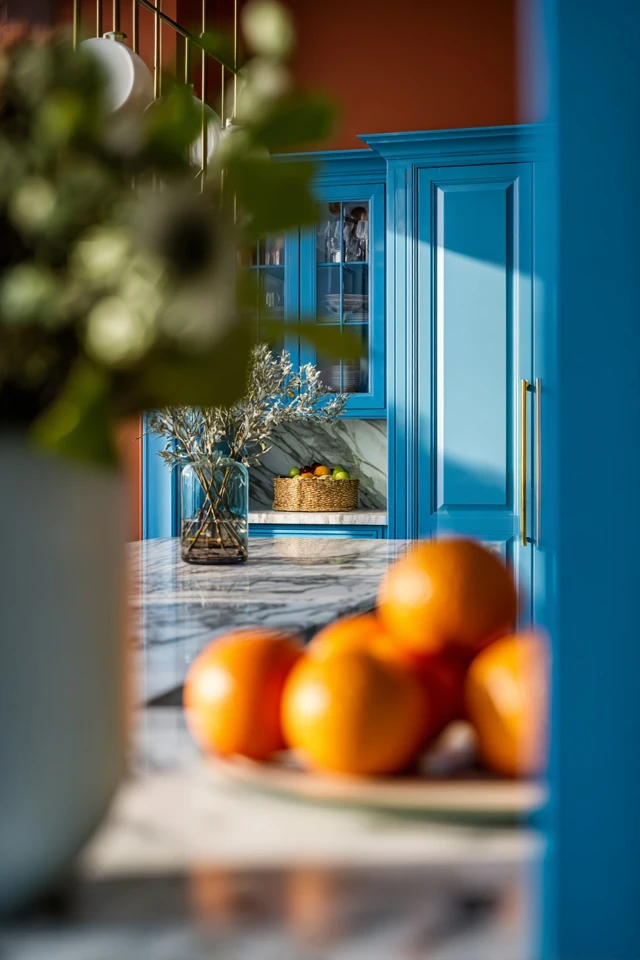
Matte finishes hide fingerprints, while a little gloss, such as a glass door or a glossy backsplash, bounces light into a dark space. For a tight budget, peel-and-stick tile or wallpaper and removable hooks refresh the look and are easy to undo if you rent.
Keep it working: rotate and label
A tidy pantry only stays tidy with a system. Use first in, first out: the oldest item goes in front and the newer one goes in the back. Label shelves by zone so everyone in the house returns things to the same place.
Schedule a regular check, too. Judy Harrison, Ph.D., an Extension Food Safety Specialist, advises: "Keep the supply fresh by rotating non-perishable staple items in general storage once or twice a year."
Which small pantry layout works best?
There's no single best design, but a few rules hold. In a reach-in pantry, use shallow shelves and pull-outs. In a small walk-in, keep shelves on one or both sides shallow and leave enough aisle to turn and bend comfortably. In a cabinet pantry, use full-height shelving with door storage. As an architect, I'd always choose accessibility over cramming in one more shelf.
Frequently asked questions
What is the best design for a small pantry?
A narrow, full-height unit with shallow shelves, pull-outs and door storage usually works best, because nothing gets buried at the back. Match the layout to your space: reach-in, cabinet or small walk-in.
What is the latest trend for pantries?
Open shelving mixed with closed storage, bold paint colors inside the pantry and hidden appliance garages are popular. Treat them as accents and keep the structure simple so it ages well.
How can I make a small pantry feel larger?
Use light, low-saturation colors, add under-shelf lighting and keep containers uniform to reduce visual noise. Clearing the floor and the top shelf also helps the space read as more open.
Are pull-out shelves better than fixed shelves in a small pantry?
They are better in deep cabinets and high-use zones, since you can reach the back without unloading the front. Fixed shelves are fine when the shelves are shallow.
Filed under
ArticlesMeet the author
Written by an architect.
Julio Arco is a passionate architect with years of experience in architecture, interior design, urban design, and housing. He studied at prestigious universities across North America and Europe.

- Name
- Julio Arco
- Job
- Architect and online interior designer
- Studied
- Architecture, ITESM · Urban Design and Housing, McGill
- Partner
- Thor, Australian Shepherd
- Thor’s title
- Head of quality control