Bedroom Scent Ideas: How to Make Your Bedroom Smell Good
Bedroom scent ideas that work: remove odor sources, wash bedding, then layer sachets, sprays and diffusers. Includes pet-safety tips and a DIY room spray.

By Julio Arco
Architect and online interior designer
In this post
If you want to know how to make your bedroom smell good, start with clean, dry fabrics and a clear source check, then add one gentle scent. Fragrance works best as the last layer, not a cover-up for a musty mattress or a damp towel.
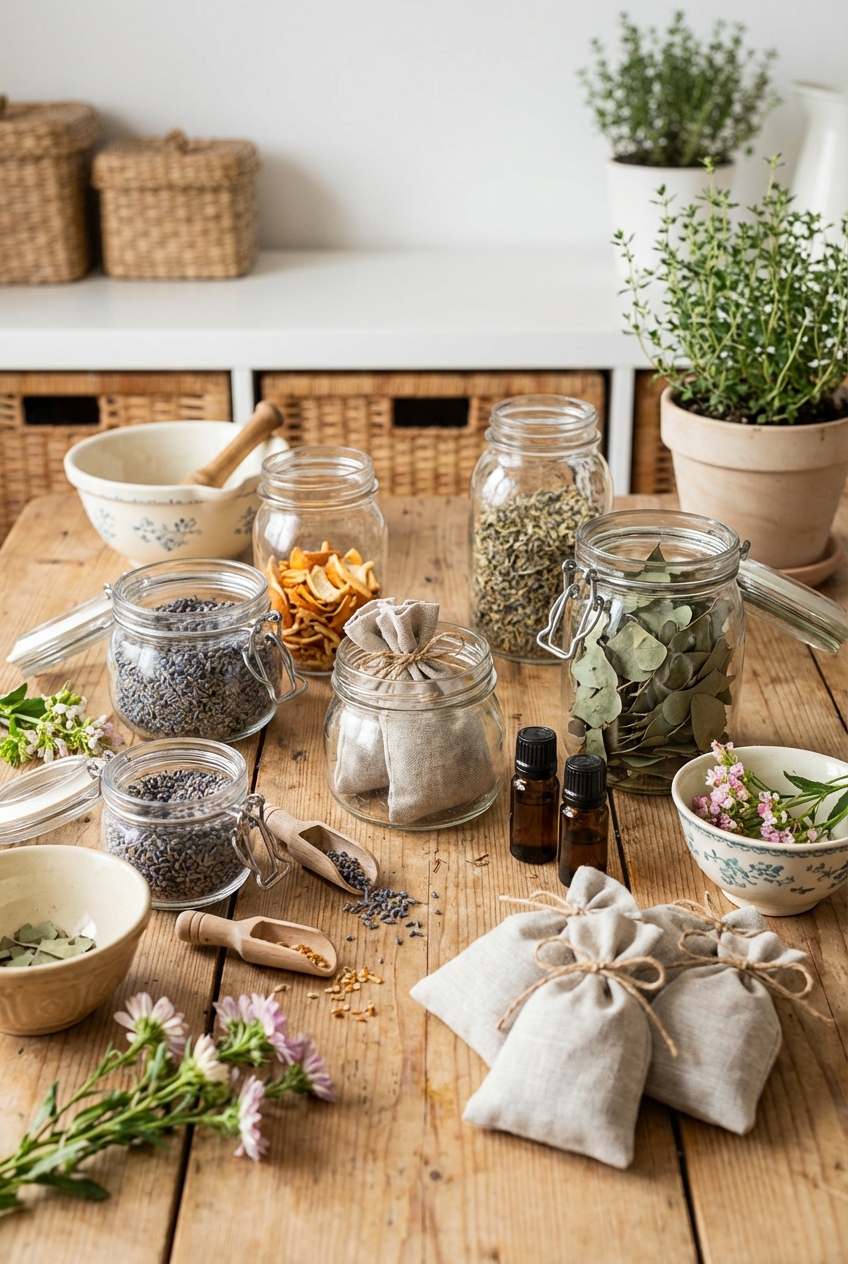
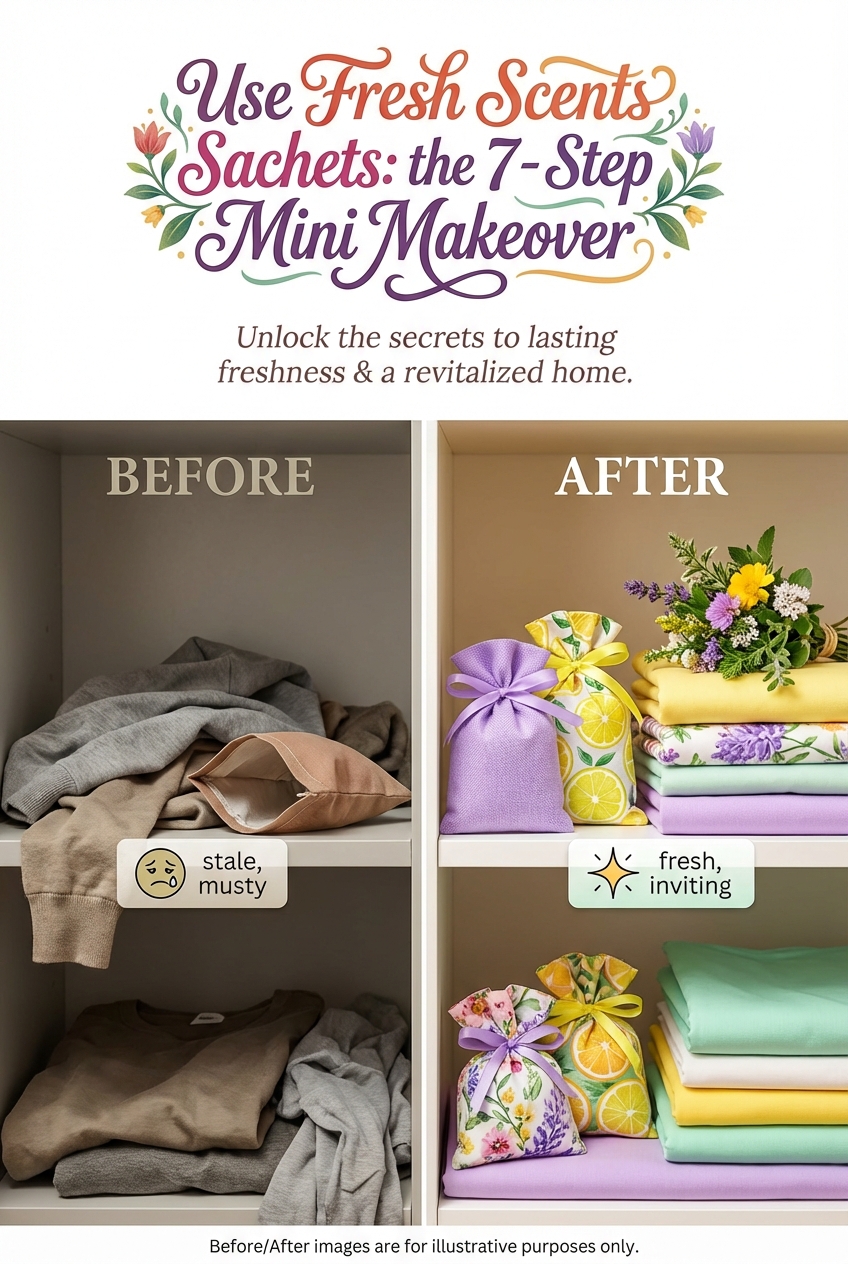
The easiest low-effort option is a sachet tucked into a drawer, closet or the corner of a shelf. It releases a mild scent without flames, sprays or liquids, so it suits small rooms and renters. Below you'll find the order I'd follow, plus scent picks and pet-safety notes.
Why scent matters in a bedroom
Smell is a design layer like light or color. A review in the National Institutes of Health archive describes fragrance as volatile chemicals that humans perceive through the olfactory system, and notes that the sense of smell plays a role in mood, stress and working capacity. For a room where you want to wind down, that is a good reason to choose the scent deliberately instead of by accident.
Find and remove the source of odors first
Perfume on top of a smell just gives you a stranger smell. Check these spots before buying anything:
- Bedding, pillows and mattress pad, which hold sweat and dust.
- Dirty laundry or a hamper with a lid that never opens.
- Under the bed, where dust and stray socks collect.
- Closets and drawers with trapped moisture.
- Curtains and upholstered chairs, which absorb cooking, pet and humidity odors.
Wash sheets and removable covers according to their care labels, vacuum the mattress and floor, and open the windows for a while. If you have a dog or cat, wash their bed too. My routine for pet smells is in this layering plan for pet odor.
Where do sachets work best in a bedroom?
Sachets do their best work in enclosed or semi-enclosed spots, where the scent stays gentle instead of filling the room.
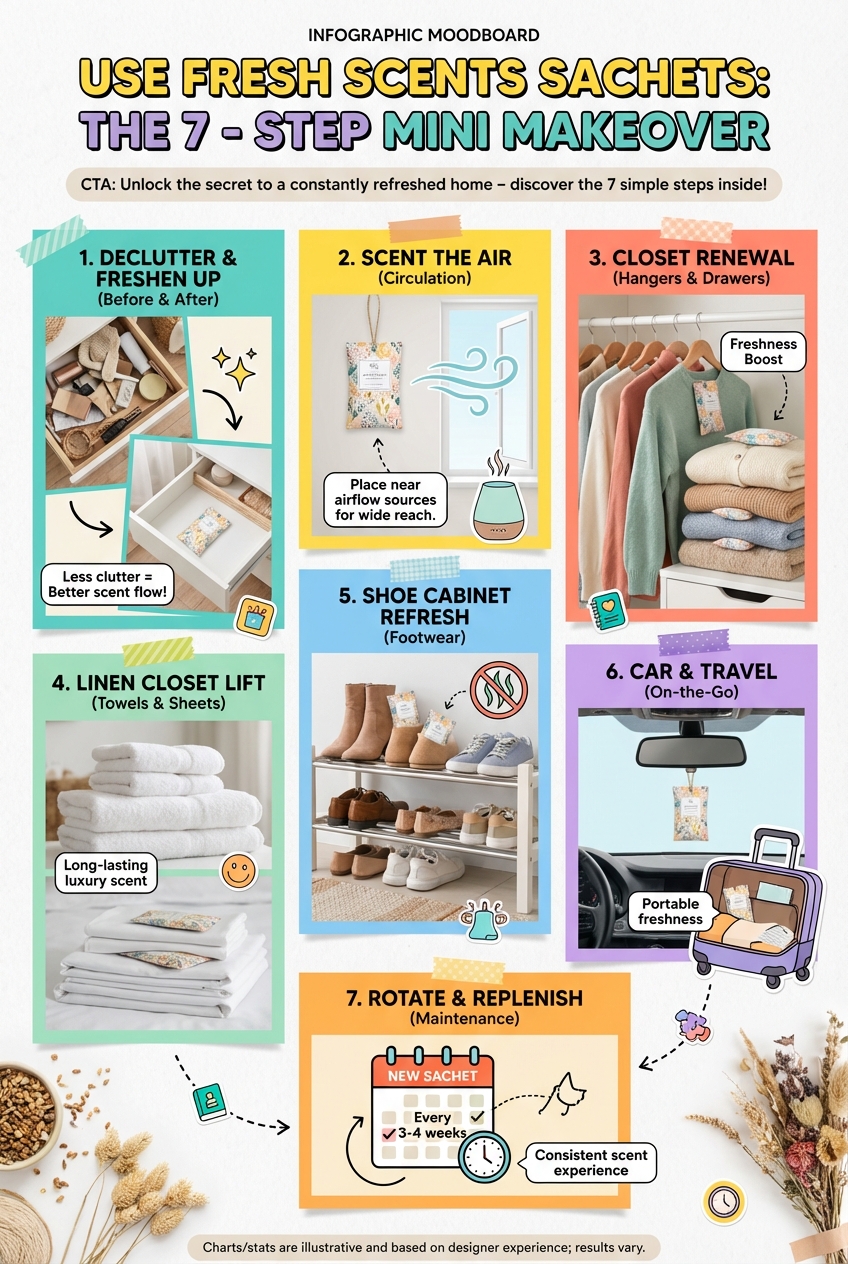
Dresser drawers
Empty the drawer, vacuum it, wipe it with a damp cloth and let it dry completely. Trapped moisture is hard on wood furniture. Then place the sachet at the back. Standing clothes upright (the file fold) keeps the sachet from getting buried under a heavy stack.
Closet and linen shelves
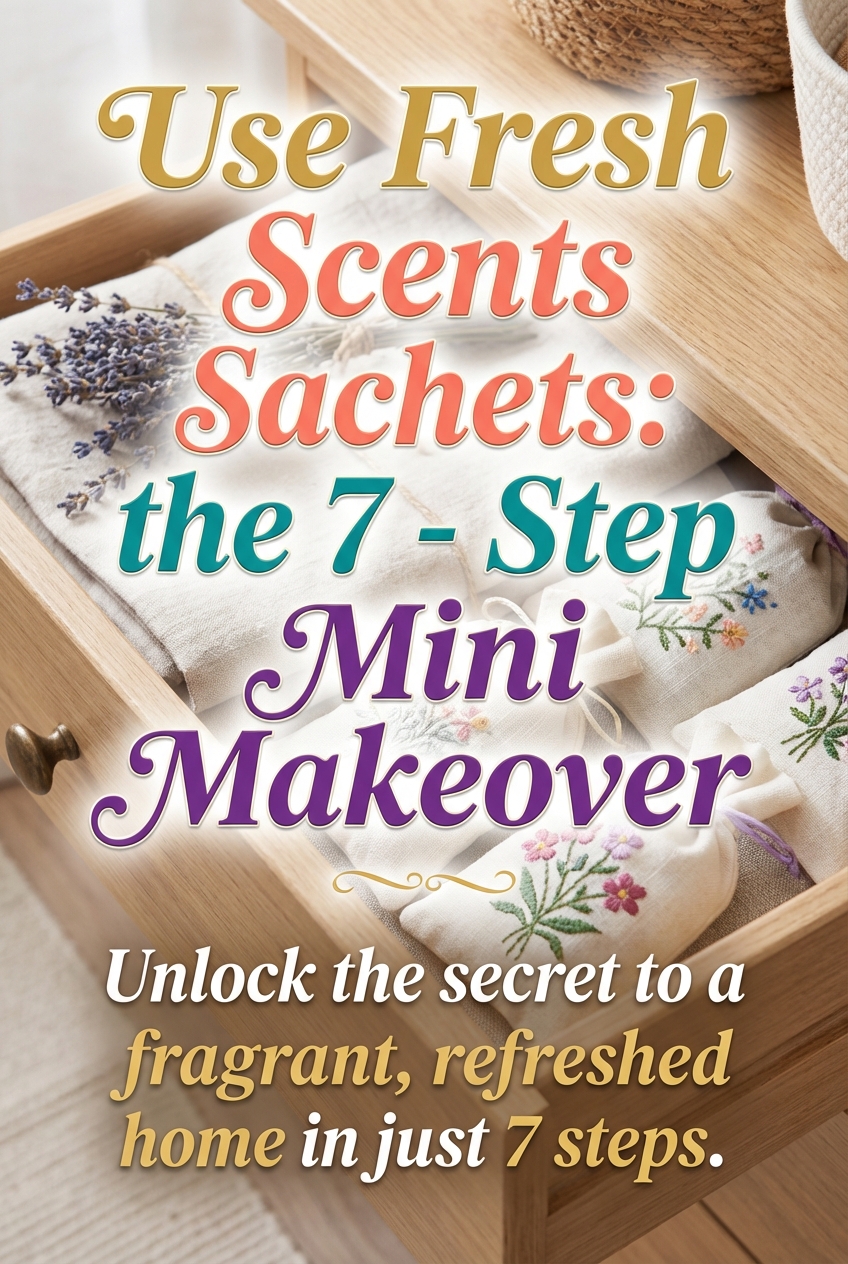
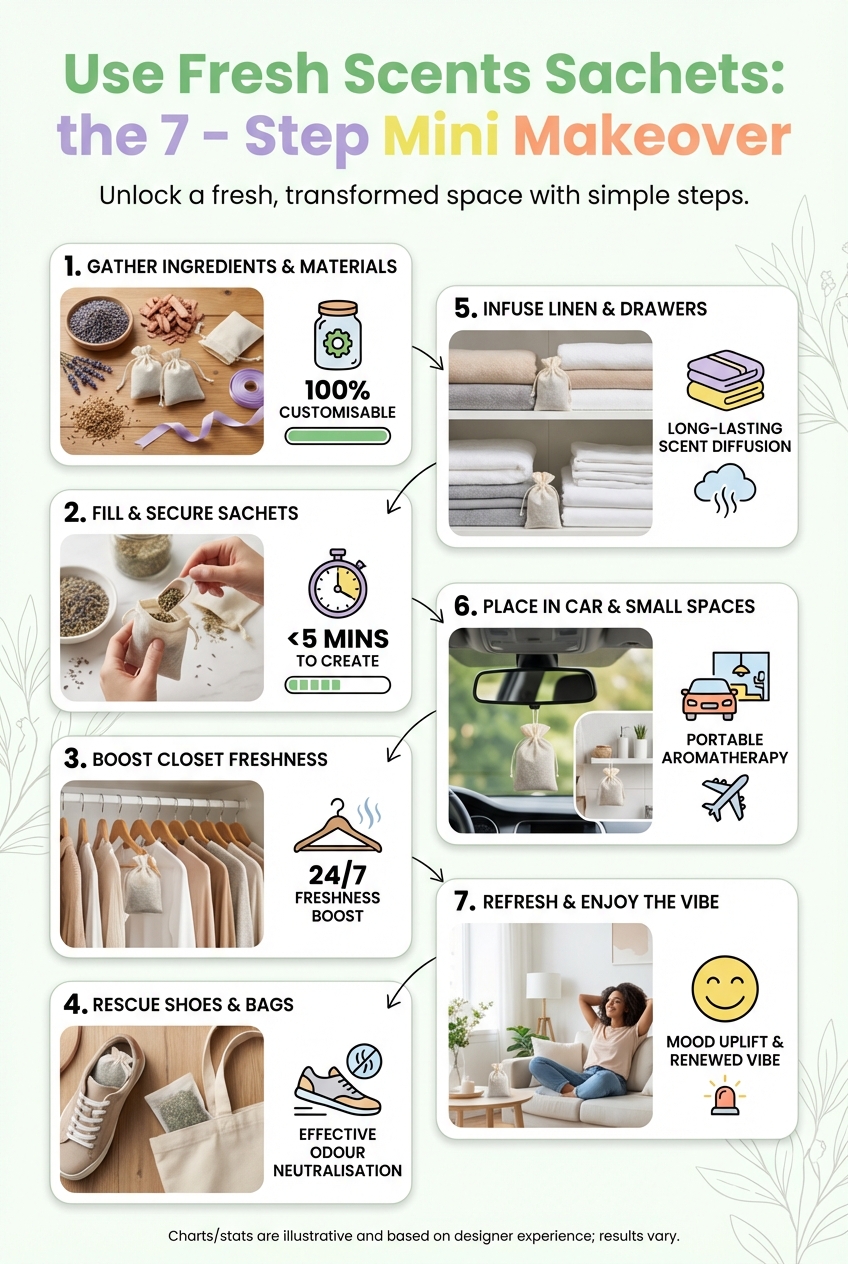
Put sachets behind stacks of towels or sheets, or in a small bowl, instead of directly on silk or fine cotton, since oils can transfer to fabric. Leave a few inches of air above stacked linens so they don't turn musty. For more ideas, see DIY closet scent ideas and 20 ways to use fresh scent sachets.
Upholstery and the reading chair
If you have an armchair or bench in the room, slide a sachet between the cushion and the arm. Body warmth releases a little scent when you sit, and the rest of the time it stays quiet.
What are the best scents for a bedroom?
For the best scents for bedroom use, think soft and clean rather than sweet and loud. Lavender, chamomile, cedar, sandalwood and light linen or cotton notes are common choices because they read as calm. Sea salt or other airy marine notes suit small rooms that need to feel fresh. Strong gourmand scents like vanilla-caramel or heavy florals can feel stuffy at night.
As an architect, I'd pick one main scent family for the whole bedroom and keep everything else in the same range. Mixed scents compete. If you want a deeper comparison for sleep, read the bedroom scent stacking guide.
Room sprays, linen sprays and a homemade option
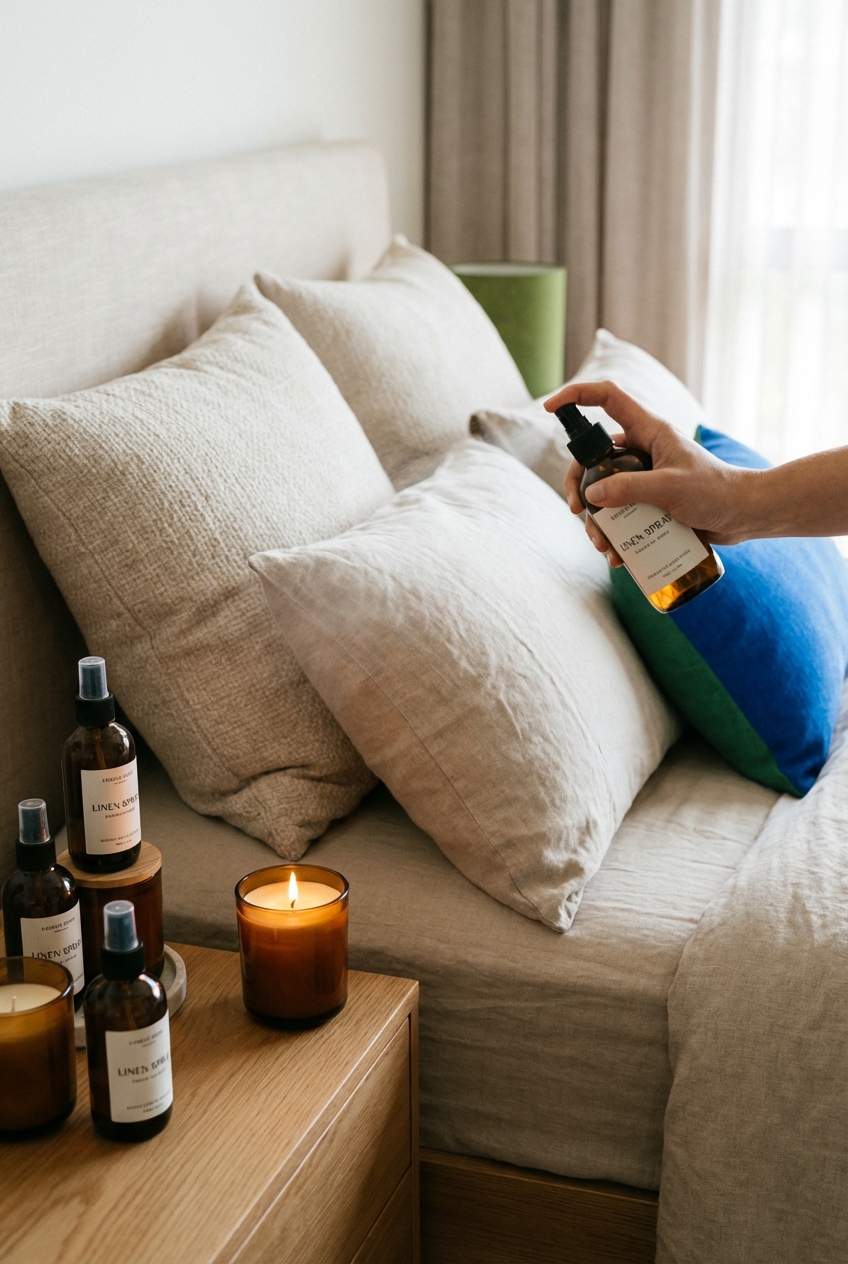
A linen spray is a light mist for pillows and bedding. A room spray works on the air and soft furnishings. For the best long-lasting room spray, look for a formula that lists its ingredients, test it on a hidden patch of fabric, and use fewer sprays than you think you need. Longevity depends mostly on how clean the fabrics are underneath.
How to make a room spray at home
A simple version uses a small glass or PET spray bottle, distilled water and a few drops of essential oil or a fragrance made for sprays. Shake before each use and mist the air, not the bed. Oil and water separate, so a few drops is plenty. Patch-test on fabric first, and skip it entirely if you have a cat or bird; check with your vet about any oil you plan to use around pets. More on oils in how to use essential oils to scent a room.
Diffusers and candles
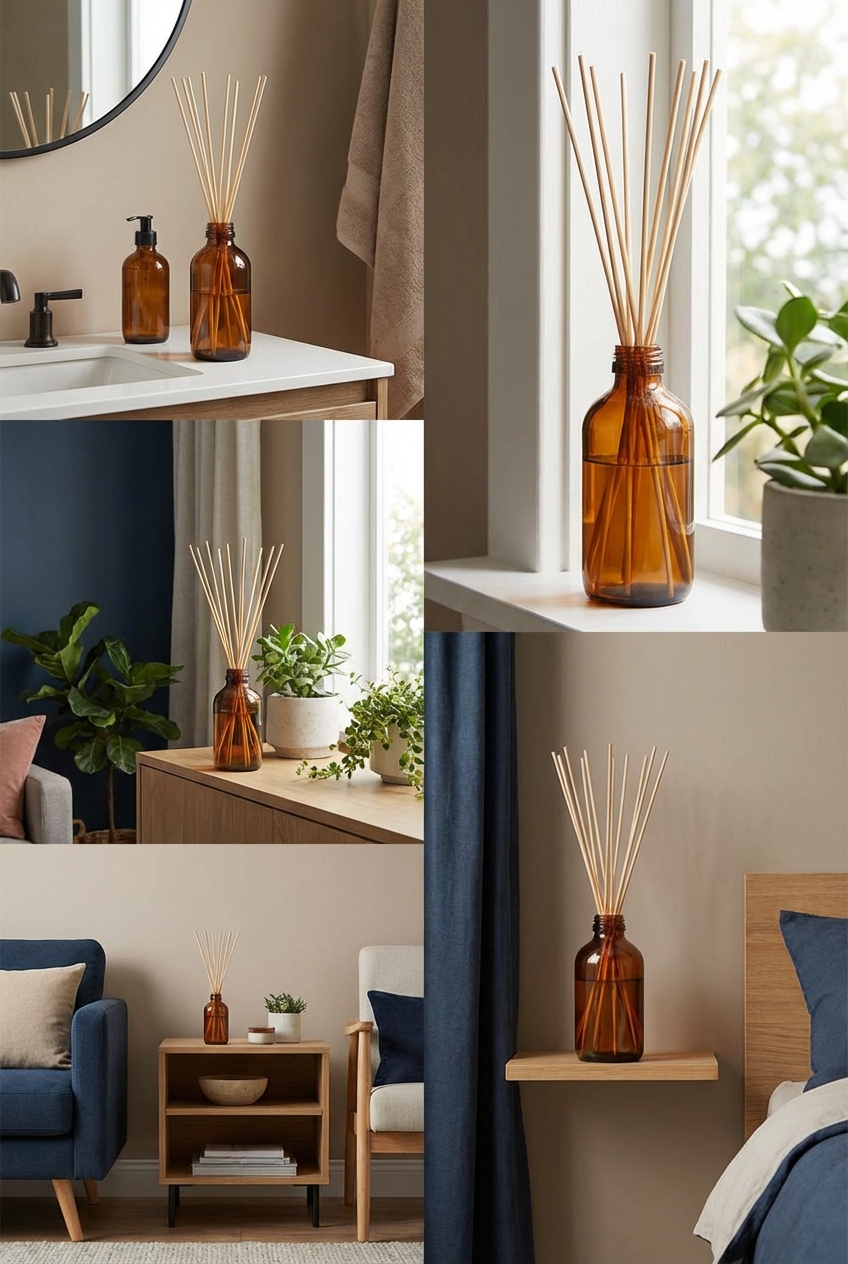
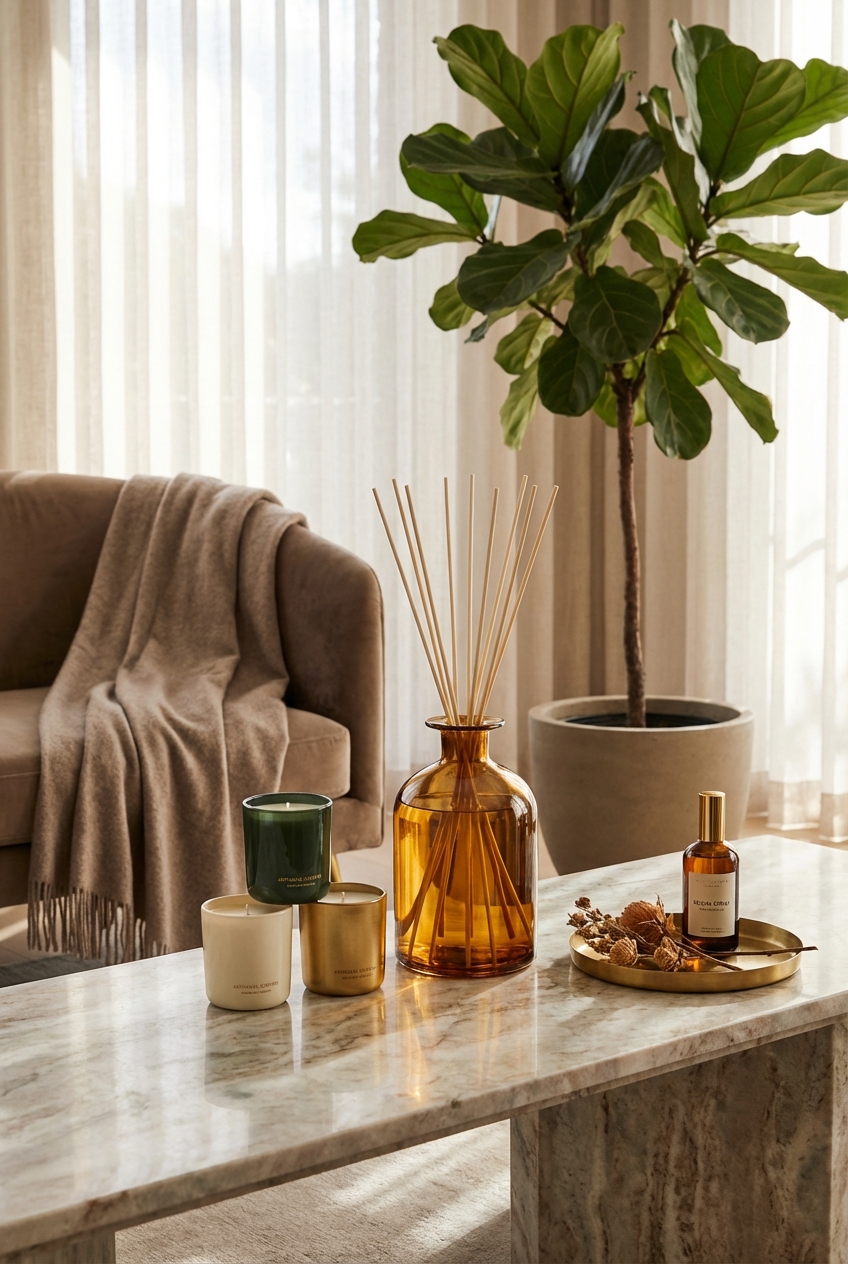
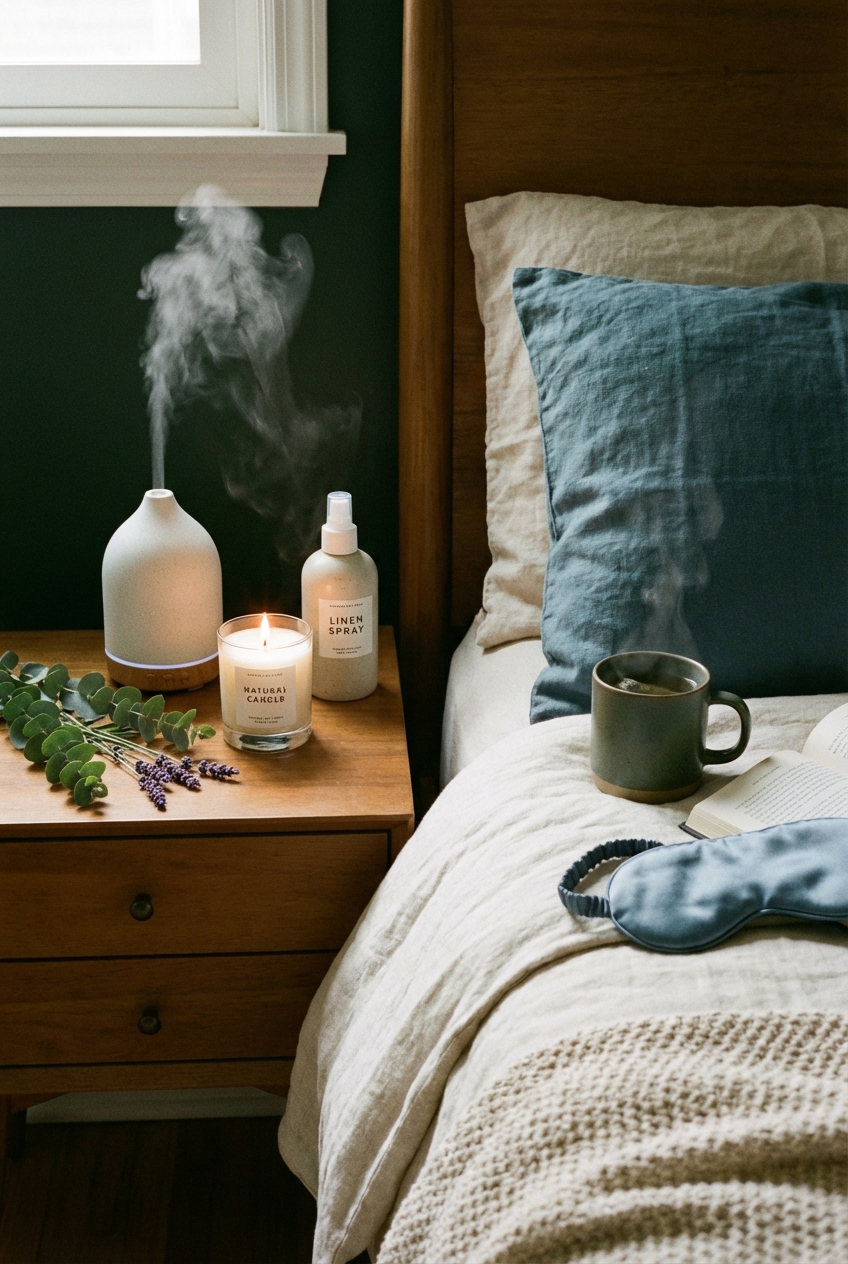
A bedroom fragrance diffuser, whether reed or ultrasonic, gives a steady background scent. Reed diffusers are simplest: no power, no timer, and nothing to forget. Place one on a dresser or shelf away from the bed and out of pet reach. Ultrasonic models can run on a timer so they switch off before you sleep.
Candles smell lovely but need attention. Never leave one burning while you sleep, and keep it away from curtains and bedding. If you want a flame-free evening scent, a diffuser or sachet is the safer pick.
Keep it pet-safe
Many scented products contain essential oils or synthetic fragrance that can irritate pets if chewed or swallowed. Cats are especially sensitive to some oils. I recommend keeping sachets inside closed drawers, closets or high shelves, and putting any loose sachet in a mesh bag so a curious paw can't puncture it. If your pet gets into one, call your vet.
How strong should the scent be?
If you can smell it strongly from the hallway, it's too much. Start with one sachet or one diffuser, wait a day, and then decide whether to add more. Sachets in damp spots like bathrooms or laundry areas should sit on a saucer or in a perforated jar so moisture doesn't stain surfaces.
Finish with a quick styling pass: fluff the pillows, fold the throw, and switch to lamps instead of the overhead light. A tidy, softly lit room makes a light scent feel intentional. For a whole-home approach, see scent stacking tips.
Frequently asked questions
What are some things I can do to make my bedroom smell good?
Wash bedding, vacuum the mattress and floor, and air the room first. Then add one mild scent, such as a sachet in a drawer or a reed diffuser on a dresser.
How to make a room spray at home?
Mix distilled water with a few drops of essential oil or spray-safe fragrance in a spray bottle, and shake before each use. Patch-test on fabric and avoid it around cats or birds unless your vet approves.
How long do scent sachets last?
It varies by brand, but most fade gradually over a few months. Check the package for the maker's estimate and replace it when you can barely smell it.
Can I use sachets in a bedroom with pets?
Yes, if they are inaccessible, such as inside closed drawers or on high shelves. Check with your vet about any scented product in a home with cats or other sensitive animals.
Filed under
ArticlesMeet the author
Written by an architect.
Julio Arco is a passionate architect with years of experience in architecture, interior design, urban design, and housing. He studied at prestigious universities across North America and Europe.

- Name
- Julio Arco
- Job
- Architect and online interior designer
- Studied
- Architecture, ITESM · Urban Design and Housing, McGill
- Partner
- Thor, Australian Shepherd
- Thor’s title
- Head of quality control