Aesthetic Rug Styles: Dark Patterns That Feel Soft
Learn the main aesthetic rug styles, pattern names and textures, and how to pick a dark, moody rug that still feels soft, sized right for your room.

By Julio Arco
Architect and online interior designer
In this post
- What are the main aesthetic rug styles for a dark, romantic…
- Rug pattern names worth knowing
- Which rug textures feel soft in a dark color?
- How big should the rug be?
- Should a rug be lighter or darker than your couch?
- How to match a dark rug to your room
- Where does each style work best?
- Mistakes to avoid
- Frequently asked questions
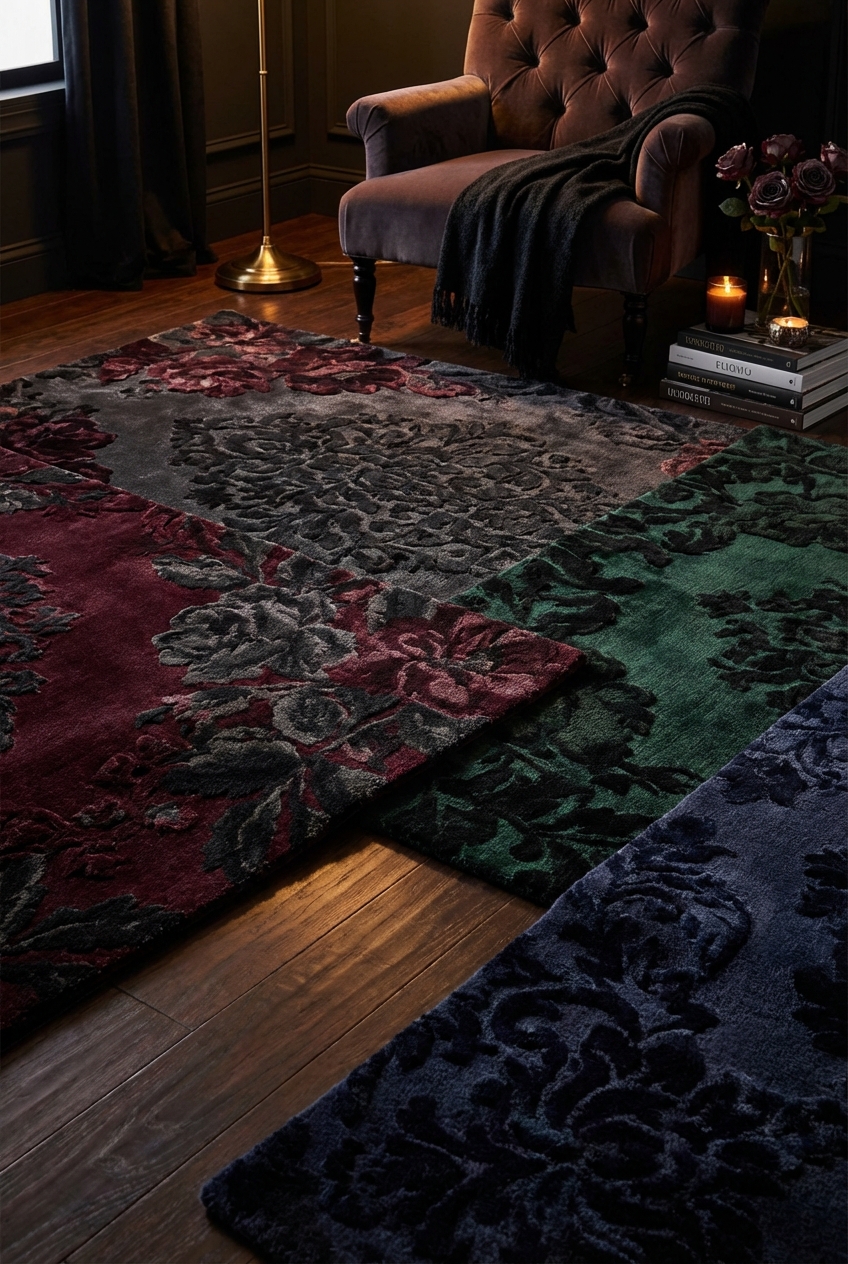
If you like moody rooms, the rug styles that work best are distressed traditional patterns, dark florals and heathered or tonal textures. They let a dark rug read as soft instead of heavy. Pick a pattern with some variation, a fiber with a little sheen, and a size big enough to hold the whole seating group.
Dark rugs have a reputation for making rooms feel small or gloomy. That's usually a pattern, texture or size problem, not a color problem, and all three are easy to fix. Below I go through the styles and pattern names worth knowing, the textures that feel soft, and how to size and place the rug.
What are the main aesthetic rug styles for a dark, romantic room?
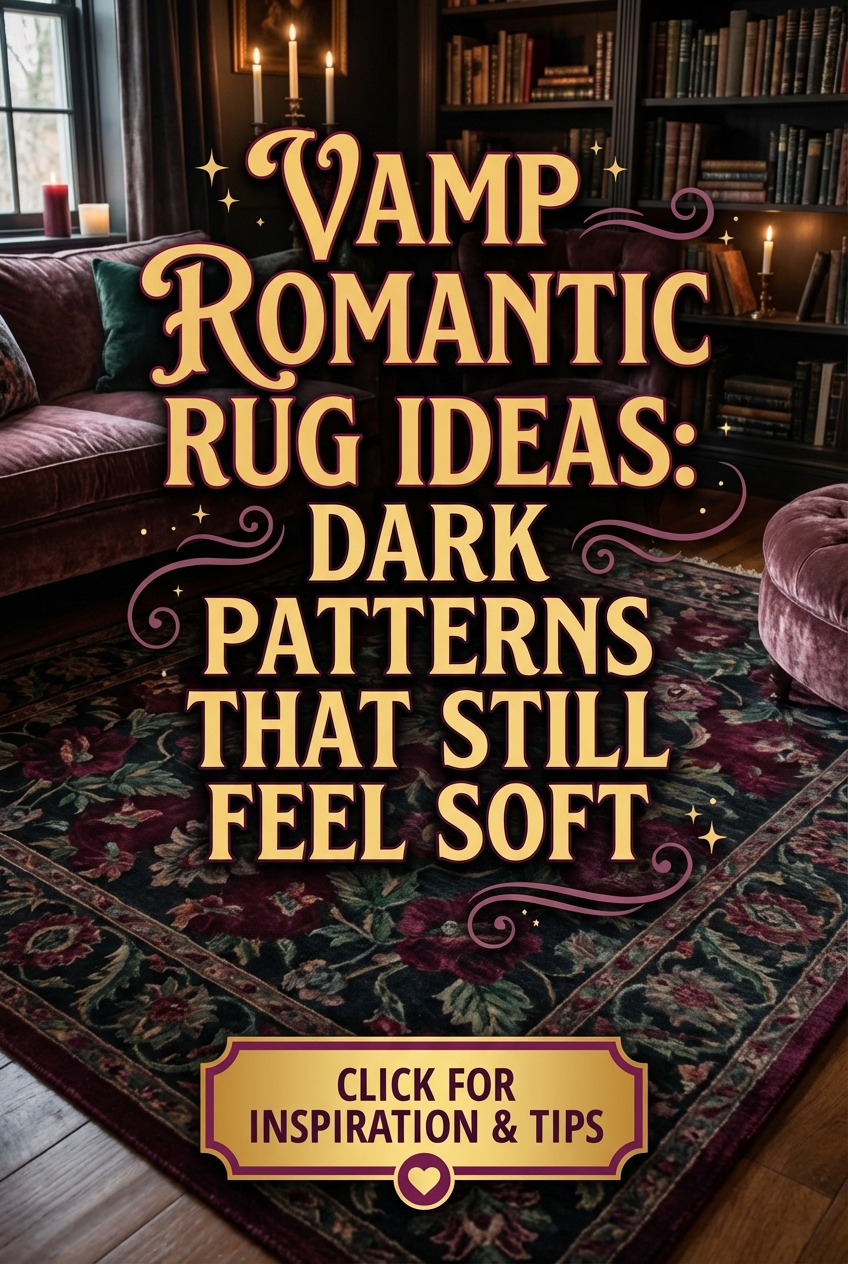
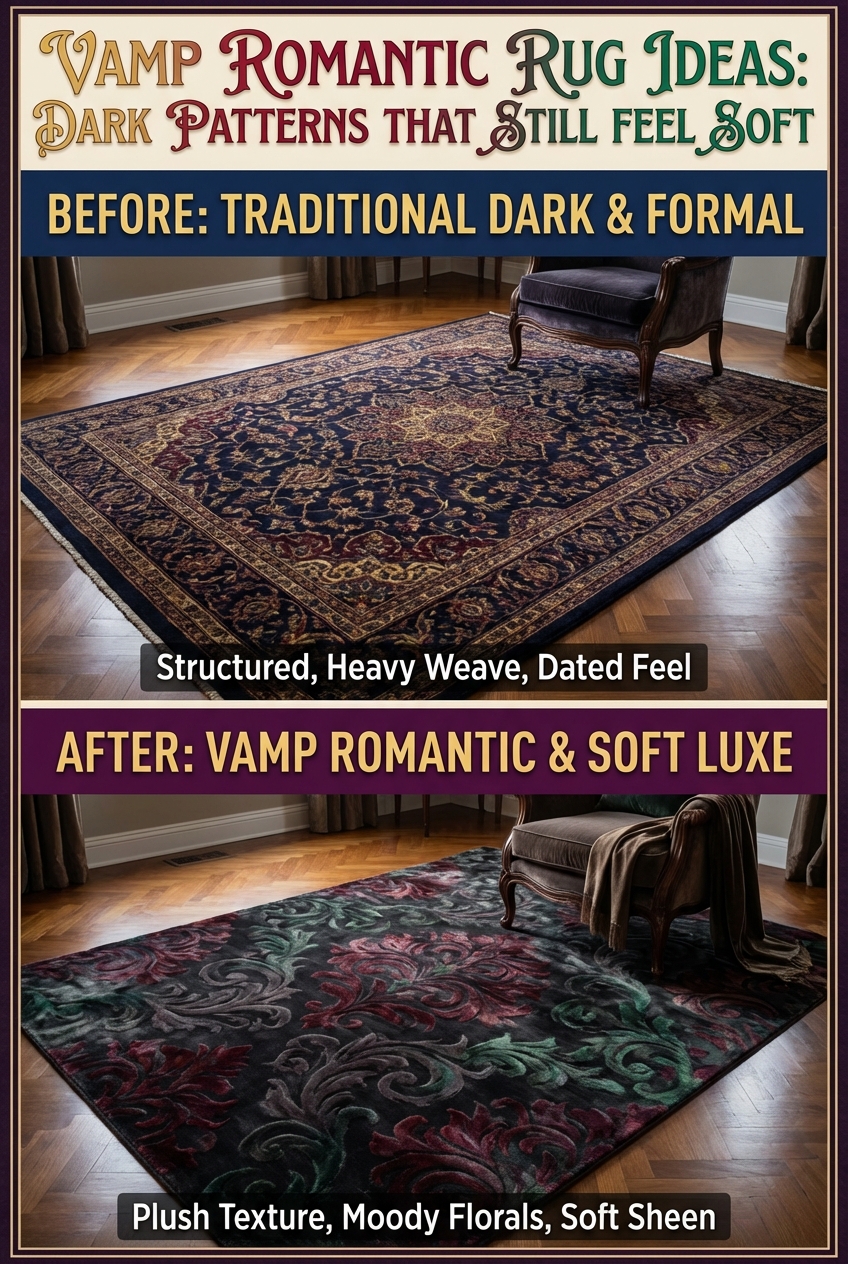
The look I'm describing is often called "vamp romantic": deep colors, soft surfaces and a bit of drama, like a library at dusk. Four rug styles fit it best.
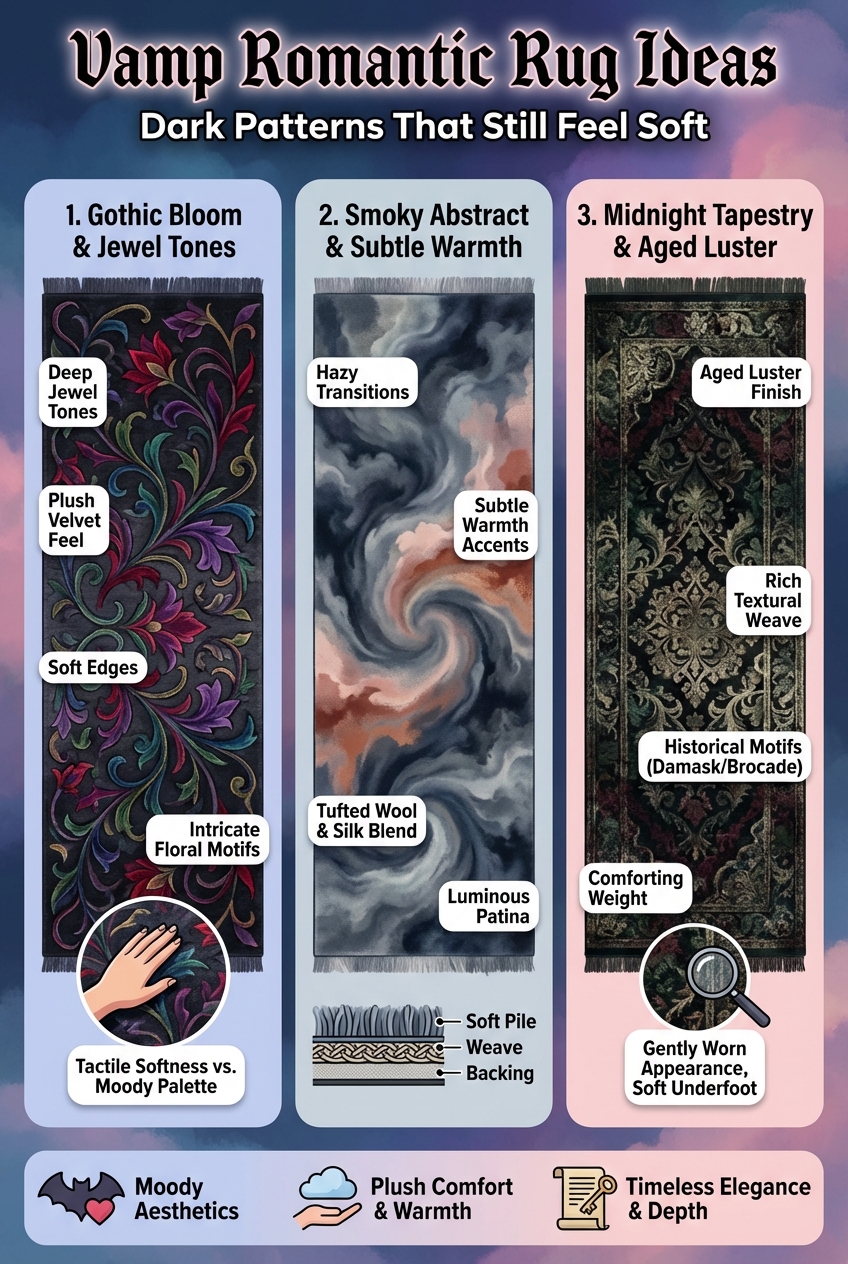
Distressed traditional
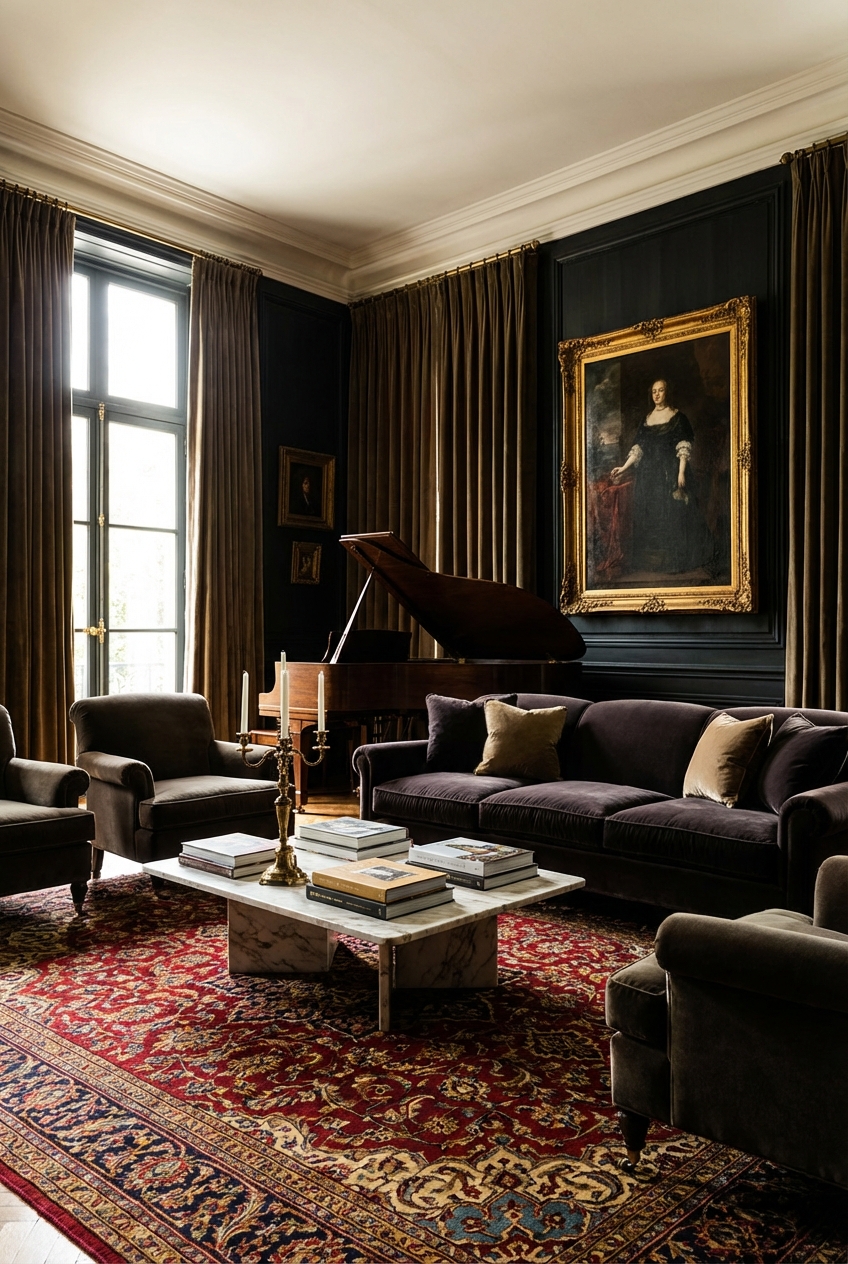
Faded Persian-style and medallion rugs have a pattern that looks worn by time. The lighter foundation threads show through the dark dye, which breaks up the color and keeps a dark rug from reading as a flat void. It's the safest starting point if you're unsure.
Floral noir
Think of an old Dutch still-life painting: big, sprawling flowers in dusty rose, sage or ochre on a near-black ground. Organic shapes soften a room in a way strict geometrics don't. This is also one of the more popular answers to what are some cool rug patterns.
Over-dyed vintage
These are old rugs washed in a dark dye, so the original pattern stays visible but muted. They suit offices and bedrooms where you want calm rather than busy.
Tonal and abstract
Charcoal on charcoal, or a subtle high-low carved line, gives you texture without a pattern competing with your furniture. If you're asking what type of rugs are trending now, muted, low-contrast designs like this are a safe bet, though trends shift and I'd choose by how a rug looks in your light.
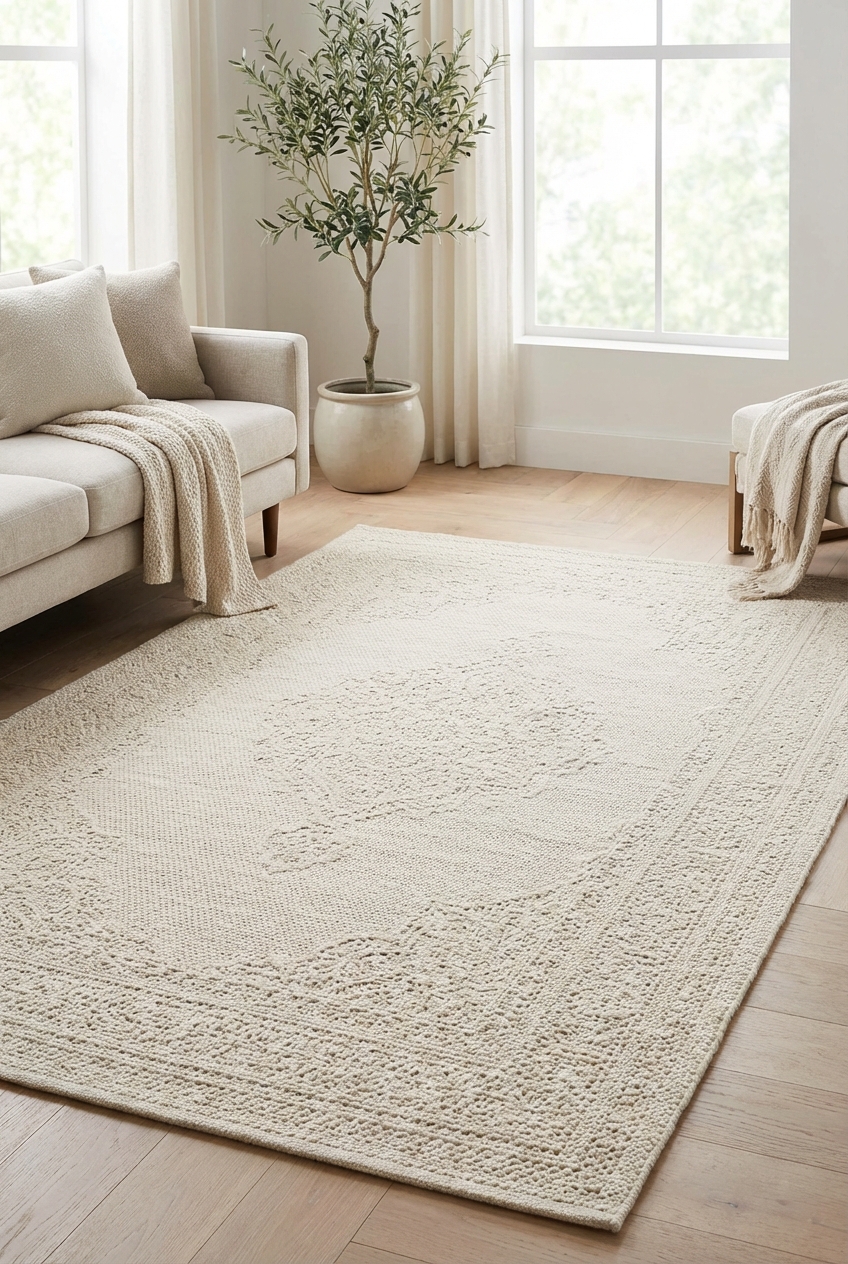
Lace-inspired designs also work here; see modern lace rug ideas for a lighter take.
Rug pattern names worth knowing
Knowing the vocabulary makes shopping easier. Among the types of rug patterns you'll see most often:
- Medallion: a large central motif, often repeated in the corners.
- Allover: one pattern repeated across the whole rug with no center.
- Floral: botanical motifs, from tight and formal to loose and oversized.
- Geometric: diamonds, trellis and lines, usually crisp and graphic.
- Border and field: a framed edge around a central area.
- Abstract: brushstroke-like or erased-looking designs with no repeat.
For a dark, soft look, allover, floral and abstract patterns hide wear and dirt better than a bold medallion on a plain ground.
Which rug textures feel soft in a dark color?
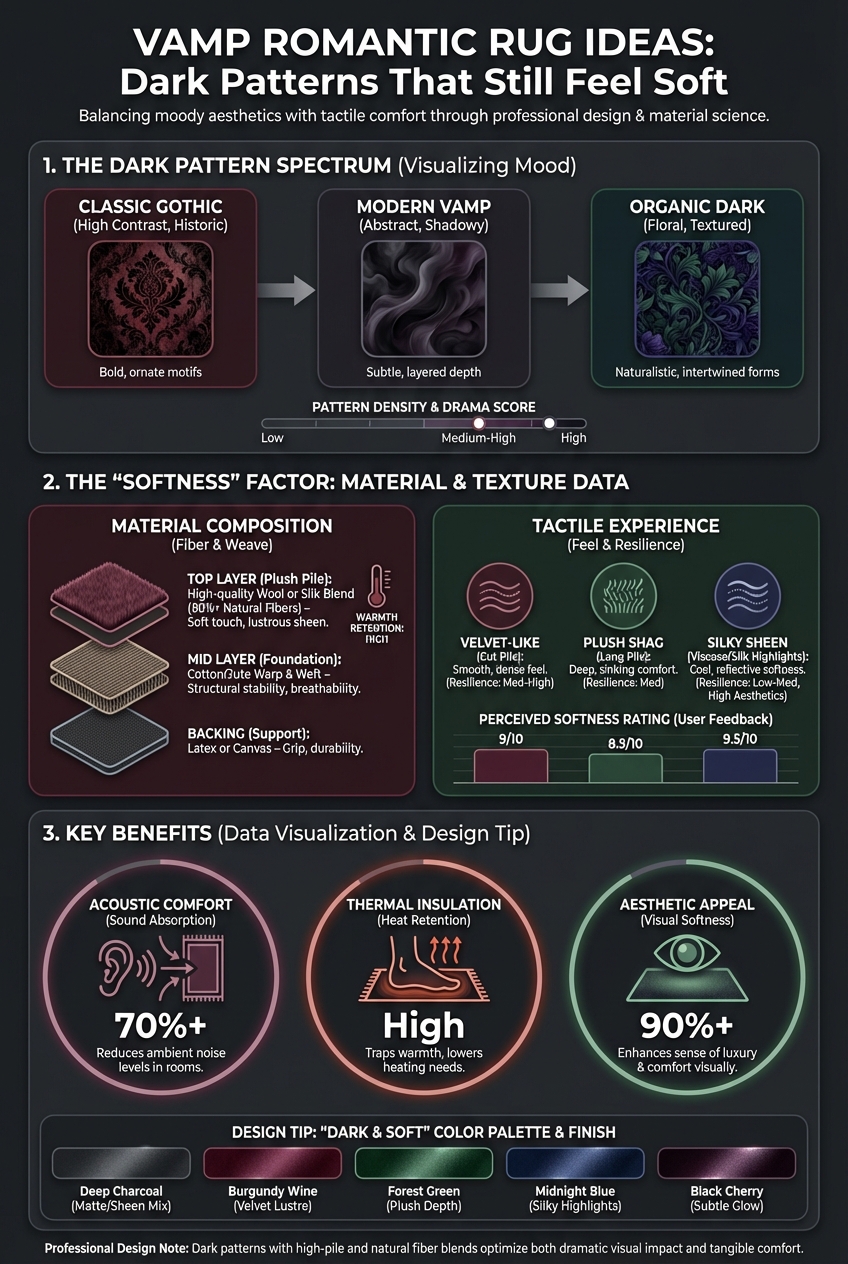
Among the types of rug textures, softness comes from pile height and fiber more than from color. A few principles help:
- Matte wool absorbs light and looks deep and calm. A flat solid black wool shows every speck of lint and pet hair, so choose a heathered or tonal wool instead.
- Viscose, Tencel or silk blends catch light and shift lighter or darker as you walk around. A little goes a long way, and they are less hardy than wool, so keep them out of the busiest paths.
- Low pile suits entryways, living rooms and dining areas. High pile suits bedrooms, where bare feet matter most.
- High-low carving adds shadow and depth to a single-color rug.
If you share your home with a dog or cat, I recommend wool or a tightly woven synthetic with a flecked color. It hides fur and cleans more easily than a plush solid.
How big should the rug be?
Bigger is the safer choice in a dark room. A small dark rug looks like an island, while a large one makes furniture feel anchored.
- All legs on: in a typical living room, a 9x12 or 10x14 lets every furniture leg sit on the rug.
- Front legs on: if that's too big, at least the front 8-12 inches of the sofa and chairs should rest on it.
- Wall gap: leave roughly 12-18 inches of floor around the edges, and a bit less in a small room.
- Coffee table: keep about 14-18 inches between sofa and table.
- Dining: the rug should extend well past the table so chairs stay on it when pulled out. Aim for about 24-36 inches on every side.
As an architect, I'd center the rug on the seating group rather than on the room if the two don't line up. If budget limits you, layer a smaller patterned rug over a larger, inexpensive jute or seagrass one.
Should a rug be lighter or darker than your couch?
Either works, but it shouldn't match exactly. A charcoal rug under a charcoal sofa makes both disappear. Shift the hue or the value: a deep plum or forest green rug under a charcoal sofa gives the furniture an outline. If your floors are very dark, look for a rug with a lighter border or a brighter pattern so it doesn't vanish.
How to match a dark rug to your room
- Check the light. Look at the room in the afternoon and evening. A naturally dim room does better with a rug that has some sheen. A bright room can handle deep matte wool.
- Choose the rug first. It's easier to pick a paint color to match a rug than the other way around.
- Pick texture to suit the room: low-pile wool for traffic, plush pile for bedrooms.
- Add a rug pad. It stops sliding and bunching on dark floors and adds cushioning.
- Layer your lighting. A floor lamp aimed toward the rug and warm bulbs (around 2700K) bring out the pattern.
A pad matters for safety, too. The National Institutes of Health's database lists loose throw rugs and area carpets with curled edges or folds among the extrinsic factors most frequently mentioned in the literature as unsafe and potentially increasing fall risk. Keep edges flat, and use a pad or non-slip backing, especially if older adults live in or visit your home.
Where does each style work best?
Living room: a distressed medallion in charcoal with muted gold or crimson looks good with velvet and brass. Bedroom: a high-pile navy or teal with a minimal pattern. Dining room: a dark floral hides crumbs and spills. Home office: an over-dyed vintage rug is calm on video calls.
The rest of the room should support the rug. Heavy drapes in a similar texture work well (see vamp romantic curtain ideas), as do layered light sources at different heights, like those in these chandelier ideas. If your walls are deep too, subtle wallpaper patterns pair well with a matte rug, and a slight sheen on one surface keeps a color-drenched room from feeling like a cave.
Open layouts need one rug story across zones; this open concept guide covers it.
Mistakes to avoid
- Buying a 5x7 because it's affordable. Layering over a cheaper large rug looks better.
- Choosing a flat black solid. Heathered or faded designs are more forgiving.
- Skipping the pad.
- Matching the rug to the sofa exactly.
Price depends on construction. Machine-made synthetics cost least and handle stains well, hand-tufted wool sits in the middle, and hand-knotted wool or silk costs the most. Check current prices for the size you need, since they vary a lot by retailer.
Frequently asked questions
What are the different types of rug styles?
Common styles are traditional (Persian, medallion), transitional, contemporary or modern, tribal, geometric, floral and abstract. Each is defined by its pattern, color range and how formal it looks.
What type of rugs are trending now?
Muted, low-contrast, tonal and abstract designs in natural fibers like wool are popular right now, along with faded vintage-look patterns. Trends change, so choose a rug you will still like in your room's light.
Do dark rugs make a room look smaller?
Not by themselves. A rug that's too small is what makes a room feel chopped up, while a large dark rug anchors the furniture and can add depth.
How do I keep a dark rug clean?
Vacuum regularly with a pet-hair attachment, since dark rugs show lint and light fur more than spills. A heathered or speckled pattern hides both better than a solid color.
Filed under
ArticlesMeet the author
Written by an architect.
Julio Arco is a passionate architect with years of experience in architecture, interior design, urban design, and housing. He studied at prestigious universities across North America and Europe.

- Name
- Julio Arco
- Job
- Architect and online interior designer
- Studied
- Architecture, ITESM · Urban Design and Housing, McGill
- Partner
- Thor, Australian Shepherd
- Thor’s title
- Head of quality control