Layered Sheer Curtains: Dramatic, Moody and Modern
Learn how to hang layered sheer curtains with velvet or blackout panels: rod setup, order, sizes and ideas for living rooms and bedrooms.

By Julio Arco
Architect and online interior designer
In this post
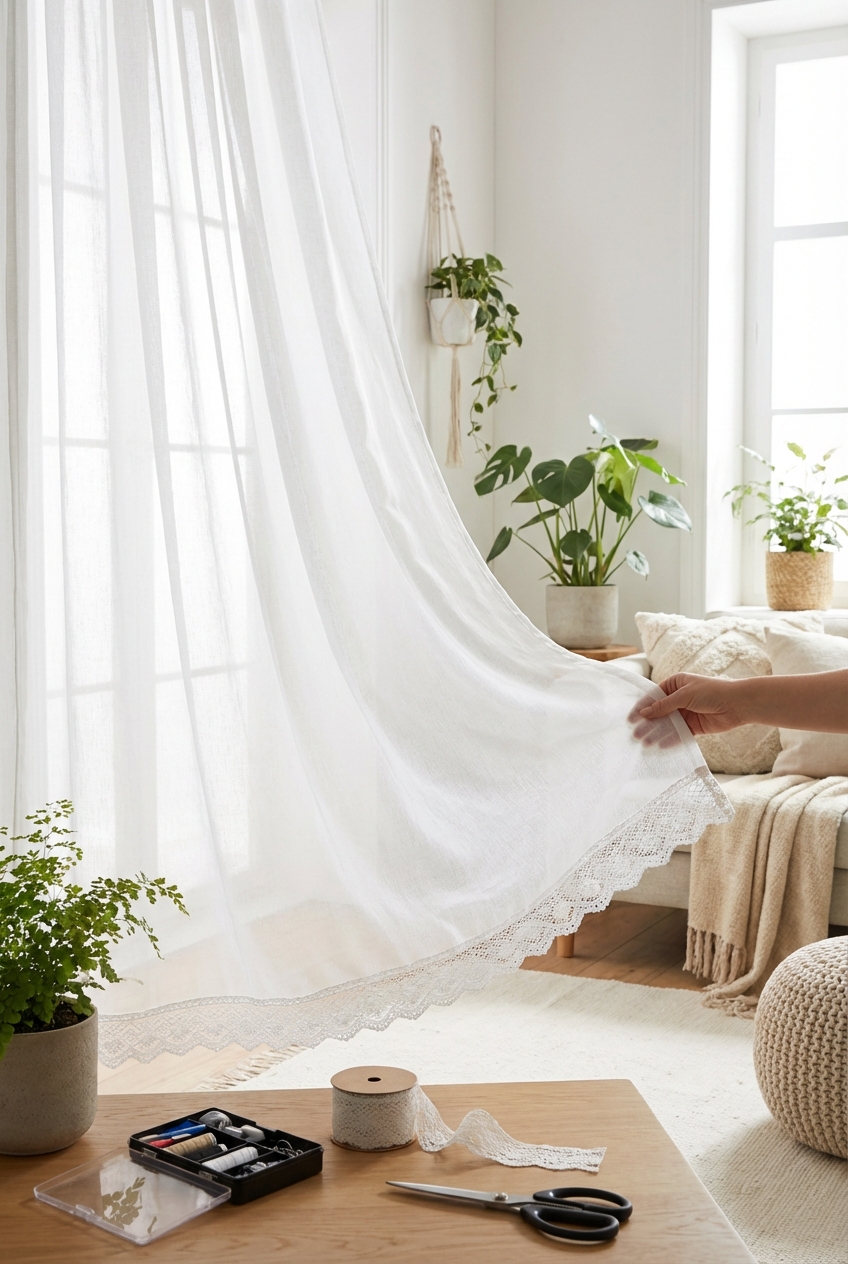
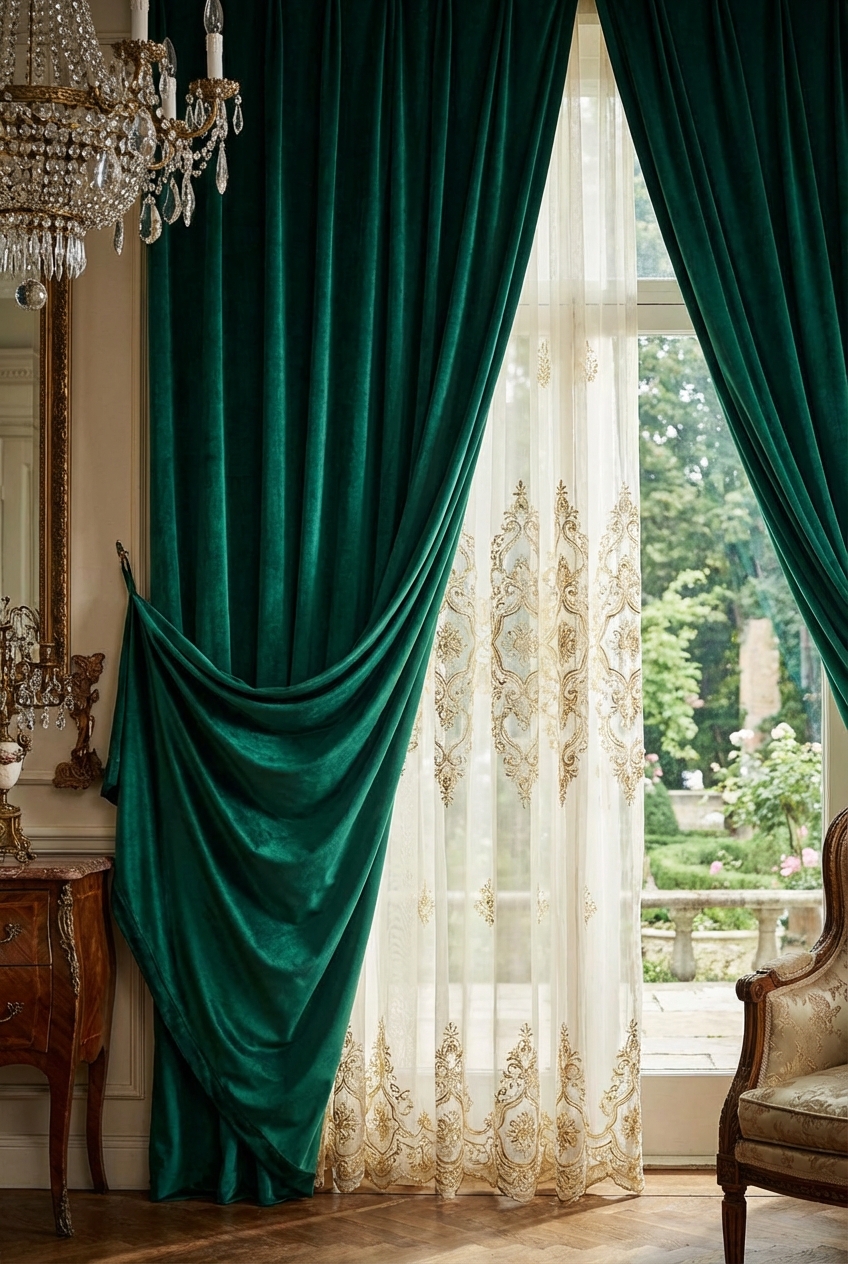
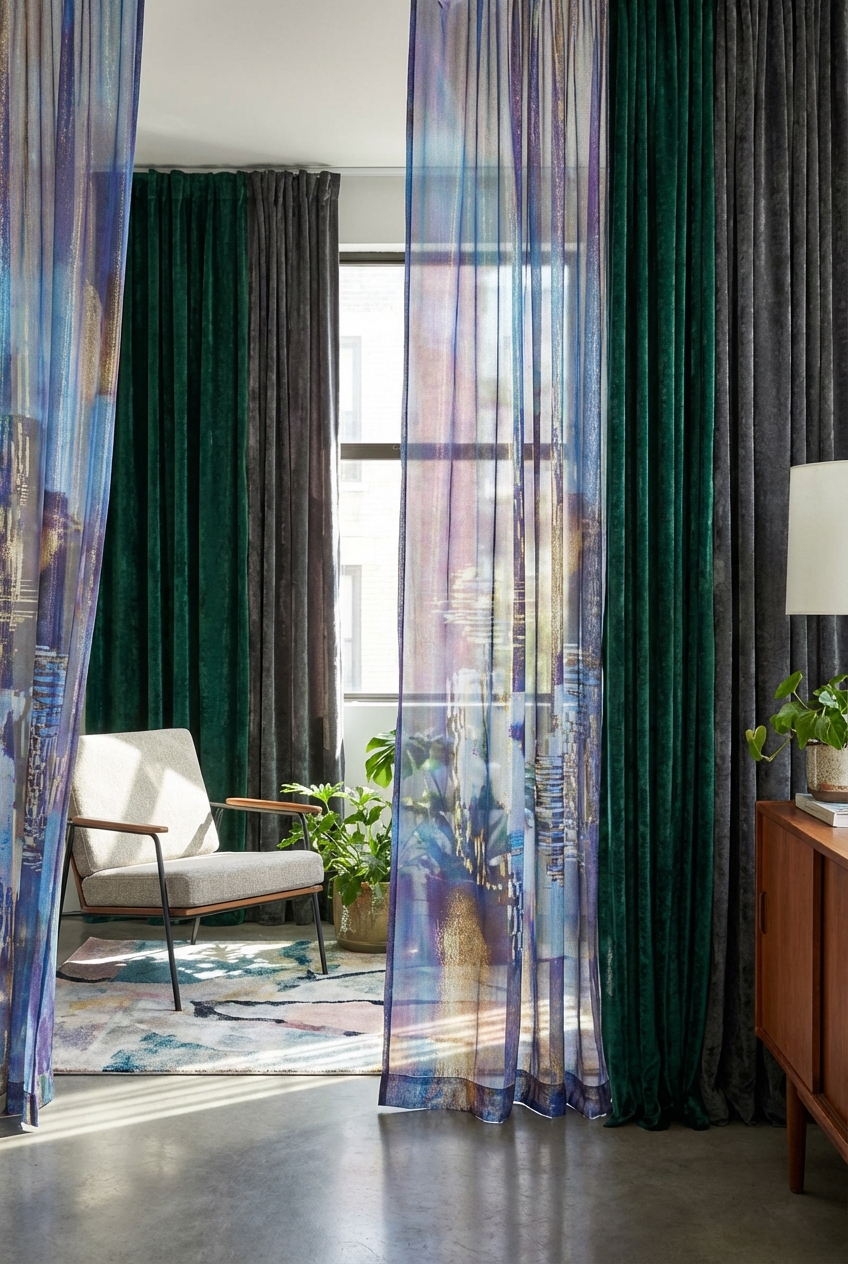
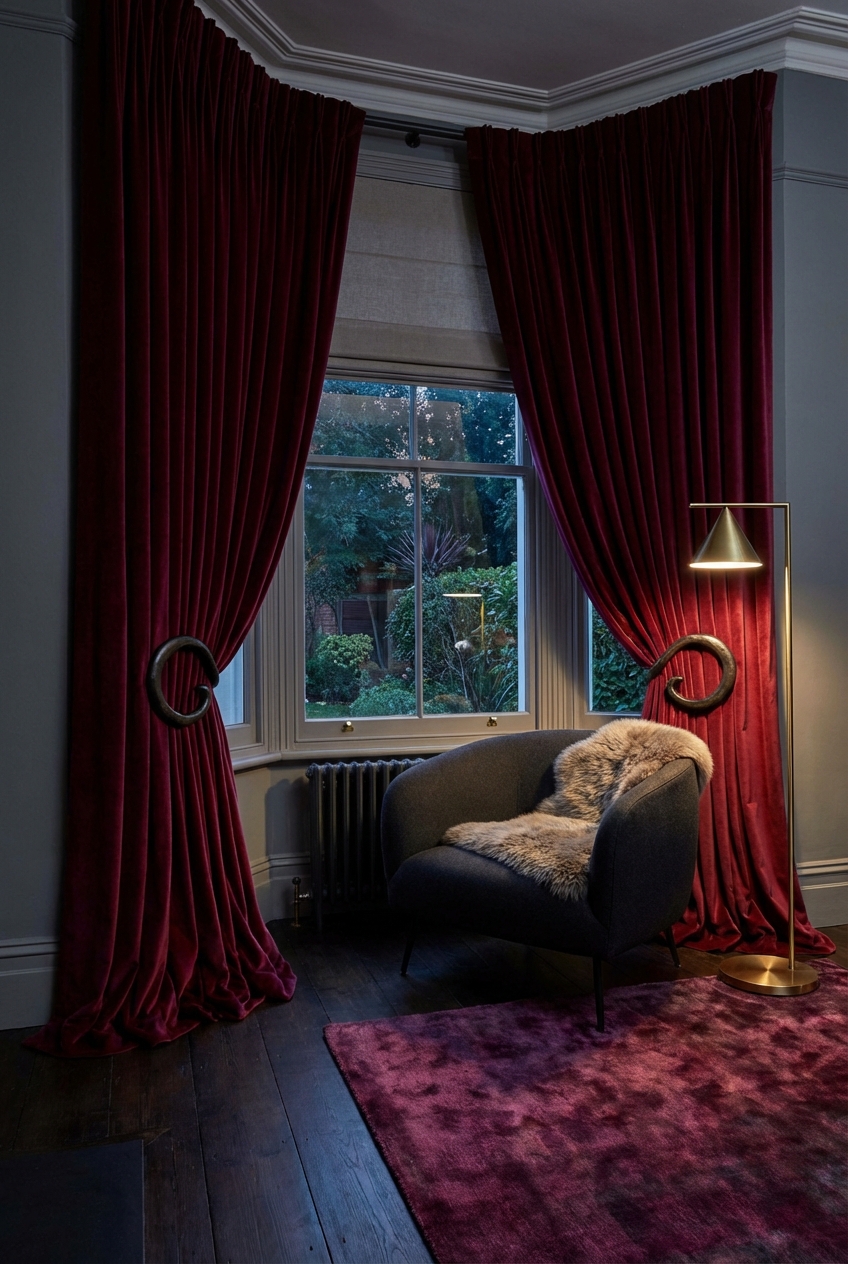
Layered sheer curtains pair a light, see-through panel next to the glass with a heavier drape (velvet, wool or a blackout-lined panel) in front. The sheer softens daylight and gives privacy. The heavy layer adds the shadow, texture and drama that a moody, vamp romantic room needs.
If you like deep colors but don't want a room that feels like a costume party, this is the easiest way to get there. Below: how to layer, which order works, how to hang it, and ideas by room.
How to layer curtains with sheer
Start with the sheer closest to the window and the heavier panel closest to the room. The sheer stays closed or mostly closed in the daytime, and the heavy drape slides open to frame it and closes at night.
- Measure the window and the wall around it before you buy anything.
- Choose the heavy layer first: a matte fabric with some weight, such as performance velvet or a wool blend. Matte finishes absorb light and give soft shadows, while shiny ones bounce it around.
- Pick a sheer in a tone that sits near your wall or your heavy drape. White, ivory and soft gray are the easy options.
- Hang both layers high and wide (see the sizing section below).
- Check the lengths. Both layers should end at the same height, unless you choose the sheer to just kiss the floor and the drape to sit a hair above it.
Rules for layering curtains
There aren't many, and they're easy to remember.
- Sheer behind, heavy in front, nearly always.
- Give each layer its own fullness. A good target is 2 to 2.5 times the window width for sheers and 2.5 to 3 times for heavy drapes. A 40-inch window needs roughly 100 to 120 inches of drape width in total.
- Mount the rod about 4 to 6 inches above the window frame, or just under the crown molding if your ceilings are standard height.
- Extend the rod 10 to 12 inches past the frame on each side, so the open drapes stack on the wall and leave the whole glass clear.
- Keep the layers in the same color family or a deliberate contrast. Three or four unrelated tones look messy.
Layering sheer and blackout curtains
For bedrooms, the cleanest method is a sheer panel plus a blackout-lined drape, rather than two separate fabrics fighting for space. A lined drape gives you one heavy layer that blocks light and a sheer for daytime privacy.
Blackout fabric only works if light can't leak around it. Wide panels that overlap the frame, plus a wraparound (French return) rod that ends at the wall, close the gap at the sides. As an architect, I'd choose the return rod for any bedroom, because side light is what wakes most people up.
Daylight is worth managing on purpose. The Building Science Education site notes that fixed shades, louvers and screens can help control unwanted glare and heat, and a sheer-plus-drape pair does a similar job indoors: the sheer cuts glare, the heavy layer handles the rest. That's most useful on sun-facing windows, since north and south windows let in natural light while glare and heat stay easier to control.

How to layer curtains with one rod
A double rod is ideal, but it isn't required. Many renters and owners have a single rod, and there are two workable ways to use it.
Use two sets of rings or clips
Hang the sheer and the drape on the same rod, using separate rings. This works with lightweight sheers and moderately heavy drapes. The rod needs to be sturdy: for velvet or heavy wool, choose a diameter of at least 1 1/8 inches, or it will bow in the middle.
Pair a single rod with a shade
Put a sheer roller or cellular shade inside the window frame, then hang the drapes on the rod outside. It's a tidy way to layer, and it gives you privacy and insulation without a second rod. If the drapes slide around, this guide to keeping drapes from sliding on rods helps.
Hanging heavy fabric on a flimsy tension rod doesn't work. Anchor brackets into studs, or use heavy-duty toggle anchors in drywall.
Fabric, color and pleats for a moody look
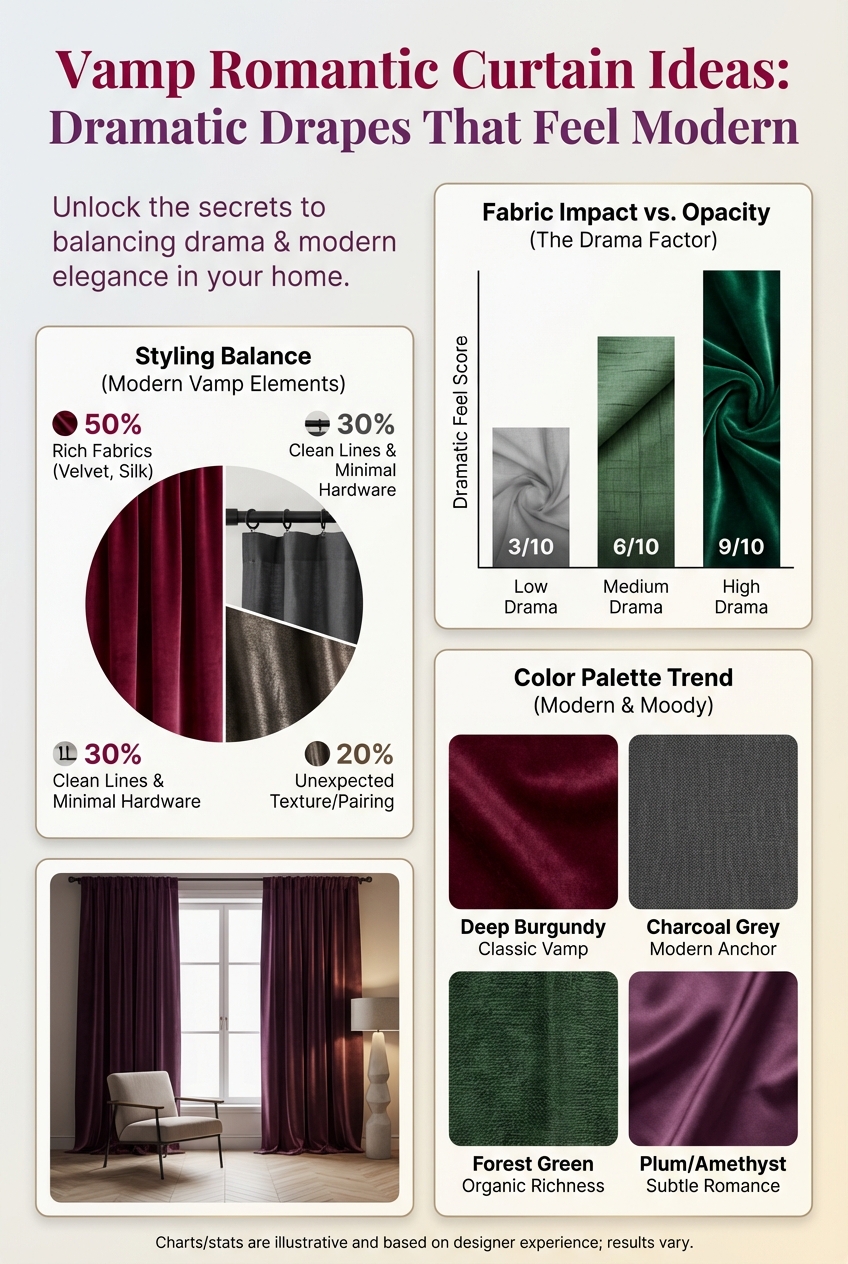
Weight and a matte finish do most of the work. Performance polyester velvet gives the deep, light-absorbing look and copes with pets better than cotton velvet, which crushes and stains easily. A wool sateen or mohair blend is the alternative if velvet feels too heavy, and it adds a tailored edge.
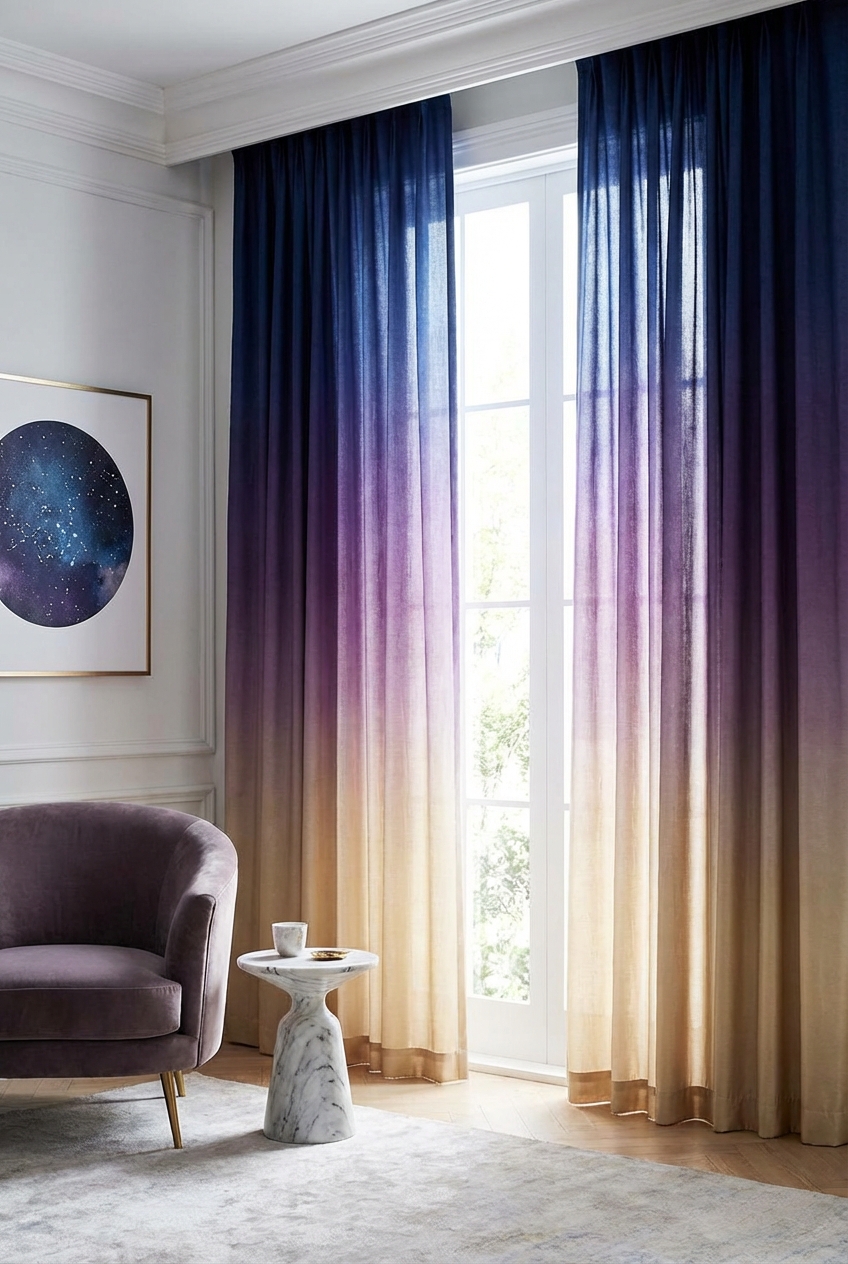
Black is only one option. In a small room, flat black can make the corners disappear. Oxblood, merlot, midnight blue and charcoal all give drama with a little more warmth. If you like the idea of painting the walls the same color as the drapes, a pale sheer in front keeps it from feeling like a cave.
For pleats, a pinch or Euro pleat looks tailored, and a ripple fold suits floor-to-ceiling glass. Grommet tops tend to look casual against this style. If you're sewing your own, the French pleat tutorial walks you through it. For another take on pairing airy and heavy fabrics, see mixing sheers and drapes the modern way.
Two layer curtain ideas by room
Living room
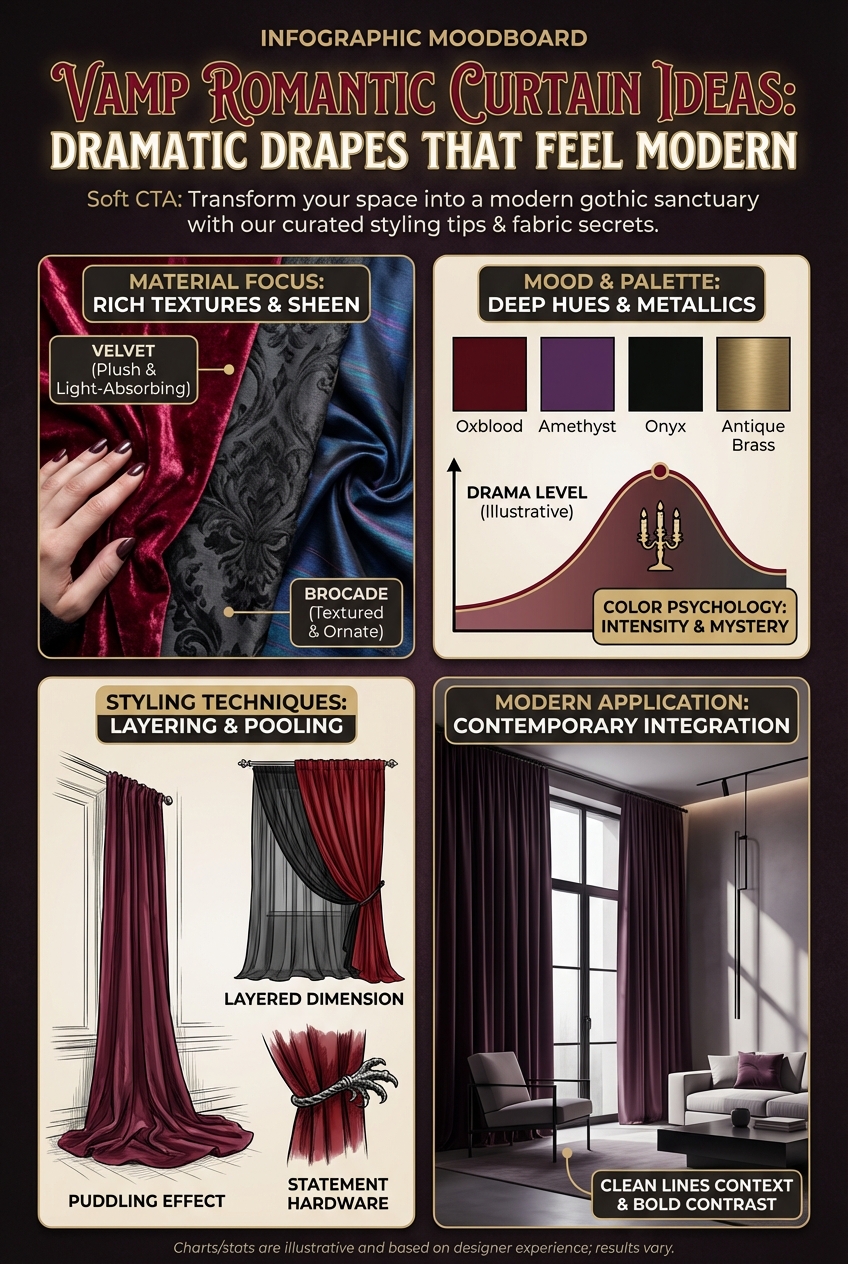
Hang a white or ivory sheer with deep charcoal or oxblood velvet panels on a high rod. Keep the sheer closed in the day for soft light, and open the drapes fully so they stack beside the window. Add a dark patterned floor covering to tie it together, like those in these vamp romantic rug ideas.
Bedroom
Pair a sheer with a blackout-lined midnight blue drape on a wraparound rod. If you sleep during the day or in a bright street-lit room, choose a thicker interlining for light and sound. A tall upholstered piece behind the bed also suits this mood, as in these headboard ideas.
Dining room
A sheer plus a deep-toned drape looks good with a statement fixture. Our chandelier ideas pair well with it, and warm lamps or sconces keep dark fabric from making the room feel smaller.
Pet-friendly details
Puddled drapes look romantic in photos, but they collect dust and pet hair. A length that just touches the floor, or breaks by about half an inch, gives the same look with less cleanup. Loose weaves like linen or bouclé invite cat claws, while a tight-weave velvet is harder to snag. It isn't claw-proof, though.
Match the color to the animal. If you have a white cat, black velvet will show every hair, so consider a dark wall with pale velvet drapes instead. Vacuum heavy drapes with a soft upholstery brush, and use a professional drapery cleaner for deep cleaning, since washing can damage pleats and structure.

Common mistakes
- Panels that are too narrow. They look like flat sheets instead of folds.
- Standard 84-inch panels on 8-foot ceilings, which leave the drape hovering above the floor. Buy 96-inch panels instead.
- A rod that is too thin for the weight.
- A sheer and a drape in clashing whites, creams and grays that don't sit together.
Frequently asked questions
What is the curtain trend for 2026?
Soft, layered looks that pair a light sheer with a heavy, matte drape in deep tones are popular right now. Floor-length panels hung high on a simple rod keep the style modern.
What are some ideas for two-layer curtains?
Try a white sheer with charcoal velvet in a living room, or a sheer with a blackout-lined navy drape in a bedroom. A sheer behind a wool-blend panel also works in a dining room.
Can I do layered curtains in a rental apartment?
Yes. Use a wall-mounted rod and heavy-duty toggle anchors for heavy drapes, then patch the holes when you move out. A single rod with two sets of rings works if you can't fit a double rod.
Will dark curtains make my room look smaller?
They can, since dark colors absorb light. A sheer layer, plus lamps and sconces, helps the room stay bright and keeps the corners readable.
Filed under
ArticlesMeet the author
Written by an architect.
Julio Arco is a passionate architect with years of experience in architecture, interior design, urban design, and housing. He studied at prestigious universities across North America and Europe.

- Name
- Julio Arco
- Job
- Architect and online interior designer
- Studied
- Architecture, ITESM · Urban Design and Housing, McGill
- Partner
- Thor, Australian Shepherd
- Thor’s title
- Head of quality control