Front Yard Landscaping Ideas for Privacy and Curb Appeal

By Julio Arco
Architect and online interior designer
In this post
- How do you plan a front yard before buying plants?
- Layer privacy plants without walling yourself in
- What are the best small front yard landscaping ideas?
- Can you do front yard landscaping with no grass?
- How do you use rocks in a front yard?
- What is the cheapest way to landscape a front yard?
- Low maintenance choices that still look good
- Dress up the entry with containers and lighting
- Frequently asked questions
The best front yard landscaping ideas start with layers: tall plants at the back, shrubs in the middle, and low perennials or groundcovers at the front. That structure gives you privacy from the street, keeps daylight reaching your windows, and makes the house look planned rather than planted by accident.
Below are the ideas I'd work through in order, from planning to plants, materials and budget. Landscaping can also increase property value, invite wildlife into your yard, and conserve energy, so the effort pays back in more than looks.
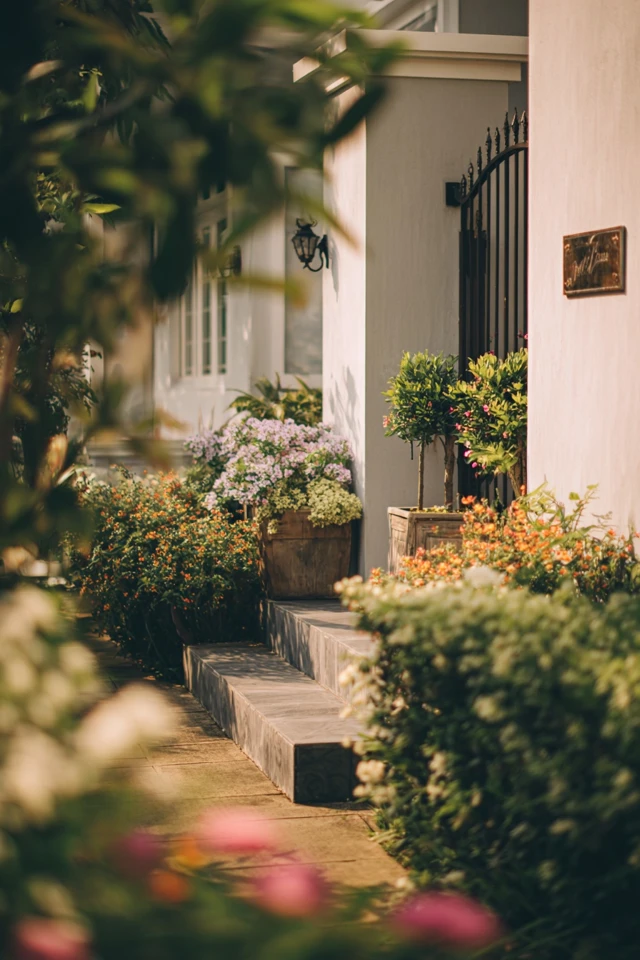
How do you plan a front yard before buying plants?
Measure first. Sketch the house, walkway, driveway and windows on paper, then mark where you want to block sightlines and where you want to keep views out. Look up the mature height and spread of every plant you're considering. Overcrowding is the most common mistake, and it's expensive to fix.
Keep the entry clear. A focal tree or a sculptural shrub near the door anchors the approach, and a path of about 36 inches wide is comfortable for two people or a stroller. Keep plants under windows low so you preserve views and a sense of safety, and put taller hedges further out.
Layer privacy plants without walling yourself in
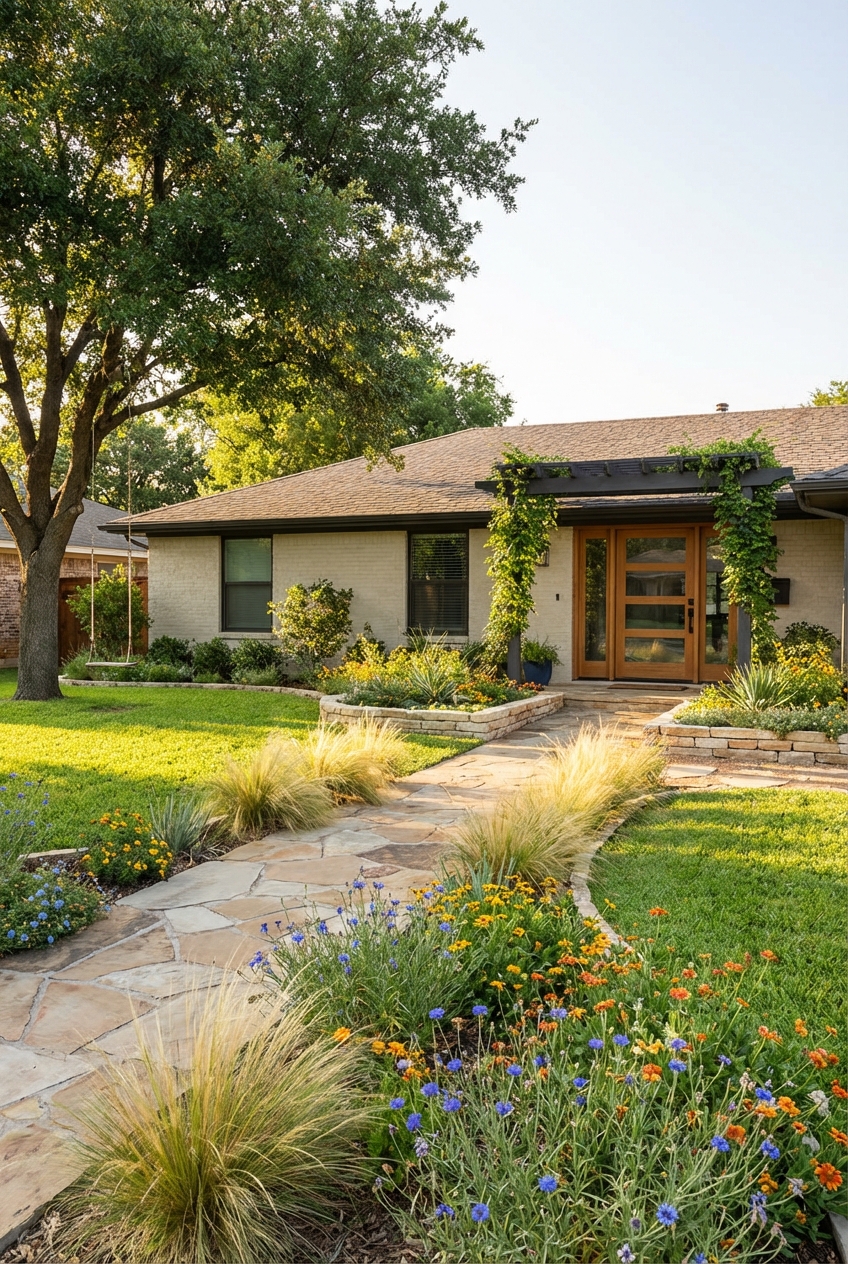
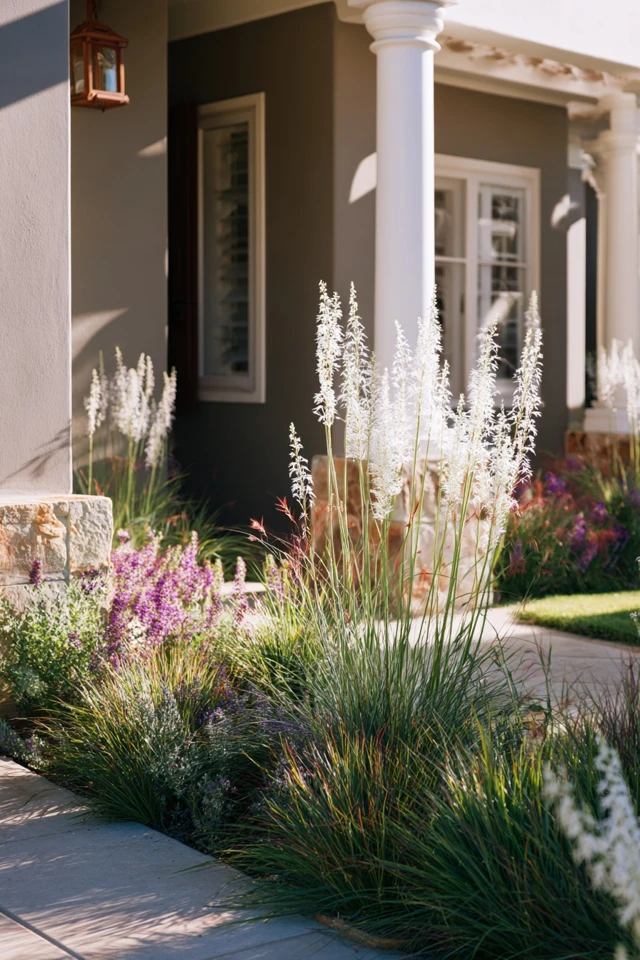
A solid hedge along the sidewalk can feel like a fortress. A softer approach mixes evergreens for year-round cover with deciduous shrubs for seasonal interest, staggered in height so light still gets through. Think of three tiers: trees or tall shrubs behind, mid-size shrubs in front of them, perennials and groundcovers at the edge.
Plant in drifts of one species rather than a single long row. Master Gardener Deb Christopher of Westmoreland County explains the risk of uniform plantings in Penn State Extension's guide to native groundcovers: "If disease or pest problems arise, the entire monoculture planting may be killed. Instead, consider planting drifts or groups of single species, providing a patchwork-quilt effect."
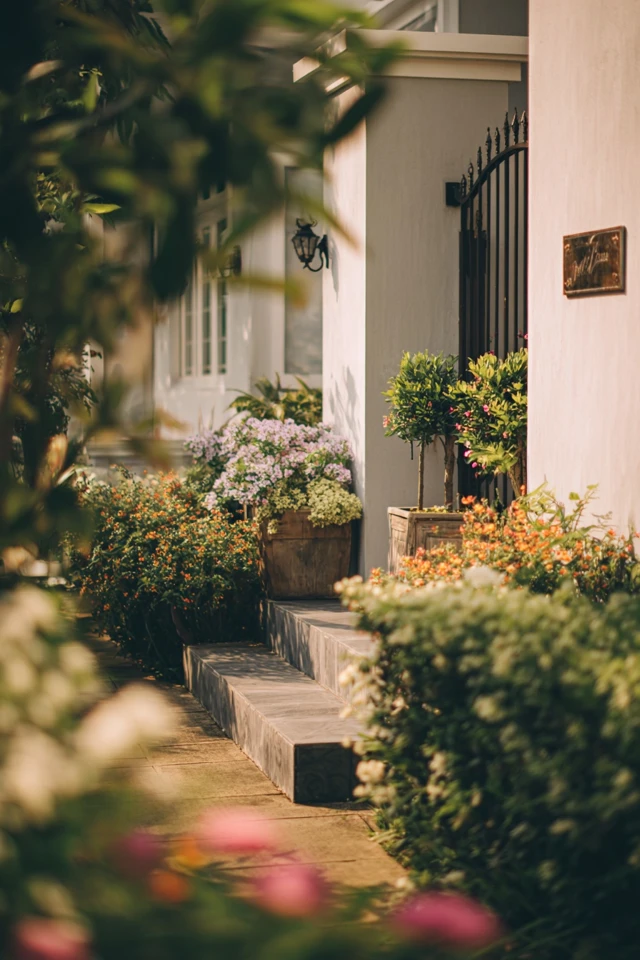
What are the best small front yard landscaping ideas?
Go vertical. Columnar trees, trellised vines and tall containers add height without eating floor space. A narrow planting bed along the fence or foundation, a clear path, and a restrained palette make a small yard read as larger.
Repeat a few plants instead of buying one of everything. Three or four species used again and again look calmer than a dozen singles, and they're easier to maintain.
Can you do front yard landscaping with no grass?
Yes, and it's often the most practical route. Turfgrass needs constant upkeep, and the University of Maryland Extension notes that it brings costs such as pesticide exposure for people and pets, pollution and water waste. If your lawn is struggling anyway, the same extension service suggests a full renovation when it is more than 50% weeds. That's a natural moment to switch.
Groundcovers
Colorado State University Extension says that plants that are low-growing (generally less than 24 inches) and spread easily are suitable ground cover plants. Pick for your sun, soil and foot traffic.
If you have a dog
Urine spots are a real issue on lawns. UC Marin Master Gardeners report that white clover does not show pet urine damage. Whatever you plant, check with your vet before choosing anything a dog might chew.
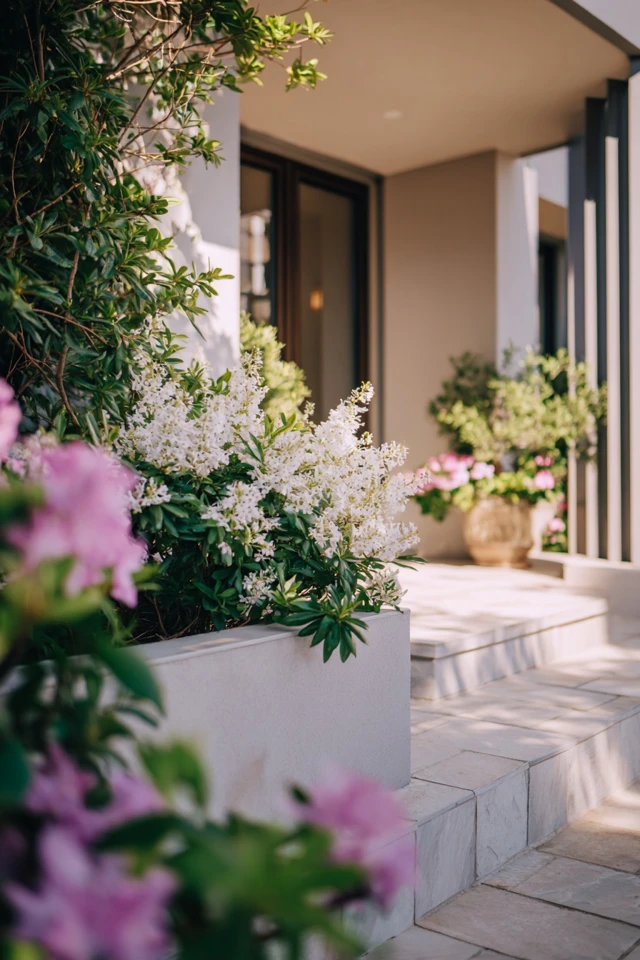
How do you use rocks in a front yard?
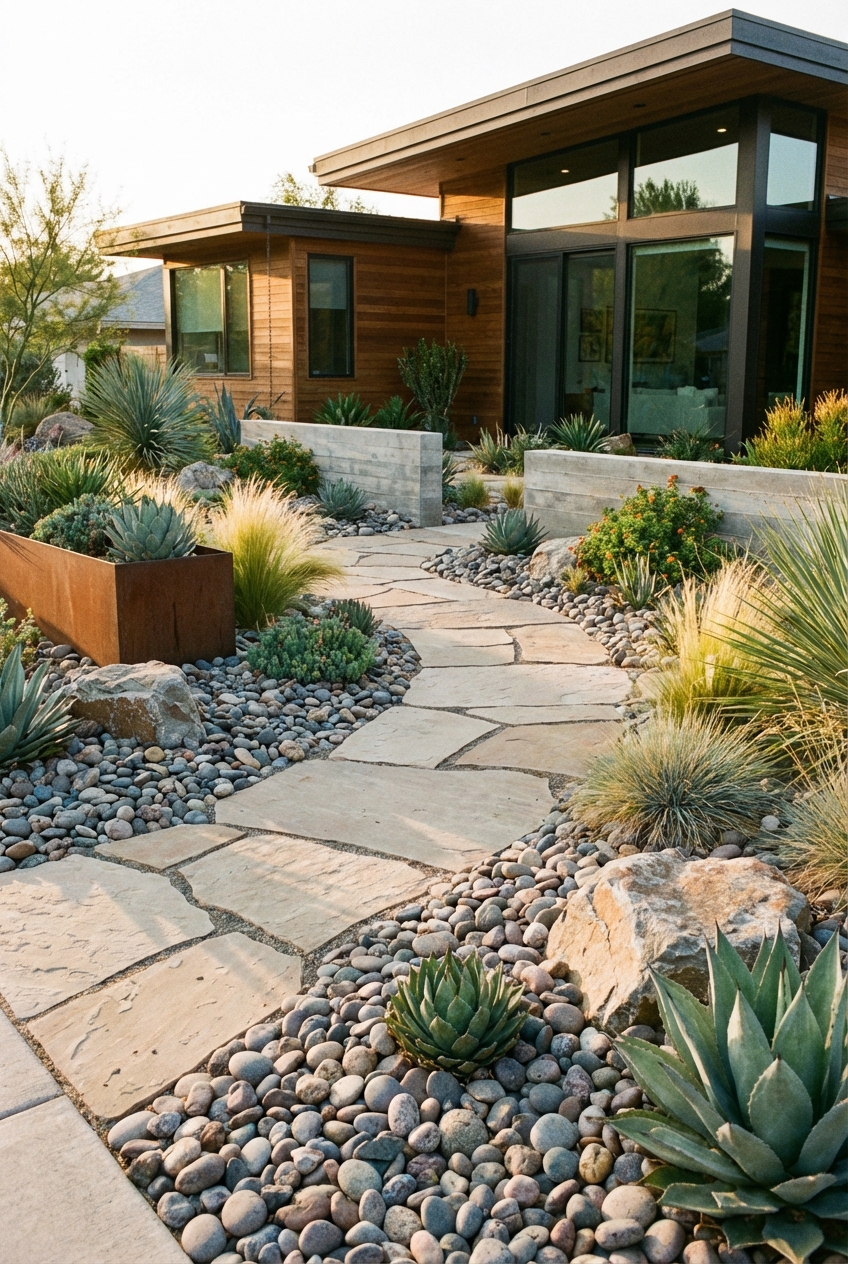
Gravel, river stone and boulders suit dry, sunny yards and give clean edges for modern houses. Use rock as a mulch around drought-tolerant plants, as a dry creek bed for drainage, or as a path surface. Large boulders in odd-numbered groups look more natural than a scattering of small stones. I have more detail in our rock front yard guide.
Skip plastic sheeting under the stone. Penn State Extension says that plastic or synthetic landscape cloth on top of or under the soil can increase erosion and water runoff. Dense plantings and a layer of mulch or gravel do the weed control better.
What is the cheapest way to landscape a front yard?
Do it in phases and put money into soil and structure first. Prepare beds properly: Colorado State suggests working 3 to 5 cubic yards of compost or other organic amendment into 1,000 square feet of area. Then buy small plants, which cost less and establish well, and choose native species that need less water and replacing.
- Divide perennials and grasses you already have or swap cuttings with neighbors.
- Mulch to hold moisture and cut weeding.
- Start with one bed by the entry and expand next season.
- Fix lawn problems like compaction and poor drainage before replanting; the University of Maryland Extension advises correcting those conditions first.
Low maintenance choices that still look good
For low maintenance front yard landscaping ideas, group plants by water need, choose regionally adapted evergreens and native shrubs, and add ornamental grasses and long-lived perennials so you replant less. Leave room around the plants for pruning access, and keep taller shrubs a few feet off the foundation for airflow, adjusting for each species' mature spread.
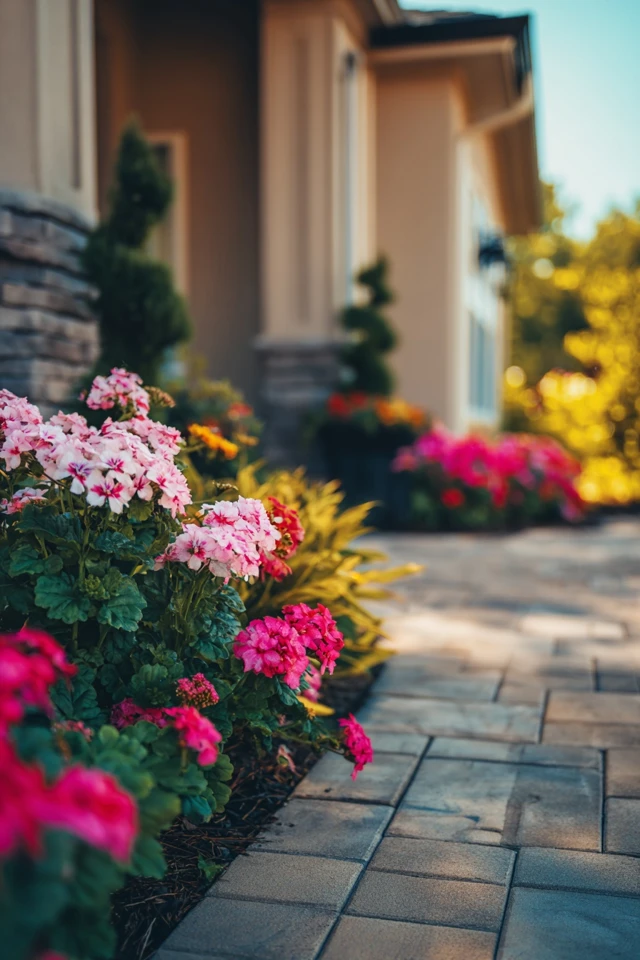
Color matters less than texture here. Pair broad leaves with fine grasses and smooth stone, and keep saturated flowers for one or two focal spots. In shade, lighter or variegated foliage brightens things up. For more simple options, see these simple front yard ideas.
Dress up the entry with containers and lighting
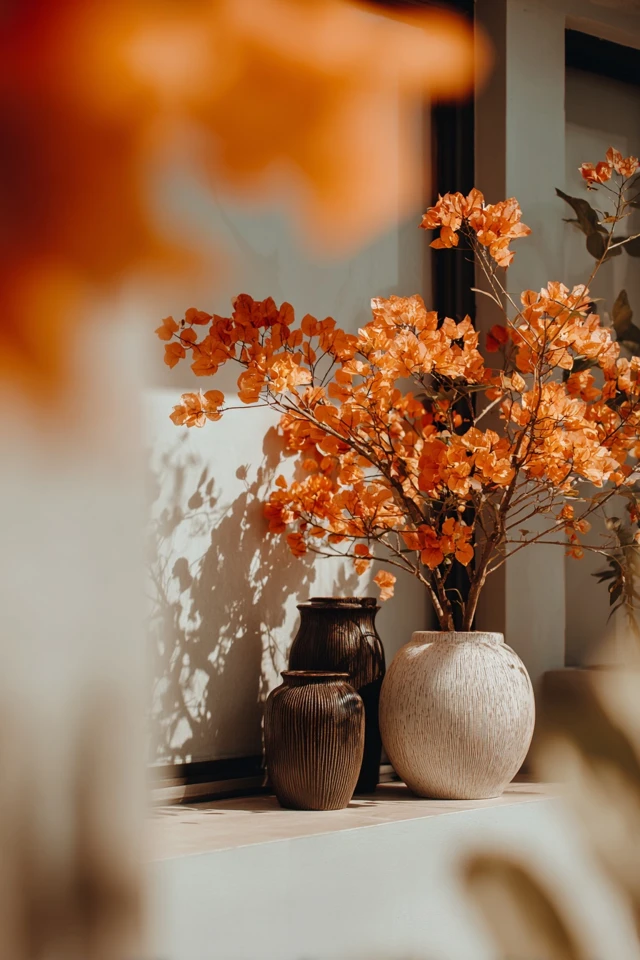
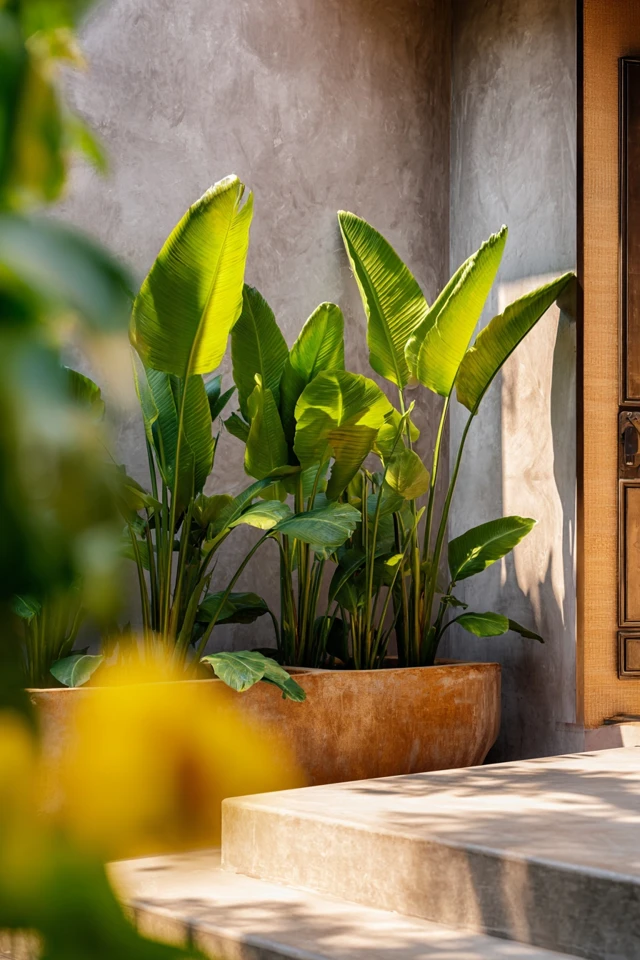
Containers give height, portability and seasonal color without digging. Use a matched pair at the door and rotate plants through the year. Low-voltage path lights and an uplight on a tree make the yard safer at night; for anything wired to the house, hire a licensed electrician.
If you want more layout ideas, this post on cozy, modern front yards pairs well with this one. As an architect, I'd always pick the planting structure first and the seasonal accents last, since accents are the cheap part to change.
Frequently asked questions
What is the 3-5-7 rule in landscaping?
It's a rule of thumb for grouping plants in odd numbers, such as three, five or seven, because odd groupings look more natural than even rows. It is a guideline rather than a requirement, so adjust it to your bed size.
What is the best landscaping for the front of my house?
Layered plantings of evergreens, shrubs and perennials, with a clear path and a focal point at the entry. Choose plants adapted to your climate and light so they stay healthy with little care.
How close should privacy plants be to the house?
Usually a few feet from the foundation, depending on the plant's mature spread and roots. This leaves room for airflow and avoids moisture problems against the wall.
How can I make a small front yard feel larger?
Use vertical accents such as columnar trees or trellised vines, keep the path clear, and stick to a limited palette. Low plants near the curb keep views open.
Filed under
ArticlesMeet the author
Written by an architect.
Julio Arco is a passionate architect with years of experience in architecture, interior design, urban design, and housing. He studied at prestigious universities across North America and Europe.

- Name
- Julio Arco
- Job
- Architect and online interior designer
- Studied
- Architecture, ITESM · Urban Design and Housing, McGill
- Partner
- Thor, Australian Shepherd
- Thor’s title
- Head of quality control