Front Yard Landscaping Ideas: Simple, Low-Cost Upgrades

By Julio Arco
Architect and online interior designer
In this post
- What is the cheapest way to landscape a front yard?
- Start with the path and the entry
- Build foundation beds that don't need constant care
- Can you landscape a front yard with no grass?
- Front yard landscaping ideas with rocks
- Small front yard landscaping ideas
- Mid-century and modern front yards
- Dress up the porch with containers and lighting
- Frequently asked questions
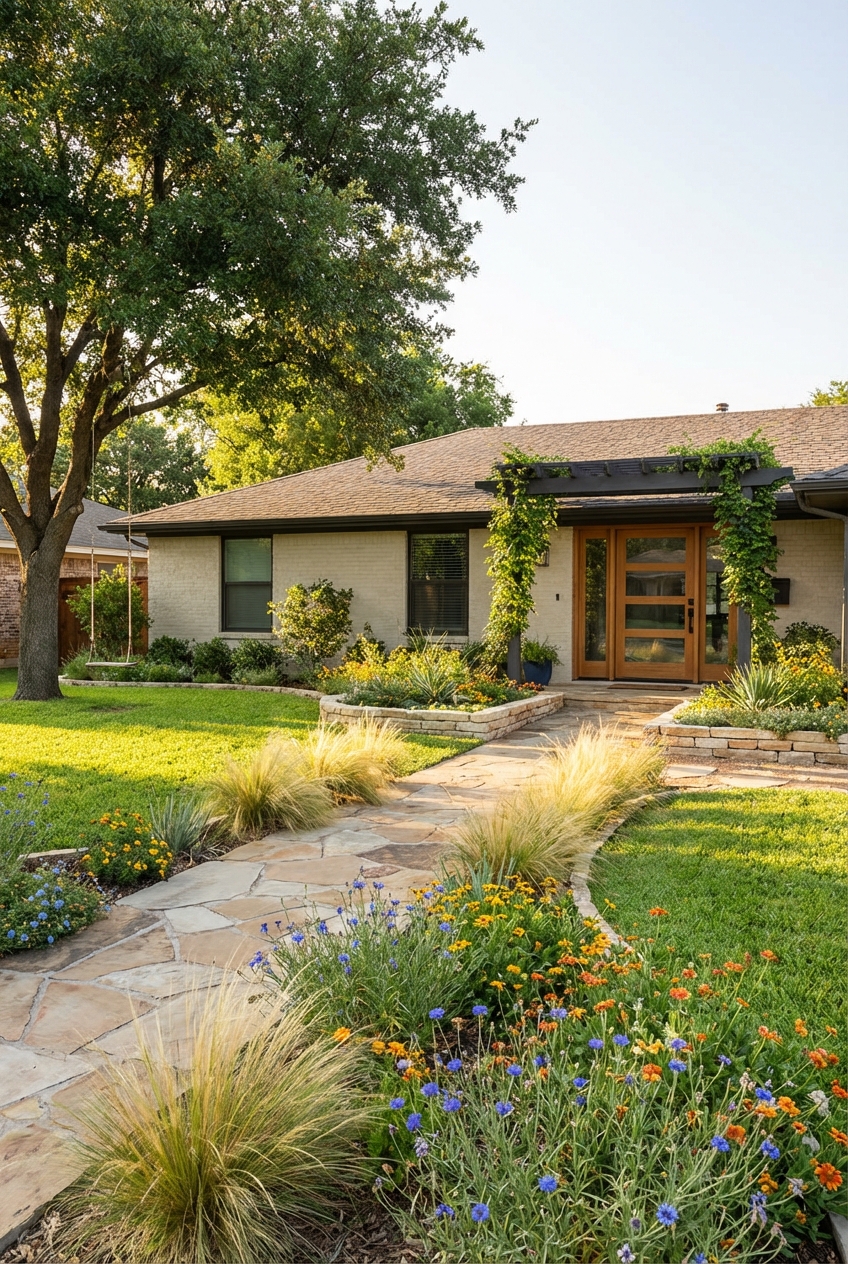
The simplest front yard refresh is a clear path to the door, a planting bed along the house, and one or two focal points such as a painted door or a pair of containers. You don't need to redo everything at once. Start with the piece that bothers you most and build from there.
Landscaping does more than look good: Wisconsin Horticulture notes it can increase property value, invite wildlife into your yard, and conserve energy. Below are the ideas I'd start with, sorted by effort and budget.
What is the cheapest way to landscape a front yard?
The cheapest way to landscape a front yard is to work with what's already there. Edge the existing beds, add mulch, prune overgrown shrubs, and plant a few perennials or grasses in groups instead of scattering single plants. Seeds, divisions from friends and small nursery sizes cost far less than mature plants, and they catch up faster than you'd think.
Spread the project over seasons. Do the path and edging first, plant the foundation bed next, and add containers last. A yard that is tidy and edged looks intentional even before the plants fill in.
Start with the path and the entry
Before choosing plants, look at how people reach your door. A path should be direct, about 36 inches wide at minimum so two people can pass comfortably, and firm underfoot. Gentle curves are fine, but a path that wanders for no reason just gets cut across.
Light the path with low fixtures and a porch light so steps are easy to see. Keep tall plants away from the sightline to the door. If you want a quick win, paint the front door a color that contrasts with the siding. It's the cheapest focal point you can buy.
If you're after more screening from the street, see these front yard privacy plant ideas.
Build foundation beds that don't need constant care
A bed along the house softens the wall and gives you a place for most of your plants. Make it deep enough that plants have room at maturity, usually 4-6 feet, and keep shrubs a few feet off the wall so air can move.
For low maintenance front yard landscaping ideas, choose a few reliable plants and repeat them: an evergreen shrub or two for winter structure, ornamental grasses for movement, and a handful of perennials for color. Check your local extension office for species that suit your climate.
Plant in drifts rather than one of everything. Master Gardener Deb Christopher of Penn State Extension explains the risk of single-species blocks: "If disease or pest problems arise, the entire monoculture planting may be killed. Instead, consider planting drifts or groups of single species, providing a patchwork-quilt effect."
Groups of three or five look natural, and they give you a simple rule for containers too.
Can you landscape a front yard with no grass?
Yes, and it's often easier than keeping a lawn going. University of Maryland Extension points out that turfgrasses can be hard to grow in some climates and come with ongoing costs, including pesticide exposure for people and pets, pollution and water waste.
Ground covers
Colorado State University Extension says low-growing plants, generally under 24 inches, that spread easily make suitable ground covers. Pick ones suited to your sun and soil, and plant them close enough to knit together.
If you have a dog
Urine spots are the usual lawn complaint. UC Marin Master Gardeners report that white clover does not show pet urine damage. If your dog uses the front yard, that's worth considering. Check plant toxicity with your vet or a trusted pet-safe plant list before planting anything a dog might chew.
Prepare the soil and skip the plastic
Remove the old turf, then improve the soil. Colorado State recommends 3 to 5 cubic yards of compost per 1,000 square feet. I'd skip landscape fabric: Penn State Extension says plastic or synthetic cloth can increase erosion and water runoff. Use mulch instead.
Should you fix the lawn or replace it?
If you'd rather keep some grass, University of Maryland Extension suggests correcting problems like soil compaction and poor drainage first. It also advises considering a full renovation when a lawn is more than 50% weeds.
Front yard landscaping ideas with rocks
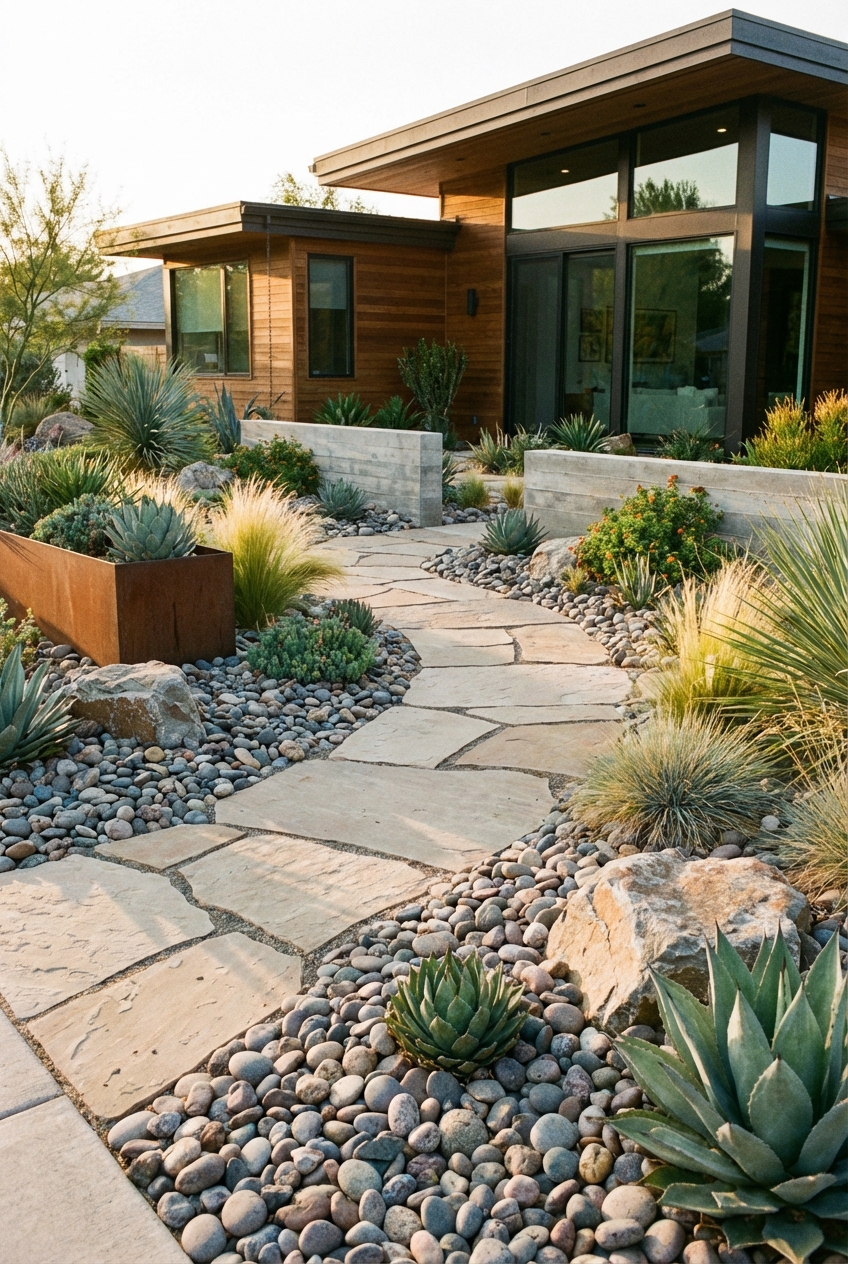
Gravel, river rock and boulders give you structure with almost no watering. They work well in dry climates, on slopes and in the strip between sidewalk and street. Use a few larger stones as anchors, then fill around them with smaller gravel and clusters of tough plants.
Rock gets hot in full sun, and a bare gravel yard can feel stark. Mix in grasses and low perennials, and keep the gravel size comfortable for paws if a dog walks through. More ideas are in our rock front yard landscaping guide.
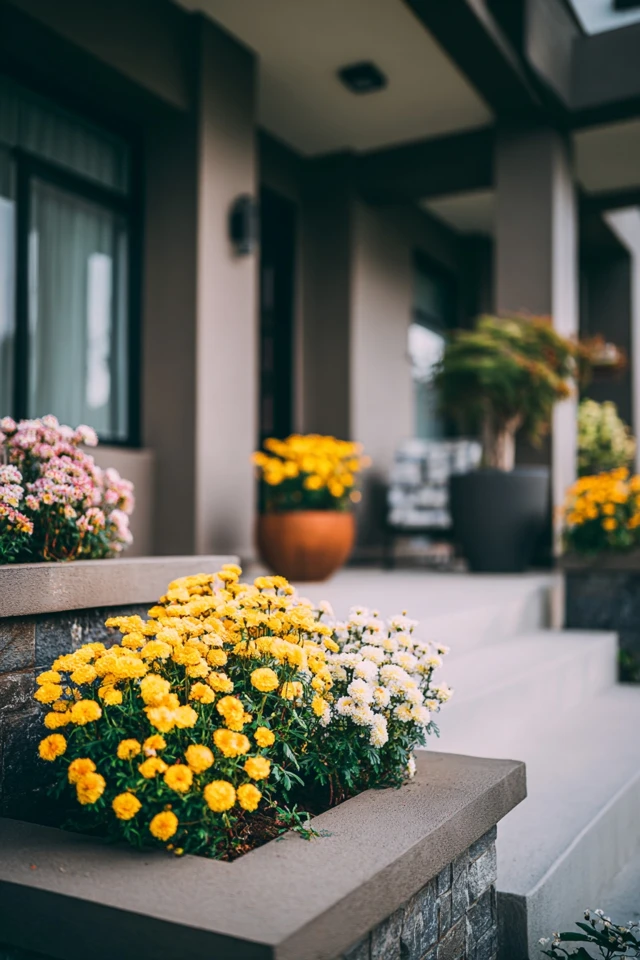
Small front yard landscaping ideas
In a small yard, the goal is to look organized. Pick one material for the path, one main planting style and one focal point. Narrow beds along the edges leave the center open, which makes the space feel larger.
- Grow upward with a trellis or a slim columnar shrub.
- Repeat the same two or three plants rather than using many different ones.
- Align the path with the door so the eye has a clear line.
- Keep furniture to a single bench or two chairs, sized to the porch.
Mid-century and modern front yards
Mid-century modern landscaping is mostly about clean lines. Think of simple geometric beds, a low ground cover or gravel field, a few sculptural plants such as grasses or one specimen tree, and a straight path in concrete or large pavers. Keep colors restrained and let the architecture show.
The same approach suits a ranch house, which sits low and wide. Use horizontal planting bands and low shrubs that don't hide the windows. For a softer take, read about a cozy, modern look for the front yard.
Dress up the porch with containers and lighting
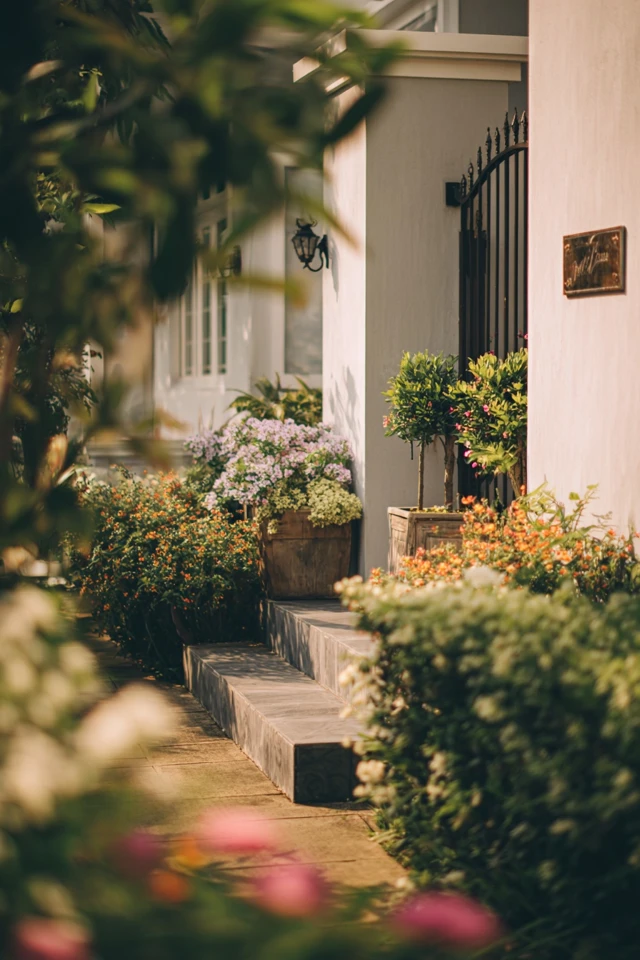
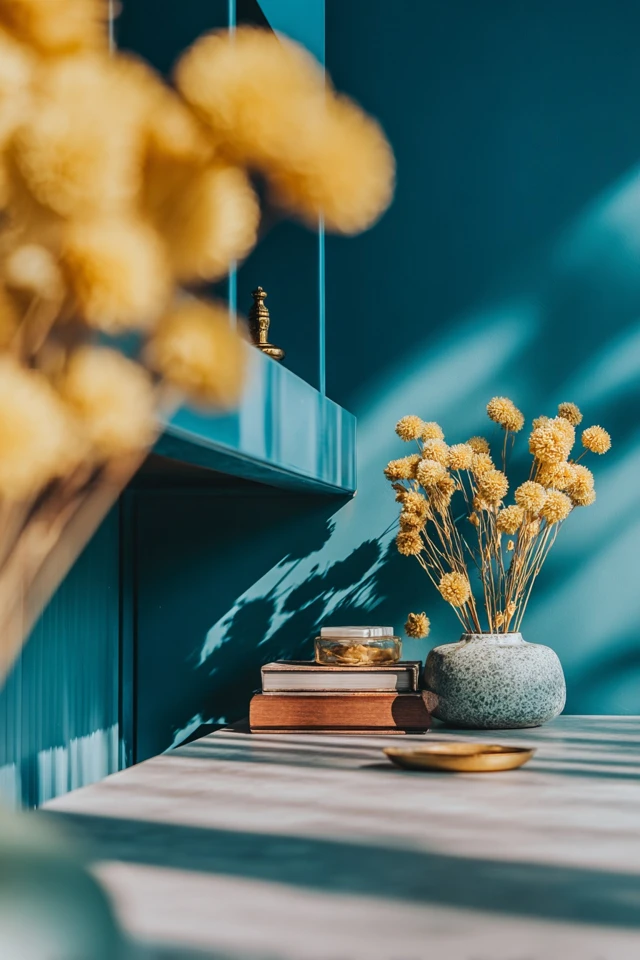
Containers are the easiest way to add seasonal color, and they move with you if you rent. Group them in odd numbers and vary the heights. Use one metal finish for the house numbers, light fixtures and mailbox so they look related.
Warm LED lights along steps help safety and make arrival easier after dark. For changes through the year, swap the plants in one or two pots and the wreath rather than redoing the beds. As an architect, I'd spend on the path, edging and lighting first, since those hold up for years.
Frequently asked questions
What is the best landscaping for the front of my house?
A layered bed along the foundation with a few evergreen shrubs, ornamental grasses and perennials planted in groups usually works well. Choose plants suited to your climate and the mature size they'll reach.
What is the 3-5-7 rule in landscaping?
It's a common rule of thumb that plants look more natural when grouped in odd numbers such as 3, 5 or 7. It's a design guideline, not a technical rule.
How can I make a small front yard feel larger?
Use a limited palette, keep the center open, and align the path with a focal point. Tall, slim plants or planters draw the eye up instead of across.
What low-maintenance plants work well for curb appeal?
Native perennials, ornamental grasses, evergreen shrubs and drought-tolerant ground covers usually need less water and pruning. Ask your local extension office which ones suit your area.
Filed under
ArticlesMeet the author
Written by an architect.
Julio Arco is a passionate architect with years of experience in architecture, interior design, urban design, and housing. He studied at prestigious universities across North America and Europe.

- Name
- Julio Arco
- Job
- Architect and online interior designer
- Studied
- Architecture, ITESM · Urban Design and Housing, McGill
- Partner
- Thor, Australian Shepherd
- Thor’s title
- Head of quality control