Fish Tank Design Ideas for Living Rooms and Small Spaces

By Julio Arco
Architect and online interior designer
In this post
- Where should a fish tank go in a room?
- How do you size a tank for the room?
- Which colors work around an aquarium?
- What materials pair well with a fish tank?
- How do you style the stand and the area around it?
- How do you light a tank so it works in the room?
- Design for maintenance from the start
- Frequently asked questions
A fish tank looks best when you treat it like a piece of furniture: pick its spot by scale and sightlines, tie its colors to the room, and plan for upkeep from the start. Do that and the tank becomes a calm focal point instead of a glass box with cables.
Below are the aquarium decor ideas I'd start with, from placement and color to the styling around the stand.
Where should a fish tank go in a room?
Start with where you actually pause: next to a reading chair, across from the sofa, beside a desk. A tank is made to be watched, so put it where you'll sit and look at it.
- Corner: a tall or corner-fit tank uses space that would otherwise sit empty and keeps walkways clear.
- Room divider: a double-sided tank can separate living and dining areas while letting light and views pass through.
- Built-in niche: a recessed tank framed by the same trim and cabinetry as the rest of the room looks custom and tidy.
- Console or stand: for smaller tanks, choose a sturdy stand that matches nearby furniture and leaves room to reach the equipment.
Water is heavy (about 8 pounds per gallon), so a large tank is a structural question as well as a design one. As an architect, I recommend asking a licensed professional about floor loading before you place anything big, especially on an upper floor.
Also keep the tank away from direct sun and heating vents. Sunlight feeds algae, and temperature swings are hard on fish. If you have a dog or cat, put the tank on a stable stand and keep cords and lids out of reach of paws and tails. Check with your vet or an aquarium professional about anything involving the animals' health.
How do you size a tank for the room?
Scale is the mistake I'd watch for first. A tiny nano tank disappears on a big living room wall, and a wide tank swallows a small bedroom. Measure the wall, then check how the tank will look from a standing position and from your seat on the sofa.
In a small space, go tall and narrow to save floor area, or choose a wall niche. In a large room, a long tank works under a window or along a wall, and two or three smaller tanks can repeat across a long wall to create a rhythm.
Which colors work around an aquarium?
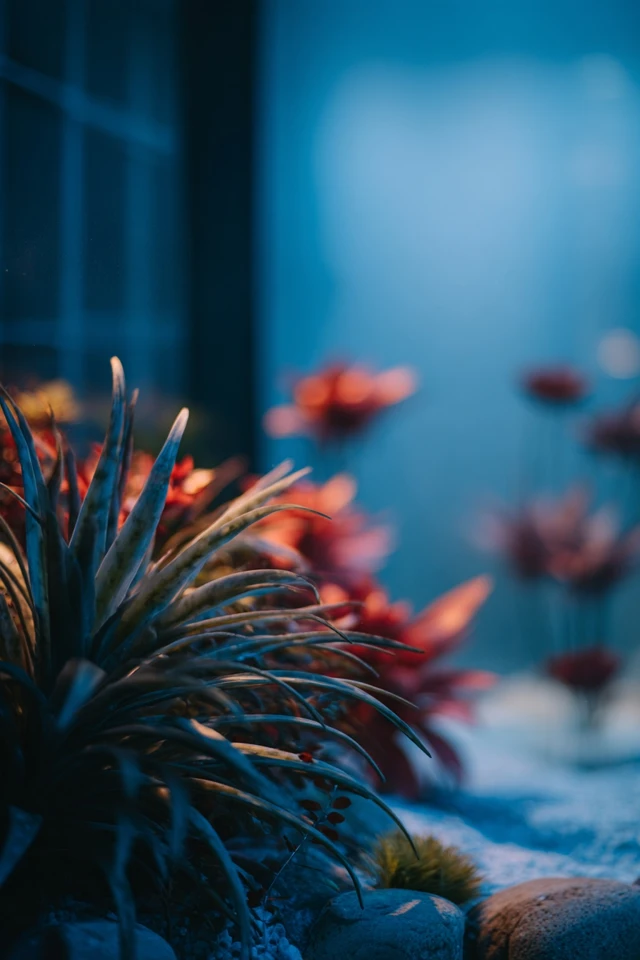
The water and light change how colors read. Blue LEDs feel cool and calm. Warmer LEDs bring out golds in wood and fish scales. Match that to the room's job: cooler tones suit a bedroom or office, warmer ones suit a living or dining room.
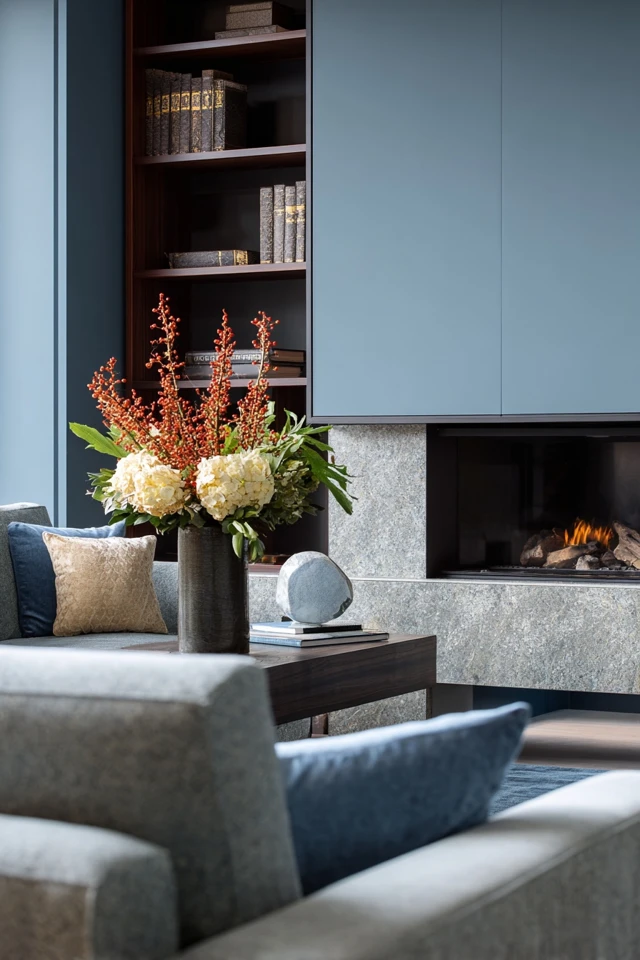
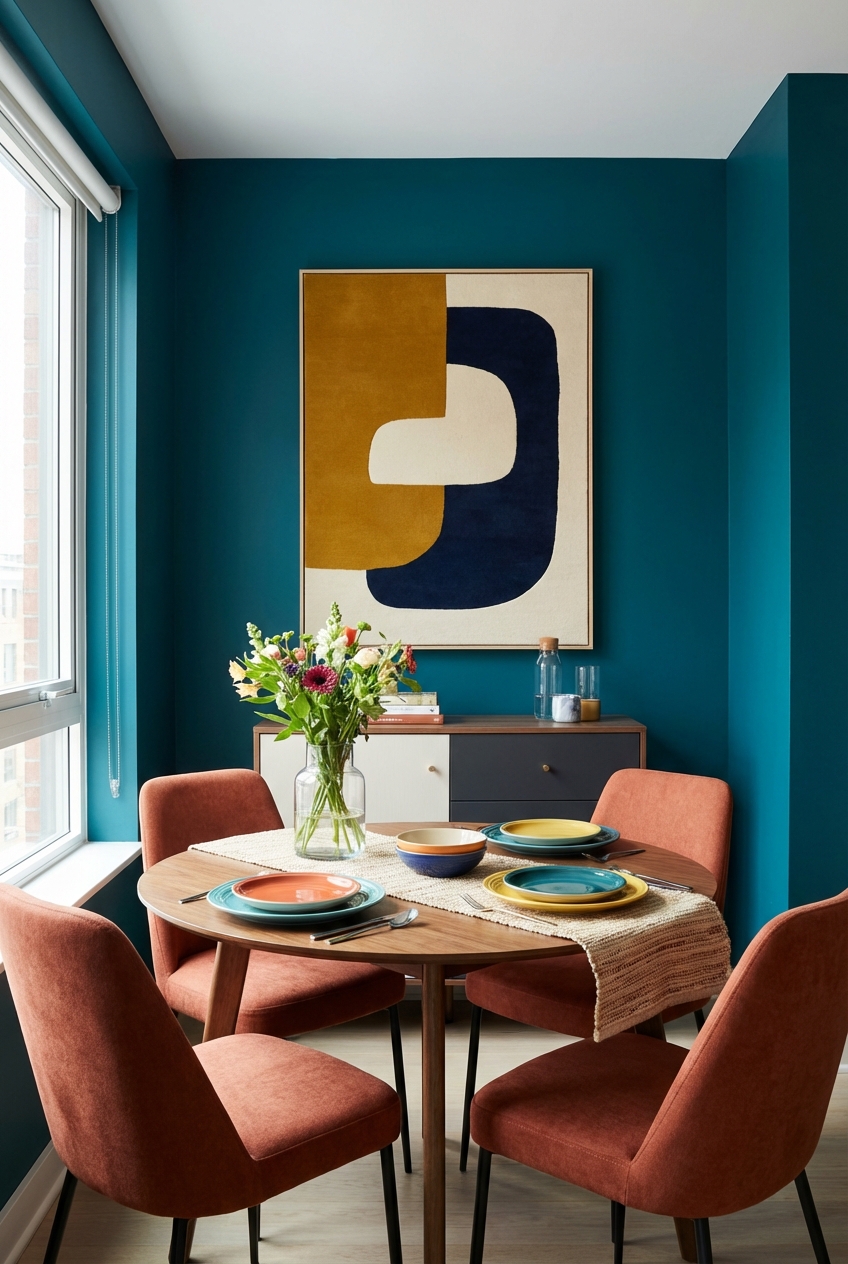
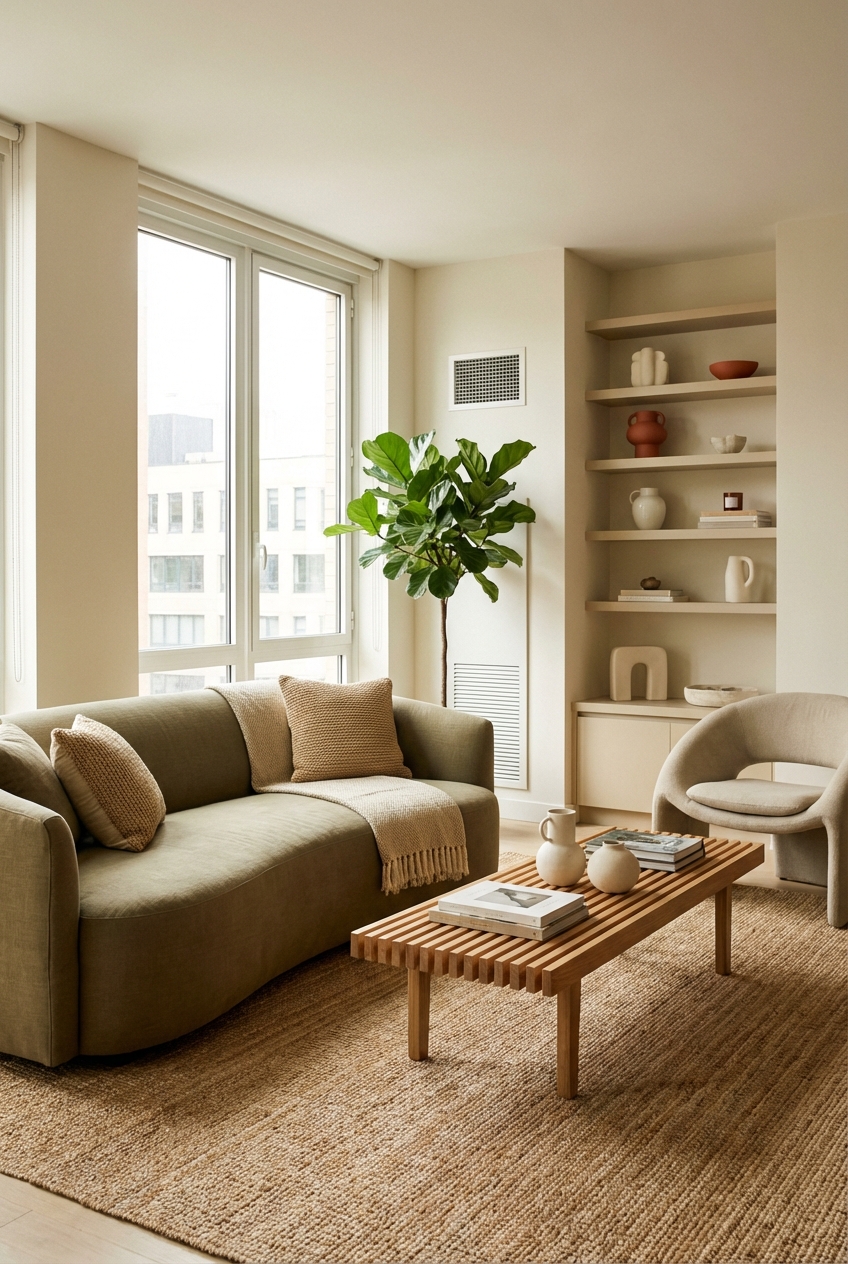
Keep walls simple. Soft grays, warm beiges or muted greens make a quiet backdrop. A deep matte navy or charcoal behind a planted tank makes the greens stand out. Then repeat one tank color, such as a stone tone or a plant green, in a pillow or a throw so the aquarium feels connected to the room.
Reflections matter too. Glossy surfaces bounce light and create glare on the glass, while a matte wall or background panel lets you see the fish and plants instead of the window behind you.
What materials pair well with a fish tank?
Glass is cool and smooth, so give it some warmth and texture nearby:
- Wood on the stand, a shelf or a lamp base, which softens the cold look of water and glass.
- Stone or slate inside the tank, echoing a hearth or coffee table finish.
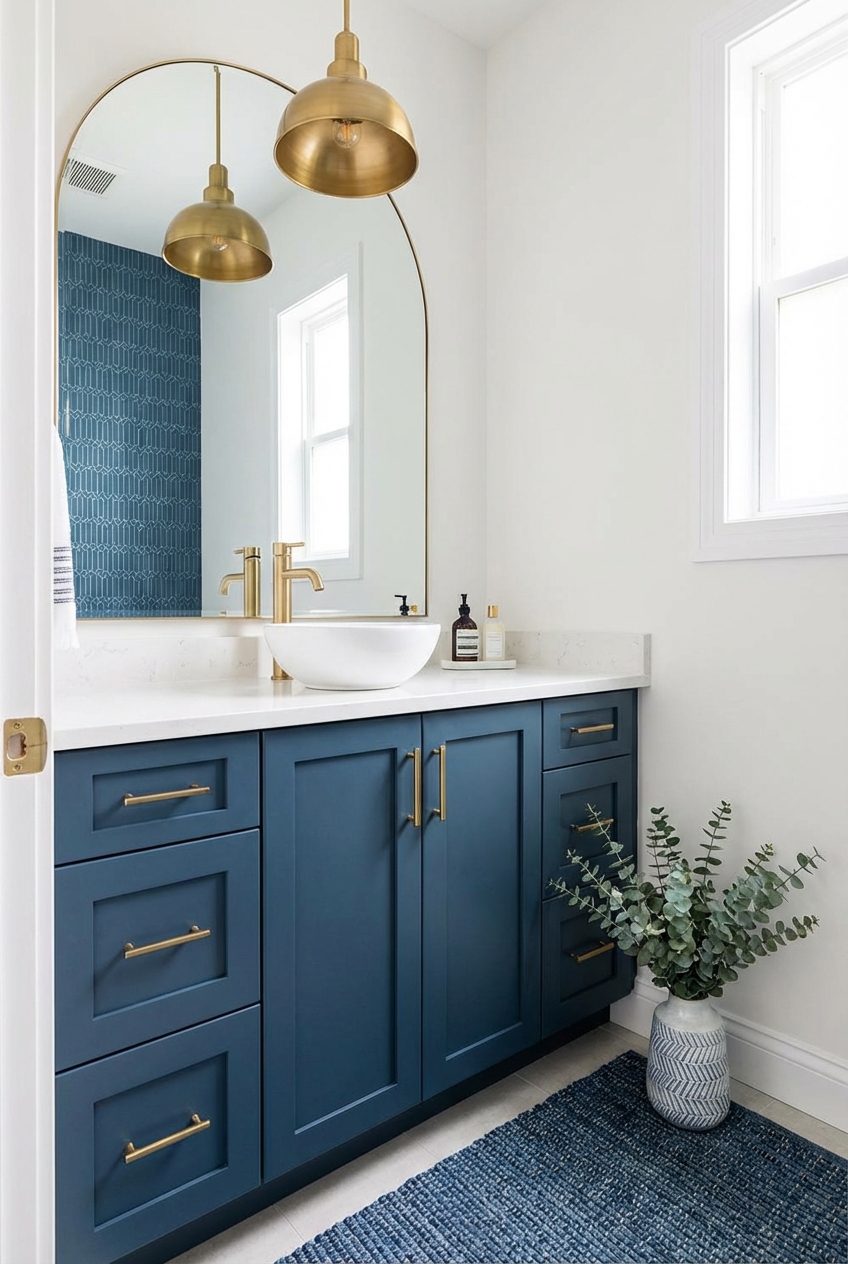
- Brushed brass or matte black hardware on the stand, repeating your kitchen or lighting metals.
- A rug or woven basket close by, so there is something soft next to all that hard surface.
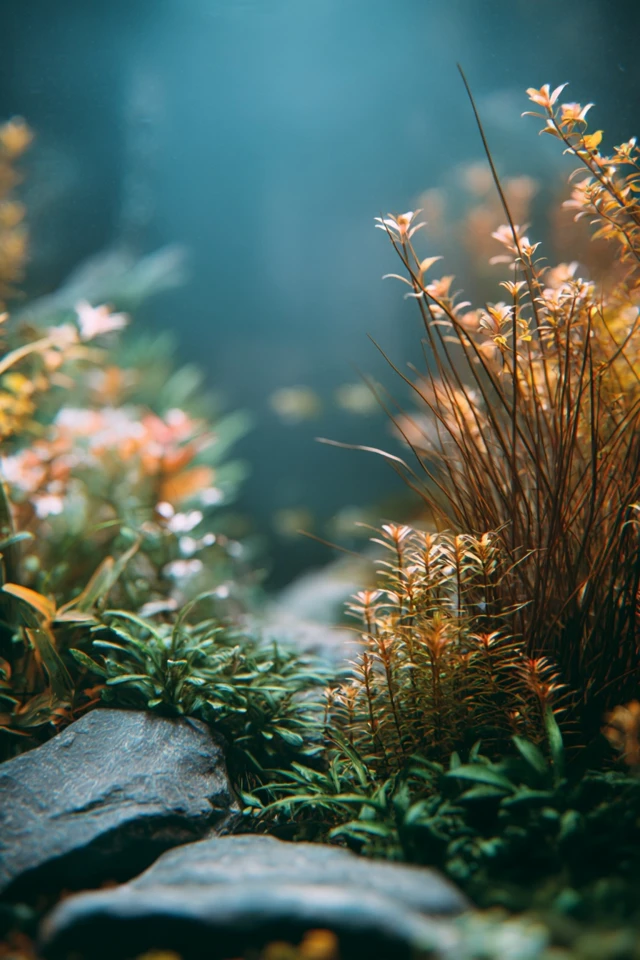
If you like this mix of natural textures, you may also like the ideas in modern rustic inspiration and boho style inspiration. Both pair well with wood, stone and plants.
How do you style the stand and the area around it?
Keep the top of the stand edited. One low plant, a small lamp and a framed print are enough, and the tank stays the focal point. Water splashes and humidity rise from tanks, so don't put paper, electronics or anything delicate right next to the lid.
Balance the visual weight too. A big tank wants a counterpart: a tall bookcase, a gallery wall or a floor lamp on the opposite side. A tank on one wall with an empty one across from it can feel lopsided. If you're planning a wall around it, wall molding ideas can help frame a niche, and brick wall design makes a strong textured backdrop.
How do you light a tank so it works in the room?
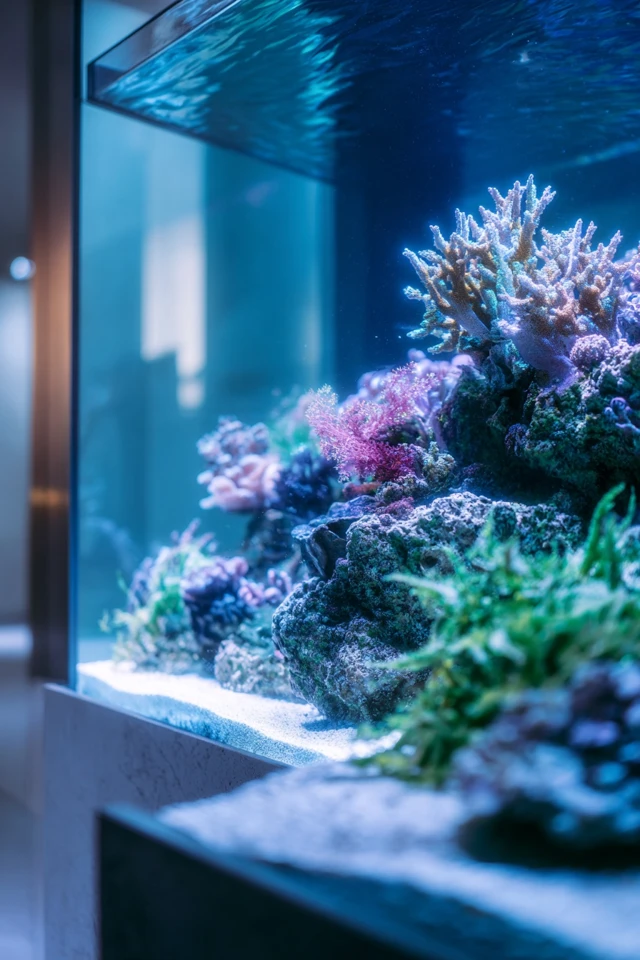
Layer it. Tank lights give the glow, a dimmable lamp gives general light, and a directional light keeps the area from going dark when the tank is the only light on. Many tank LEDs can be put on a timer, which keeps a steady day and night rhythm for fish and plants and keeps the room from glowing at 2 a.m.
Filters hum softly. Many people find that soothing, but if you're sensitive to noise, ask for quieter equipment and set the stand on a stable surface so nothing vibrates.
Design for maintenance from the start
A tank that is hard to clean ends up looking neglected. If you're building it into cabinetry, add access panels, ventilation for equipment, and moisture-resistant surfaces. Leave room for a bucket, a net and supplies. For a calmer, low-effort setup, a planted tank with hardy species and good filtration is a common choice, but every tank needs regular water checks, so ask an aquarium specialist what suits your fish.

If you want the whole room to feel restful around the tank, take a look at zen room ideas for layouts and palettes that keep things quiet.
Frequently asked questions
How can I make a small room feel larger with a fish tank?
Choose a tall, narrow or wall-mounted tank so it doesn't eat floor space, and keep nearby decor sparse. A light, neutral wall behind it and a mirror or glossy surface placed to catch the light can add a feeling of depth.
What paint colors go well with an aquarium?
Neutral grays, beiges and muted greens are easy backdrops. A deep matte navy or charcoal behind a planted tank makes the greens look richer, but consider how much natural light the room gets before going dark.
Are there low-maintenance fish tank ideas for busy households?
A planted tank with hardy species and good filtration is a common starting point, and automatic feeders can help on busy days. Every tank still needs regular water testing, so check with your vet or an aquarium professional about what suits your fish.
How do I mix textures around an aquarium?
Pair the smooth glass with a few organic materials such as wood, wool or rattan. Limit yourself to one or two patterns nearby so the tank stays the focus.
Filed under
ArticlesMeet the author
Written by an architect.
Julio Arco is a passionate architect with years of experience in architecture, interior design, urban design, and housing. He studied at prestigious universities across North America and Europe.

- Name
- Julio Arco
- Job
- Architect and online interior designer
- Studied
- Architecture, ITESM · Urban Design and Housing, McGill
- Partner
- Thor, Australian Shepherd
- Thor’s title
- Head of quality control