Contemporary Design Examples for Every Room at Home
See contemporary design examples for living rooms and beyond: what the style means, its main traits, and how to get the look at home.

By Julio Arco
Architect and online interior designer

In this post
Contemporary design is the style of the present moment: clean lines, uncluttered rooms, neutral colors, natural textures and a layout built around how you live. Unlike a historic style, it keeps changing, so the best examples borrow from several looks and stay simple.
Below you'll find what the term means, the traits that show up again and again, and concrete examples you can copy, starting with the living room.

What does contemporary design mean?
Contemporary simply means "of now." A historic style has a fixed period and a fixed set of details. The National Park Service, for example, describes Greek Revival as popular in America from the 1830s through the 1860s, inspired by the classical Greek temple. Contemporary has no such end date, so what counts as contemporary shifts as tastes shift.
That's also why it's often confused with modern design. Modern refers to a specific early-to-mid 20th-century movement. Contemporary pulls from it, adds softer shapes and warmer materials, and doesn't follow a rulebook.
Contemporary interior design characteristics
Compare contemporary with a style like Italianate, whose dominant feature was a low, overhanging roof with decorative eave brackets. Ornament defines that look. In contemporary rooms, the opposite is true: shape, proportion and material do the work.
- Clean, simple lines and furniture with visible legs that keeps sightlines open.
- A neutral base (warm white, greige, soft gray) with one or two accent colors.
- Natural materials such as oak, walnut, linen, wool and stone.
- Layered lighting: overhead, task and accent.
- Few, well-chosen objects instead of many small ones.
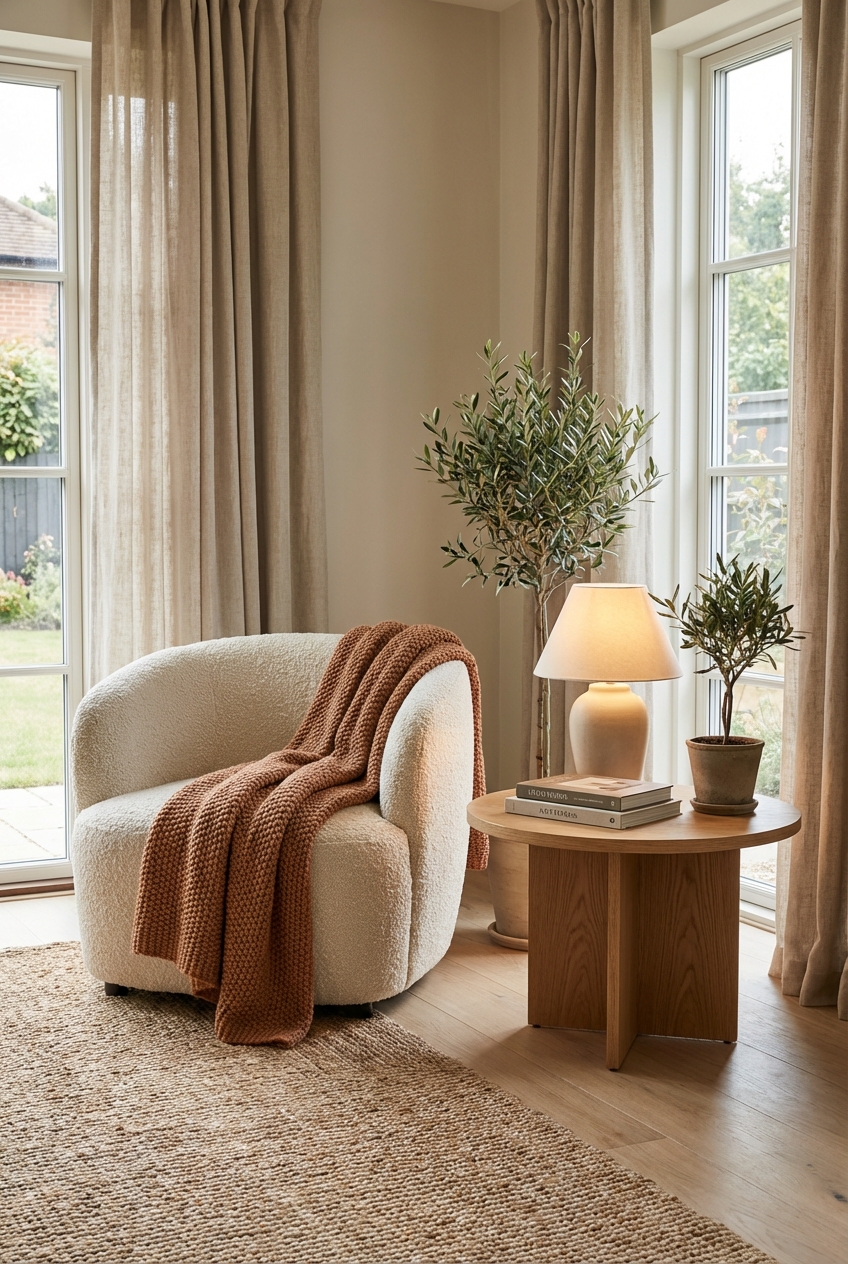
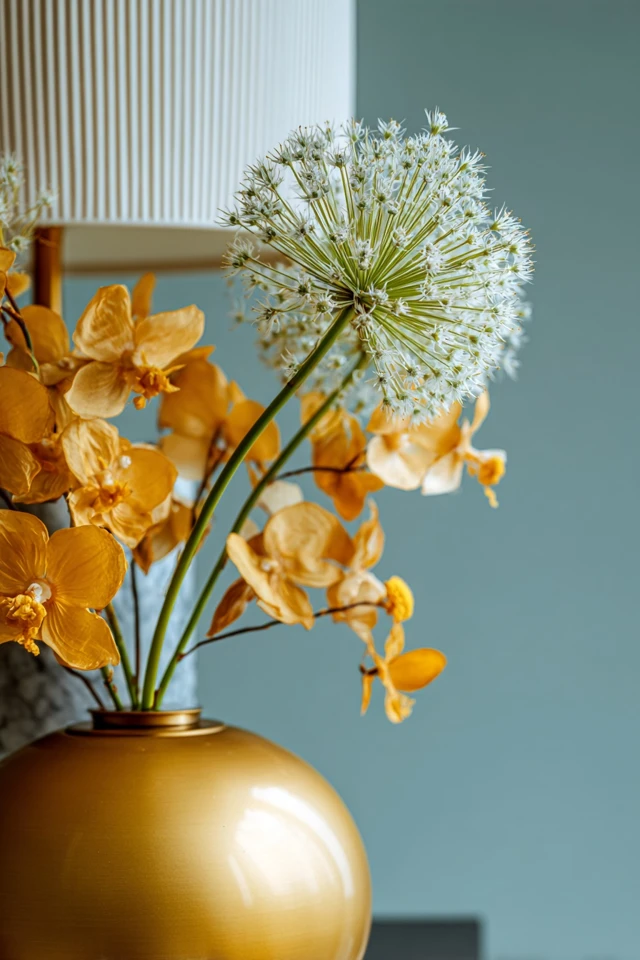
Texture matters more than pattern here. A glossy surface bounces light and throws sharp shadows, while a matte or nubby one absorbs it and softens the room. Mixing both keeps a neutral palette from feeling flat.
Types of contemporary design
There's no official list, but these are the looks you'll see most often.
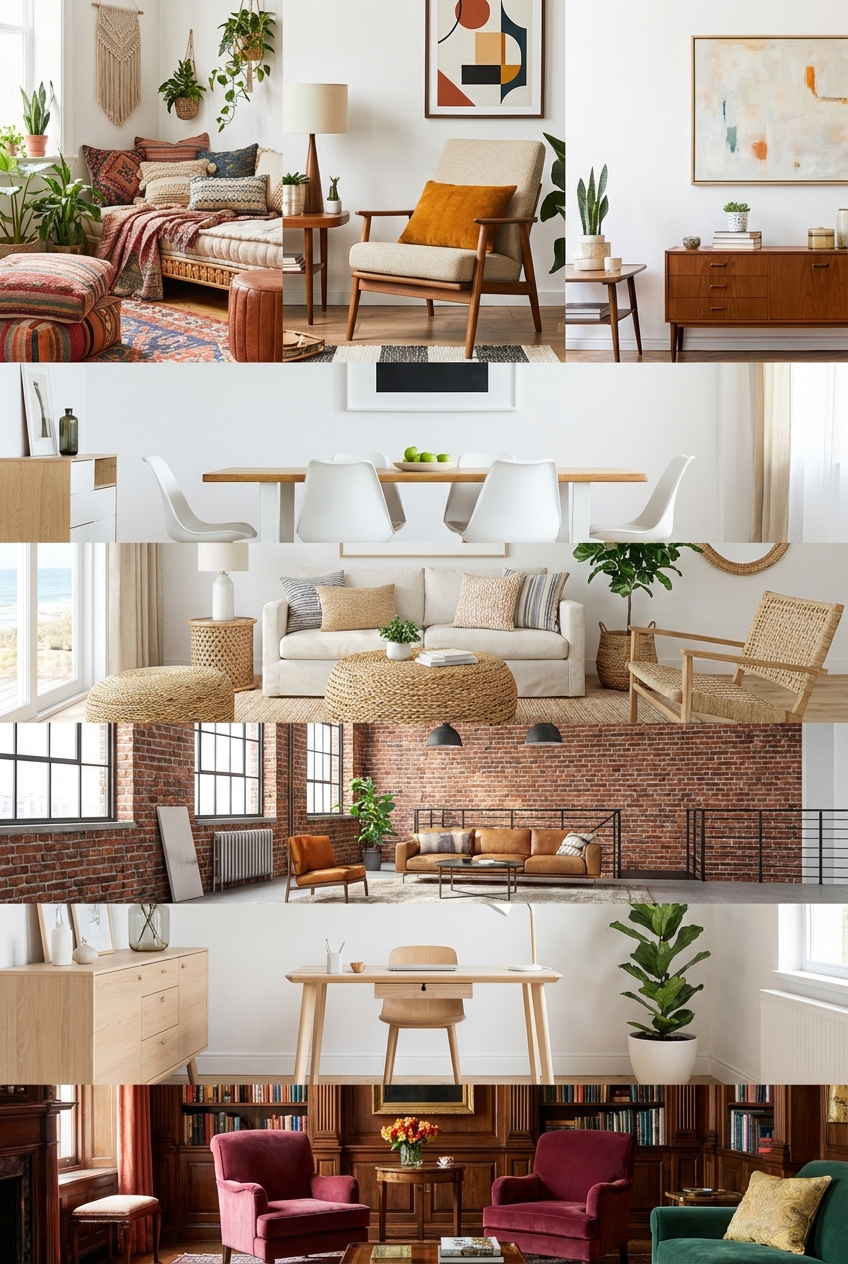
- Minimalist contemporary: very few pieces, bare surfaces, one material repeated.
- Warm or organic contemporary: curved furniture, wood, plants, wool and linen in earthy tones.
- Transitional contemporary: contemporary lines mixed with a few traditional pieces.
- Industrial-leaning contemporary: matte black metal, concrete and raw wood.
If you like minimalist contemporary interior design but live with a dog or kids, choose one warm material and washable fabrics so the room doesn't feel cold or show every paw print.
Contemporary design examples for the living room

Neutral sofa, one bold chair
Start with a low-profile sofa in a quiet color, then add a single statement chair in a stronger hue or texture. It's an easy way to try a trend color without repainting. For homes with pets, I recommend a tightly woven fabric and removable, washable covers.
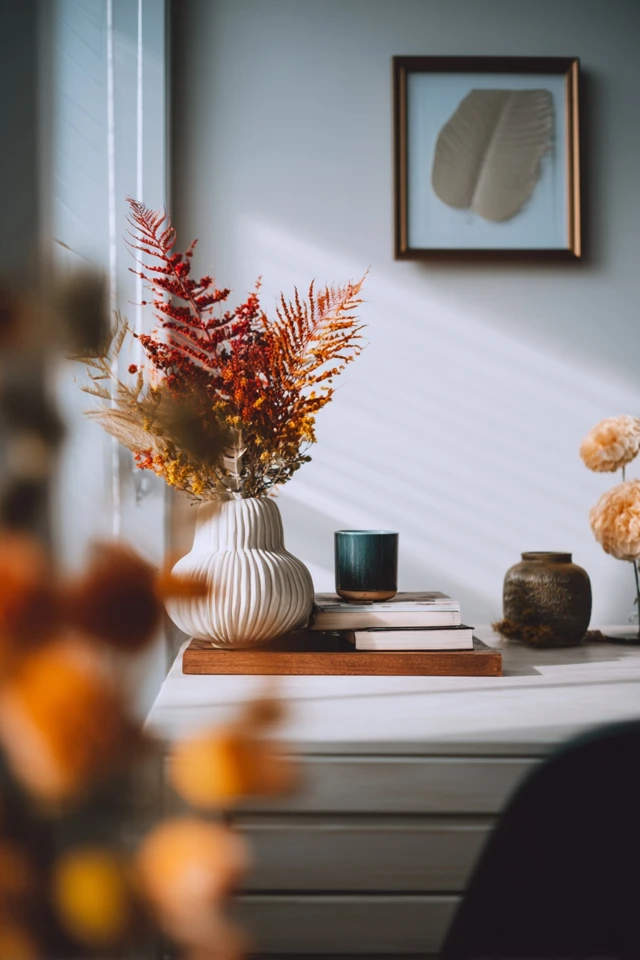
Zoned open plan
In an open space, a rug and a lighting group define the seating area without walls. Keep at least the front legs of the sofa and chairs on the rug, and leave about 30-36 inches for main walkways and 18-24 inches around the coffee table.
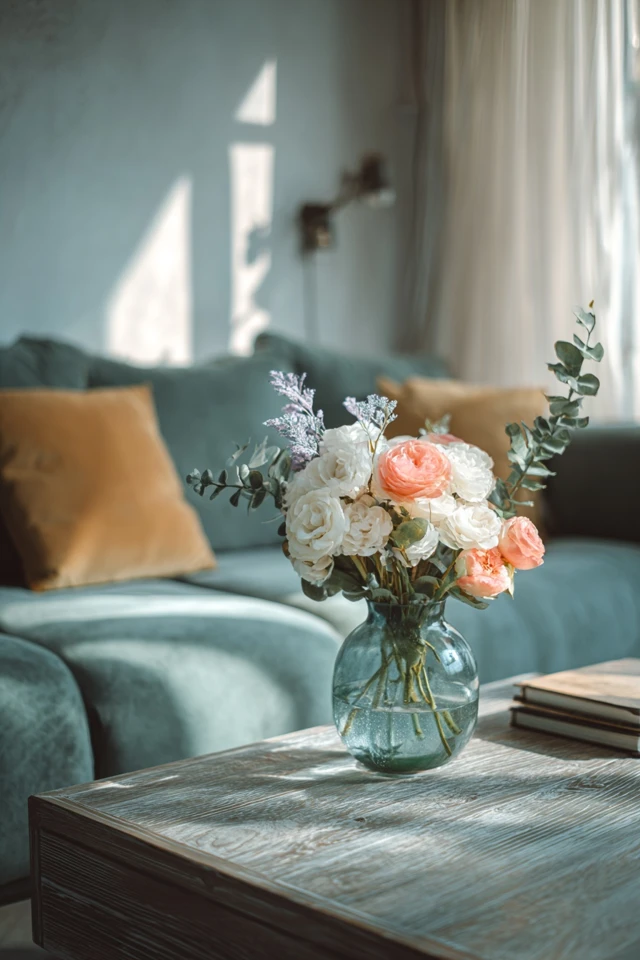
Mixed textures in one palette
Pair smooth ceramics, a chunky wool throw, brushed metal and raw wood in the same family of colors. The room reads calm but never boring. Keep metal finishes consistent across hardware and lamps.
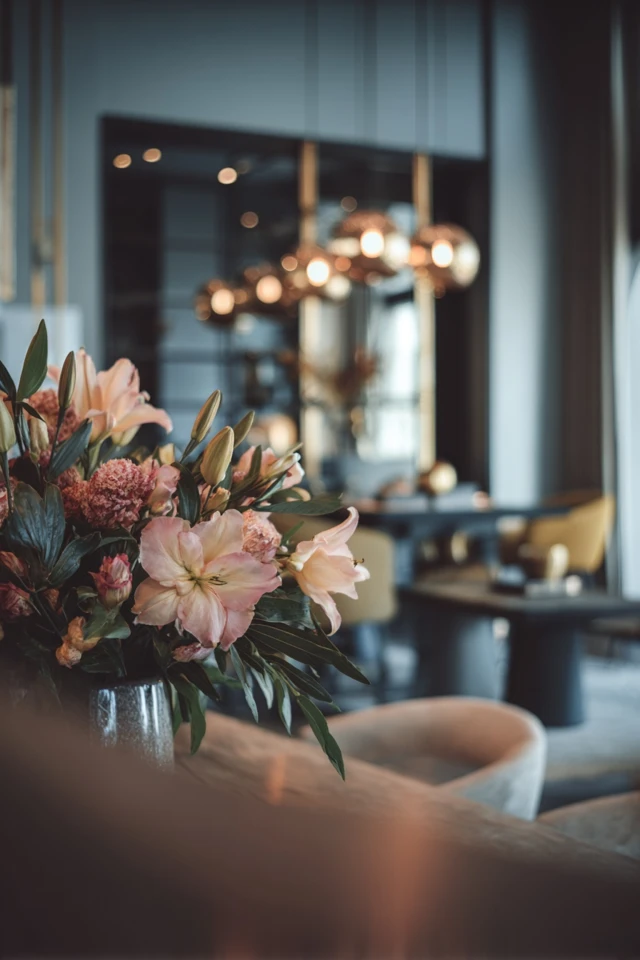
Edited surfaces
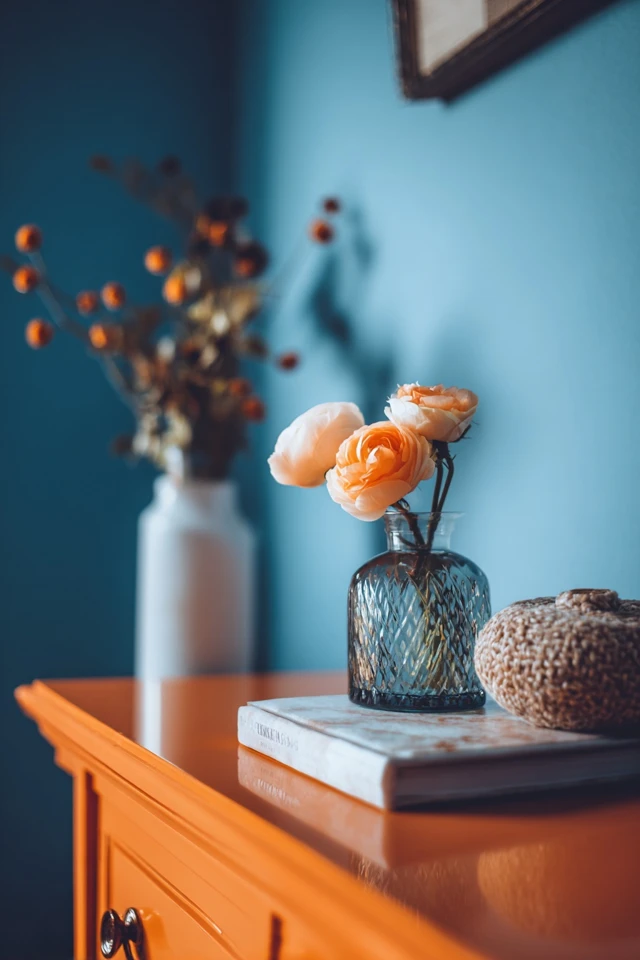
Group objects in odd numbers and vary their heights, then leave the rest of the surface empty. Hang art so its center sits about 57-60 inches from the floor.
For smaller rooms, see these small living room ideas. If you want a darker take, there's also a masculine living room guide.
How to get the look at home
- Pick a neutral base and test two or three large paint swatches on different walls, then look at them in daylight and at night.
- Choose a focal point (sofa, fireplace or art) and arrange the rest around it.
- Layer lighting. Warmer bulbs make neutral palettes feel inviting.
- Add natural texture with wood, linen, wool and a plant suited to your light. If you have pets, check with your vet before bringing in a new plant, since some are toxic.
- Edit. If a room feels busy, remove a third of the objects before buying anything.
You don't need to replace furniture. New pillows, lighting, hardware and a rug change a room more than you'd expect. As an architect, I'd spend first on the sofa and the lighting, and let trendy pieces come and go.
Curious how contemporary compares with a more ornate era? Have a look at Victorian rooms, or read a related roundup of contemporary design examples.
Frequently asked questions
What are some examples of contemporary?
A neutral sofa with one accent chair, an open plan zoned with rugs, a room built on mixed natural textures, and a minimalist space with bare surfaces are all common examples.
What are the different types of contemporary design?
Common variations are minimalist, warm or organic, transitional and industrial-leaning contemporary. They share clean lines and a neutral base but differ in warmth and materials.
Is contemporary the same as modern design?
No. Modern refers to a specific 20th-century movement, while contemporary describes what's current and borrows from several styles.
How can I make a room contemporary without replacing furniture?
Swap pillows and throws, update lighting and hardware, add a simple rug or large art piece, and clear surfaces of extra objects.
Filed under
ArticlesMeet the author
Written by an architect.
Julio Arco is a passionate architect with years of experience in architecture, interior design, urban design, and housing. He studied at prestigious universities across North America and Europe.

- Name
- Julio Arco
- Job
- Architect and online interior designer
- Studied
- Architecture, ITESM · Urban Design and Housing, McGill
- Partner
- Thor, Australian Shepherd
- Thor’s title
- Head of quality control