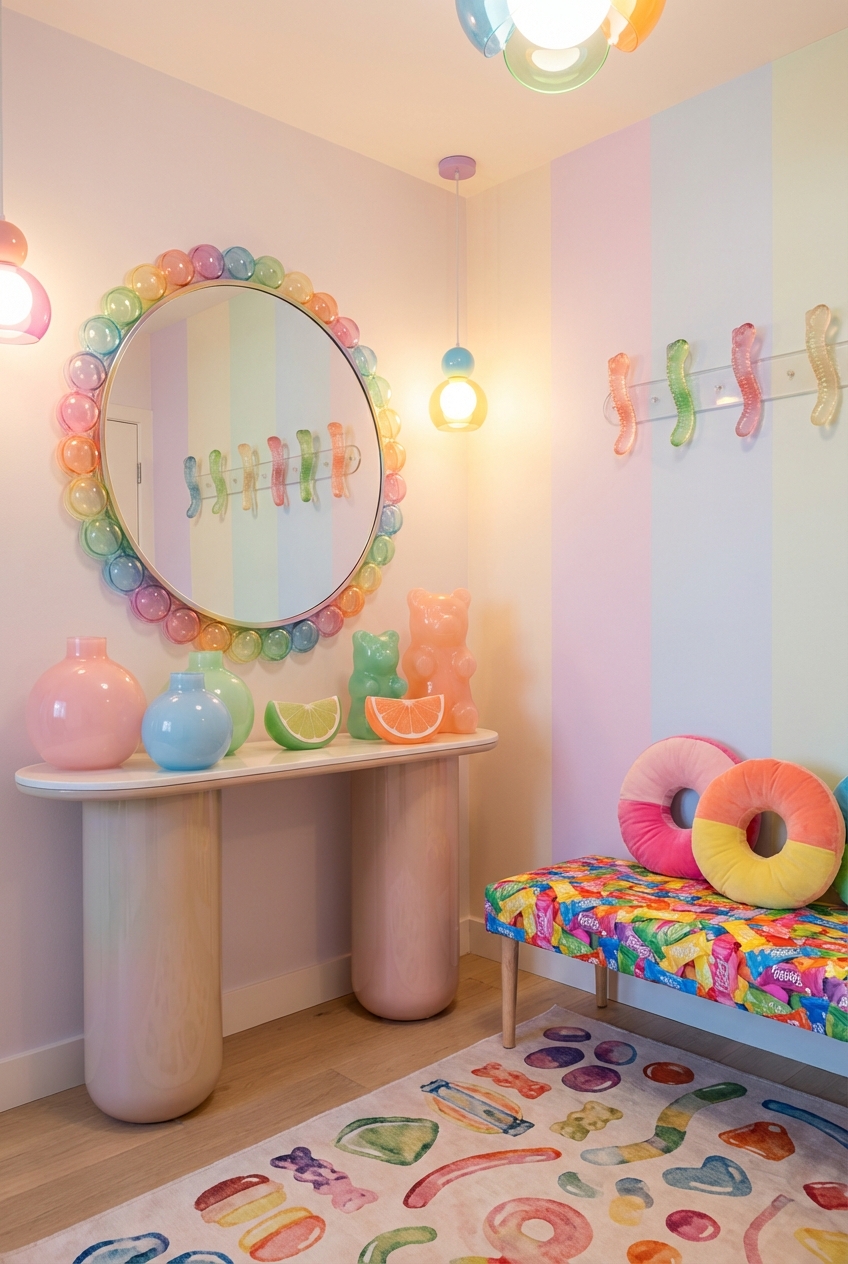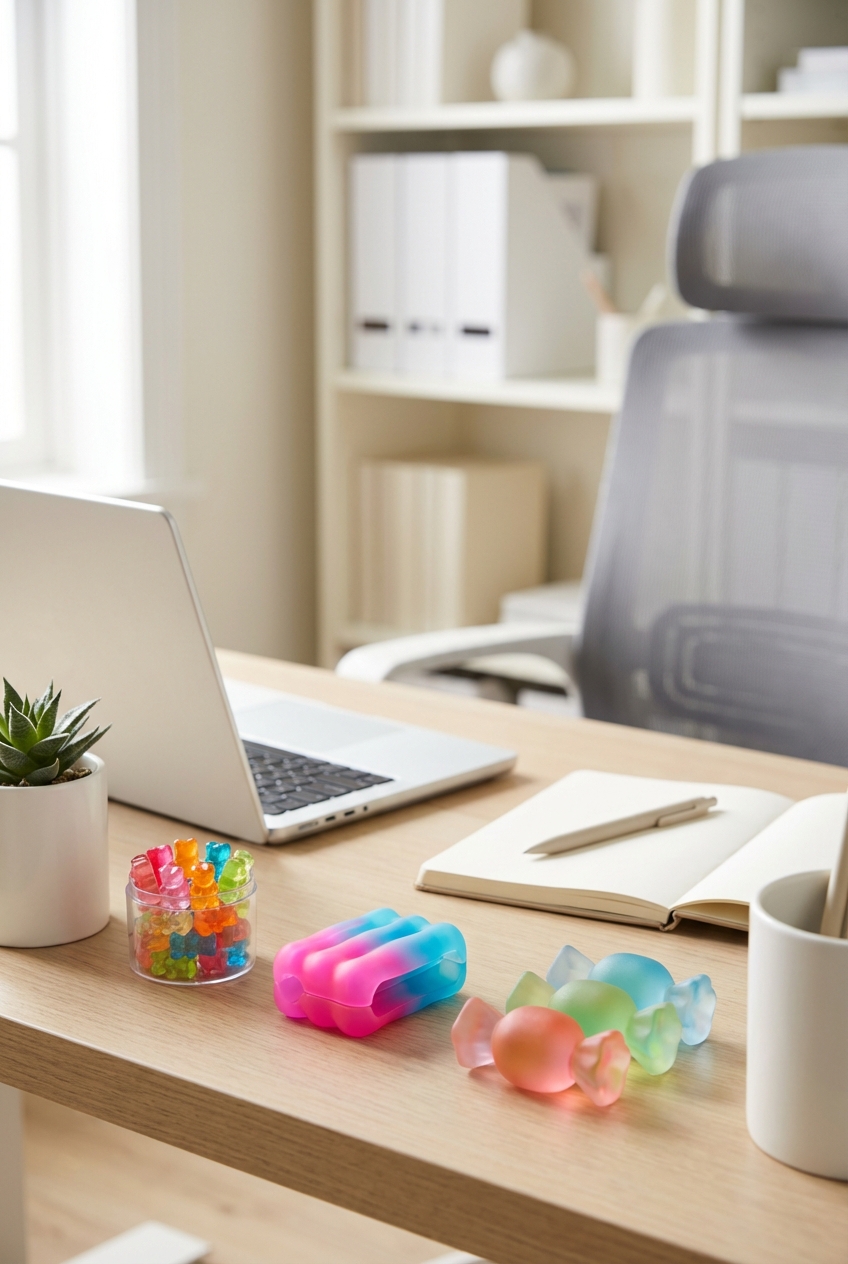
Gimme Gummy Home Office Ideas for a Playful Workspace

By Julio Arco
Architect and online interior designer
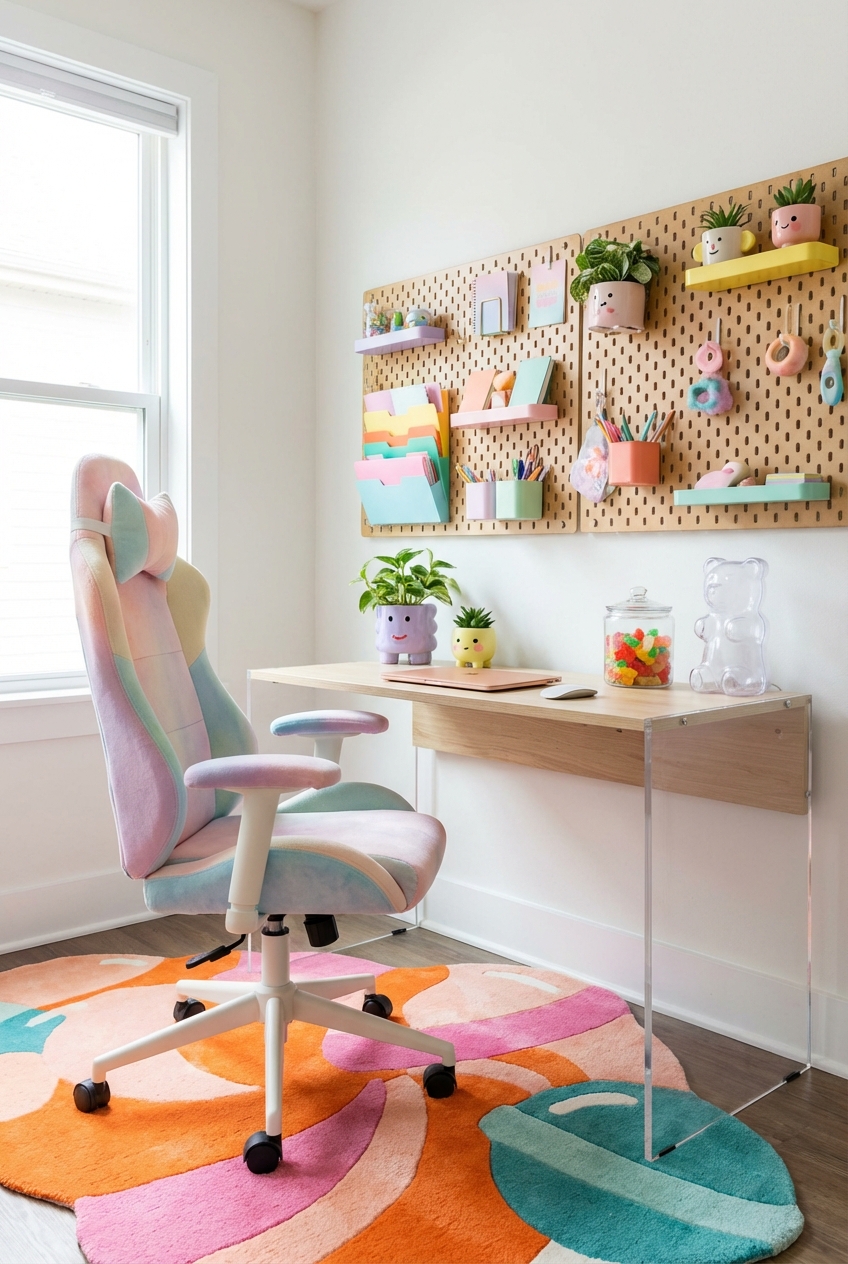
In this post
- What makes an office look gummy?
- How do you keep a playful office comfortable to work in?
- How much space does a chunky desk need?
- How do you build the look step by step?
- What does it cost?
- Which mistakes spoil the look?
- How do you adapt it for small, large or shared rooms?
- Quick styling checklist
- Frequently asked questions
A gimme gummy home office mixes translucent materials (acrylic, resin, frosted glass), soft rounded shapes and a milky pastel palette, then adds one saturated accent color. The result feels like candy without turning the room into a playroom.
The trick is to keep the base calm and the desk setup ergonomic. Below you'll find the materials, layout numbers, lighting and small details that make the look work for an actual workday.
What makes an office look gummy?
Three things: translucency, soft geometry and contrast between finishes. Lean too hard on one and the room tips toward a toy store. Balance them and it reads as a design studio with a sense of humor.
Translucent materials
Acrylic or resin desks and shelves let light pass through, so the room feels less crowded. A tinted acrylic desk is a bold choice, but clear acrylic with rounded corners gets you most of the effect.
Soft, molded shapes
Look for waterfall edges, chunky cylindrical legs, pill-shaped shelves and chairs with plump cushions. Rounded hardware helps too, and it's kinder to hips and shins than sharp industrial pulls.
Matte against gloss
Glossy surfaces bounce light and throw crisp highlights. Matte ones absorb it and soften the room. Pair a high-gloss acrylic desk with a matte wool or velvet-textured rug, and bring in one chrome lamp as a sharp counterpoint to soft eggshell walls.
How do you keep a playful office comfortable to work in?
Start with the body, then style around it. Playful furniture is sometimes lower or bulkier than standard office gear, so check three numbers before you commit.
- Desk height: standard desks sit around 28 to 30 inches. If a trendy resin desk is shorter, you'll slump or raise the chair too high.
- Monitor: OSHA's computer workstation guidance says the top of the monitor should be at or just below eye level. An acrylic monitor riser fixes a short desk without breaking the look.
- Arms: OSHA describes elbows staying close to the body and bent between 90 and 120 degrees. A chunky desk edge or thick top can push your forearms out of that range, so test it seated.
As an architect, I'd test any gummy chair for a full work session before keeping it. A molded shell that looks great can still be miserable after two hours, and an ergonomic base with a playful seat is a safer pairing.

How much space does a chunky desk need?
Leave about 30 to 36 inches behind the desk so the chair can roll back freely. With thick-legged or boxy desks, add a few inches, because the bulk eats into usable floor.
For the rug, make it large enough that the desk legs and the chair (even pushed back) stay on it. Otherwise the desk looks like it's floating. An 8x10 rug is a common starting point for a 10x12 room.
Visual weight matters in small rooms. An opaque, saturated desk with thick legs reads as heavy, while a translucent one of the same size lets you see the floor and wall behind it. In a tight room I recommend the translucent option.
How do you build the look step by step?
- Paint the walls a milky white with a hint of peach or mint instead of stark white. It makes colorful pieces pop without harsh contrast.
- Pick one statement desk: waterfall edge, acrylic top, or a simple white desk with oversized rounded knobs.
- Layer the lighting. Skip harsh overhead fluorescents and use a frosted-glass table lamp plus a floor lamp that washes a wall. Warm bulbs (about 2700K to 3000K) make translucent furniture glow.
- Add texture underfoot with a blob-shaped or soft pastel rug.
- Finish with details: acrylic drawer organizers, a wavy-edged mirror and colored cable sleeves.
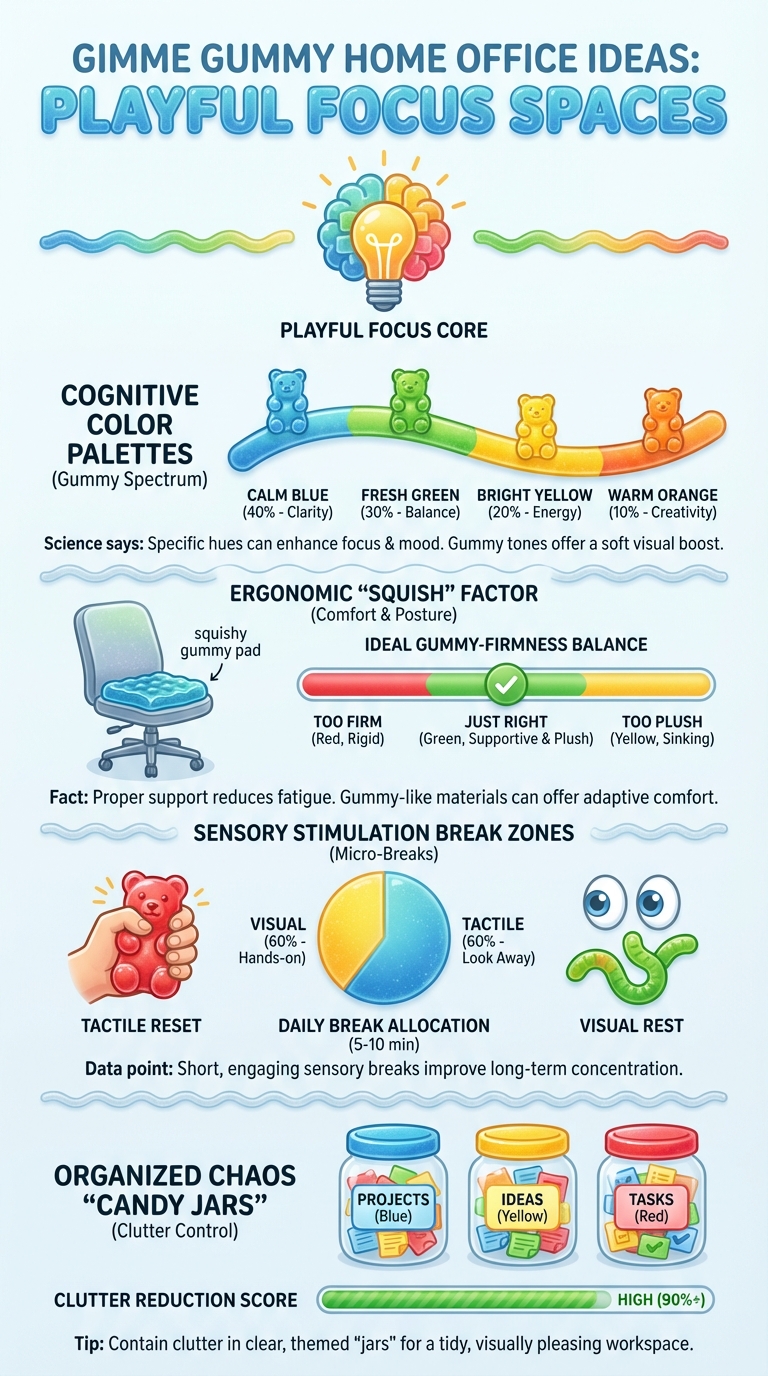
If you want a deeper dive on color, the neutral base plus jelly pop palette breaks down how much of the room each color should take. For a calmer take on the same idea, see these fun accents on a calm base.
What does it cost?
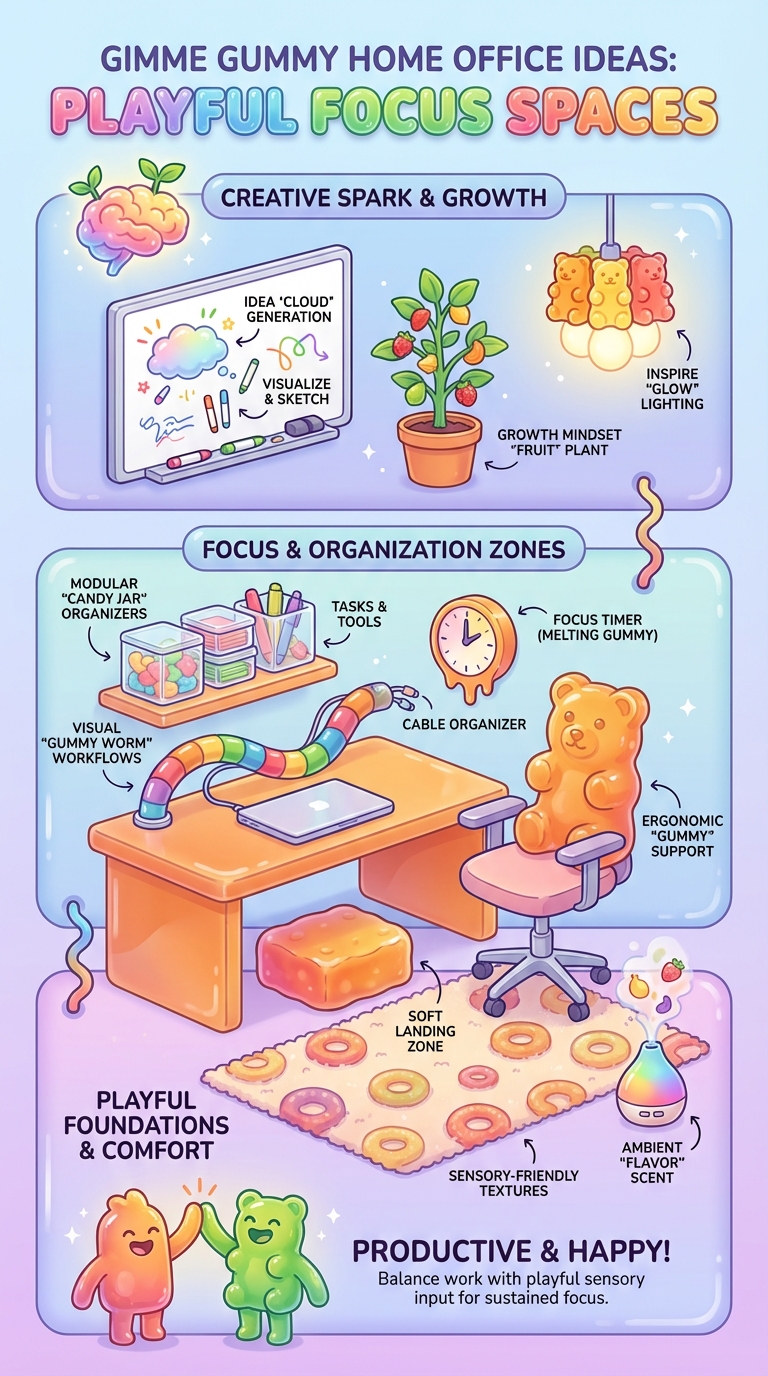
Paint and accessories carry a low-budget version: repaint a desk in semi-gloss pastel, add a blob rug, acrylic organizers and a colorful shell chair. Roughly $300 to $700 covers it. Spending more, say $1,500 to $3,000, buys an acrylic desk or a good task chair and a custom-sized rug. Authentic vintage or designer resin furniture sits well above that. These are ballpark figures that vary a lot by region and retailer.
If budget is tight, put money into the chair and the rug first. You sit and roll on them all day.
Which mistakes spoil the look?
Too much plastic
When every surface is acrylic, the room feels cold and cheap. Add wood, wool or a ceramic planter to ground it.
Messy cables
Clear desks show everything underneath. Mount a power strip to the underside of the frame so one cord runs down a leg, and use white or colored sleeves and adhesive clips along hidden edges.
Cold lighting
Blue-toned light makes pastels look muddy. Use warm white bulbs, or smart bulbs you can tint slightly toward pink or amber.
Cleaning acrylic with the wrong product
Ammonia-based glass cleaners can damage acrylic. Check the maker's care instructions, and a soft microfiber cloth with a plastic-safe cleaner is the usual choice. If you share the home with a dog or cat, expect scratches from claws and nose prints, and keep sharp-clawed pets off low acrylic tops.
How do you adapt it for small, large or shared rooms?
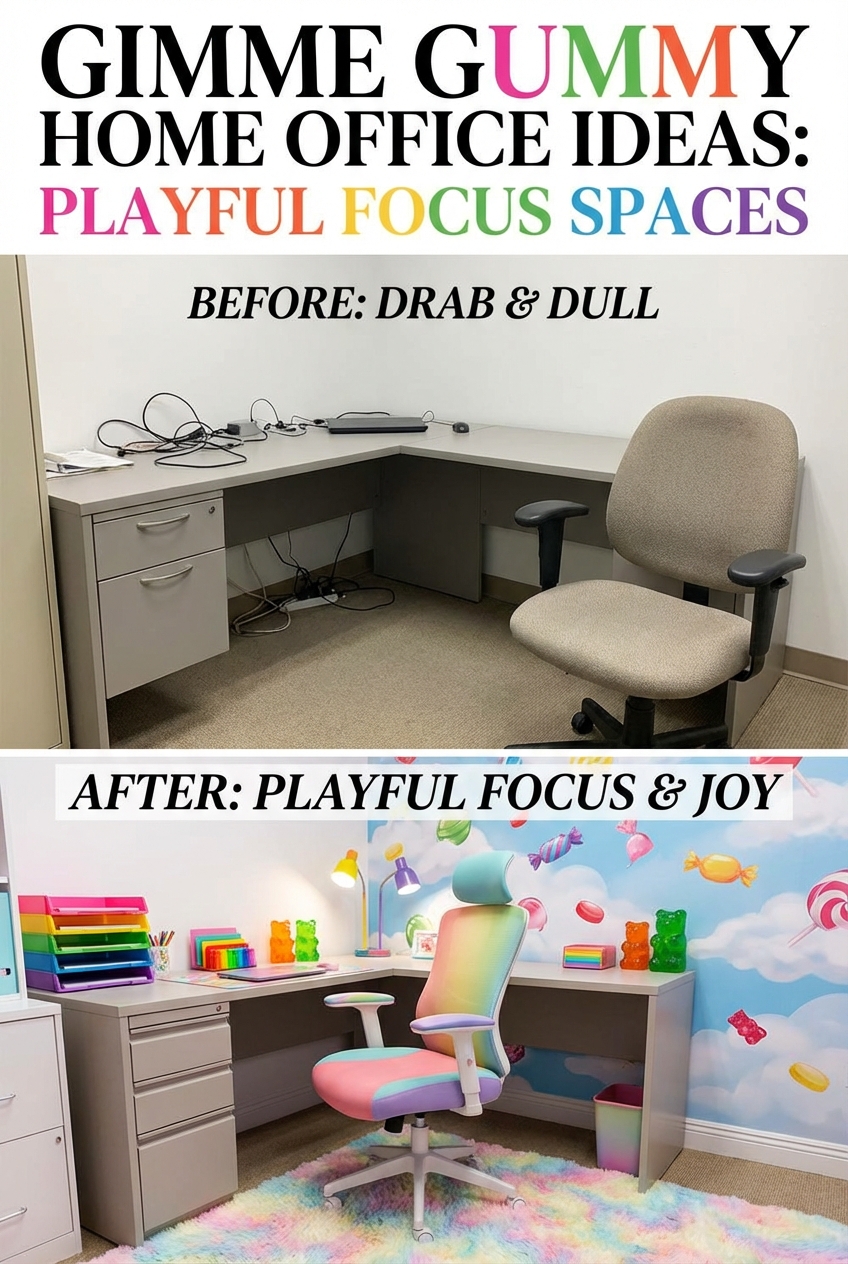
- Closet office: paint walls, shelves and desk the same soft lavender (or any one shade), and use a clear acrylic chair so the nook feels larger.
- Large room: float the desk toward the center, put matte shelves behind it, and add two rounded chairs for guests or reading.
- Shared office: give each person a color zone, such as mint on one side and peach on the other, with a long shared desk between.
- Rental: use peel-and-stick contact paper on a basic desk, removable wall decals, and portable rugs and lamps.
Apartment dwellers with minimal rooms might also like these gimme gummy ideas for minimal homes, and the basics of playful styling cover the principles behind the whole look. If you prefer something quieter, try a woodland-warm home office.
Quick styling checklist
- Rounded knobs and pulls.
- A heavy colorful desk balanced on the other side by a plant or floor lamp.
- At least three textures, such as smooth acrylic, soft wool and matte metal.
- Monitor top at or just below eye level.
- One hero color, used sparingly, with everything else in milky tones.
- Plants with rounded leaves, like a pilea or rubber plant. If you have pets, check with your vet or the ASPCA's plant list before choosing.
Frequently asked questions
Is acrylic furniture hard to keep clean?
It shows fingerprints and dust easily. Wipe it with a soft microfiber cloth and a cleaner made for plastic, and avoid ammonia-based glass cleaners.
How do you make a gummy office look professional on video calls?
Keep the shelves behind you tidy, arrange books by color and leave empty space. Light your face from the front with a soft, warm lamp so colorful furniture doesn't wash you out.
What is the best rug for a rolling office chair?
A low-pile or tight-weave rug lets wheels roll easily. High-pile shag catches casters, so put a chair mat over it if you love that look.
Can you do a gimme gummy office in a rental?
Yes. Contact paper, removable decals, rugs, lamps and chairs are all portable or removable, so nothing needs to be permanently changed.
Filed under
ArticlesMeet the author
Written by an architect.
Julio Arco is a passionate architect with years of experience in architecture, interior design, urban design, and housing. He studied at prestigious universities across North America and Europe.

- Name
- Julio Arco
- Job
- Architect and online interior designer
- Studied
- Architecture, ITESM · Urban Design and Housing, McGill
- Partner
- Thor, Australian Shepherd
- Thor’s title
- Head of quality control