How to Decorate with Asian Landscape Like a Pro
Asian landscape design explained: core principles, how to lay out a small garden, plants and materials to use, and pet-aware tips for a yard.

By Julio Arco
Architect and online interior designer
In this post
- What is Asian landscape design?
- What are the key elements of a Japanese garden?
- How do you lay out a Japanese garden?
- Which plants work in an Asian-style garden?
- How do you keep color simple?
- Small Asian garden ideas for tight spaces
- What materials suit the look?
- Making it work with a dog
- Frequently asked questions
Asian landscape design is built on a few repeatable moves: layered planting, a restrained palette, natural materials, and a sense of enclosure that makes a yard feel calm. You don't need a big lot. A small corner with a path, a few evergreens and a stone can carry the whole idea.
Below are the principles, a simple layout method, plant and material choices, and a few notes for yards shared with dogs.
What is Asian landscape design?
It's a family of garden traditions from Japan, China, Korea and Southeast Asia rather than one style. Michigan State University's Beal Botanical Garden notes that most Asian garden designs are influenced by cultural philosophies, and the design spirit is always surrounded by nature. Landscape architect Yun Cao, writing for the same collection, puts the goal this way: "Including culture into the garden makes the space meaningful rather than just a plant collection."
In practice that means each element has a job. A rock anchors a view, a path slows you down, and a pruned pine frames what's beyond it. If you want more asian landscape design ideas, start by deciding what you want people to see and feel at each point along the route.
What are the key elements of a Japanese garden?
Japanese gardens are usually described through a handful of recurring parts. The exact count varies by source, so treat this as a working checklist:
- Stone, used as a single focal point or a small group in odd numbers
- Water, real or suggested with gravel raked into lines
- Evergreen and pruned plants, such as pines, boxwood or azaleas
- Paths, often stepping stones that make you look down and move slowly
- Moss and low ground cover for a soft, even floor
- Edges: a fence, hedge or screen that creates enclosure
Asymmetry matters more than most people expect. A balanced garden doesn't mirror itself. One heavy element on one side is answered by open space or a lighter plant on the other.
How do you lay out a Japanese garden?
- Choose the main viewing point, usually a window or a seat, and design toward it.
- Mark the boundary and decide where you need screening. A bamboo fence or tall evergreens close off neighbors and noise.
- Place the largest stone or tree first, off-center, then add smaller pieces around it.
- Draw a path that curves or steps so the whole garden isn't visible at once.
- Fill in with layers: tall evergreens at the back, mid-height shrubs, then low ground cover.
- Edit. Remove anything that doesn't support the view.
Leave about 30-36 inches for a path two people will walk, and a bit less for a single-file stepping stone route. Measure before you buy stone.
Which plants work in an Asian-style garden?
Foliage does most of the work, so think shape and texture before flowers. Japanese maples, bamboo in a contained bed, ferns, hostas, mondo grass, moss and clipped evergreens are common choices. Check what thrives in your climate first; a local nursery or extension office will know.
Plant in groups of a single species rather than a scattered mix. Master Gardener Deb Christopher of Westmoreland County, writing for Penn State Extension, notes: "If disease or pest problems arise, the entire monoculture planting may be killed. Instead, consider planting drifts or groups of single species, providing a patchwork-quilt effect." Drifts also look more like a natural hillside.
Ground cover instead of lawn
A lawn is the opposite of the layered look, and it's demanding. University of Maryland Extension points out that turfgrasses require constant maintenance that comes with costs, including pesticide exposure for humans and pets. Colorado State University Extension defines suitable ground covers as plants that are low-growing (generally less than 24 inches) and spread easily.
Skip plastic landscape cloth under gravel or mulch. Penn State Extension says it is not recommended to use plastic or synthetic landscape cloth on top of or under the soil, since it can increase erosion and water runoff.
How do you keep color simple?
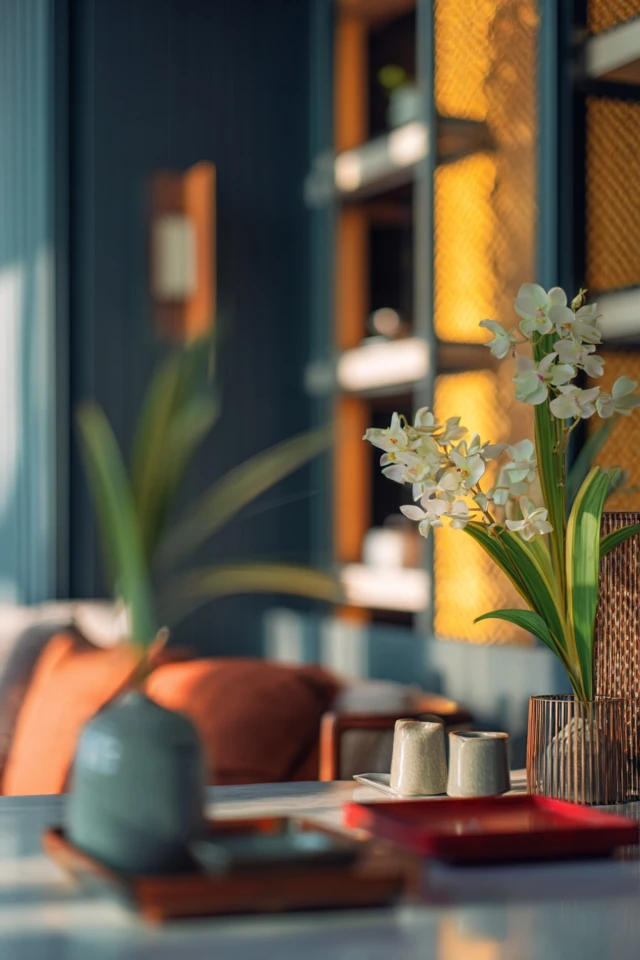
Limit the palette to green in several shades, gray stone, brown wood and one seasonal accent, such as maple foliage or an azalea bloom. Variety comes from leaf size and texture, not from more colors. A single lacquered-red element, like a bridge rail or a pot, reads as a deliberate accent.
Small Asian garden ideas for tight spaces
For asian landscape design for small spaces, scale everything down and look for one strong view.
- A narrow side yard becomes a stepping-stone path with moss or mondo grass and a bamboo screen.
- A courtyard can hold one large container with a pruned tree, a gravel bed and a stone.
- A balcony works with a low trough of ferns, a ceramic water bowl and a few pots grouped in odd numbers.
If you're after asian style backyard ideas that don't take over the whole lot, section off a corner with a fence or hedge and treat it as a room: a bench, a stone, a tree. For a similar approach to shade, see patio shade ideas.
What materials suit the look?
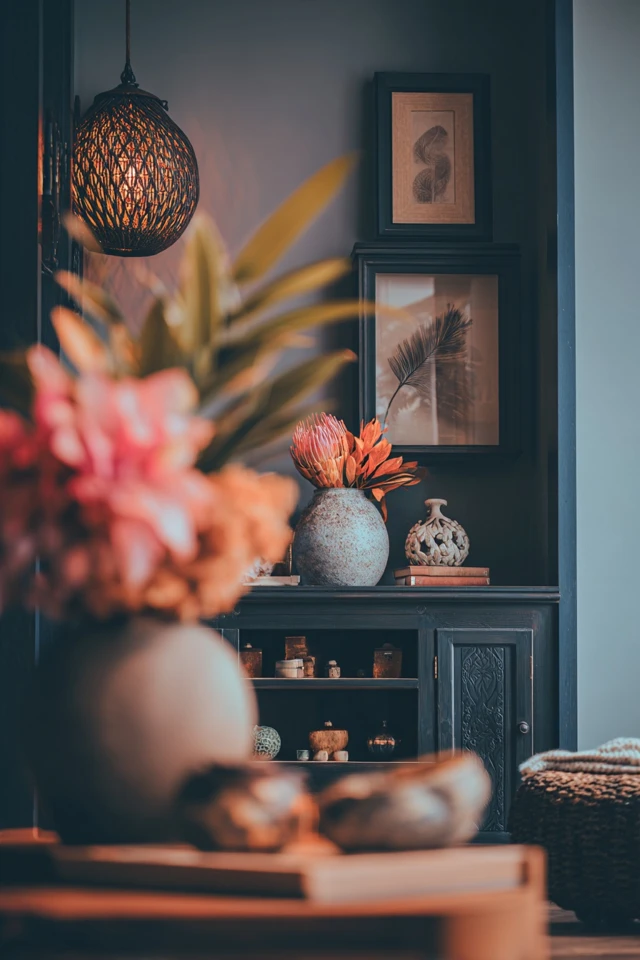
Stone, gravel, weathered wood and bamboo are the staples. Use gravel or flagstone for paths and keep hard surfaces in one or two materials so the garden reads as calm. Wood should be untreated or sealed with a pet-safe product if animals will chew or lick it; ask the manufacturer or your vet if you're unsure.
Prepare the soil before you plant. Colorado State University Extension recommends working 3 to 5 cubic yards of compost or other organic soil amendment into 1000 square feet of area, which for a small bed is a thin layer dug in, not a heap.
Making it work with a dog
Dogs and raked gravel don't get along, and moss doesn't love paws at full speed. As an architect, I'd give a dog a defined run along the fence and keep the formal viewing garden on the other side of a low barrier. Choose a firm, even surface for the dog's route.
If you want a green patch, UC Marin Master Gardeners note that white clover does not show pet urine damage. Check every plant against the ASPCA's toxic-plant list or ask your vet before planting, since some common garden shrubs are unsafe if eaten.
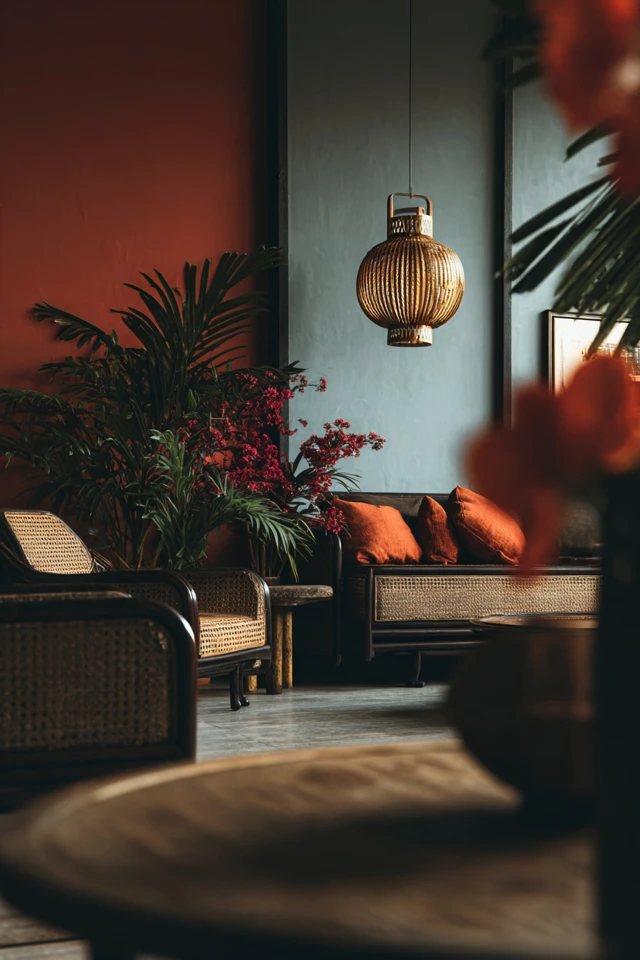
Bringing the look indoors is simpler: a landscape scroll or ink print at eye level, a low bench, a wood tray with a plant. The same restraint applies, and a few well-placed pieces beat a crowded shelf. Related reading: corner design and colors that go with brown.
Frequently asked questions
What are some ideas for Asian-style landscaping?
Try a stepping-stone path, a single feature stone, a pruned evergreen or Japanese maple, moss or low ground cover, and a bamboo or wood screen. Keep the palette to greens, gray and brown.
What is Japanese landscaping called?
The general term is Japanese garden design, and it includes styles such as dry rock (karesansui) gardens, tea gardens and stroll gardens. Each uses stone, plants and water in a slightly different way.
What are the six key elements of a Japanese garden?
Sources list them differently, but common ones are stone, water, evergreen plants, paths, moss or ground cover and an enclosing fence or hedge.
Can I build an Asian garden in a very small yard?
Yes. One viewing point, a short path, a stone and a few layered plants are enough, and a fence or hedge gives the enclosure.
Filed under
ArticlesMeet the author
Written by an architect.
Julio Arco is a passionate architect with years of experience in architecture, interior design, urban design, and housing. He studied at prestigious universities across North America and Europe.

- Name
- Julio Arco
- Job
- Architect and online interior designer
- Studied
- Architecture, ITESM · Urban Design and Housing, McGill
- Partner
- Thor, Australian Shepherd
- Thor’s title
- Head of quality control