Sofa Color Ideas: How to Pick One (Mustard to Neutral)
Sofa color ideas for your living room: how to choose by mood, light and room size, which shades to avoid, and how to style a mustard sofa.

By Julio Arco
Architect and online interior designer
In this post
- How does sofa color change a room?
- What should you check before choosing a sofa color?
- What are the best timeless sofa colors?
- How do you style a mustard sofa?
- Which sofa colors should you avoid?
- Which fabric suits a pet-friendly colored sofa?
- How do you place a bold sofa in the room?
- Can you mix mustard with other bright colors?
- Frequently asked questions
The best color for a living room sofa is the one that fits your light, your palette and the mood you want. Neutrals like warm gray, oatmeal and charcoal are the easy choice. If you want personality, mustard is one of the most forgiving bold colors, because it behaves a bit like a warm neutral.
This guide covers how to choose a sofa color, what to pair it with, which shades to think twice about, and how to style a mustard sofa in particular, including fabric choices for homes with pets.
How does sofa color change a room?
A sofa is usually the largest object in a living room, so its color sets the tone for everything around it. Warm, saturated colors advance toward the eye and make a piece feel heavier. Pale or low-contrast colors recede and make a room feel calmer and larger.
Color also affects how people respond to a space. A study from Deakin University's School of Psychology, led by Isabella S Bower, found that blue coloring of the built environment increases autonomic range and is associated with modulations of brain activity linked to emotional processing. That is one study of one color, so treat it as a reminder that color is not neutral, not as a prescription.
What should you check before choosing a sofa color?
- Your light. North-facing rooms are cooler and flatten warm colors. South-facing rooms make warm colors glow.
- Your floor and walls. The sofa needs some contrast with both, or it disappears or fights.
- Who sits on it. Dogs, cats and kids change which fabrics and shades make sense.
- How long you want it. A sofa is a long-term piece, so put the boldest color in pillows if you tire of things quickly.
Should a sofa be lighter or darker than the walls?
Either works. A sofa darker than the walls reads as a grounded anchor, which suits light, airy rooms. A lighter sofa against dark walls feels dramatic and cozy. The mistake is a sofa that matches the wall almost exactly, which can look flat unless you add texture.
What are the best timeless sofa colors?
Warm gray, beige, oatmeal, charcoal and deep navy last because they work with almost any palette and hide daily wear. For a small room, a pale sofa with slim legs keeps the floor visible and the space open. For small sofa color ideas in a living room, pick a color close to the walls and add contrast through pillows and a rug. If you are working with a compact room, these small living room colors pair well with a light sofa.
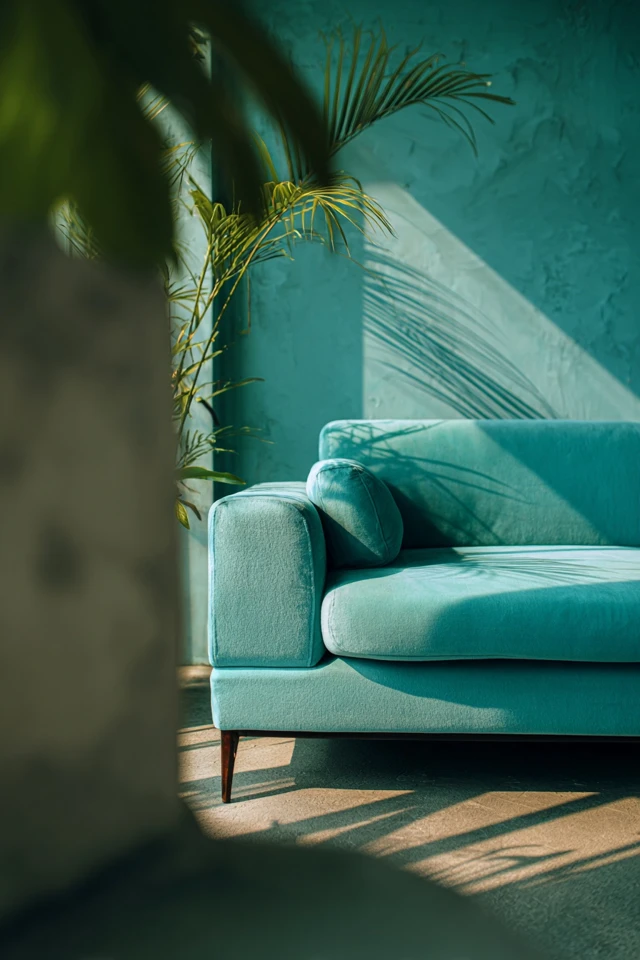
A neutral sofa also lets the room do the talking. See how that plays out in a cool blue living room with a neutral sofa.

How do you style a mustard sofa?
Mustard is not a primary yellow. It has earthy, slightly muddy undertones, so it needs the right partners to look intentional.
Best color combinations for a mustard sofa
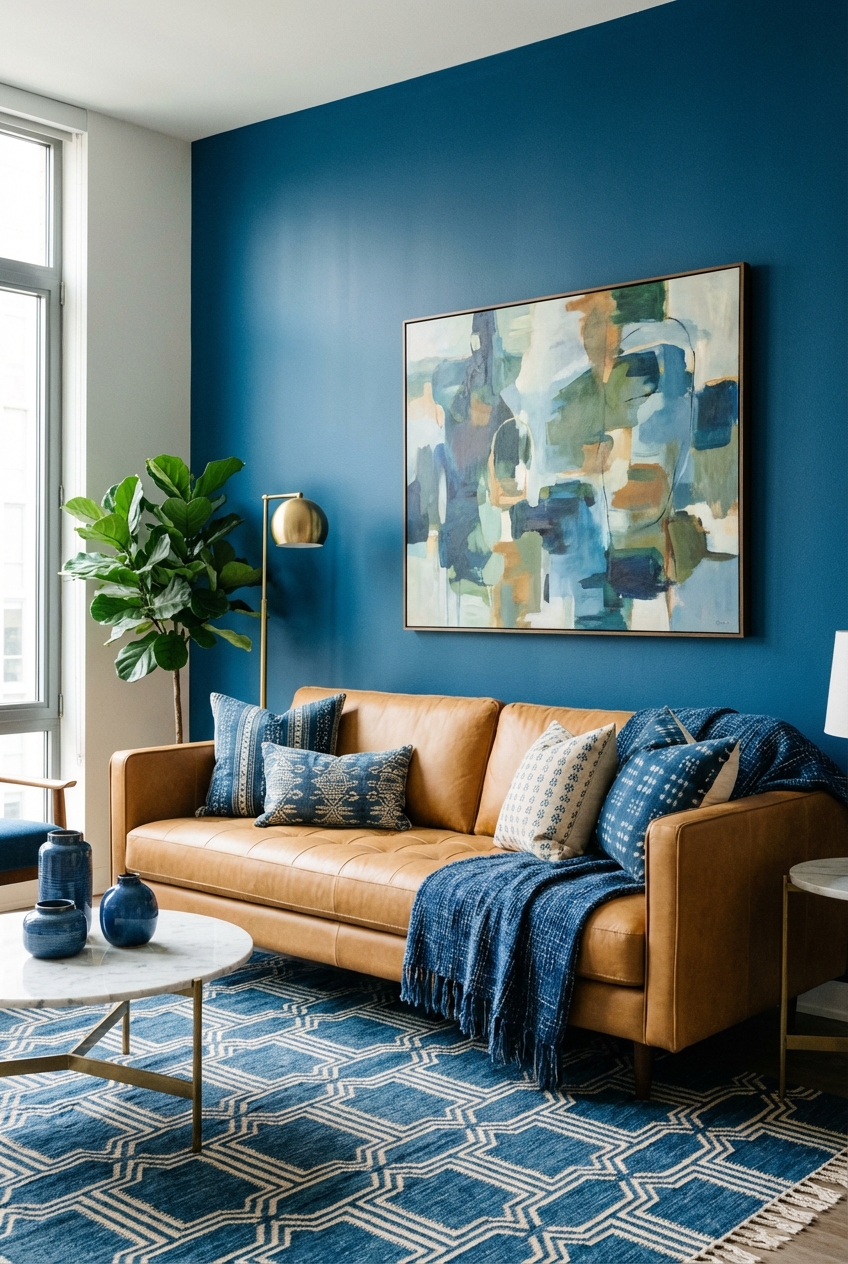
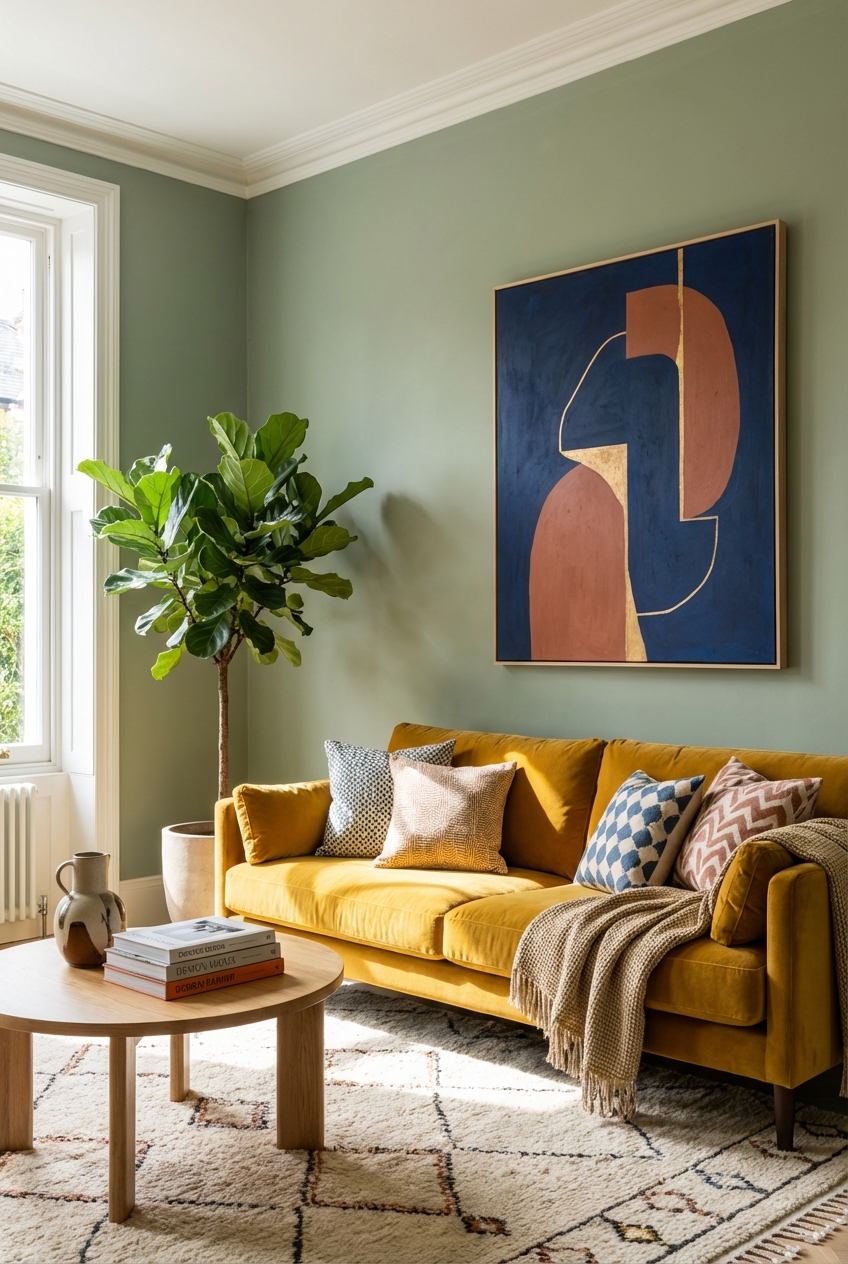
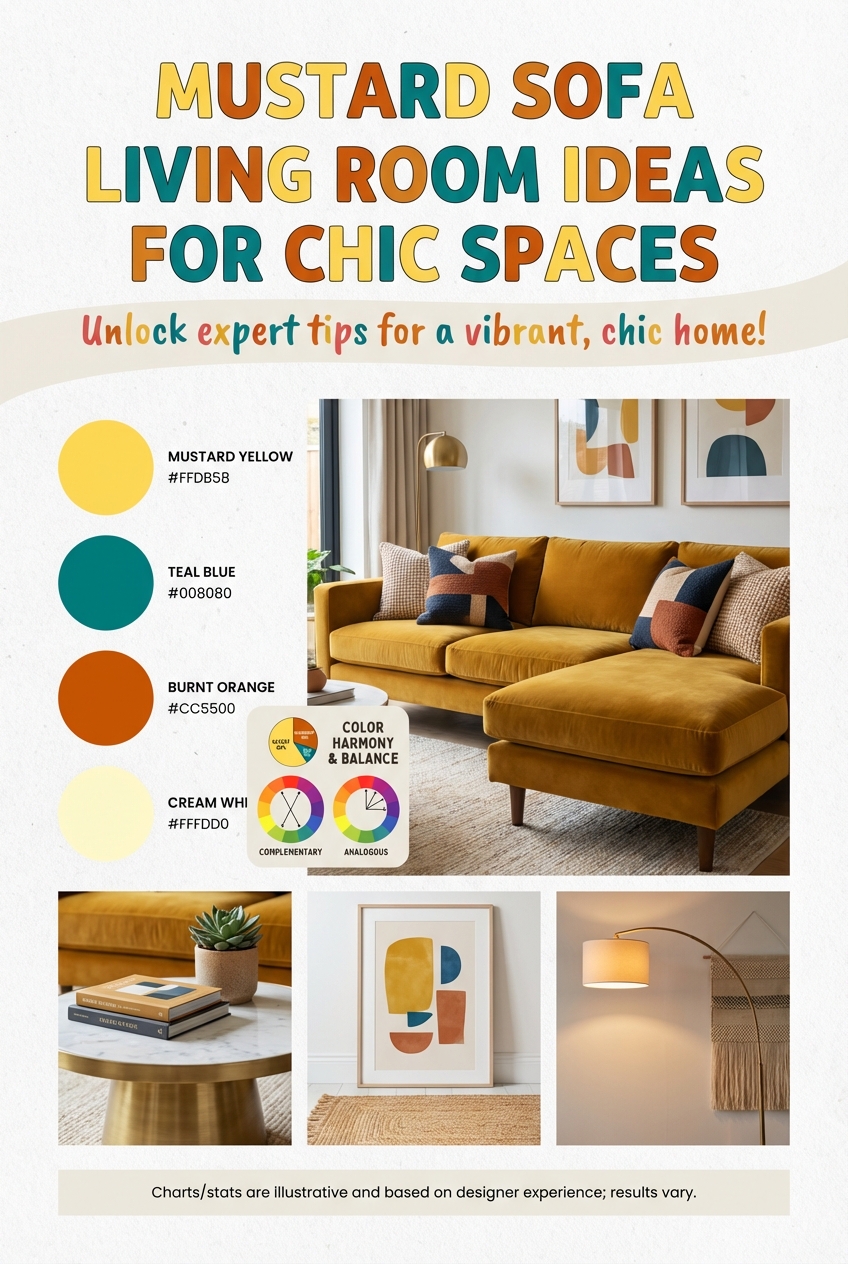
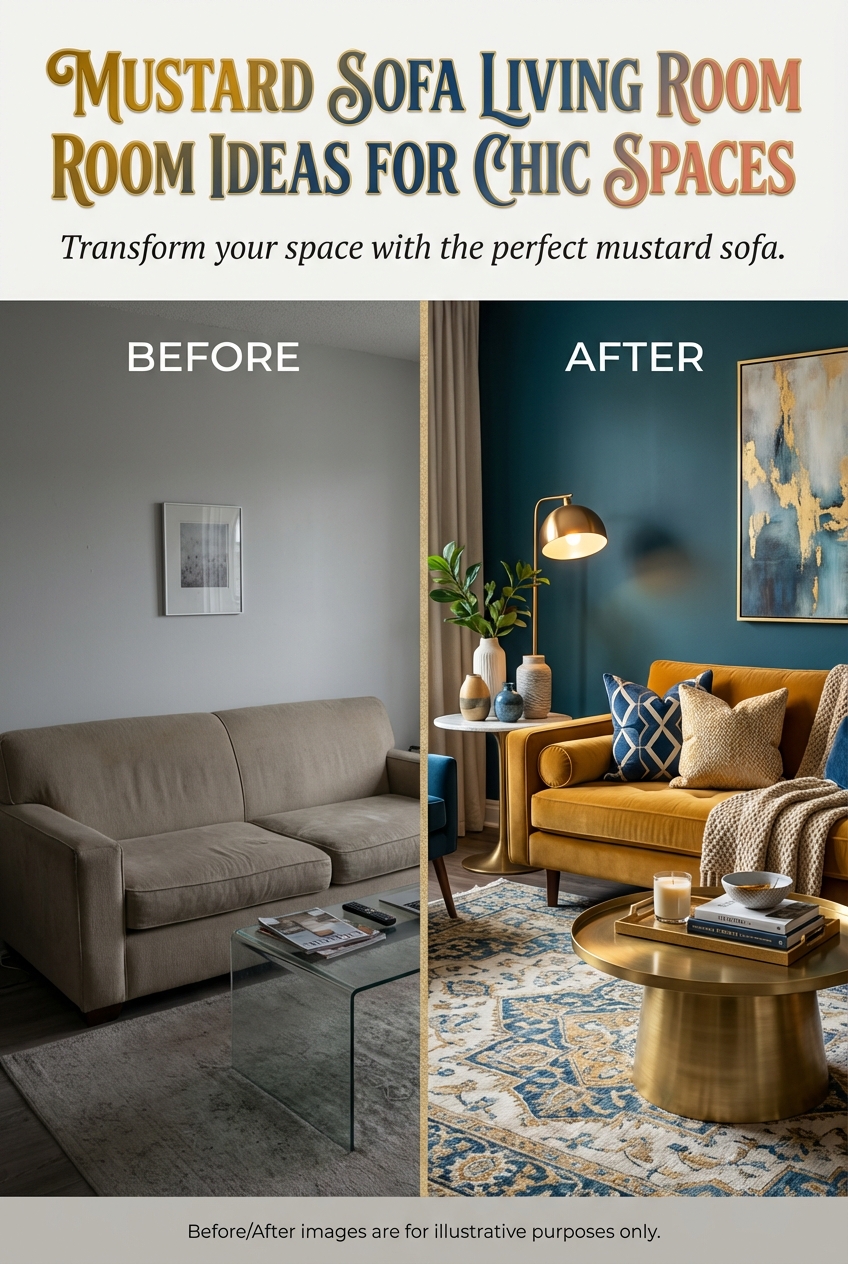
For drama, pair it with deep cool tones: navy, charcoal or forest green. Blue and orange-yellow sit opposite each other on the color wheel, so the contrast feels deliberate. A dark wall behind the sofa also stops the yellow from floating in the room.
For a calmer look, stay in the earthy family: terracotta, rust, warm cream and olive. As an architect, I'd keep bright primary red out of it. Mustard with bright red looks like a snack-bar logo, and deep burgundy or oxblood is a much better partner.
Light walls work too. Choose a warm white rather than a blue-based one, so the wall picks up the sofa's undertones.
Textures, woods and metals
A flat mustard block needs contrast in texture. Bouclé, sheepskin or chunky wool pillows help, as do black and white geometric prints, deep plum or slate gray.
Mid-tone woods like walnut and teak flatter mustard. Very yellow woods, such as unfinished pine, can wash the combination out. Matte black metal gives a graphic edge, and brushed or antique brass works. Shiny chrome tends to feel cold beside it.

Light bulbs change the color
Bulb temperature shifts how mustard reads. At 2700K it turns golden and a bit orange at night. At 3000K it looks closest to the true fabric color, and that is what I recommend. Cool daylight bulbs of 4000K and above can push mustard toward a greenish tone, so skip them near the sofa.
Which sofa colors should you avoid?
No color is banned, but some need more care:
- Pure white or very pale cream, if you have pets or kids. It shows every mark.
- A shade that matches your pet's opposite coat. Dark fur on mustard or cream shows instantly; tan or golden fur blends in.
- Very trend-driven shades you may tire of in a year. Keep them to pillows and throws.
- Any color in a loose-weave fabric if you have large dogs or a climbing cat. The weave matters as much as the shade.
I can't tell you which color will be in next year, and trend lists change fast. Earthy, warm tones have been around for decades, so they are a safer bet than a color that depends on one season.
Which fabric suits a pet-friendly colored sofa?
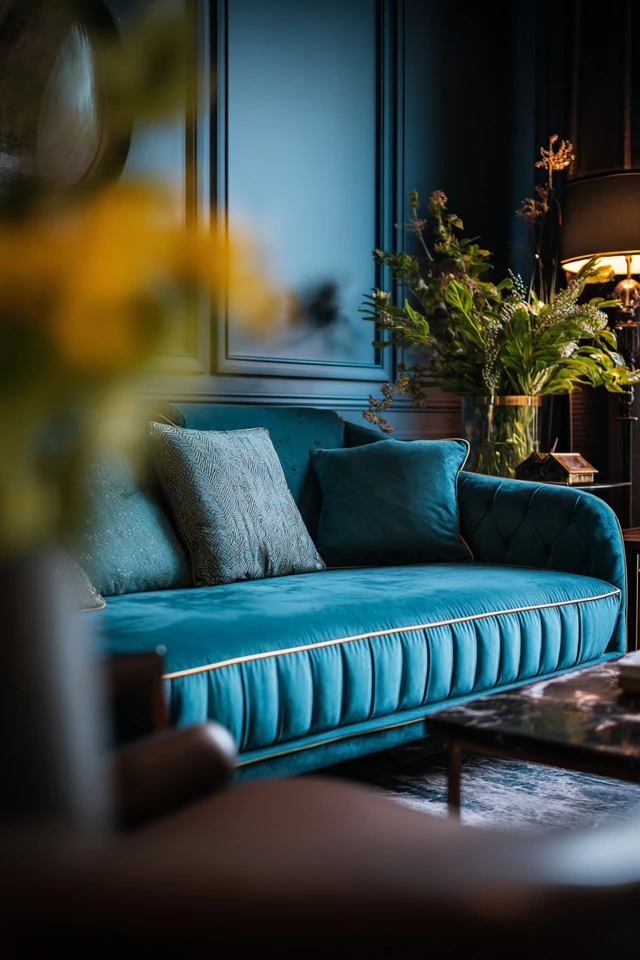
Tightly woven performance velvet is my first recommendation for cat owners, because claws have fewer loops to hook. For dogs, look for performance fabrics or commercial-grade polyester blends with a high rub-count rating, and ask the retailer for the number. Washable covers are worth it on any sofa a dog is allowed on. For anything involving a pet's health, such as chewing on fabric, check with your vet.
Velvet also has a sheen that shifts through the day, which gives mustard some depth.
How do you place a bold sofa in the room?
A saturated sofa has more visual weight than a gray one of the same size. Balance it with something substantial on the opposite side: a large piece of art, a bookshelf or a pair of armchairs.
- Keep about 14-18 inches between the sofa and the coffee table.
- Leave about 30-36 inches for main walkways.
- Choose a rug large enough that at least the front sofa legs sit on it. For a standard sofa, that often means 8x10.
Rug sizing changes with sectionals, so check what size rug suits a sectional. If your sofa is L-shaped, this layout guide helps. Prefer a different color story? Try red leather sofa ideas.
Can you mix mustard with other bright colors?
Yes. A simple split is about 60% neutral walls and floor, 30% sofa color and 10% an accent such as teal or rust. Equal amounts of mustard, bright red and bright blue will make the room look like a preschool.
Frequently asked questions
What is the best color for a living room sofa?
Warm gray, oatmeal and charcoal are the safest, since they suit most palettes and hide wear. If you want color, mustard, deep green or navy are easy to live with.
Should a sofa be lighter or darker than the walls?
Both work. Darker than the walls anchors a bright room, while lighter against dark walls feels cozy. Avoid a near-exact match unless you add texture.
Is a mustard sofa timeless or just a trend?
Mustard and ochre are old earth tones that have appeared in many design eras. A good-quality fabric helps it age well.
How do I keep a mustard sofa clean with kids?
Choose performance velvet or a microfiber blend, which resist spills better than linen or pure cotton. Keep an upholstery cleaner handy and blot spills quickly.
Filed under
ArticlesMeet the author
Written by an architect.
Julio Arco is a passionate architect with years of experience in architecture, interior design, urban design, and housing. He studied at prestigious universities across North America and Europe.

- Name
- Julio Arco
- Job
- Architect and online interior designer
- Studied
- Architecture, ITESM · Urban Design and Housing, McGill
- Partner
- Thor, Australian Shepherd
- Thor’s title
- Head of quality control